
TL;DR:
- Rental application fees fund tenant screening costs, such as credit and background checks. They can be regulated or banned depending on state laws and may unfairly burden low-income applicants. Renters should verify fee details, request itemized invoices, and consider waiver options to avoid unnecessary costs.
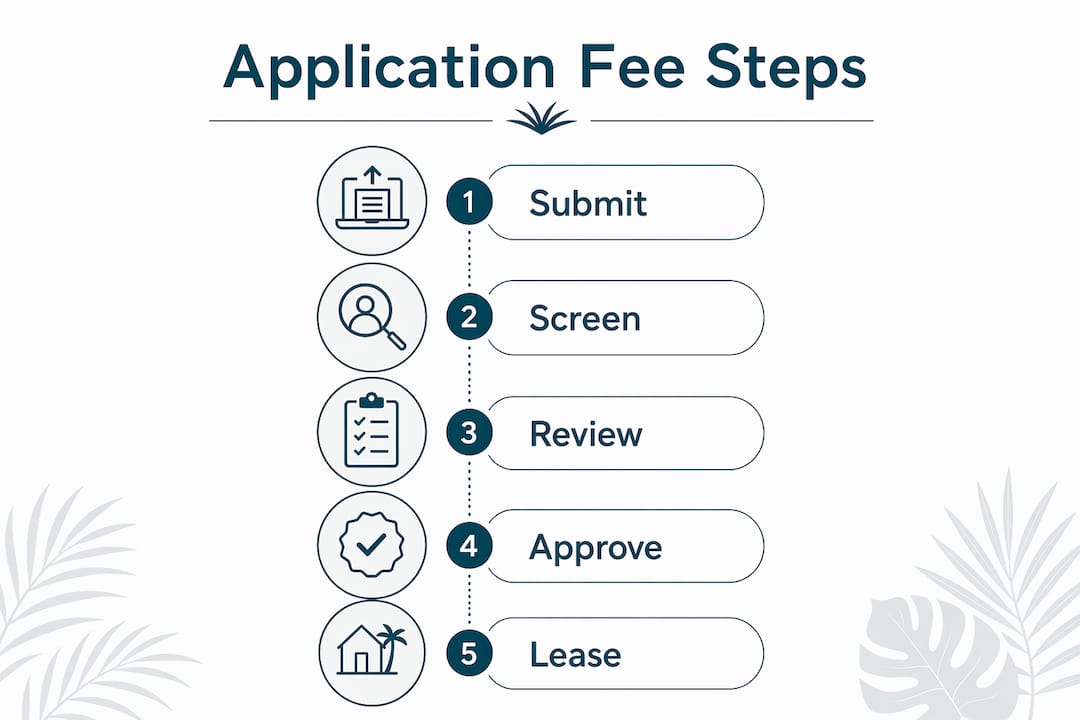
A rental application fee is a non-refundable payment charged by landlords to cover the cost of screening a prospective tenant. The role of application fees in housing is straightforward on paper: landlords use them to fund credit checks, criminal background checks, and income verification before approving anyone for a unit. Standard fees range from $30 to $75, though the actual amount depends heavily on location and local law. What renters often miss is that these fees carry real financial weight, legal complexity, and equity implications that affect who gets housing and who gets priced out of applying.
What costs do application fees cover in rental applications?
Application fees exist to pay for tenant screening, which landlords cannot legally or practically skip. The three core expenses are a credit report pull, a criminal background check, and an income or employment verification. Each of these involves a third-party vendor, and those vendors charge per report. The fee passes that cost directly to the applicant.

Beyond vendor costs, landlords also factor in staff time for reviewing reports and communicating with applicants. That administrative layer is real, but it is where fees can drift from cost recovery into profit, which regulated states prohibit. Understanding the tenant screening process helps renters see exactly what they are paying for before they hand over any money.
A critical distinction renters frequently miss:
- Application fee: Covers pre-approval screening costs (credit, background, income). Charged before a decision is made.
- Administrative fee: Covers post-approval lease setup and processing. Charged after you are approved.
- Security deposit: A refundable amount held against damages or unpaid rent. Not a fee at all.
Applicants should request itemized invoices to confirm they are not being charged twice for the same service under different labels. Some landlords bundle screening costs into an “admin fee” and then charge a separate application fee on top. That practice is unlawful in several states.
Pro Tip: Ask the landlord or property manager to specify in writing which fee covers which service before you pay anything. A legitimate operation will answer that question without hesitation.
How do application fees impact renters and the rental market?
Application fees create a real financial burden, especially for renters with limited cash on hand. Nearly 50% of renters find upfront costs like application fees challenging, and 40% cite them as a major burden, a figure that has risen since 2023. The median renter earning under $30,000 a year has roughly $250 in discretionary monthly income. A single application fee can consume a meaningful share of that budget.
The burden compounds when renters apply to multiple units at once, which is common in competitive markets. Applying to five apartments at $50 each costs $250 before a single lease is signed. That math pushes lower-income renters toward fewer applications, which reduces their odds of securing housing. Apartments with no application fee exist and are worth seeking out specifically for this reason.
Application fees also function as volume control for landlords. A fee discourages casual or unserious inquiries. That sounds reasonable until you realize the filter is financial, not qualitative. The applicants screened out are not necessarily less qualified. They are simply less liquid.
The equity effects are measurable:
- Renters of color are statistically more likely to fall in lower income brackets, making fee barriers disproportionate.
- Young professionals and students often have thin credit files, meaning they pay fees and still face rejection.
- Pet owners face additional pet deposits on top of application fees, compressing their upfront budget further.
Higher applicant costs correlate with increased success rates in competitive selections. That correlation reflects economic barriers, not applicant quality. Renters who can afford to apply more often win more often, regardless of how good a tenant they would actually be.
What legal regulations govern application fees across states?
Application fee law varies dramatically by state, and renters benefit from knowing their local rules before paying anything. New York caps fees at $20, Virginia at $50, and Vermont bans them outright. Many other states require that fees bear a reasonable relationship to actual screening costs, which limits a landlord’s ability to profit from the process.
| State | Rule | Cap or Ban |
|---|---|---|
| New York | Fee capped by law | $20 maximum |
| Virginia | Fee capped by law | $50 maximum |
| Vermont | Fees prohibited | Full ban |
| California | Fee cannot exceed screening cost | Actual cost only |
| Most other states | No specific cap | Varies by locality |
California’s rules go further than most. Fees cannot exceed screening costs and cannot be charged when no unit is available or when a tenant provides a portable screening report. A portable screening report is a background and credit check the tenant orders independently and shares with multiple landlords, eliminating the need for each landlord to run a new one.
Some landlords unlawfully collect fees when no unit is available or charge amounts that exceed actual costs. Regulated states prohibit this and require an actual cost basis. If you pay a fee and later discover no unit was ever available, you may have grounds for a complaint with your state’s housing authority.
The Fair Housing Act does not set a specific dollar cap on application fees, but it does require that any fee policy apply equally to all applicants. A landlord who waives fees selectively based on protected characteristics violates federal law.
What criticisms and debates surround the use of application fees?
The core criticism of application fees is that they function as economic filters, not quality filters. Application fees act as financial filters more than quality filters, and higher fees do not necessarily correlate with better applicants. A landlord who charges $75 does not get a more reliable tenant pool than one who charges $35. They get a wealthier one.
“Charging application fees aims to reduce application volume and administrative burden but may disproportionately deter under-resourced applicants. Application fees represent economic barriers rather than measures of tenant quality, limiting equitable access to housing.”
That tension sits at the center of the debate. Landlords have legitimate costs to recover. Screening is not free, and running reports on dozens of unqualified applicants wastes real money. The problem is when the fee exceeds actual costs, or when no waiver policy exists for applicants who genuinely cannot afford it.
The strongest arguments on each side:
- For fees: They reduce frivolous applications, fund necessary screening, and protect landlords from unqualified tenants who never intended to rent.
- Against fees: They price out qualified low-income renters, create compounding costs in competitive markets, and do not reliably predict tenancy quality.
Fee waiver policies offer a middle path. Some landlords waive fees for applicants who provide portable screening reports, reducing the landlord’s cost to near zero. Others offer waivers for applicants who can demonstrate financial hardship. These policies exist, but renters have to ask for them. They are rarely advertised.
How should renters approach application fees when applying for housing?
Managing application fees well starts before you submit a single form. A clear plan reduces wasted money and improves your odds of landing the right unit.
- Set a fee budget before you start. Decide how much you can spend on application fees total, not per application. That ceiling forces you to prioritize the units you most want.
- Research local fee caps. Check your state and city laws before paying. If a landlord charges $80 in New York, that is illegal. Knowing the rules protects your money.
- Ask for an itemized breakdown. Request itemized invoices before paying to confirm the fee covers screening only, not administrative processing that should be billed separately after approval.
- Ask about portable screening reports. If your state allows it, order your own background and credit report and offer it to the landlord. This can eliminate the fee entirely or reduce it significantly.
- Clarify the refund policy in writing. Application fees are almost always non-refundable because screening costs begin the moment you pay. Knowing this upfront prevents surprises.
- Apply selectively, not broadly. Applying to ten apartments at once is expensive and rarely necessary. Narrow your list to three or four strong candidates and apply to those first.
Pro Tip: If a landlord cannot tell you exactly what your application fee covers, treat that as a red flag. Transparent landlords have nothing to hide about their screening costs.
Renters who want to reduce upfront costs more broadly will find practical strategies in this guide on saving money on rent, which covers fee management alongside other cost-reduction tactics.
Key Takeaways
Application fees are legitimate cost-recovery tools that become problematic when they exceed actual screening costs, vary by applicant, or exist in markets with no available units.
| Point | Details |
|---|---|
| Fee purpose | Application fees cover credit, background, and income checks, not lease setup or administrative processing. |
| Legal variation | State caps range from $20 in New York to $50 in Virginia; Vermont bans fees entirely. |
| Renter burden | Nearly 50% of renters find upfront costs challenging, with fees hitting low-income applicants hardest. |
| Quality filter myth | Higher fees do not produce better applicants. They produce wealthier ones. |
| Practical defense | Request itemized breakdowns, ask about portable screening reports, and verify local fee caps before paying. |
My take on application fees after years of watching renters navigate them
The industry frames application fees as a practical necessity, and in a narrow sense, that is true. Screening costs money. Landlords should not absorb that cost for every applicant who submits a form. I accept that logic.
What I do not accept is the way fees have drifted from cost recovery into revenue generation, and in some cases, into outright gatekeeping. When a landlord charges $75 in a state with no cap, runs a $15 credit check, and pockets the difference, that is not cost recovery. That is a tax on the act of trying to find housing.
The renters who pay the highest total fees are often the ones with the fewest options. They apply to more units because they face more rejections. Each rejection costs them money. The system rewards financial resilience, not tenancy quality. That is a design flaw, not an unfortunate side effect.
The fix is not complicated. Landlords who want to be fair should charge only what screening actually costs, accept portable reports where the law allows, and offer waivers for applicants who ask. Renters who want to protect themselves should know their state’s rules, ask hard questions before paying, and apply only where they have a genuine shot. The power imbalance in rental applications is real, but information narrows it considerably.
— Ayman
Transparent leasing at Cynthiagardens in Boca Raton
Renters who have spent time researching application fees know exactly what to look for: clear pricing, no hidden charges, and a leasing process that respects their time and money. Cynthiagardens in Boca Raton is built around that standard.
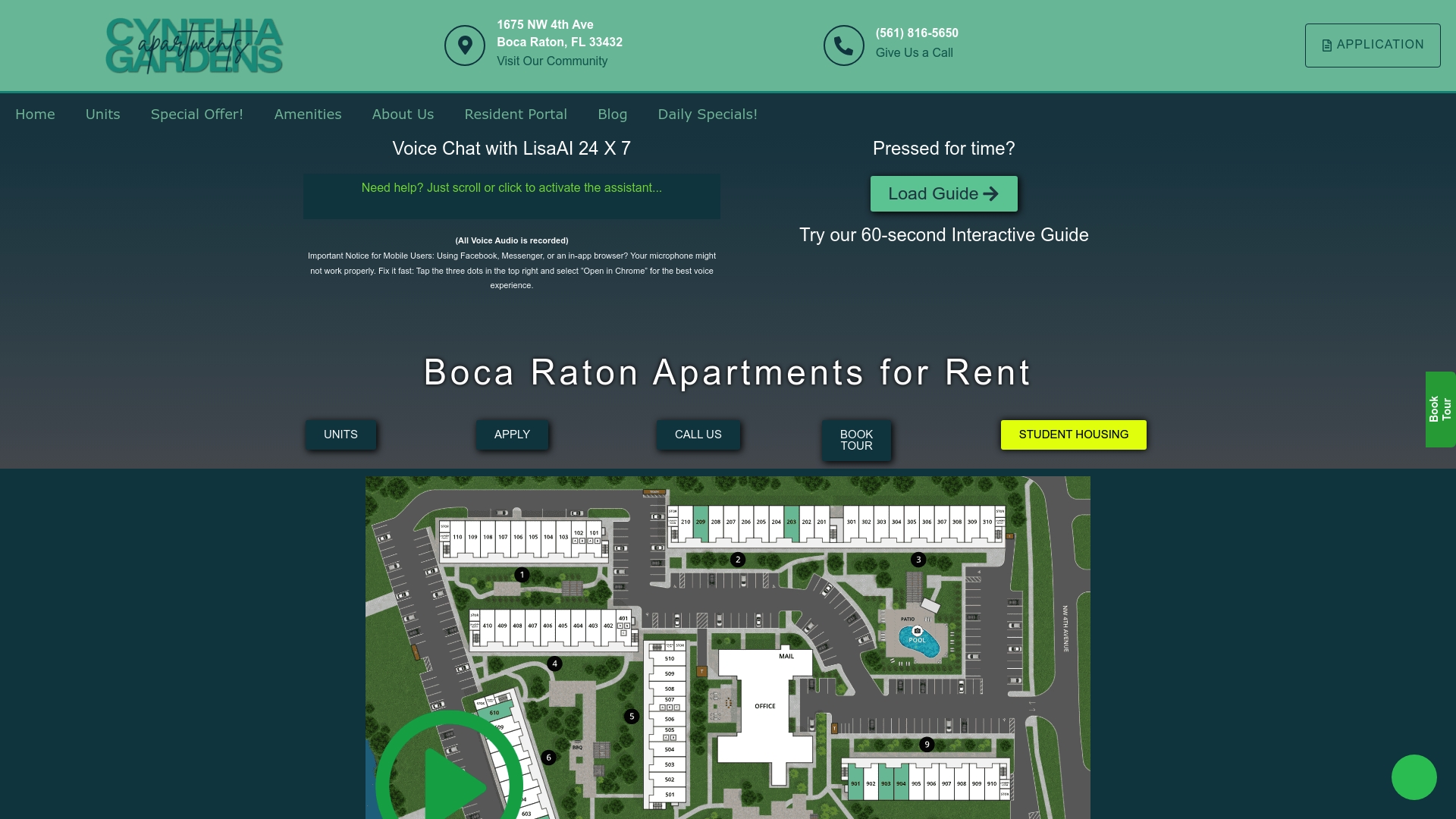
The community offers well-maintained one-bedroom apartments with a leasing workflow designed for young professionals, students, and pet owners who want answers fast. Virtual tours, AI chat support, and an interactive property map let you evaluate the unit before you commit to anything. Cynthiagardens publishes its fees upfront so you know exactly what you are paying and why. Browse apartment styles and features to find the right fit without guessing at costs.
FAQ
What is the purpose of a rental application fee?
A rental application fee covers the cost of screening a prospective tenant, including credit checks, criminal background checks, and income verification. Landlords charge the fee to offset third-party vendor costs incurred at the time of application.
Are rental application fees refundable?
Application fees are almost always non-refundable because screening costs begin immediately when the fee is paid, even if the application is denied or withdrawn.
What states cap or ban rental application fees?
New York caps fees at $20, Virginia at $50, and Vermont bans them entirely. California prohibits fees that exceed actual screening costs and bars landlords from charging fees when no unit is available.
What is the difference between an application fee and an administrative fee?
An application fee covers pre-approval screening costs. An administrative fee covers post-approval lease setup and processing. Renters should request itemized invoices to confirm they are not being charged for both under different labels.
Can a landlord charge an application fee with no available unit?
In regulated states like California, charging an application fee when no unit is available is prohibited. If this happens, renters may have grounds to file a complaint with their state housing authority.