Table of Contents
- Essential Pet-Friendly Apartment Features Renters Should Prioritize
- On-Site Dog Parks, Pet Wash Stations, and Community Spaces
- Pet-Safe Flooring and Interior Design for Small Apartment Spaces
- Pet-Specific Smart Home Technology for Apartment Renters
- Understanding Breed-Specific Challenges and Rental Restrictions
- Building a Pet Resume for Apartment Rentals
- Critical Apartment Pet Policy Questions to Ask Landlords
- Practical Tips for Renting With Pets Successfully
Last Updated: June 22, 2026
Choosing the best pet friendly apartment features for renters is harder than most people expect. The difference between a genuinely pet-welcoming community and one that merely tolerates animals comes down to a handful of specific features most renters never think to ask about. Below, we’ll walk through exactly what to look for, what questions to ask, and how to set yourself up for a smooth renting experience with your pet in tow.
A common mistake is treating pet-friendly as binary. The gap between "pets allowed" and "built for pets" is enormous, and closing that gap is what this guide is about.
Essential Pet-Friendly Apartment Features Renters Should Prioritize
Pet-friendly housing formally accommodates animals through lease terms, physical design, and community amenities, rather than simply not prohibiting them. A property that allows pets but has no outdoor relief areas, no pet-safe flooring, and aggressive breed restrictions is not genuinely serving pet owners.
Start your search by evaluating two categories simultaneously: physical amenities and policy structure.
Physical Amenities That Matter Most
The physical features that most directly affect daily pet ownership in an apartment include:
- Designated outdoor relief areas with pet waste stations nearby
- Hard-surface or pet-safe flooring throughout living spaces
- On-site pet wash stations to avoid bathing large dogs in your tub
- Secure off-leash areas or fenced dog parks within the community
- Wide hallways and elevator access for larger breeds
Most properties will hit two or three of these. Prioritize based on your pet’s specific needs: a senior cat owner needs different features than someone with an 80-pound Labrador.
Pet Policy and Cost Considerations
Pet policy is where many renters get surprised after signing. Get the full cost picture in writing before committing.
| Cost Type | What to Expect | Notes |
|---|---|---|
| Pet deposit | One-time, refundable fee | Typically covers damage beyond normal wear |
| Pet rent | Monthly recurring charge | Non-refundable, added to base rent |
| Pet fee | One-time, non-refundable | Sometimes charged instead of or alongside deposit |
| Breed surcharge | Added monthly or one-time | Applied to "high-risk" breeds by some insurers |
| Weight limit fee | Varies by property | Larger dogs may pay more |
Pet rent and pet deposits are standard, but amounts vary widely. Always ask whether the pet deposit is refundable and what conditions trigger a deduction.
Signing a lease without confirming the pet policy in writing is one of the most common and costly mistakes renters make. Verbal assurances from leasing agents carry no legal weight if they contradict the written lease.
On-Site Dog Parks, Pet Wash Stations, and Community Spaces
The most visible markers of a genuinely pet-centric community are its shared outdoor spaces. A proper on-site dog park should include separate areas for large and small dogs, durable ground cover that drains well, shade structures, and fresh water access.

Pet wash stations are an underrated amenity that many renters overlook until they’re trying to bathe a muddy 60-pound dog in a standard apartment tub. A dedicated wash station with a raised tub, handheld sprayer, and non-slip surface makes a real difference in day-to-day life.
Pet waste stations throughout the grounds are a baseline expectation. Their placement matters: stations every 50-75 feet along walking paths signals a community that actually thinks about how pet owners use the space.
According to the American Pet Products Association’s pet ownership data, the majority of U.S. households own at least one pet, which explains why pet amenities have become a competitive differentiator for property managers.
Pet-Safe Flooring and Interior Design for Small Apartment Spaces
Interior design choices are just as important as building amenities for successful pet-friendly living.
Vinyl Flooring and Pet-Proof Materials
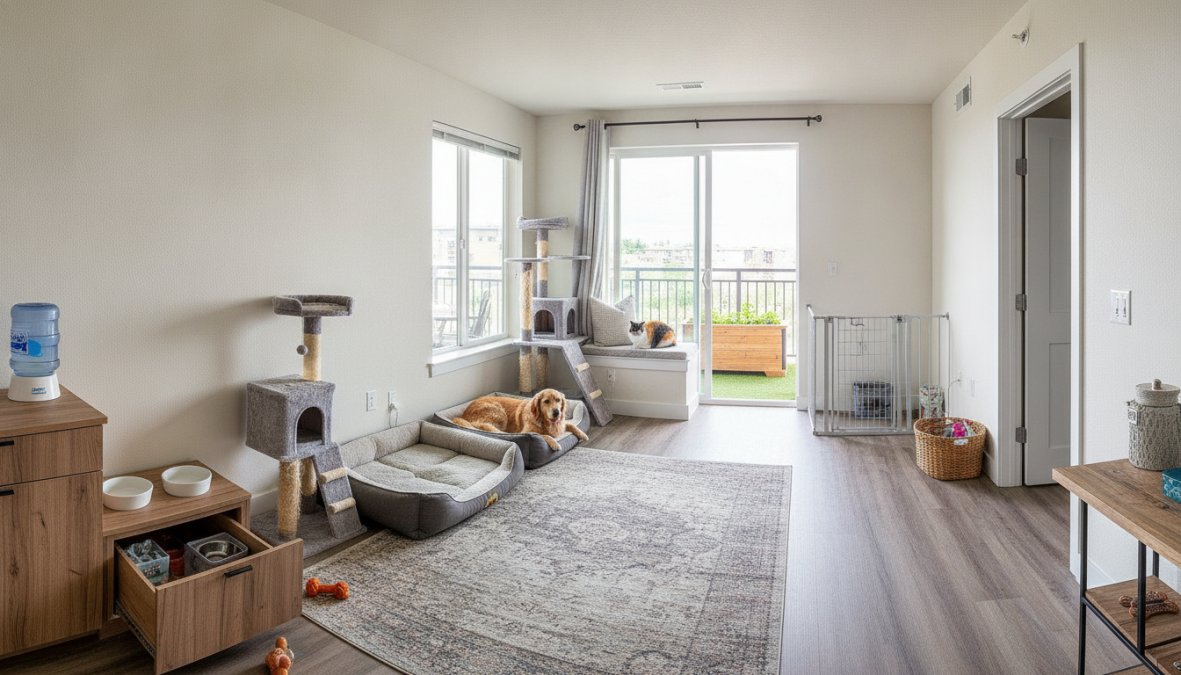
Pet-safe flooring is any hard-surface or treated material that resists scratching, moisture damage, and odor absorption from pet accidents. Luxury vinyl plank (LVP) is the current standard: it’s scratch-resistant, waterproof, and significantly more comfortable underfoot than ceramic tile.
Many newer Boca Raton apartment communities are installing LVP as standard. If your unit has carpet, Ruggable’s washable rug system (starting around $89) uses a two-piece design where the top layer detaches and goes directly into a standard washing machine. This protects the underlying flooring and preserves your security deposit.
Furniture and Decor Hacks for Pet-Friendly Living
Small apartments require intentional design to accommodate both pets and people without chaos.
The Fable Pets Crate (around $395) functions as a side table while serving as a crate, eliminating the visual clutter of a wire cage. For cat owners, the Hooluxe wall-mountable sisal scratcher ($45) redirects scratching behavior away from furniture and walls without taking up floor space.
Place a Ruggable washable rug under your pet’s food and water bowls. It catches spills before they reach the floor and takes about 10 minutes to wash. This single habit prevents a surprising amount of flooring damage over a year-long lease.
Pet-Specific Smart Home Technology for Apartment Renters
Smart pet technology solves real problems: separation anxiety, noise complaints from barking, and the general anxiety of leaving a pet alone in a small space.
Smart Cameras and Remote Monitoring
The Furbo 360-degree dog camera ($149) and the Petcube Bites 2 Lite ($129) are the two most practical options for apartment renters. Both offer two-way audio and treat dispensing via a mobile app. The Furbo’s 360-degree rotating view gives full room coverage in open-plan studios. The Petcube is more compact and wall-mountable, making it better for renters who need to minimize counter footprint.
Behavioral Support Technology
The Kong Classic rubber chew ($10) stuffed with kibble or peanut butter keeps a dog occupied silently, which matters enormously in apartment buildings where noise complaints can jeopardize your lease. For cats, the Feliway pheromone diffuser ($25, with monthly refills) reduces stress-related behaviors like scratching and spraying. It covers up to 700 square feet, sufficient for most one-bedroom apartments.
Understanding Breed-Specific Challenges and Rental Restrictions
Breed restrictions originate from property insurance policies rather than landlord preference. Insurance carriers classify certain breeds as higher liability risks, and property owners pass those restrictions down to tenants. Commonly restricted breeds include American Pit Bull Terriers, Rottweilers, Doberman Pinschers, Chow Chows, and Akitas.
If you own a restricted breed, ask about the specific policy before touring. Some properties enforce restrictions strictly; others evaluate dogs individually based on temperament documentation. Bringing a behavioral assessment or Canine Good Citizen certification from the American Kennel Club can shift a conversation that might otherwise end in rejection.
Weight limits present a separate challenge. A 50-pound weight limit eliminates a large portion of popular breeds. Always confirm whether the weight limit applies at adoption or at full adult weight.
Never misrepresent your pet’s breed or weight on a rental application. If discovered, it constitutes lease fraud and can result in immediate eviction.
Building a Pet Resume for Apartment Rentals
A pet resume is a one-page document that presents your pet’s history, behavior, and health records to a prospective landlord. This is one of the most effective tools available to renters with pets.
A strong pet resume includes:
- Pet’s name, breed, age, and weight
- Current vaccination records (rabies, distemper, bordetella)
- Spay/neuter status
- Veterinarian contact information
- Training certifications or completed obedience courses
- References from previous landlords or neighbors
- A brief behavioral description
- A recent photo
Keep the document to one page and format it cleanly. A professional presentation stands out.
Critical Apartment Pet Policy Questions to Ask Landlords
These are the questions that actually matter:
- Is the pet deposit refundable, and under what conditions is it withheld?
- What is the monthly pet rent, and does it increase at lease renewal?
- Are there breed or weight restrictions, and how are they enforced?
- What is the process for adding a second pet after move-in?
- Are there designated pet relief areas, and who maintains them?
- What is the policy if a neighbor files a noise complaint about my pet?
- Does the community carry pet liability insurance, or am I responsible for all damage claims?
- Are there restrictions on pet access to amenities like the pool area or clubhouse?
Question seven is critical. In Boca Raton and throughout Florida, liability for pet-related injuries can fall on the tenant if the lease does not specify otherwise.
Practical Tips for Renting With Pets Successfully
Document the unit’s condition at move-in with dated photographs and video, paying special attention to flooring, baseboards, and door frames. Communicate proactively with property management. If your dog has a barking episode, a brief note to the leasing office acknowledging it and describing what you’re doing to address it goes a long way.
Proactive damage prevention means addressing problems before they become lease violations. Use door frame protectors if your dog scratches at exits. Apply furniture covers to upholstered pieces. Run a Feliway diffuser during the first few weeks in a new unit to reduce cat stress-related marking.
Pet-Friendly Neighborhood Walkability and Location
Walkability scores directly affect quality of life for dog owners. A community with a Walk Score above 70 means daily errands and dog walks can happen without a car. Boca Raton offers genuine walkability advantages for pet owners near FAU and the beach corridor.
When evaluating a specific address, check Walk Score’s neighborhood walkability ratings to get an objective measure of how pedestrian-friendly the area is. A tired dog is a well-behaved dog.
The best pet friendly apartment features for renters combine on-site amenities, clear policy terms, and a walkable location. No single feature compensates for a restrictive or ambiguous pet policy, so always read the lease addendum in full before signing.
Finding pet-friendly housing that genuinely works for both you and your animal requires more than checking a "pets allowed" box. Cynthia Gardens offers lush, landscaped outdoor spaces and a serene garden-style community in Boca Raton, FL, providing the kind of private, well-maintained environment where both residents and their pets can settle comfortably. Schedule a tour today and see firsthand how the grounds, the location near FAU and the beach, and the maintenance-free living experience come together for a genuinely effortless Florida lifestyle.
Frequently Asked Questions
What are the most important pet-friendly apartment features renters should look for?
The best pet-friendly apartment features include dedicated on-site dog parks or pet play areas, pet wash stations, pet-safe flooring (like vinyl), clear pet policies with reasonable weight limits, and proximity to pet-friendly neighborhoods. Additionally, look for amenities like pet concierge services, pet-centric community events, and modern conveniences such as smart pet cameras for monitoring. Properties near walking trails or parks add significant value for active pet owners.
How should I prepare a pet resume for apartment rentals?
A pet resume for apartment rentals should include your pet's vaccination records, microchip information, training certifications, and references from previous landlords or veterinarians. Include behavioral assessments, proof of liability insurance if available, and photos demonstrating your pet's well-behaved nature. This documentation helps landlords feel confident about approving your application and can sometimes offset higher pet deposits or monthly pet rent fees.
What apartment pet policy questions should I ask before renting?
Essential apartment pet policy questions to ask include: What are the weight limits and breed restrictions? What pet deposits and monthly pet rent fees apply? Are there pet-free areas or common spaces? What is the policy on pet damage and repairs? Are there breed-specific restrictions? Is pet liability insurance required? Are there designated pet relief areas? Understanding these details prevents surprises and helps you budget accurately for pet-friendly living.
What tips for renting with pets can help me succeed as a tenant?
Key tips for renting with pets include: maintain excellent documentation of your pet's behavior and health, invest in pet-proof flooring protectors like washable rugs, use furniture-grade pet crates to save space, leverage smart home technology like pet cameras for monitoring, and respect community pet policies strictly. Choose pet-friendly neighborhoods with good walkability scores, keep your pet socialized and well-trained, and communicate proactively with your landlord about any pet-related concerns to maintain a positive relationship.