TL;DR:
- Pet-proofing an apartment involves securing hazards, controlling toxins, and using reversible modifications to protect your cat and safeguard your deposit. Conducting a thorough floor-level inspection and documenting conditions before your cat arrives helps prevent deposit disputes and ensures safety. Renter-safe solutions like adhesive latches, tension gates, and enzyme cleaners provide effective protection without damaging the property.
Pet-proofing an apartment means proactively securing hazards and making renter-appropriate modifications to keep your cat safe and your home intact. The process goes well beyond hiding a few cords. It covers toxic substance control, physical barriers, behavioral management, and deposit-safe fixes that you can reverse when you move out. Knowing how to pet-proof an apartment before your cat arrives is the difference between a smooth tenancy and an expensive security deposit dispute. Tools like childproof cabinet latches, cord covers, enzyme-based cleaners, and tension-mounted gates are the core of any solid pet safety plan for renters.
How to pet-proof an apartment: start with a room-by-room sweep
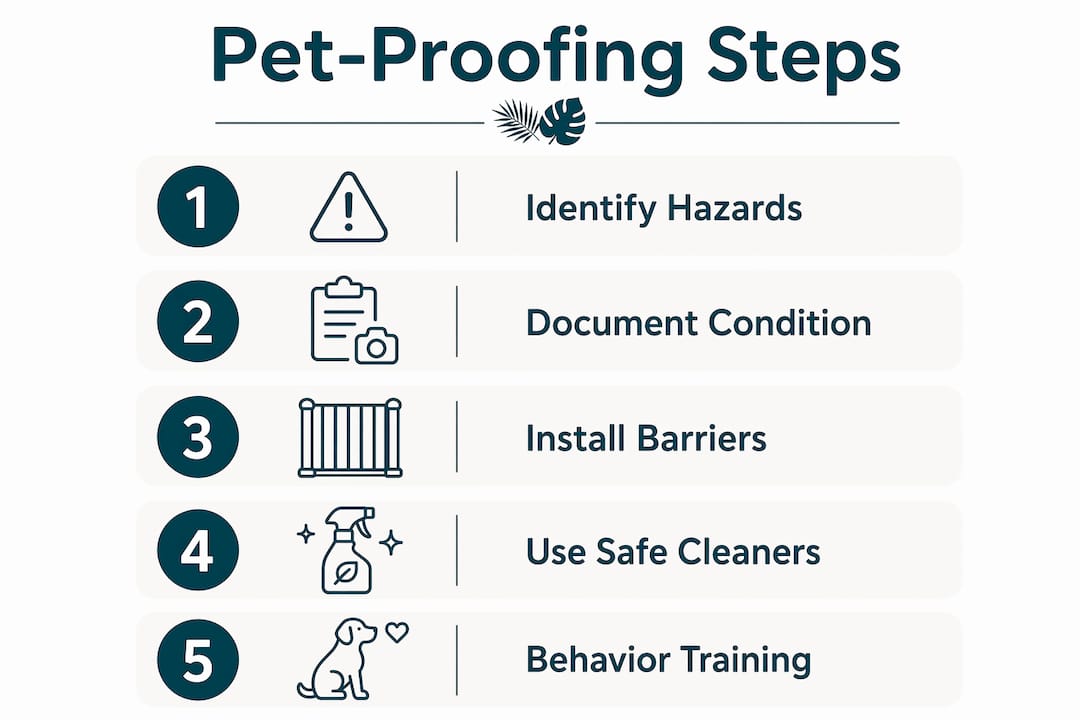
The most effective first step in apartment pet safety is a floor-level inspection of every room. A room-by-room sweep at cat eye level reveals hidden hazards like loose cords, small chewable objects, and tight gaps that are completely invisible from standing height. Get down on your hands and knees and move through each room slowly. What you see from that vantage point is exactly what your cat sees and reaches.
Work through the apartment in this order:
- Kitchen: Check under the stove and refrigerator for gaps, loose wires, and small fallen objects. Look for accessible trash bins, low cabinet doors with cleaners inside, and dangling appliance cords.
- Bathroom: Identify open toilet lids, accessible medications, and any string or dental floss left on counters. Cats are drawn to small, stringy items.
- Living room: Scan for TV and lamp cords running along the floor, small decorative objects on low shelves, and any gaps behind furniture where a cat could get stuck.
- Bedroom: Check for loose charging cables, hair ties, rubber bands, and any low storage areas with accessible contents.
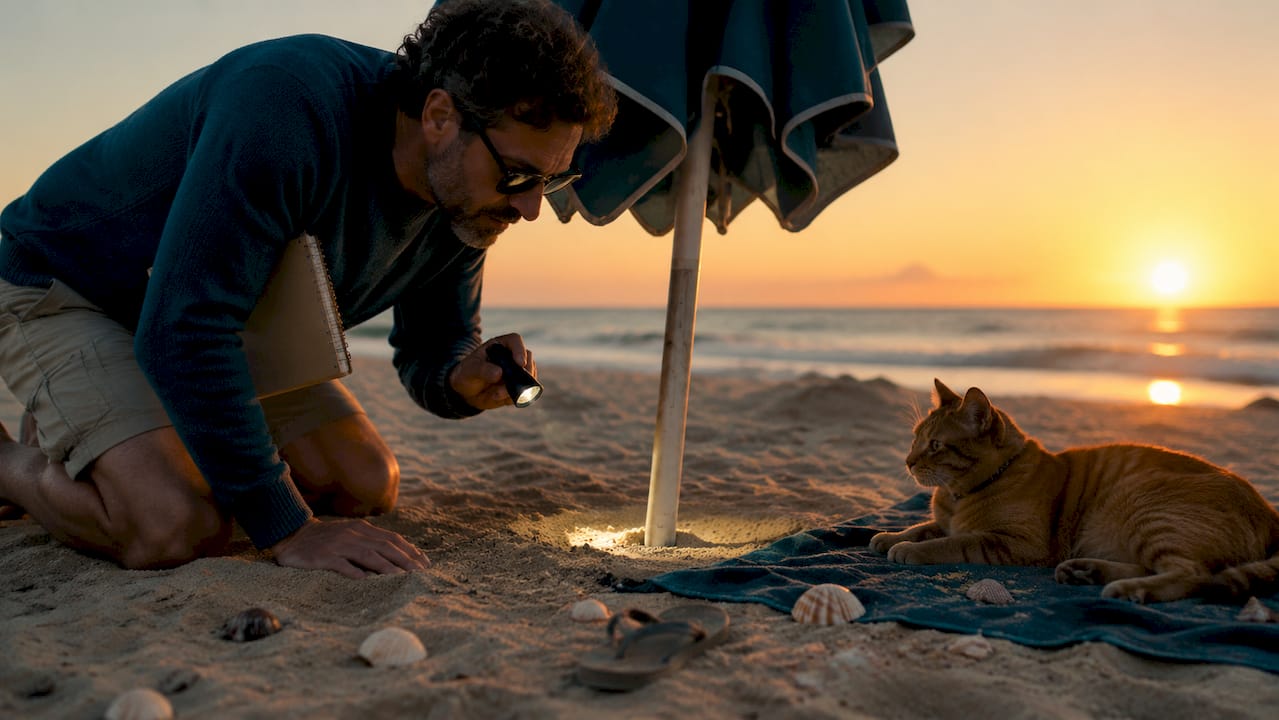
Use a flashlight to check dark corners and under furniture. Take timestamped photos of every room before your cat moves in. This photo walkthrough is your primary defense if a landlord later disputes pre-existing damage.
Pro Tip: Bring a small notepad and mark every hazard you find with a sticky note before you fix anything. This gives you a complete list and prevents you from missing a spot.
What are the safest renter-friendly ways to secure hazards?
Renters face a specific constraint: fixes must be reversible. Drilling holes or installing permanent hardware risks your security deposit. The good news is that renter-safe, non-permanent solutions like tension-mounted gates and adhesive cabinet latches work just as well as permanent ones for most cat hazards.
Here are the core fixes every renter should apply:
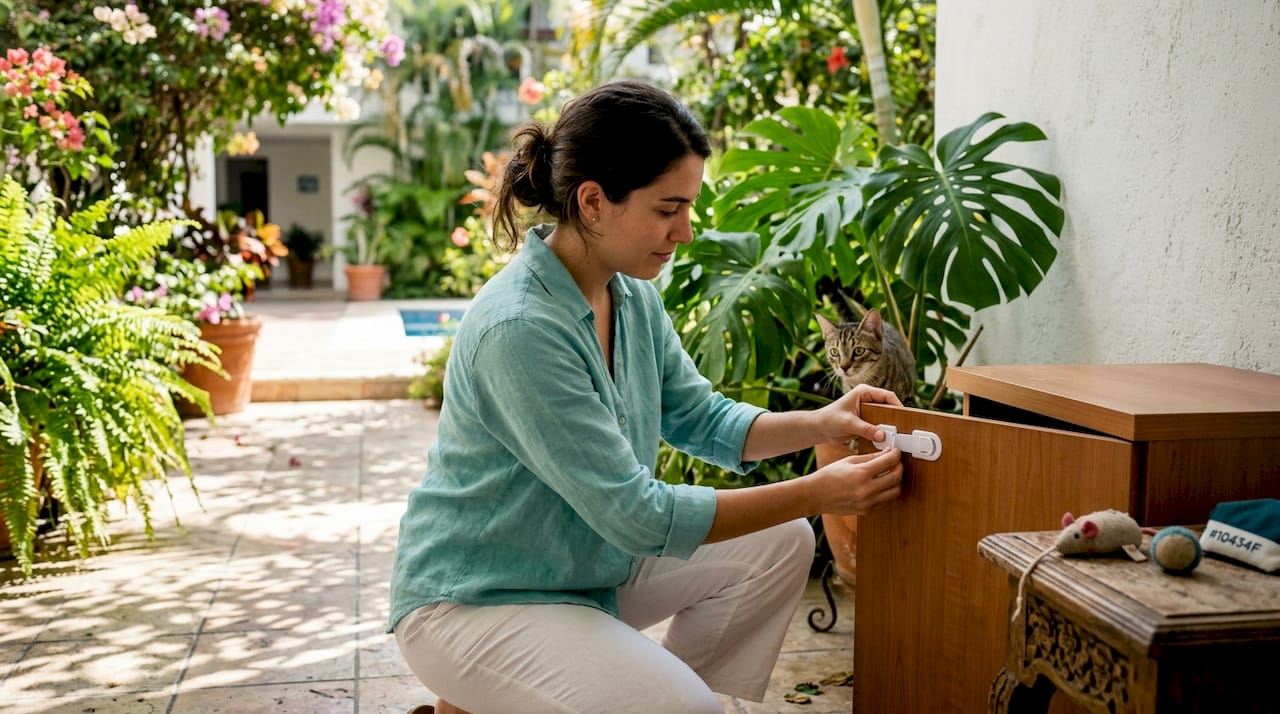
- Cabinet latches: Use adhesive or magnetic childproof latches on kitchen and bathroom cabinets. Locking up toxic substances like cleaning products and medications is the single highest-priority step in securing an apartment for pets.
- Cord management: Route electrical cords behind furniture or along baseboards using adhesive cord clips. Electrical cords and string-like items pose electrocution and ingestion risks for cats. Most feline surgeries involve swallowed cords, dental floss, yarn, or small objects.
- Tension-mounted gates: Block off laundry areas, balcony doors, or any room you want off-limits. These install without screws and remove cleanly.
- Trash bin security: Replace open bins with locking or weighted-lid versions. A cat that gets into the trash can ingest bones, wrappers, or toxic food scraps.
- Plant removal or relocation: Move all houseplants to surfaces your cat cannot reach, or remove them entirely if they are toxic species.
Document the apartment condition before your cat arrives. Photo walkthroughs protect renters from deposit disputes by establishing a clear baseline of pre-existing wear.
| Hazard | Renter-Safe Fix | Reversible? |
|---|---|---|
| Low cabinets with cleaners | Adhesive childproof latches | Yes |
| Floor-level cords | Cord clips and furniture routing | Yes |
| Restricted rooms | Tension-mounted gates | Yes |
| Open trash bins | Locking lid bins | Yes |
| Toxic plants | Relocate or remove | Yes |
Pro Tip: Take a short video walkthrough of every room before your cat arrives, not just photos. Video timestamps are harder to dispute and capture details that still images miss.
Which household substances are most dangerous to cats?
Toxic exposure is the leading cause of preventable cat emergencies in apartments. The ASPCA classifies many popular houseplants as toxic to cats, and immediate treatment is critical if exposure occurs. Lilies are the most dangerous. Even small amounts of Easter lily, tiger lily, or daylily can cause acute kidney failure in cats.
Beyond plants, the most common toxic hazards in a typical apartment include:
- Cleaning products: Bleach, ammonia-based sprays, and disinfectant wipes are all toxic if ingested or walked through and then licked off paws.
- Medications: Ibuprofen, acetaminophen, and antidepressants are among the most common causes of cat poisoning. Store all medications in a closed cabinet, not on a counter.
- Small objects: Hair ties, rubber bands, twist ties, and bottle caps are all ingestion risks. Cats chew and swallow objects out of curiosity and boredom.
- Food items: Onions, garlic, grapes, raisins, and xylitol (found in sugar-free gum) are toxic to cats.
The Cat Fanciers’ Association makes the point clearly: access control beats deterrents every time. Blocking or removing a hazard is always more reliable than sprays, noise makers, or hoping your cat ignores something dangerous.
For cleaning up accidents, skip standard floor cleaners. Enzyme-based cleaners break down odor-causing compounds in urine and feces at a molecular level. Standard cleaners mask the smell for humans but leave enough trace for a cat to return to the same spot. Products like Nature’s Miracle and Rocco and Roxie are widely available and safe for use around pets once dry.
How do you set up a litter box area that minimizes mess?
Litter management is one of the most overlooked parts of making an apartment pet-friendly. A poorly placed or poorly maintained litter box creates odor, scatter, and hygiene problems that compound quickly in a smaller space. Covered or top-entry litter boxes significantly reduce litter scatter and odor spread compared to open trays. Top-entry designs in particular force cats to jump in and out, which shakes loose litter back into the box rather than onto your floor.
Apply these setup practices to keep the area clean:
- Choose a heavier pellet litter rather than fine-grain clay. Pellets are harder to track and easier to spot-clean.
- Place a textured mat directly outside the box to catch litter from your cat’s paws before it spreads.
- Keep a small dustpan and brush next to the box. Catching stray litter immediately prevents it from spreading through the apartment.
- Use washable mats and rugs in both the litter area and the feeding area. These go straight into the washing machine and prevent odor buildup on floors.
- Clean food and water bowls daily. Bacteria in standing water or old food can cause digestive issues that lead to more accidents.
Pro Tip: Place the litter box in a bathroom or laundry closet if space allows. Ventilation is better, cleanup is easier, and the hard floor makes stray litter simple to sweep.
Does cat behavior training actually reduce apartment damage?
Physical barriers handle most risks, but behavior management closes the gaps that barriers cannot cover. Training a cat with commands like “leave it” and “stay” reduces the chance of hazardous ingestion when something new appears in the apartment. These commands take consistent repetition over days or weeks, but they work. Clicker training with small treat rewards is the most effective method for cats.
Scratching is the most common source of apartment damage from cats. Providing dedicated scratching posts near furniture your cat already targets redirects the behavior without punishment. Cats scratch to mark territory and maintain their claws, so the behavior itself is not a problem. The location is. Place sisal or cardboard scratching posts next to sofas and chair legs, and your cat will use them instead.
Environmental enrichment also reduces risky behavior. A bored cat is more likely to chew cords, knock objects off shelves, and push into restricted areas. Window perches, puzzle feeders, and rotating toys keep cats mentally occupied. A cat that is tired from play is a cat that is not testing your cord management.
For balcony access, use a tension-mounted gate or a purpose-built cat enclosure called a “catio” that attaches to a window or door frame. These give your cat outdoor stimulation without the fall risk. Check your lease before installing any attachment to a door frame, and use adhesive mounting options where possible to stay deposit-safe. You can find more renter-safe pet strategies that cover both safety and lease compliance.
Key takeaways
Securing an apartment for a cat requires layered protection: physical barriers, toxic substance control, and behavioral management working together.
| Point | Details |
|---|---|
| Start at floor level | Conduct a hands-and-knees sweep to find hazards your cat can actually reach. |
| Use renter-safe fixes | Adhesive latches and tension-mounted gates protect your deposit while blocking real dangers. |
| Remove toxic plants and substances | Lilies, cleaning products, and medications are the top poisoning risks for indoor cats. |
| Manage litter proactively | Top-entry boxes and pellet litter reduce scatter and odor in small apartments. |
| Document before move-in | Timestamped photos and video protect you from deposit disputes caused by pre-existing damage. |
What i’ve learned after years of renting with cats
Most pet-proofing guides treat cats like small dogs. They don’t. A dog knocks things over. A cat climbs, squeezes, and chews with surgical precision. The first time I watched my cat pull a charging cable off a desk by the cord and carry it under the bed, I realized that cord management was not optional. It was urgent.
The biggest mistake I see renters make is treating pet-proofing as a one-time setup. Cats adapt. They find new routes, new objects, and new ways to reach things you thought were secure. I do a quick sweep every time I rearrange furniture or bring something new into the apartment. It takes five minutes and has saved me from at least two vet visits.
The photo documentation step is the one most renters skip, and it is the one that matters most when you move out. I have seen renters lose significant portions of their deposits over scratches and stains that existed before their cat arrived. A two-minute video walkthrough on move-in day is the cheapest insurance you can buy.
One more thing: choose your cleaning products carefully. I switched to enzyme-based cleaners like Nature’s Miracle after my cat kept returning to the same corner of the living room. Standard cleaners were not eliminating the odor signal. The enzyme cleaner solved it in one application. That single change made a bigger difference to apartment hygiene than any physical barrier I installed. If you are still searching for the right place to bring your cat, the pet owner apartment checklist is worth reviewing before you sign a lease.
— Ayman
Find a pet-friendly apartment that works for you and your cat
Cynthiagardens offers pet-friendly apartments in Boca Raton designed with cat owners in mind. The community features durable flooring, transparent pet policies with no hidden fees, and a tech-forward leasing experience that includes virtual tours and AI chat support so you can evaluate the space before you visit.

If you are looking for a one-bedroom apartment where your cat is genuinely welcome, not just tolerated, Cynthiagardens makes the process straightforward. Explore available apartment styles and features to find the layout that fits your lifestyle and your pet’s needs. No surprises, no buried clauses, just a clean and comfortable home for both of you.
FAQ
What does pet-proofing an apartment actually mean?
Pet-proofing means identifying and securing hazards in your rental to protect your cat from injury and prevent property damage. It covers toxic substances, physical barriers, cord management, and renter-safe modifications.
How do i protect my security deposit when renting with a cat?
Take timestamped photos and a video walkthrough of every room before your cat arrives. Photo documentation is the primary defense against deposit disputes over damage that existed before your tenancy.
Which plants are toxic to cats in an apartment?
Lilies are the most dangerous, with even small exposures causing kidney failure. The ASPCA also classifies pothos, sago palm, and peace lily as toxic. Remove or relocate all houseplants to surfaces your cat cannot reach.
Are tension-mounted gates effective for blocking off rooms?
Yes. Tension-mounted gates install without screws, hold firmly in doorways, and remove without leaving marks. They are the standard renter-safe solution for restricting a cat’s access to specific areas.
What cleaner removes cat urine odor from apartment floors?
Enzyme-based cleaners like Nature’s Miracle or Rocco and Roxie are the most effective option. Standard cleaners do not break down odor-causing compounds, which causes cats to return to the same spot repeatedly.