Cynthia Gardens is a residential apartment community in Boca Raton, Florida, offering quiet, garden-style living near Florida Atlantic University, Mizner Park, and Boca Raton’s beaches at 1675 NW 4th Ave, Boca Raton, FL 33432.
Table of Contents
- How to Choose a Safe Apartment Complex: Start With the Right Framework
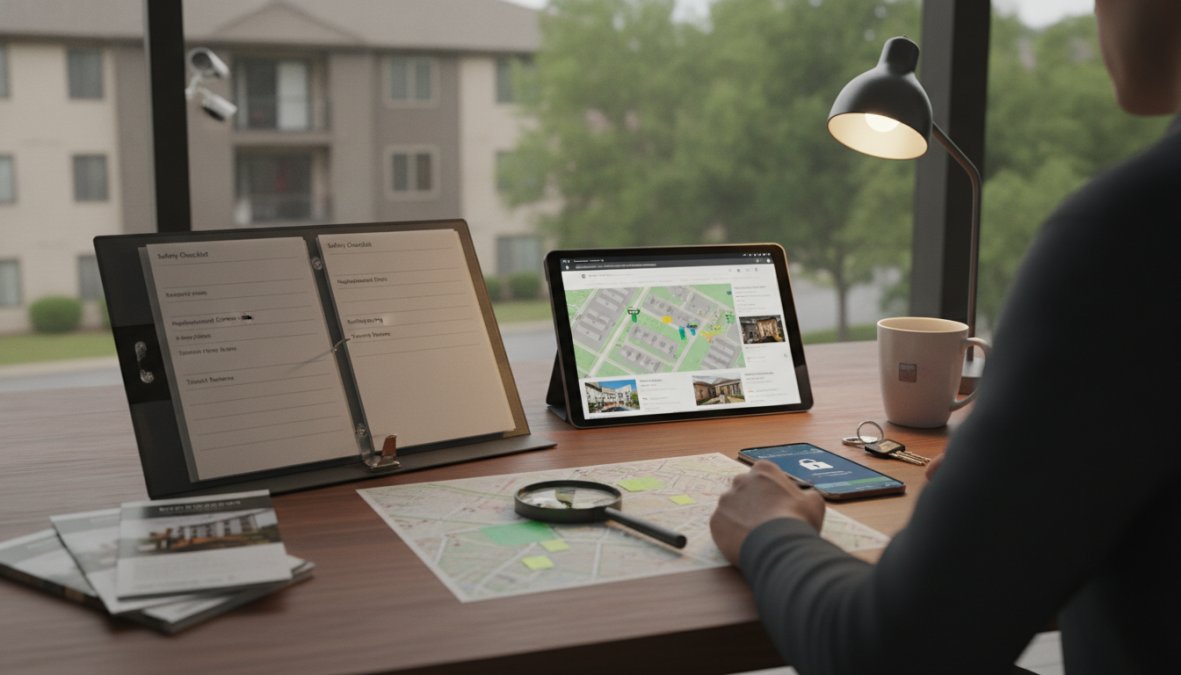
- How to Research Crime Rates for Apartments Before You Sign
- Location and Neighborhood Safety Assessment
- Building Access, Security Systems, and Physical Safeguards
- Questions to Ask When Touring an Apartment for Safety
- Your Apartment Safety Checklist: What to Inspect Unit by Unit
- Budgeting, Lease Terms, and Amenities: How They Affect Your Safety Decision
- How to Choose a Safe Apartment Complex in Boca Raton, FL
Last Updated: June 11, 2026
How to Choose a Safe Apartment Complex: Start With the Right Framework
Knowing how to choose safe apartment complex options is harder than most rental guides admit, and the stakes are higher than picking the right floor plan. This guide from Cynthia Gardens breaks down exactly what to look for, what to verify independently, and what most apartment hunters overlook, including physical security, neighborhood data, lease terms, and digital privacy considerations that virtually no mainstream guide touches.
Most guides treat safety as a checklist item rather than a layered evaluation. A building can have cameras at every entrance and still be a poor choice if the neighborhood has unaddressed crime patterns, management is unresponsive, or the lease leaves you exposed. Safety is a system, not a feature.
A safe apartment complex is one where physical security infrastructure, responsive property management, documented maintenance history, and a low-crime surrounding neighborhood all align to protect residents consistently.
Start with this three-layer framework before you tour a single unit:
- Macro layer: Neighborhood crime rate, walkability, proximity to emergency services
- Building layer: Controlled building access, surveillance systems, lighting, parking security
- Unit layer: Deadbolt quality, peephole, window locks, emergency exits
Work outward to inward. A great unit inside a poorly managed building in a high-crime area is still a poor choice.
How to Research Crime Rates for Apartments Before You Sign
Crime data verification is the step most renters skip because it feels complicated. It isn’t. The information is publicly available, free, and takes under an hour to gather properly. Never rely on what a leasing agent tells you about neighborhood safety, verify it yourself using primary sources.
Free Crime Data Verification Tools Worth Bookmarking
According to NeighborhoodScout’s crime mapping methodology, crime statistics at the neighborhood level are far more predictive of resident safety than city-wide averages, which can mask hyperlocal patterns.
The most reliable free resources include:
- SpotCrime and CrimeMapping.com: Aggregate police department data geographically, showing incident type, date, and proximity to any address
- Local police department crime dashboards: Many Florida counties publish monthly reports by district; Boca Raton‘s police department maintains public-facing data
- The FBI’s Uniform Crime Reporting (UCR) database: Best for regional context and comparing cities
- Google Street View time-lapse: Shows how a neighborhood has changed over several years, revealing trajectory
Look at trends, not snapshots. A neighborhood with declining incidents over 18 months is safer than one with a low current count that’s trending upward.
Why Nighttime Site Visits Change Everything
A daytime tour will look presentable. Nighttime tells a completely different story. Visit the property between 9 PM and 11 PM on a weekday and check whether parking areas and walkways are well-lit, whether the access gate is actually closed or propped open, and whether residents appear comfortable walking to their cars alone.
Residents who later report feeling unsafe almost universally describe nighttime conditions a daytime tour would never have revealed.
Never rely solely on daytime tours. Parking garage lighting failures, broken gate mechanisms, and poor exterior lighting are invisible at noon but become serious safety concerns after dark. One nighttime visit can reveal what months of daytime inspections miss.
Location and Neighborhood Safety Assessment
The address is the first safety decision. Everything else is secondary to it. Neighborhood safety assessment goes beyond crime statistics, it includes walkability, proximity to emergency services, and community engagement, which is a documented deterrent to opportunistic crime.
Walkability, Public Transportation, and Commute Time
According to Walk Score’s research on walkability and neighborhood safety, areas with higher pedestrian activity tend to have more natural surveillance, reducing the likelihood of property crimes.
Assess these factors for any apartment you’re seriously considering:
- Walk Score above 70: Correlates with street activity and natural visibility
- Bus and transit proximity: Reduces reliance on parking structures late at night, which are statistically higher-risk environments
- Commute time under 30 minutes: Reduces the tendency to take shortcuts through less safe routes at night
- Proximity to emergency services: Response times vary significantly across Boca Raton neighborhoods
For apartments near FAU or the Boca Raton beach corridor, public transportation options are generally stronger than in outlying areas, but verify specific routes rather than assuming coverage.
Building Access, Security Systems, and Physical Safeguards
Physical security infrastructure is where property management either demonstrates commitment or cuts corners. The baseline standard for a well-secured building in 2026 includes controlled access at all entry points, security cameras covering parking areas and common spaces, video intercom systems at main entrances, and adequate exterior lighting throughout. A building that meets all four criteria is meaningfully safer than one that meets two.
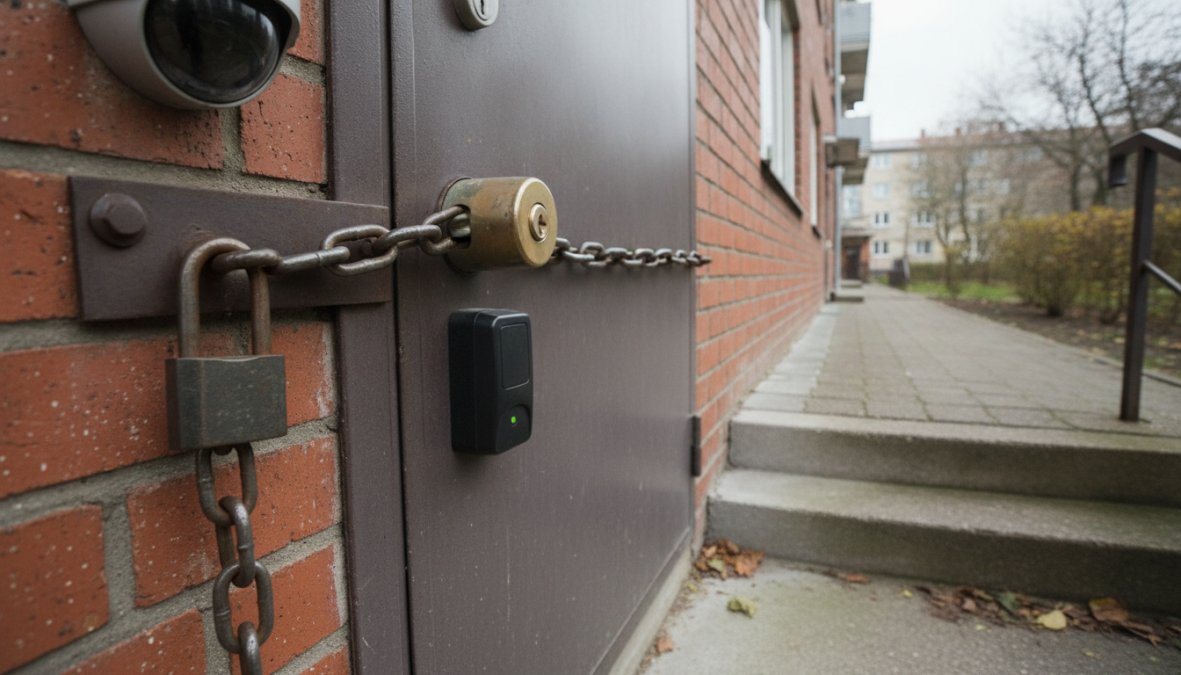
Verify each element directly rather than taking the leasing agent’s word for it. Test the video intercom yourself. Ask to see the parking garage at night via photos or video. Check whether security cameras are operational or decorative.
Key physical safeguards to evaluate:
- Gated community access: Is the gate operational 24/7, or frequently left open?
- Deadbolt quality on unit doors: Ask whether locks have been rekeyed between tenants
- Peephole or door viewer: Should be present on every unit door
- Window locks on ground-floor and accessible units: Often overlooked during tours
- Lighting in stairwells, hallways, and parking areas: Should be consistent, not patchy
Emergency Response, Fire Safety, and Exit Accessibility
A building that meets minimum code is not the same as one that takes emergency preparedness seriously. Check for clearly marked, unobstructed emergency exits on every floor. Ask when the last fire safety inspection was conducted and request documentation, many renters never ask, which means poorly managed buildings rarely face pressure to maintain standards between official inspections.
Sprinkler systems and smoke detectors should be present in every unit and common area. Ask whether carbon monoxide detectors are installed, particularly in buildings with gas appliances.
Digital Security and Privacy Considerations
Most apartment safety guides end at the deadbolt. Digital security is now a legitimate component of residential safety, particularly for professionals who work remotely.
Evaluate these factors before signing a lease:
- Building Wi-Fi networks: Shared or unsecured networks create vulnerability; confirm whether you’ll maintain a private connection
- Smart lock systems: Verify who has access to entry logs and how data is stored
- Package delivery security: Look for secure parcel lockers or a staffed reception area
- Surveillance data retention policies: Ask how long footage is retained and who has access
A management team that handles digital security thoughtfully signals broader operational competence.
Questions to Ask When Touring an Apartment for Safety
Prepare these questions before every tour:
- "How are maintenance requests handled, and what’s the average response time?" Slow maintenance response is a proxy for overall management quality, including security repairs.
- "When were the locks last rekeyed on this unit?" If they can’t answer, that’s your answer.
- "Has there been any criminal activity on the property in the last 12 months?" Know your rights under Florida law before asking.
- "Are security cameras monitored in real time, or recorded only?" The distinction matters for incident response.
- "What is the process for reporting safety concerns to management?" A clear, documented process indicates a responsive team.
- "Is renter’s insurance required, and what does the building’s policy cover?" Gaps here are a common financial vulnerability discovered too late.
- "What is the background check process for new residents?" Communities that screen residents create safer environments for everyone.
Ask question 3 in writing via email after your tour. A verbal answer is unverifiable. A written response creates a documented record and often produces more accurate information.
Your Apartment Safety Checklist: What to Inspect Unit by Unit
Use this checklist during every tour to maintain a consistent evaluation framework across multiple properties.
Entry and Access
- Deadbolt present and functional on front door
- Peephole installed at eye level
- Door frame is solid, not hollow or damaged
- Building entrance requires key fob, code, or video intercom to access
Windows and Balconies
- All windows have functional locks
- Ground-floor windows have secondary security measures (pins or bars)
- Balcony sliding door has a secondary lock or security bar
Interior Safety
- Smoke detector present and tested
- Carbon monoxide detector present (especially with gas appliances)
- Emergency exit route is clearly marked and accessible
- No evidence of water damage or mold (structural integrity signal)
Parking and Exterior
- Parking area is well-lit at night (verify via photos or evening visit)
- Assigned parking is in a visible, monitored area
- No evidence of vandalism or property damage in common areas
Management and Community
- Maintenance history is available on request
- Resident feedback online (Google reviews, Yelp) reflects responsive management
- Community feels occupied and maintained, not neglected
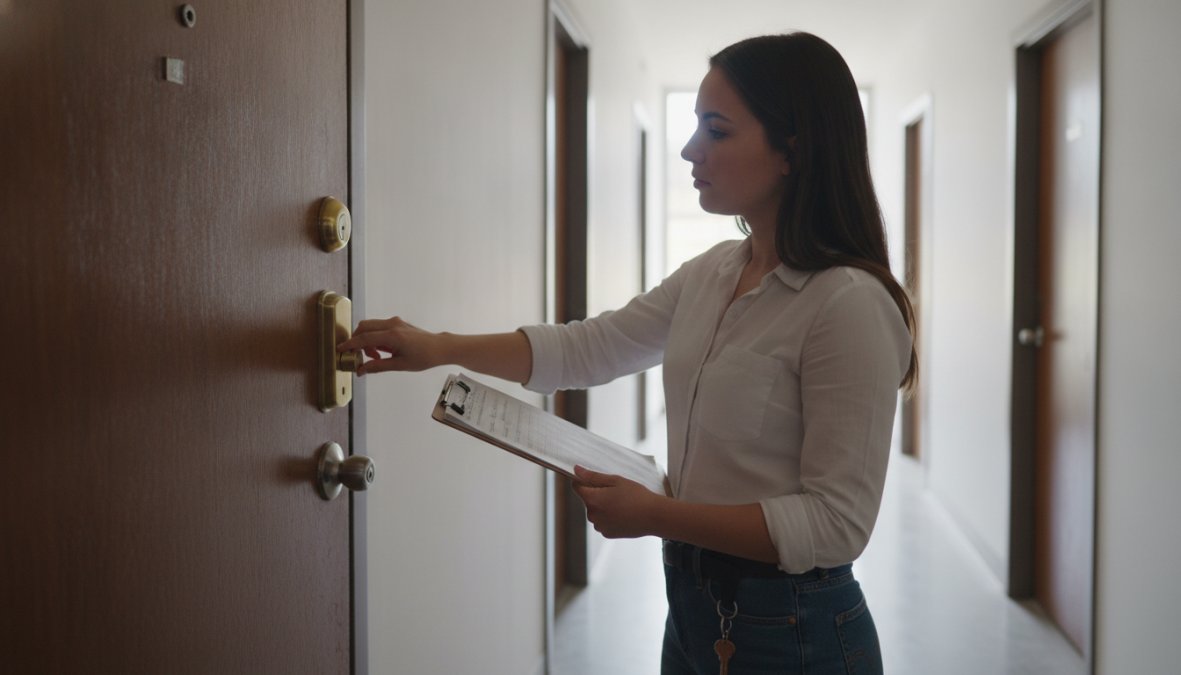
The most predictive safety signal during a tour isn’t any single feature. It’s the overall maintenance standard of the property. A well-maintained building indicates a management team that responds to problems before they become crises.
Budgeting, Lease Terms, and Amenities: How They Affect Your Safety Decision
Budget constraints shape safety decisions in ways renters rarely acknowledge. A rent budget set too low for a given market often forces trade-offs on location or building quality with direct safety implications. Determine your maximum rent budget first, then filter neighborhoods by crime rate and walkability before evaluating individual units, not the reverse.
Lease terms also carry safety implications. Review the lease for:
- Early termination conditions: Some leases allow termination without penalty if the unit violates habitability standards
- Maintenance response obligations: Well-structured leases specify timelines for addressing repair requests
- Guest and access policies: Understand who management can authorize to enter your unit and under what circumstances
Amenities affect safety indirectly. Properties that maintain high-quality amenities tend to attract residents who contribute to community engagement, itself a safety factor, and signal that management invests in overall property upkeep.
Parking Availability, Parking Garage Security, and Pet Policies
Renters who can’t find close, well-lit parking resort to less monitored areas, increasing personal safety risk. Verify that assigned parking is covered or well-lit, not a distant overflow lot. According to the National Crime Prevention Council’s guidance on parking safety, parking structures are among the most common locations for vehicle break-ins and personal safety incidents in residential communities. Garages should have security cameras, adequate lighting on every level, and controlled access preventing non-residents from entering.
Pet policies signal management attentiveness in a less obvious way. Buildings that require pet documentation, vaccination records, and registered pet information are generally more attentive to resident accountability across the board.
How to Choose a Safe Apartment Complex in Boca Raton, FL
Boca Raton spans diverse neighborhoods with varying crime profiles, proximity to FAU, beach access, and a range of property management quality levels. Knowing how to choose safe apartment complex options in this specific market requires local context, not just general frameworks.
Neighborhoods closest to Florida Atlantic University tend to have higher foot traffic and more active street life, supporting natural surveillance. Areas near the beach corridor offer walkability but vary significantly in building age and security infrastructure. Older buildings in any Boca Raton neighborhood warrant closer inspection of maintenance history and security system updates.
For professionals and individuals seeking a quiet, well-maintained community near FAU and the beach, Cynthia Gardens offers a garden-style living environment in Boca Raton that reflects the safety and comfort standards this guide describes, maintenance-free living in modern one-bedroom apartments with high-end finishes, a resort-style pool, and lush landscaped grounds designed for both privacy and community engagement.
When evaluating any apartment near me in Boca Raton, apply the full checklist above. Verify crime data using SpotCrime and the Palm Beach County Sheriff’s Office public data tools. Conduct a nighttime visit to assess lighting and access control. Review the lease carefully before signing.
The right apartment in Boca Raton combines a low-crime location, responsive property management, solid physical security infrastructure, and a community environment that makes a place feel genuinely safe, not just technically secure.
For additional guidance, the U.S. Department of Housing and Urban Development’s renter resources provides federal-level guidance on tenant rights and habitability standards applicable across Florida.
Choosing a safe apartment complex requires independent crime data verification, nighttime site visits, a unit-by-unit safety inspection, and careful review of lease terms. Cynthia Gardens in Boca Raton, FL was designed with exactly these priorities in mind, offering maintenance-free living in a private garden-style community with modern one-bedroom apartments, a resort-style pool, and a location minutes from FAU and the beach. Schedule a tour today and see firsthand how a well-managed, thoughtfully designed community changes what safe living actually feels like.
Frequently Asked Questions
How can I check if an apartment complex is safe?
To check if an apartment complex is safe, start by researching local crime rates using free tools like the city's police department crime map, SpotCrime, or NeighborhoodScout. Visit the property at night to assess lighting and foot traffic. Read resident feedback on Google Maps and apartment review sites. During your tour, look for controlled building access, working security cameras, deadbolts, and a well-maintained property, all strong indicators of how seriously management takes resident safety.
What should I look for when touring an apartment for safety?
When touring an apartment, use a safety checklist that covers: functioning deadbolts and peepholes on unit doors, secure building entry with video intercom or keypad access, visible security cameras in hallways and parking areas, well-lit common spaces and stairwells, clearly marked emergency exits, and the overall maintenance condition of the property. Ask the property management team about their background check process for residents and whether renter's insurance is required.
How do I research crime rates in a specific apartment area?
Researching crime rates for apartments involves several steps. Visit your local police department's online crime map and search the address or ZIP code. Use free platforms like SpotCrime, CrimeMapping, or the FBI's Crime Data Explorer for broader trends. Cross-reference with resident reviews mentioning noise levels, break-ins, or security incidents. Also visit the neighborhood at different times of day, especially at night, to observe lighting, foot traffic, and overall activity firsthand.
Are gated apartment complexes actually safer?
Gated communities can deter opportunistic crime by limiting vehicle access, but they are not a guarantee of safety on their own. The effectiveness depends on whether the gate is consistently monitored, how well-maintained the access system is, and whether it's paired with other security measures like surveillance cameras, controlled building access, and adequate lighting. Always combine gated access with your own due diligence, researching crime data and reading resident feedback, rather than relying on gates alone.
What questions should I ask a landlord about building security?
When asking questions during an apartment tour, focus on security specifics: How is building access controlled, keypad, fob, or video intercom? Are security cameras monitored in real time or recorded only? How quickly does maintenance respond to broken locks or lighting? Is there an on-site property management team? Do residents go through a background check? What is the protocol if a security incident occurs? These questions reveal how seriously management prioritizes resident safety and privacy.
Explore more Cynthia Gardens resources: contact the leasing team about community security, floorplans at Cynthia Gardens, News & Apartment Living Resource Center, or apartment rental FAQ.