
TL;DR:
- Pet fees, deposits, and rent differ in legality and impact, especially for assistance animals exempt from fees under the Fair Housing Act. Preparing documentation, understanding local laws, and proposing specific alternatives can help renters negotiate or avoid pet fees effectively. Proper communication, written requests, and consistent documentation are essential for protecting tenant rights and securing fee reductions or waivers.
If you have a pet and you’re apartment hunting, you already know the sting of discovering a $300 non-refundable pet fee on top of monthly pet rent and a separate deposit. Learning how to avoid pet fees renting is not just about saving money. It is about knowing your rights, preparing the right documentation, and having a real conversation with your landlord. This guide covers every angle: legal protections, negotiation tactics, and alternative housing strategies that actually work for renters on a real budget.
Table of Contents
- Key takeaways
- How to avoid pet fees renting: know what you’re being charged
- Preparing before you ask for a fee reduction
- Negotiating or requesting exceptions to pet fees
- Common mistakes and how to escalate when needed
- Alternative ways to rent without pet fees
- My honest take on the pet fee game
- Find a pet-friendly home with no surprises at Cynthiagardens
- FAQ
Key takeaways
| Point | Details |
|---|---|
| Know your fee types | Pet fees, pet rent, and deposits are different charges with different legal implications. |
| Assistance animals are exempt | A properly documented assistance animal cannot be charged pet fees under the Fair Housing Act. |
| Written requests win | Always submit written accommodation or negotiation requests to protect your tenant rights. |
| Research your state laws | Some states cap pet deposits and rent, giving you built-in leverage before you negotiate. |
| Alternatives exist | Smaller landlords and no-fee communities offer real options if negotiation does not work. |
How to avoid pet fees renting: know what you’re being charged
Before you can challenge or negotiate a fee, you need to know exactly what type of charge you are dealing with. Pet-related charges fall into three main categories, and each one plays by different rules.
Pet fees are one-time, non-refundable charges paid at move-in. They typically range from $100 to $500 depending on the property and your pet’s size. You pay them once and never see that money again.
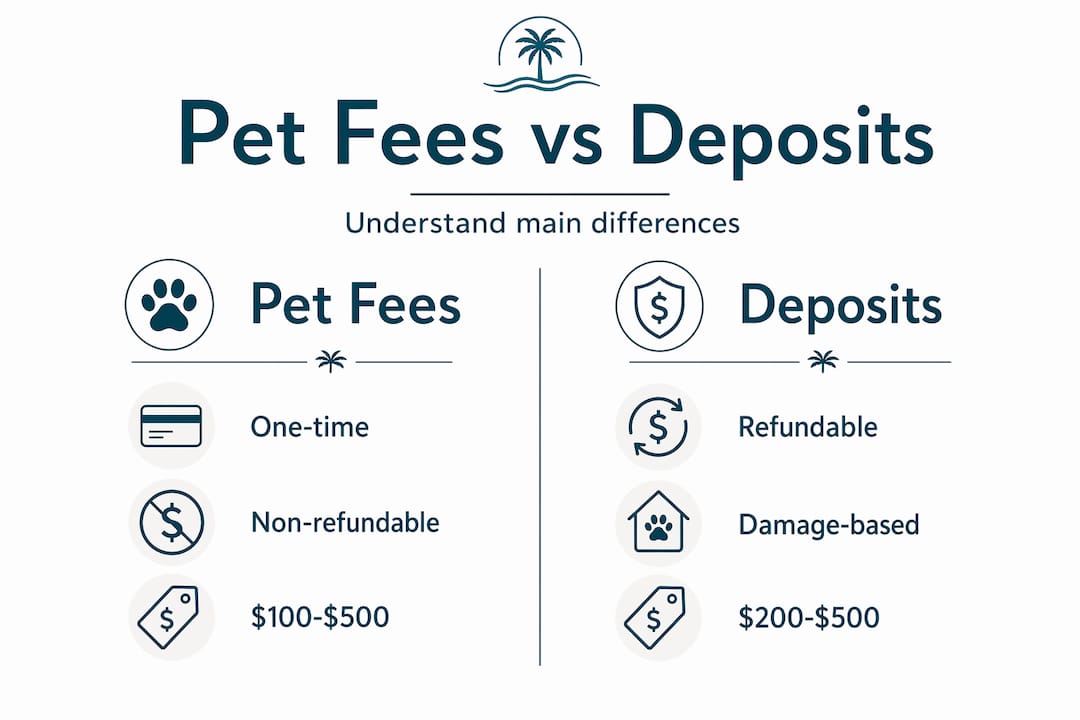
Pet deposits are refundable, meaning you get the money back if your pet causes no damage. These usually run between $200 and $500. The catch is that landlords have discretion over what counts as “damage,” so documentation matters enormously here.
Pet rent is the sneaky one. It is a monthly surcharge added to your base rent, and pet rent ranges from $10 to $60 per month. Over a 12-month lease, that is up to $720 per year for nothing more than having a cat or a small dog.
Here is where the landscape changes significantly for some renters: if your pet is a legally recognized assistance animal, the rules above do not apply to you. Assistance animals are exempt from all pet fees, deposits, and pet rent under the Fair Housing Act. Landlords also cannot charge you extra if actual damage occurs beyond normal wear, but they can charge for real property damage caused by the animal, the same as any tenant damage.
It is worth reviewing your lease closely before signing. Look for:
- Whether the pet fee is labeled “non-refundable” explicitly
- Any monthly pet rent added as a line item separate from base rent
- Language describing the pet deposit as a “security pet deposit” versus a flat fee
- Clauses about breed, weight, or species restrictions
Understanding these distinctions sets you up to challenge fees from the right angle rather than guessing. Check out this breakdown of pet deposit vs pet rent for a deeper comparison specific to Florida renters.
Preparing before you ask for a fee reduction
Most renters skip straight to asking for a waiver without doing the groundwork. That is the single biggest reason negotiations fail. Preparation is where you actually win.
The most powerful thing you can do is determine whether your pet qualifies as an assistance animal. Emotional support animals and service animals both qualify under the Fair Housing Act. If a licensed mental health professional or physician can document that your animal provides support related to a disability, disability accommodation requests carry legal weight that standard pet negotiations simply do not. This is not a loophole. It is a federal right.
Next, research your state’s laws. Colorado caps pet deposits at $300 and pet rent at $35 per month or 1.5% of monthly rent, whichever is lower. Many renters in regulated states have no idea a cap exists and simply pay whatever the landlord asks. Knowing the law gives you immediate, concrete leverage.
Gather evidence of responsible pet ownership before any conversation. This means:
- References from a previous landlord confirming no pet-related damage
- Proof of renter’s insurance with pet liability coverage
- Vaccination and vet records
- Obedience training certificates if applicable
- Photos of your current or previous residence showing good condition
This documentation tells the landlord a story before you say a single word. You are not just another pet owner asking for a favor. You are someone who can prove their track record.
Pro Tip: Research the pet deposit rules in your specific city before talking to any landlord. Local ordinances sometimes give you more protection than state law alone.
Finally, understand what the landlord is actually worried about: carpet damage, noise complaints, liability, and property wear. When you address those concerns directly in your request, the conversation shifts from confrontational to problem-solving.

Negotiating or requesting exceptions to pet fees
Now you execute. Whether you are asking for a full waiver based on an assistance animal or simply negotiating to reduce pet fees in rentals, the process follows the same core logic: be specific, put it in writing, and propose an alternative.
-
Start with a written request. Written accommodation requests formally trigger a landlord’s response obligations and create a paper trail that protects you. Never negotiate pet fees verbally and assume it will stick.
-
Separate assistance animal requests from standard negotiations. If your animal qualifies, do not negotiate. Submit a formal reasonable accommodation request citing the Fair Housing Act. Attach supporting documentation from your healthcare provider without disclosing sensitive medical details. Framing the request as a disability accommodation has a significantly higher success rate than framing it as a general pet request.
-
Propose a fee structure swap. For regular pets, offer to replace monthly pet rent with a one-time refundable deposit. A landlord charging $50/month pet rent over 12 months collects $600 that they keep. A $400 refundable deposit protects them against damage and costs you far less long-term. Swapping pet rent for a deposit is one of the most effective ways to reduce pet fees in rentals when backed by documentation of good pet ownership.
-
Come with specific numbers. Vague requests get vague rejections. Instead of “Can you lower the pet fee?” try “Given that I have renter’s insurance with a $100,000 liability policy and a reference from my previous landlord, would you consider waiving the monthly pet rent and accepting a $250 refundable deposit?”
-
Get any agreement in writing. Even if the landlord agrees verbally to waive the pet fee, it means nothing unless it appears in the lease or a signed addendum.
-
Plan for a “no.” If the landlord declines, do not disappear. Ask what conditions would change their answer, and follow up in writing. Sometimes a second conversation after a landlord has thought it over produces different results.
Pro Tip: Time your request before you sign anything. Once you are under lease, you have significantly less leverage than you do while the landlord is still trying to fill the unit.
Common mistakes and how to escalate when needed
Even prepared renters hit walls. Here are the pitfalls that derail otherwise solid attempts at avoiding pet deposits or reducing fees.
The biggest mistake is paying pet fees for an assistance animal because you did not know you were exempt. Paying improper pet fees creates a messy refund situation that requires formal enforcement steps. Avoid this entirely by submitting your accommodation request before paying anything.
Other common mistakes include:
- Accepting a verbal agreement without a written record
- Not saving emails and letters exchanged with the landlord
- Failing to document the condition of the property at move-in
- Assuming breed restrictions apply to assistance animals (they do not: landlords cannot impose breed or weight bans on assistance animals)
If a landlord improperly charges pet fees for a documented assistance animal and refuses to refund them, you have real recourse. File a complaint with the U.S. Department of Housing and Urban Development. The HUD complaint process is specifically designed for Fair Housing Act violations and can result in required refunds plus damages.
Keep every receipt, every email, and every lease page. Documentation you thought was unnecessary becomes your strongest asset the moment a dispute starts.
Maintaining your landlord relationship while asserting rights is easier than most people think. Focus the conversation on solutions, not accusations. Phrases like “I want to make sure we are both protected here” land very differently than “You are legally required to do this.”
Alternative ways to rent without pet fees
Sometimes negotiation is not the right path. Maybe the landlord is firm, the market is tight, or you simply want to find a place where the conversation never needs to happen. These approaches to ways to rent without pet fees are worth considering seriously.
Look for smaller, private landlords. Large property management companies have rigid, standardized fee structures that individual owners don’t always have. A private landlord with one rental property often has more flexibility and more personal motivation to find a reliable tenant with a well-behaved pet. You can locate these listings through local Facebook groups, Nextdoor, and neighborhood referrals.
Prioritize communities advertising no pet fees. Some communities, including Cynthiagardens in Boca Raton, make transparent pricing a core feature rather than an afterthought. Searching specifically for no-fee pet apartments before you fall in love with a place saves the hassle of negotiating later.
Add pet liability coverage to your renter’s insurance. This does not eliminate pet fees, but it gives you a negotiating chip and reduces the landlord’s actual financial risk. Some landlords will drop or reduce fees when they see you carry coverage.
Here is a quick look at how different renting options compare for pet owners:
| Housing type | Fee flexibility | Typical pet cost | Best for |
|---|---|---|---|
| Large property management | Low | $200 to $900+ | Amenity-focused renters |
| Small private landlord | High | $0 to $300 | Budget-focused pet owners |
| No-fee pet community | None needed | $0 | Renters who want certainty |
| Subsidized/public housing | Varies by program | Low or none | Income-qualified renters |
For pet-owner renters in South Florida, exploring affordable pet-friendly housing options early in your search gives you more choices before the pressure of a deadline pushes you into accepting fees you could have avoided.
My honest take on the pet fee game
I have talked to a lot of renters who went into a pet fee negotiation convinced they would win because they had the facts on their side. Some did. Many did not. The difference was rarely about the law or even the documentation. It was about tone and timing.
What I have found is that most landlords are not trying to extract money unfairly. They are trying to manage risk. When you show up as someone who understands their concern and has a specific plan to address it, the conversation completely changes. When you show up as someone demanding a waiver because “the law says so,” even if you are right, you trigger defensiveness instead of cooperation.
The assistance animal path is genuinely powerful, but I have seen people misuse it without proper documentation and then wonder why it backfired. That approach only works when it is legitimate and backed by real paperwork. When it is legitimate, it works almost every time.
The swap from pet rent to a refundable deposit is the most underused strategy out there. Landlords often agree to it because they still feel protected. Renters almost never propose it because they don’t know it is an option.
My honest advice: do not just avoid pet fees. Understand why they exist, address the actual concern behind them, and propose something better. That is how you get around pet fees without burning the relationship before your lease even starts.
— Ayman
Find a pet-friendly home with no surprises at Cynthiagardens
If you have spent hours searching for renting with pets alternatives that don’t bury the cost in fine print, Cynthiagardens in Boca Raton was built with you in mind. Transparent pricing means no hidden pet charges showing up after you sign.
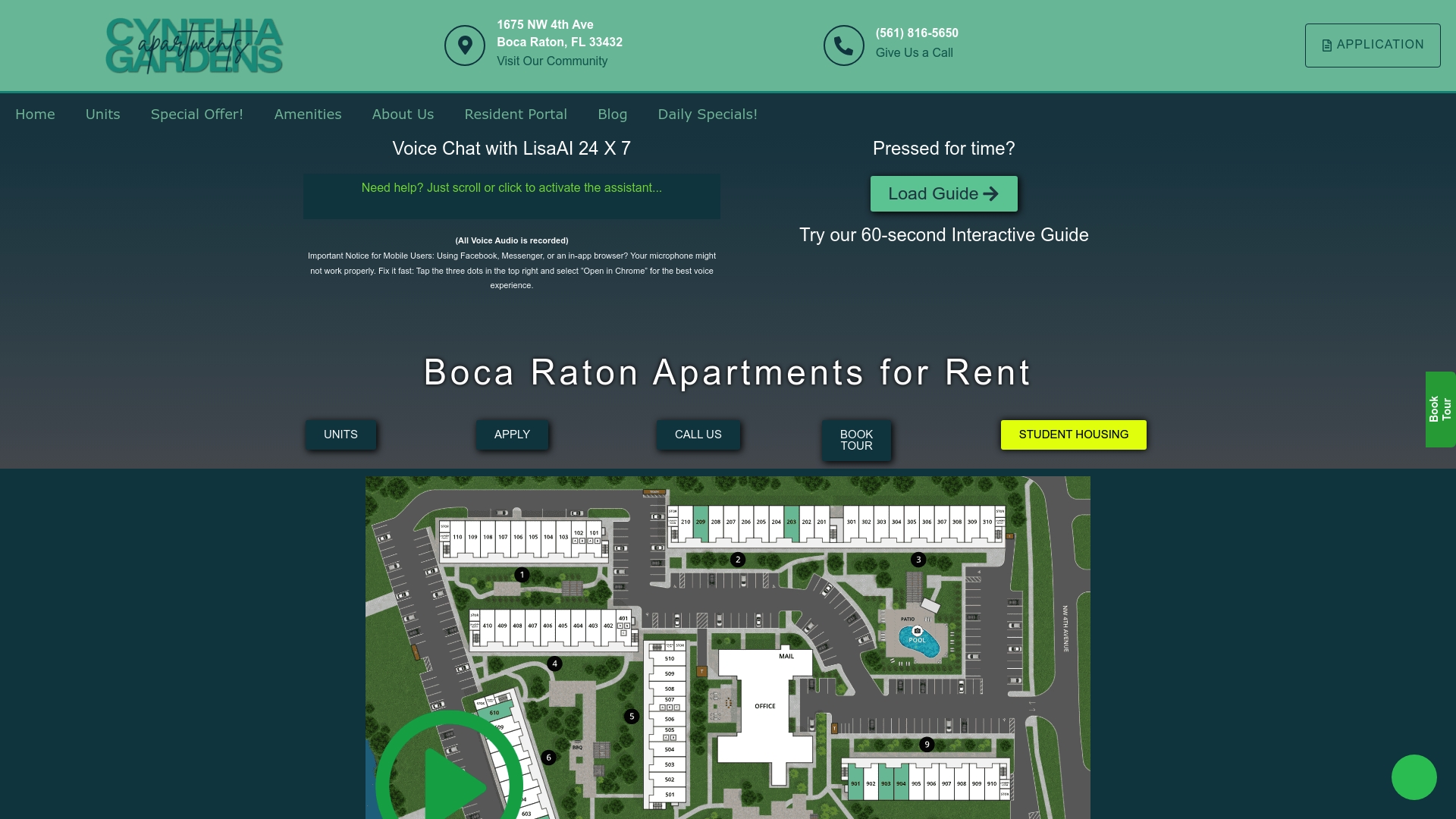
Our one-bedroom apartments are designed for young professionals and pet owners who want great amenities without the guessing game. Browse our available apartment styles to see exactly what is included, including pet policies written in plain language. You can also take a virtual tour, use our interactive property map, or chat with our AI support team any time you have a question. No surprises. Just a community that works for you and your pet.
FAQ
Can a landlord legally charge pet fees for an assistance animal?
No. Under the Fair Housing Act, assistance animals are exempt from all pet fees, deposits, and monthly pet rent. You must provide reasonable documentation, but the fee waiver is legally required.
What is the most effective way to negotiate pet fees?
Propose swapping monthly pet rent for a one-time refundable deposit and back it up with written documentation. Concrete alternative proposals succeed far more often than open-ended requests to lower fees.
Are pet fee amounts regulated by law?
In some states, yes. Colorado caps pet deposits and rent by law. Always check your state’s landlord-tenant statutes before agreeing to any fee, because you may already have a legal limit on your side.
What should I do if a landlord illegally charges pet fees for my assistance animal?
Keep all receipts and written correspondence, then file a complaint with HUD. The HUD complaint process handles Fair Housing Act violations and can require refunds plus additional remedies.
Can landlords ban certain dog breeds even for assistance animals?
No. Breed and weight restrictions do not apply to assistance animals under the Fair Housing Act. A landlord cannot deny housing or charge extra fees based on your assistance animal’s breed.
Recommended
- how to find pet friendly apartments: A Quick Guide – Luxury Apartments for Rent in Boca Raton | Premium Boca Raton Apartments | Aapartments Boca Raton
- How to Find Affordable Pet-Friendly Housing Fast
- Navigating Your Apartment Pet Policy – Luxury Apartments for Rent in Boca Raton | Premium Boca Raton Apartments | Aapartments Boca Raton
- Rental pet agreements: A Boca Raton renter’s guide