Deposit-free renting can slash your upfront moving costs by 50% or more, turning the traditional $1,500 security deposit into a small one-time fee of around $90. For young professionals and students in Boca Raton facing tight budgets, this alternative makes moving into your first apartment far more accessible. This article breaks down what deposit-free renting is, how it works, the financial benefits it offers, and how modern leasing technology makes finding these options easier than ever.
Table of Contents
- Understanding Deposit-Free Renting
- How Deposit-Free Renting Works
- Financial Implications And Savings
- Role Of Technology In Deposit-Free Renting
- Common Misconceptions About Deposit-Free Renting
- Key Differentiators And Framework For Decision Making
- Benefits For Renters And Practical Application
- Discover Deposit-Free Apartments At Cynthia Gardens
- Frequently Asked Questions About Deposit-Free Renting
Key takeaways
| Point | Details |
|---|---|
| Definition | Deposit-free renting replaces upfront security deposits with small fees typically 1-3% of monthly rent, drastically lowering initial costs. |
| Financial impact | You pay a non-refundable fee instead of a refundable deposit, freeing up cash for furniture, utilities, and other moving expenses. |
| Technology advantage | Virtual tours, AI chat support, and interactive property maps accelerate your apartment search process in Boca Raton and approval timelines. |
| Common myth | Deposit-free programs don’t cost more than traditional deposits when you factor in opportunity cost and immediate cash flow needs. |
| Decision factors | Weigh upfront savings against non-refundable fees, and consider your credit profile, move-in timeline, and financial flexibility. |
Understanding deposit-free renting
Deposit-free renting is a leasing model where you pay a small, non-refundable fee instead of a traditional security deposit. Typically, this fee ranges from 1-3% of your monthly rent, meaning a $1,500 apartment might require just $45 to $90 upfront instead of $1,500 or $3,000.
Traditional security deposits equal one to two months’ rent and tie up your cash until you move out, assuming no deductions. Deposit-free options let you keep that money in your pocket from day one. This approach gained popularity as third-party services began offering insurance or guarantee programs that protect landlords against damages and unpaid rent, eliminating the need for large cash deposits.
Several deposit-free products have emerged in the rental market:
- Third-party insurance programs that charge renters a monthly or annual fee
- One-time fee structures paid at lease signing
- Landlord-backed guarantee programs integrated into lease terms
- Hybrid models combining small refundable deposits with lower fees
For students and young professionals in Boca Raton starting careers or attending college, the difference is transformative. Instead of scraping together thousands for a deposit plus first month’s rent, you need only the first month plus a modest fee. This reduced barrier opens access to quality rental options in Boca Raton without draining your emergency fund or requiring family loans.
How deposit-free renting works
Third-party insurance or guarantee services cover landlord risks similar to cash deposits, creating a win-win situation. When you opt for deposit-free renting, an insurance company or guarantee provider steps in to assure your landlord they’ll be compensated for damages or unpaid rent up to a certain limit, usually equivalent to what a traditional deposit would cover.
Landlords receive protection through these programs in several ways. The insurance policy pays claims for property damage beyond normal wear and tear, covers unpaid rent if you break the lease early, and handles eviction costs if necessary. These protections mirror what a security deposit provides, giving landlords confidence to offer deposit-free terms.
Eligibility requirements vary by program and landlord but generally include credit score minimums, income verification showing you earn two to three times the monthly rent, rental history checks, and background screenings. Some programs accept applicants with lower credit scores but may charge slightly higher fees.
Here’s the typical sequence for applying deposit-free renting:
- Check if your desired apartment offers deposit-free options during your initial inquiry
- Complete the standard rental application including credit and income documentation
- Receive approval and choose between traditional deposit or deposit-free fee structure
- Pay the one-time fee (or set up monthly payments if the program offers installments)
- Sign your lease and move in without the burden of a large upfront deposit
This streamlined process protects both parties effectively. You get immediate cost relief, while landlords maintain financial security through professional insurance backing. The apartment search process in Boca Raton becomes faster since you’re not waiting weeks to save deposit money.

Financial implications and savings
The math behind deposit-free renting reveals significant upfront savings, though you’ll want to understand the full picture before deciding. Deposit-free rental fees average 1-3% of monthly rent, significantly less than traditional deposits that often equal 1-2 months’ rent.
| Cost Type | Traditional Deposit | Deposit-Free Fee |
|---|---|---|
| Upfront Amount | $1,500 to $3,000 (1-2 months) | $45 to $90 (1-3% of rent) |
| Refundable | Yes, minus damages | No |
| Monthly Impact | None after initial payment | Some programs charge $10 to $25 monthly |
| Cash Tied Up | Full amount until move-out | None |
| Typical Timeframe | Returned within 30-60 days after moving | Fee paid once at signing |
Consider a real scenario with a $1,500 monthly apartment. Traditional leasing requires $1,500 deposit plus $1,500 first month, totaling $3,000 upfront. Deposit-free leasing requires just $90 fee plus $1,500 first month, totaling $1,590 upfront. You save $1,410 immediately, money you can allocate toward furniture, utilities setup, or building an emergency fund.
Cash flow impact extends beyond move-in day. That $1,410 saved can earn interest in a high-yield savings account, cover unexpected car repairs, or fund professional development. For young renters establishing themselves in Boca Raton, this flexibility matters enormously.
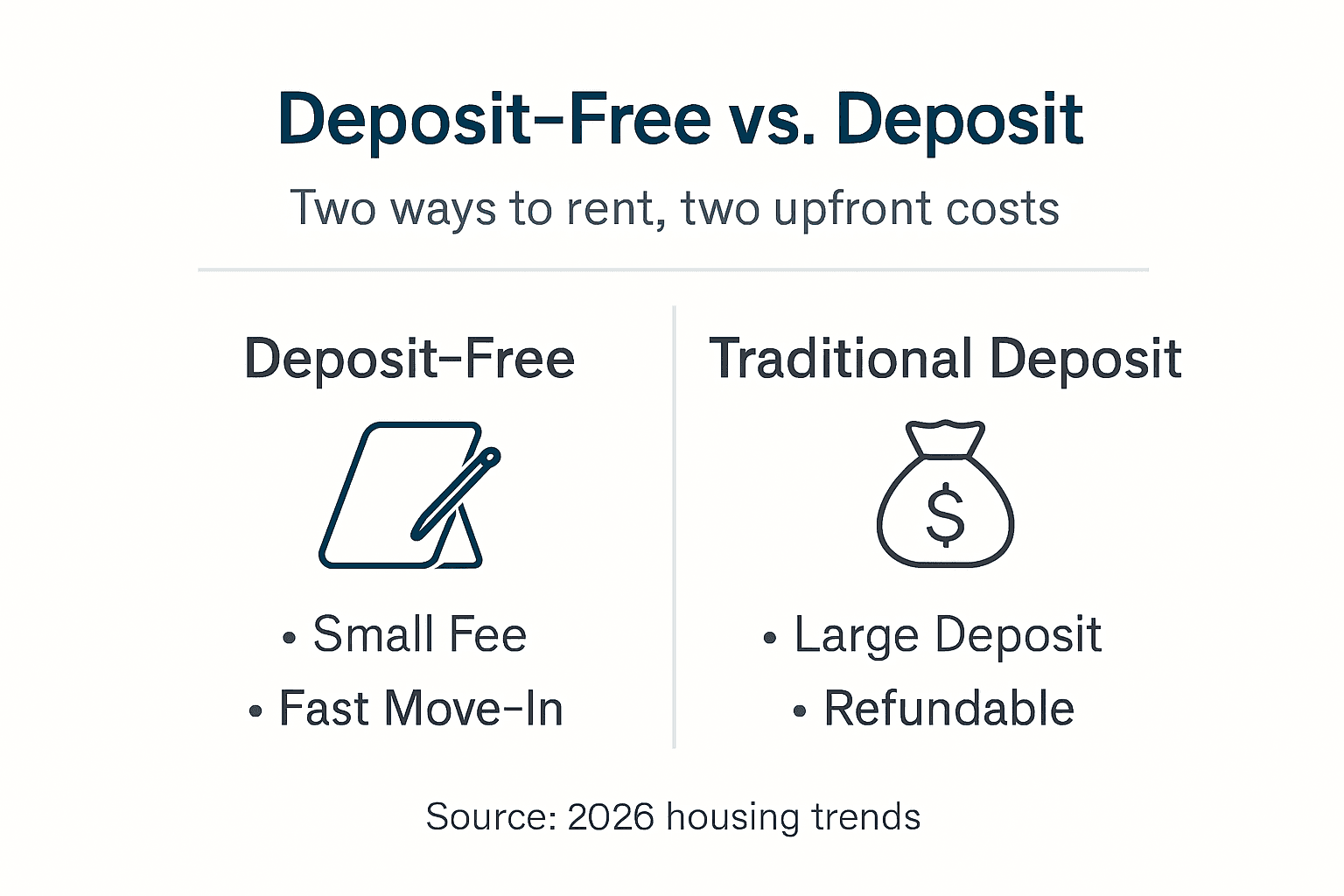
The trade-off lies in refundability. Traditional deposits return to you if you leave the apartment in good condition, while deposit-free fees never come back. Over a 12-month lease, you might pay $90 upfront or $90 to $300 total if using a monthly payment program. Compare this against the opportunity cost of having $1,500 locked away for a year.
Pro Tip: Calculate your total lease term cost including all fees before choosing. If you’re highly confident you’ll maintain the apartment perfectly and recover your full deposit, traditional might cost less. If cash flow flexibility matters more, or if you have past deposit deduction experiences, deposit-free often wins. Research affordable apartments in Boca Raton that offer transparent pricing to make informed comparisons.
Role of technology in deposit-free renting
Tech-enabled leasing platforms reduce approval times and simplify finding deposit-free rentals, making the entire process faster and more transparent. Modern apartment communities now integrate digital tools that complement the financial benefits of deposit-free options.
Virtual tours let you explore apartments from your laptop or phone, eliminating the need for multiple in-person visits. You can view floor plans, examine finishes, and get a realistic sense of space before ever setting foot on the property. Interactive property maps show available units, pricing, and amenities in real time, helping you identify deposit-free options instantly.
AI chat and voice support answer your questions 24/7, from deposit-free fee structures to lease terms and move-in dates. These tools provide immediate responses without waiting for office hours, accelerating your decision timeline. When you’re ready to apply, digital applications process your information quickly, often delivering approval decisions within hours instead of days.
Key technology features modern platforms offer for deposit-free renting include:
- Real-time availability updates showing which units offer deposit-free terms
- Transparent pricing displays with all fees clearly itemized
- Digital lease signing eliminating paper shuffling and mailing delays
- Instant payment processing for deposit-free fees and first month’s rent
- Mobile apps for managing your application status and communications
For busy students juggling classes and young professionals working full time, these tools save hours of phone tag and property visits. You can complete your entire leasing technology in Boca Raton journey during lunch breaks or evening study sessions.
Pro Tip: Use virtual tours to narrow your choices to two or three finalists, then schedule in-person visits only for those top picks. This strategy maximizes your time efficiency while ensuring you make a confident final decision. Always verify deposit-free fee amounts and terms through the platform’s transparent pricing tools before applying.
Common misconceptions about deposit-free renting
Several myths about deposit-free renting create unnecessary hesitation among renters, but the reality often surprises people once they examine the facts. Deposit-free renting fees are usually only 1-3% monthly rent, less than traditional deposits.
Myth 1: Deposit-free renting costs more than traditional deposits. Many assume non-refundable fees add up to more than a refundable deposit. In practice, paying $90 to $150 for a $1,500 apartment costs far less upfront than a $1,500 deposit. Even if you’d receive that deposit back eventually, the immediate cash flow benefit and opportunity to use that money elsewhere during your lease term often outweighs the refund potential.
Myth 2: Deposit-free programs are the same as renter’s insurance. These are completely different products. Renter’s insurance protects your personal belongings against theft, fire, or water damage, and provides liability coverage if someone gets injured in your apartment. Deposit-free programs protect landlords against property damage and unpaid rent. You typically still need renter’s insurance even with deposit-free leasing, though some programs bundle coverage options.
Myth 3: Landlords aren’t adequately protected without cash deposits. Professional insurance and guarantee services backing deposit-free programs often provide better landlord protection than cash deposits. Insurance companies have legal teams and streamlined claims processes, while cash deposits require landlords to pursue renters through small claims court for damages exceeding the deposit amount. The financial backing is often stronger with insurance programs.
Myth 4: Only renters with perfect credit qualify for deposit-free options. While eligibility requirements exist, many programs accept applicants with fair credit or limited rental history, particularly when combined with proof of steady income. Some landlords view deposit-free programs as ways to expand their renter pool while maintaining protection.
Understanding these realities helps you evaluate deposit-free renting myths objectively rather than dismissing a valuable option based on misconceptions. The key is reading specific program terms and comparing total costs across your full lease period.
Key differentiators and framework for decision making
Choosing between deposit-free renting, traditional deposits, and understanding how renter’s insurance fits requires a clear comparison framework. Deposit-free renting offers lower upfront cost and flexible eligibility compared to traditional deposits and differs substantially from renters insurance.
| Factor | Deposit-Free Renting | Traditional Deposit | Renter’s Insurance |
|---|---|---|---|
| Upfront Cost | $45 to $150 (1-3% of rent) | $1,500 to $3,000 (1-2 months’ rent) | $15 to $30 monthly |
| Refundable | No | Yes, minus damages | N/A (ongoing premium) |
| What It Covers | Landlord property damage and unpaid rent | Landlord property damage and unpaid rent | Your personal belongings and liability |
| Eligibility | Credit and income checks, often more flexible | Credit and income checks, stricter standards | Open to all renters |
| Risk Management | Insurance company assumes risk | Landlord holds and manages funds | Insurance company covers your assets |
Additional factors to weigh when selecting your approach:
- Move-in timeline urgency: Deposit-free lets you move faster if you don’t have deposit savings ready
- Financial flexibility needs: Keeping cash liquid versus locked in a deposit account
- Credit profile: Lower credit scores may find deposit-free more accessible than traditional deposits
- Lease term length: Shorter leases benefit more from deposit-free since you’d recover a deposit sooner anyway
- Damage risk assessment: If you’re meticulous about property care, traditional deposits might return more money
Use this framework by first calculating your total upfront costs for each option, then projecting over your intended lease term. A student planning a 9-month lease near campus might prioritize immediate cash savings with deposit-free, while someone planning a multi-year stay might calculate long-term costs differently.
Real scenarios illustrate these trade-offs. A young professional relocating to Boca Raton for a new job benefits from deposit-free options since relocation already strains finances with moving trucks, new furniture, and settling-in costs. A renter with excellent credit and substantial savings might prefer traditional deposits to maximize refund potential. Compare options across deposit-free renting comparison resources to identify your best fit.
Benefits for renters and practical application
Deposit-free renting delivers tangible advantages that extend beyond initial cost savings, particularly for mobile young renters building careers and education paths. Deposit-free renting increases renter mobility and lowers financial barriers, especially when combined with tech-forward leasing.
The main benefits include dramatically reduced upfront costs that free capital for other moving expenses and life needs. You gain faster lease approval since insurance programs often process decisions more quickly than landlords reviewing deposit fund transfers. Increased flexibility and mobility emerge because you’re not waiting to recover a deposit before moving to your next opportunity. This matters enormously for young professionals whose careers may require relocation or students transitioning between school years.
To leverage deposit-free renting effectively, follow this practical checklist:
- Verify deposit-free availability when you first inquire about an apartment, asking specifically about fee amounts and program terms
- Compare total costs across your planned lease term, including any monthly fees versus one-time charges
- Review eligibility requirements early and gather necessary documentation like pay stubs and credit reports
- Use virtual tours and interactive maps to efficiently narrow choices before in-person visits
- Read all lease terms carefully, noting what the deposit-free fee covers and any exclusions
- Confirm whether you still need separate renter’s insurance and budget accordingly
Pro Tip: Choose reputable deposit-free programs backed by established insurance companies. Ask for the insurance provider’s name and look up their rating with agencies like AM Best. Avoid programs with hidden monthly fees not disclosed upfront. Transparent communities will clearly itemize every cost in their pricing breakdowns. Research affordable apartments in Boca Raton that explicitly promote transparent pricing to ensure you’re getting honest terms.
This approach simplifies moving for students managing tuition and living expenses simultaneously, and for young professionals establishing themselves in new cities without large savings cushions. The reduced financial barrier removes a major obstacle to securing quality housing in competitive rental markets.
Discover deposit-free apartments at Cynthia Gardens
If you’re ready to experience the benefits of deposit-free renting firsthand, Cynthia Gardens offers modern apartments in Boca Raton designed specifically for young professionals and students like you. Our community combines affordable pricing with transparent, tech-forward leasing that eliminates surprises and streamlines your entire move-in process.
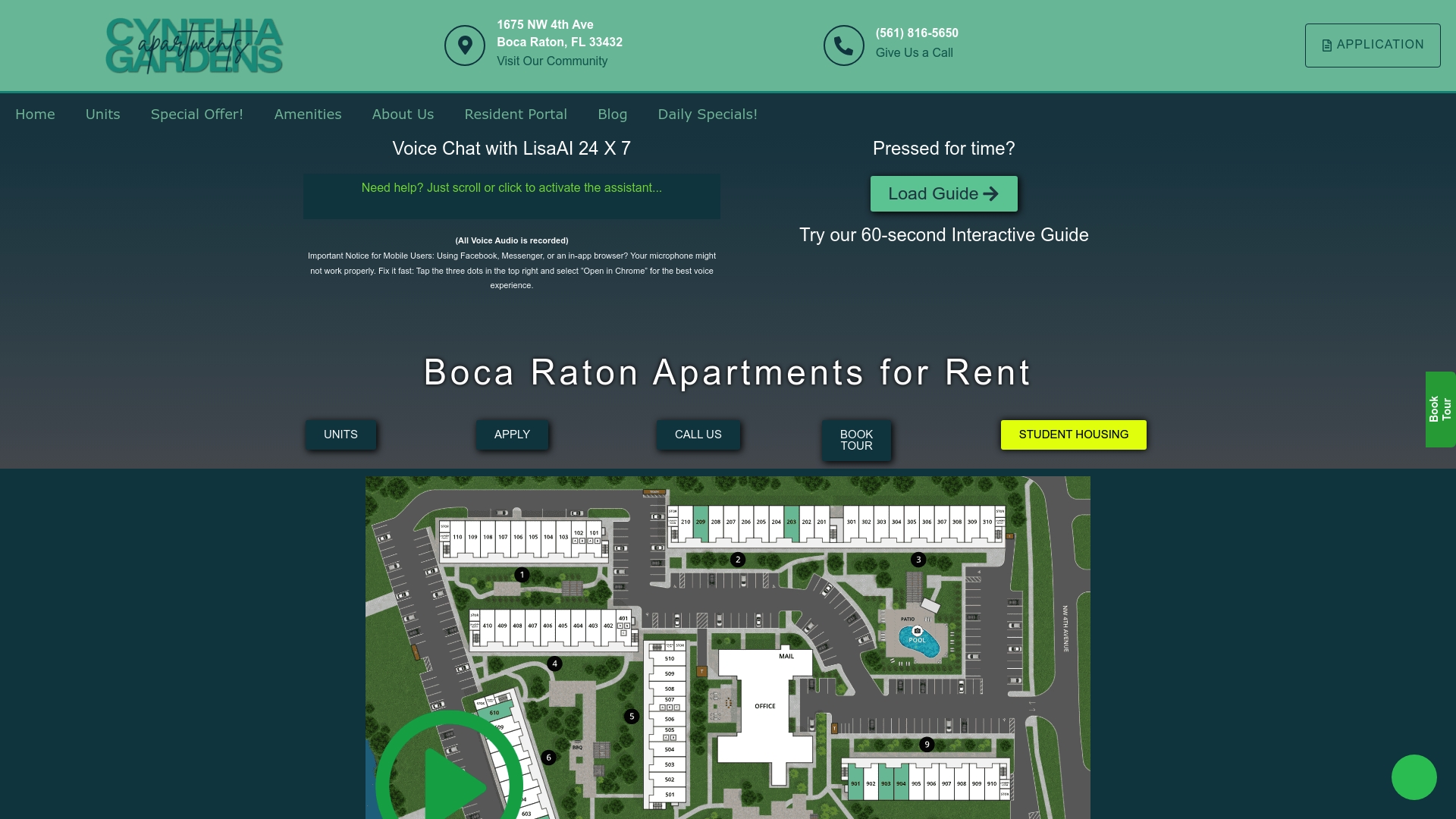
Explore our variety of apartment styles and features offering flexible deposit-free options that put money back in your pocket from day one. Our affordable one-bedroom apartments come with clear pricing breakdowns showing exactly what you’ll pay upfront and monthly, with no hidden fees catching you off guard. Use our interactive property map and virtual tours to compare available units at your convenience, then connect with our AI chat support anytime you have questions. When you’re ready to apply, our digital apartment search process delivers quick approvals so you can secure your new home and start your Boca Raton chapter with confidence and financial peace of mind.
Frequently asked questions about deposit-free renting
What is deposit-free renting and who qualifies?
Deposit-free renting replaces traditional security deposits with small non-refundable fees, typically 1-3% of monthly rent. Most programs require applicants to meet basic eligibility criteria including minimum credit scores, income verification showing you earn at least twice the monthly rent, and standard background checks. Many programs accommodate renters with fair credit or limited rental history when income and employment are stable.
How much does deposit-free renting cost compared to traditional deposits?
For a $1,500 monthly apartment, deposit-free fees range from $45 to $90 as a one-time charge versus $1,500 to $3,000 for traditional deposits. While the fee is non-refundable, you save over $1,400 upfront that you can use for furniture, utilities, or emergency funds. Over a 12-month lease, even accounting for the non-refundable nature, immediate cash flow benefits often outweigh the eventual deposit refund you’d receive with traditional leasing.
Does deposit-free renting protect landlords as well as traditional deposits?
Yes, professional insurance and guarantee programs backing deposit-free options often provide equal or superior landlord protection compared to cash deposits. These programs cover property damage, unpaid rent, and eviction costs up to specified limits, with insurance companies handling claims through established legal processes. Landlords gain financial security without needing to pursue renters through small claims court for damages exceeding deposit amounts.
Can I use deposit-free renting if I have less than perfect credit?
Many deposit-free programs accept applicants with fair credit scores, particularly when you demonstrate steady income and employment. Some landlords view these programs as opportunities to expand their renter pool while maintaining protection through insurance backing. Requirements vary by program, so inquire directly about specific credit minimums and whether alternative documentation like proof of savings or co-signers can strengthen your application.
How does technology simplify finding and applying for deposit-free rentals?
Tech-enabled leasing platforms offer virtual tours, interactive property maps, and AI chat support that let you explore deposit-free options 24/7 from your phone or computer. These tools provide transparent pricing breakdowns showing exact fee amounts, real-time availability updates, and instant answers to questions about deposit-free terms. Digital applications and lease signing accelerate approval timelines to hours instead of days, helping you secure your apartment faster with less back-and-forth communication.
Recommended
- How to Save Money on Rent With Proven Strategies – Luxury Apartments for Rent in Boca Raton | Premium Boca Raton Apartments | Aapartments Boca Raton
- 7 Key Advantages of Affordable Housing for Young Renters
- Why Rent as a Student at FAU in 2026? Save Up to 30% Monthly
- Find 2 Bedroom Apartments Utilities Included | Easy Budgeting – Luxury Apartments for Rent in Boca Raton | Premium Boca Raton Apartments | Aapartments Boca Raton