
Tech-forward leasing is an integrated, end-to-end digital workflow that replaces paper applications, phone tag, and siloed tools with connected systems covering every step from first inquiry to signed lease — and it measurably speeds lease velocity, raises resident satisfaction, and improves net operating income. Research shows many renters say technology has a moderate to major impact on their rental decisions. Properties that get this right don’t just fill units faster; they retain residents longer and command higher rents.
A property can credibly call itself tech-forward when it offers all of the following:
- 24/7 AI chat or voice assistance for lead triage and after-hours inquiries
- Self-guided or virtual tours available without scheduling a leasing agent
- Online applications with integrated background and credit screening
- Digital lease signing and electronic payment setup at move-in
- A resident portal or app for maintenance requests, payments, and communication
- Smart access or package management that residents can control from their phones
Table of Contents
- What tech-forward leasing actually includes
- Why operators invest in tech-driven leasing solutions
- How to implement a tech-forward leasing program
- Which KPIs actually tell you if it’s working
- Common risks and how to handle them
- What real operators have seen
- Is your property ready? A quick readiness checklist
- Regulatory and compliance considerations
- Key Takeaways
- The hybrid model is the only model that works
- Cynthiagardens brings tech-forward leasing to Boca Raton
- Useful sources for further reading
What tech-forward leasing actually includes
The stack is not one product. It is a set of integrated layers, each handling a distinct stage of the prospect-to-resident journey.
| Category | Role in the workflow |
|---|---|
| Discovery / marketing | ILS syndication, SEO-optimized listings, virtual tour embeds |
| Lead capture / AI triage | 24/7 chatbot or voice agent qualifies leads, books tours, answers FAQs |
| CRM / lead pipeline | Centralizes all prospect data, tracks follow-up cadence, prevents drop-off |
| Tour technology | Self-guided tours, 3D walkthroughs, interactive floor plan maps |
| Application / screening | Online application form connected to instant credit, background, and income checks |
| E-sign / payments | Lease execution and first-month payment in a single digital session |
| Resident engagement | Maintenance portal, renewal reminders, community announcements |
| Property connectivity | Managed Wi-Fi, smart locks, package lockers, access control |
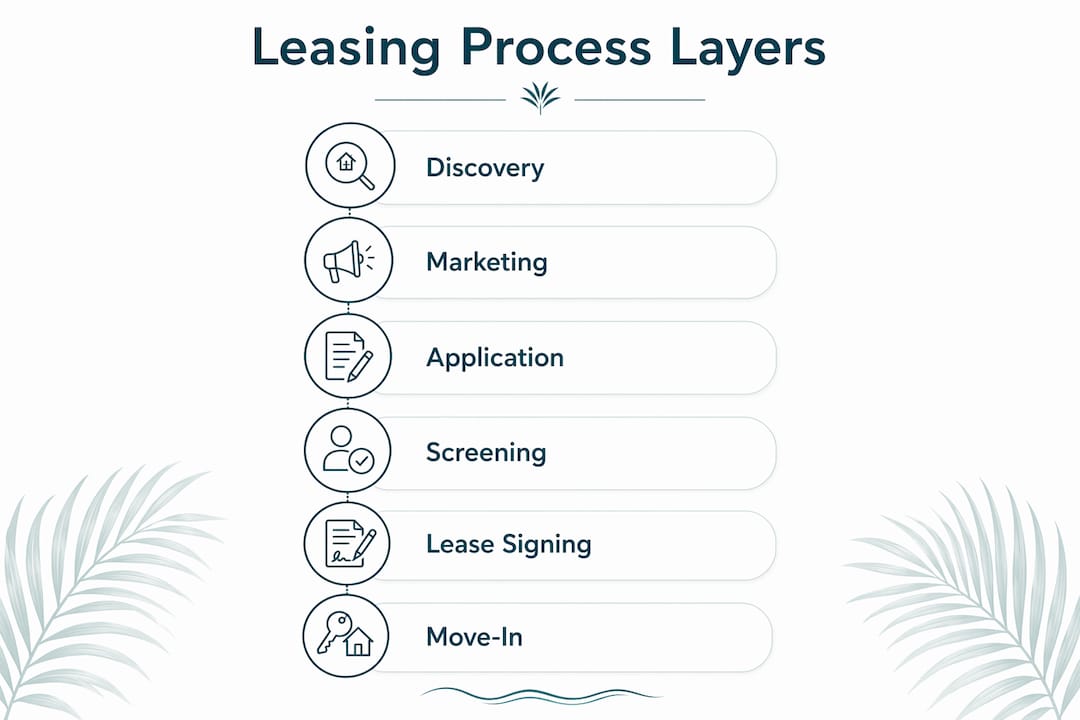
The table above shows components, but the real value is in how they connect. A digital leasing platform that ties listing, application, screening, e-signing, and onboarding into one continuous flow eliminates the manual handoffs where prospects most often drop off. Point tools that don’t share data create exactly the siloed workflows operators are trying to escape.
Pro Tip: Run a connectivity audit before you buy any smart-home or AI feature. Managed Wi-Fi reliability is the silent foundation — virtual tours stutter, smart locks fail, and AI interfaces frustrate residents when the network is unstable. Fix the infrastructure first.
Why operators invest in tech-driven leasing solutions
Renter expectations have shifted permanently. More than 90% of renters now rate high-speed internet as important, and a large majority want pre-installed connectivity at move-in. Online payments and package management rank just as high. Properties that can’t meet those expectations lose prospects before a tour is ever scheduled.
The financial case is equally clear. Properties with smart amenities report higher resident satisfaction scores and the ability to charge rent premiums, while operators using AI-assisted pricing overlays — pulling closed-lease comps, demand signals, and portfolio benchmarks — avoid pricing drift that quietly erodes NOI. Lower turnover is the other lever: every avoided vacancy saves the cost of make-ready, re-leasing fees, and lost rent, which typically runs thousands of dollars per unit.

Speed matters too. Deployments of integrated stacks have shown notable increases in applications and significantly faster approvals compared to manual systems. Faster approvals mean fewer prospects who accept a competitor’s offer while waiting on yours.
How to implement a tech-forward leasing program
A phased approach prevents the most common failure mode: buying software before the infrastructure or data is ready to support it.
- Audit current state. Map every manual step in your leasing workflow. Note where prospects drop off, how long approvals take, and which tasks consume the most staff hours.
- Define outcomes. Set specific targets before selecting vendors — lease-up velocity, application-to-approval time, renewal rate. Outcome-first vendor selection beats feature-first every time.
- Fix connectivity. Complete a property-wide network audit. If managed Wi-Fi is unreliable, address it before deploying smart locks, virtual tours, or AI tools.
- Choose an integration layer. Select a CRM or property management platform that connects natively to your screening, e-sign, and payment tools. API readiness is non-negotiable.
- Pilot on one building or unit type. Run a 60–90 day pilot with defined acceptance criteria: target conversion rate, approval time, and resident satisfaction score. Measure against a control group if possible.
- Retrain and reallocate staff. Automation removes drudge work — data entry, repetitive follow-up, after-hours phone coverage. Redirect that time toward high-judgment tasks: resident conflict resolution, renewal conversations, community events.
- Measure, iterate, and scale. Review KPIs at 30, 60, and 90 days. Fix integration gaps before rolling out to additional buildings.
Pro Tip: Define pilot acceptance criteria in writing before launch — not after. A target like “tour-to-application conversion above 35% within 60 days” gives your team a clear pass/fail signal and makes the business case to ownership concrete.
For a practical workflow example, the one-bedroom apartment leasing workflow at Cynthiagardens shows how these steps apply at the unit level.

Which KPIs actually tell you if it’s working
| Metric | Definition | Sample target |
|---|---|---|
| Lead-to-tour conversion | % of inquiries that result in a scheduled tour | 30–40% |
| Tour-to-application conversion | % of tours that generate a submitted application | 35% |
| Application-to-approval time | Hours from submission to approval decision | Under 24 hours |
| Lease-up velocity | Days from unit availability to signed lease | Under 30 days |
| Renewal rate | % of expiring leases that renew | a high renewal rate |
| Resident satisfaction score | Survey-based score at 30 days and renewal | — |
| NOI impact | Year-over-year NOI change attributable to reduced vacancy and turnover | Positive trend |
Measure at 30, 60, 90, and 180 days. Early windows catch integration failures; later windows show retention and NOI trends. Attribution works best when you change one major variable per pilot — adding AI triage and e-applications simultaneously makes it hard to know which drove the improvement.
Operators using unified platforms have reported applications up 42%, approvals in under 24 hours, and meaningful reductions in administrative hours per lease. Those are the benchmarks worth testing against.
Common risks and how to handle them
Every tech-forward implementation runs into at least one of these:
- Integration complexity. Vendors that don’t share APIs create data silos. Require documented integration specs and test data flows in the pilot before committing to a full rollout.
- Weak network infrastructure. Smart features fail on unreliable Wi-Fi. A connectivity audit is the first project, not an afterthought.
- Resident privacy and data security. Collecting biometric access data, income documents, and payment information creates real liability. Require SOC 2 compliance from vendors and review your lease language with counsel before deployment.
- Cost/ROI mismatch. Phased contracts with performance milestones reduce exposure. Tie vendor payments to outcome metrics where possible.
- Staff resistance. Change management is underrated. Involve leasing staff in vendor selection, run hands-on training before go-live, and frame automation as workload relief rather than a headcount threat.
A short legal note: lease language, data-sharing disclosures, and screening compliance (including Fair Housing Act requirements for AI-assisted screening tools) vary by jurisdiction. Consult qualified legal counsel before finalizing any tech-forward lease addendum or data-collection policy.
Pro Tip: When evaluating vendors, ask for a reference from an operator with a similar portfolio size and property type. Integration overhead drops significantly when the vendor has already solved your specific stack combination.
What real operators have seen
The outcomes operators report from integrated digital leasing are consistent enough to form a pattern.
“By 2030, we anticipate leasing technology will be fully embedded across the prospect and resident journey. Leading operators will differentiate themselves by balancing automation with a meaningful human connection. Far from diminishing the personal touch, automation enhances it. It frees front-line staff to deliver the kind of elevated, white-glove experience residents value most.”
— Shawaun Alexander, SVP of Operations Software and Systems, Bozzuto (Multifamily Executive)
Operators who deployed unified leasing platforms during lease-up campaigns have reported application increases up to 42% and approval times compressed from several days to under 24 hours. The mechanism is straightforward: faster approvals reduce the window during which a qualified prospect accepts another offer.
AI leasing assistants handling after-hours inquiries have shown measurable conversion lift by responding within seconds rather than the next business day. AI leasing support keeps the pipeline moving around the clock without adding headcount. Package management and smart access, while smaller investments, consistently appear in renter surveys as features that influence both the initial leasing decision and renewal.
Is your property ready? A quick readiness checklist
Run through these in 15 minutes. Each “no” is a prioritized fix.
- [ ] Property-wide managed Wi-Fi is stable and documented
- [ ] A CRM tracks every lead from first contact to signed lease
- [ ] AI chat or voice handles inquiries 24/7, including weekends
- [ ] Virtual tours or self-guided tours are available without agent scheduling
- [ ] Applications, screening, and e-sign run in a single online flow
- [ ] Residents pay rent and submit maintenance requests through a digital portal
- [ ] Smart access or package management is in place
Score 0–3: Start with connectivity and a CRM. Everything else depends on these two.
Score 4–5: Add AI lead triage and virtual tours. You have the foundation; now close the gaps.
Score 6–7: Focus on measurement. You’re operating a tech-forward property — now prove the NOI impact with the KPI dashboard above.
A realistic pilot timeline for a single building runs 60–90 days from connectivity audit to first KPI review. Budget for vendor integration work, staff training, and a resident communication plan at launch.
Pro Tip: Saved-property workflows and lead-capture tools are often the fastest wins — low installation time, immediate impact on lead quality, and easy to measure.
Regulatory and compliance considerations
Tech-forward leasing introduces compliance obligations that paper-based workflows never triggered.
Fair Housing Act and AI screening. Any AI tool that scores, ranks, or filters applicants must produce consistent, non-discriminatory outcomes. HUD guidance makes clear that disparate impact liability applies to algorithmic screening the same way it applies to human decisions. Audit your screening vendor’s methodology and document the criteria used.
Electronic signatures. The federal E-SIGN Act and the Uniform Electronic Transactions Act (UETA), adopted in most states, make electronic lease signatures legally binding — but your lease must include a consent clause and an opt-out path for residents who prefer paper.
Data privacy. Collecting biometric data (smart lock fingerprints, facial recognition for access) triggers state-level biometric privacy laws in Illinois (BIPA), Texas, and Washington, among others. Income and credit documents are covered by the Gramm-Leach-Bliley Act when handled by certain entities. At minimum, publish a clear data-retention and deletion policy.
Smart home device disclosures. Florida and several other states require landlords to disclose the presence of recording-capable devices in or around a unit. Smart doorbells, AI-enabled intercoms, and package cameras all fall within this disclosure requirement.
This article is general information, not legal advice. Confirm current requirements with qualified legal counsel for your specific jurisdiction and property type.
Key Takeaways
Tech-forward leasing delivers measurable NOI gains when operators build an integrated stack, fix connectivity first, and measure outcomes at 30/60/90-day intervals.
| Point | Details |
|---|---|
| Integration beats point tools | A connected CRM-to-e-sign workflow eliminates drop-off; siloed tools recreate the manual handoffs you’re trying to remove. |
| Connectivity is the foundation | Managed Wi-Fi must be stable before smart locks, virtual tours, or AI tools can perform reliably. |
| Outcomes drive vendor selection | Define targets (approval time under 24 hours, renewal rate above 65%) before choosing software, not after. |
| Compliance is non-negotiable | AI screening, e-sign consent, biometric data, and smart-device disclosures each carry specific legal obligations in the U.S. |
| Cynthiagardens as a live example | Cynthiagardens applies AI chat, voice assistance, virtual tours, and an interactive map to deliver a fully digital leasing experience in Boca Raton. |
The hybrid model is the only model that works
The operators who get the most from tech-forward leasing are not the ones who automate the most. They’re the ones who automate the right things. Routine lead triage, application status updates, after-hours FAQs, payment reminders — these are tasks that consume staff hours without requiring human judgment. Hand them to software.
What software cannot do is read a nervous first-time renter and know when to slow down. It can’t negotiate a renewal with a long-term resident who just lost a job. It can’t build the kind of community trust that turns a one-year lease into a five-year relationship. Mike Gomes at Cortland put it plainly: “Tech doesn’t empathize. Tech doesn’t communicate caring.”
The mistake most operators make is treating automation as a cost-cutting exercise rather than a reallocation. When you free a leasing agent from 40 manual follow-up emails a week, the question isn’t “do we need fewer agents?” It’s “what higher-value work can this person now do?” The properties that answer that question well — and then measure the results — are the ones pulling ahead.
Cynthiagardens brings tech-forward leasing to Boca Raton
If you want to see these principles in practice rather than on paper, Cynthiagardens is a working example. The community in Boca Raton runs AI chat support and voice assistance around the clock, offers virtual tours and an interactive property map so prospects can explore floor plans and availability without waiting for a callback, and completes the full leasing workflow online from application through e-sign.
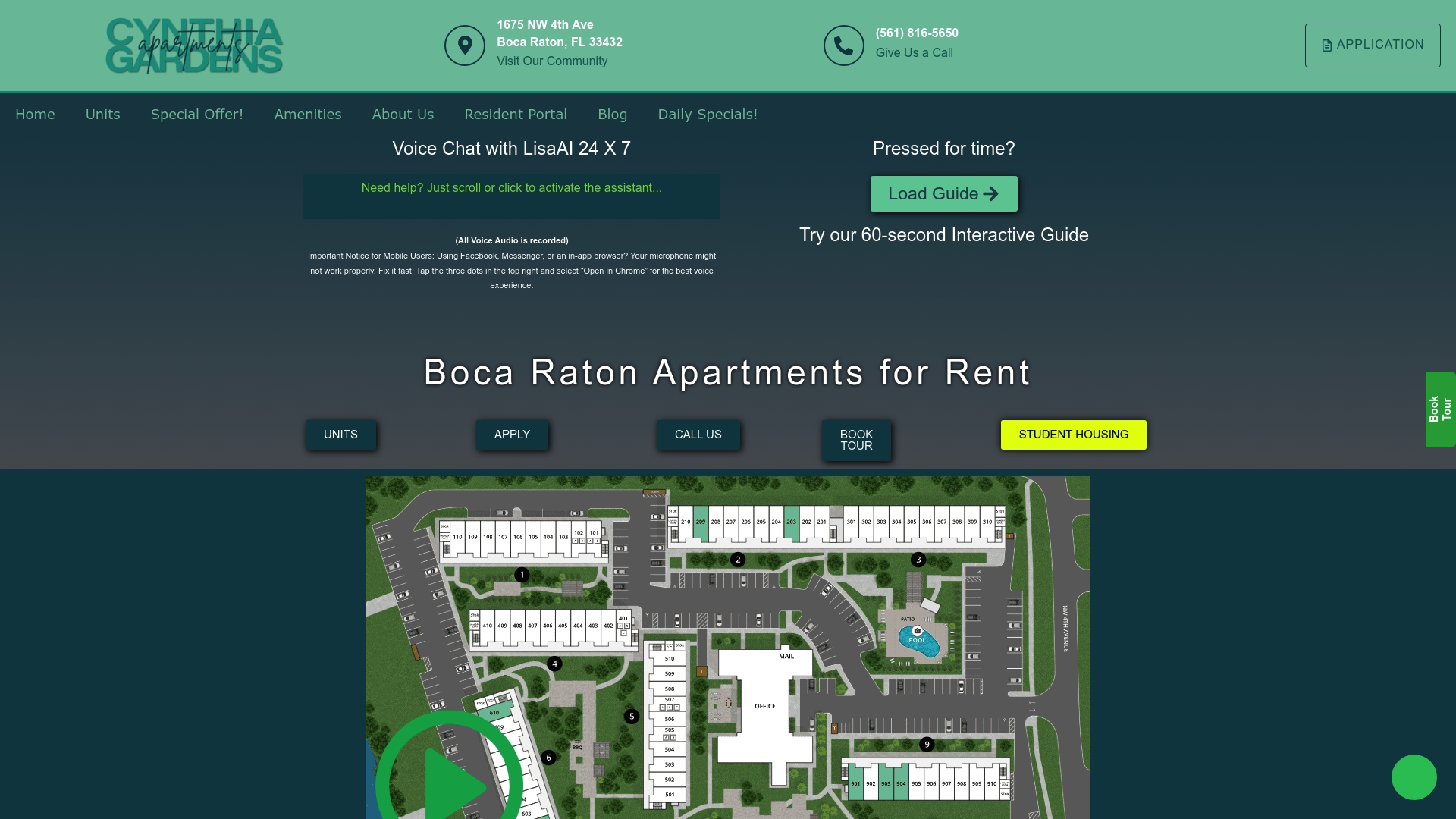
For young professionals, students, and pet owners looking for a one-bedroom apartment with transparent pricing and no hidden fees, the leasing process is designed to take minutes, not days. View available apartments and features to see the tech-forward experience firsthand, or take a virtual tour to explore the community on your schedule.
Useful sources for further reading
- SmartRent: The Future of Leasing Is Digital — best source for stack definitions, renter preference data, and application-rate outcomes
- Multifamily Executive: Leasing 2030 — operator interviews (Cortland, Bozzuto) on hybrid leasing strategy and 2030 predictions
- Multifamily Executive: Beating the Lease-Up Squeeze — real operator outcomes including application increases and approval-time reductions
- Knockli: Renter Technology Expectations 2026 — renter preference surveys on connectivity, smart features, and package management
- Nimbio: What Is Digital Leasing? — clear explanation of the end-to-end digital leasing workflow
- Clouddle: What Is Digital Leasing Explained — connectivity and managed Wi-Fi as foundational infrastructure
- PropertyManagement.com: Tech-Enabled Certification — third-party framework for evaluating whether a property management stack meets category-leader standards
- Multifamily Dive: PropTech Predictions 2026 — industry perspective on integrated platforms, AI adoption, and leasing innovation trends