
TL;DR:
- Over half of tenants now pay rent electronically, making payments faster, safer, and more traceable.
- Landlords cannot always require digital payments and must offer non-electronic options where laws protect tenant choice.
Electronic rent payment is the digital transfer of rent funds from a tenant to a landlord using methods like ACH bank transfers, credit or debit cards, or online rent portals. As of Q2 2026, over 51% of tenants pay rent electronically, up from just 4% in 2014. That shift reflects how much faster, safer, and more traceable digital payments are compared to paper checks or cash. Understanding what is electronic rent payment, how it works, and what it costs gives you a real advantage as a renter. Some states also have laws that protect your right to pay by non-electronic means, so the legal side matters too.
How does electronic rent payment work?
Electronic rent payment moves money from your bank account or card to your landlord through a digital network. The three most common methods are ACH transfers, card payments, and online rent portals.
- ACH transfers pull funds directly from your checking account through the Automated Clearing House network. ACH transfers typically process in 5–7 business days and generate a secure, bank-encrypted transaction record.
- Credit or debit card payments process faster, often within 1–2 business days, but carry higher fees.
- Online rent portals are web or app-based platforms your landlord sets up. You log in, enter your payment details, and submit. The portal handles the transfer and sends you a digital receipt automatically.
Every electronic payment creates a timestamped record. That record protects you if a dispute ever arises about whether you paid on time. Most portals also offer autopay, which schedules your payment to go out on the same date every month without any action from you.
Pro Tip: Set your autopay date one or two days before rent is due, not on the due date itself. ACH transfers take several business days to clear, and a payment initiated on the first can arrive late if that day falls on a weekend or holiday.
For renters who want to understand how digital leasing tools fit into the broader rental process, the connection between payment portals and modern property management is worth exploring.
What are the benefits and drawbacks of paying rent electronically?
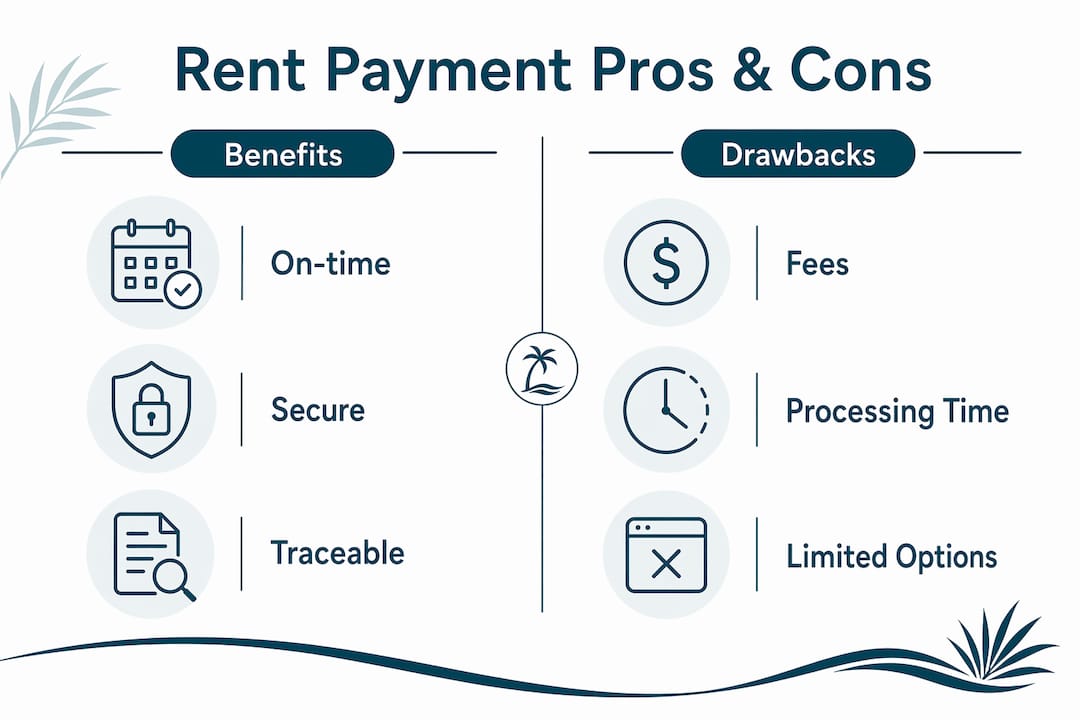
Electronic payments offer real advantages, but they also come with costs that are easy to overlook.
Benefits worth knowing
Tenants who pay rent offline are 23% more likely to pay late than those paying online. That single statistic explains why autopay is the most effective tool for protecting your rental history. Digital payments also produce receipts instantly, which simplifies tax preparation and gives you proof of payment for any dispute. Electronic payment platforms use bank-level encryption, making them more secure and traceable than cash or checks. Cash leaves no record. A check can be lost or stolen. A digital transfer cannot.
Drawbacks to watch
| Drawback | What it means for you |
|---|---|
| ACH flat fees | Typically $2–$3 per transaction, adding up to $36 per year |
| Credit card percentage fees | Up to 2%–3% of rent, which costs hundreds annually on a $1,500 rent |
| Privacy concerns | Some portals collect financial data beyond what the transaction requires |
| Digital access barriers | Renters without reliable internet or bank accounts face real friction |
The fee gap between ACH and card payments is significant. On a $1,500 monthly rent, a 3% card fee costs $45 per payment, or $540 per year. An ACH flat fee of $3 costs $36 per year total. The math strongly favors ACH for most renters.
Pro Tip: Always check whether your landlord’s portal charges a convenience fee for card payments. If ACH is available, use it. The savings over a 12-month lease are meaningful.
Checking for hidden rental fees before you sign a lease is one of the smartest moves you can make as a renter, and payment method fees belong on that checklist.
Are landlords allowed to require electronic rent payments?
Landlords cannot legally force all tenants to pay rent exclusively by electronic means in many states. States like California, New York, and New Hampshire require landlords to offer at least one non-electronic, non-cash payment option alongside any digital system. That means a personal check or money order must remain available to you even if your landlord prefers online payments.
Key legal points renters should know:
- A lease clause that requires electronic-only payment may be void or unenforceable in states with protective statutes.
- New Hampshire passed a law in 2026 specifically banning mandatory electronic rent payment, reflecting a national trend toward protecting tenant choice.
- Tenants without bank accounts, reliable internet, or comfort with digital tools have the strongest legal standing to request alternative methods.
- Always verify your state’s specific statutes. Laws vary significantly, and local tenant rights organizations can clarify what applies to your situation.
- If your landlord insists on electronic-only payment and your state law says otherwise, document your request for an alternative in writing.
State laws limiting mandatory electronic payment protect tenant choice and require landlords to maintain options like personal checks or money orders. Knowing this before you sign a lease puts you in a much stronger position.
How can tenants make the most of electronic rent payment methods?
Getting the most out of digital rent payment comes down to setup, scheduling, and record-keeping. Follow these steps to avoid the most common mistakes.
- Create your portal account early. Set up your account at least one week before your first payment is due. This gives you time to troubleshoot any bank linking issues without the pressure of a deadline.
- Link your checking account for ACH. ACH transfers are the lowest-cost electronic rent payment method for most renters. Link your checking account rather than a card to avoid percentage-based fees.
- Schedule autopay aligned with your income. Scheduling autopay to match your income deposit date prevents overdrafts. If you get paid on the 1st and rent is due on the 1st, set autopay for the 2nd or 3rd to let your deposit clear first.
- Download every receipt. Most portals generate a PDF receipt after each transaction. Save these in a dedicated folder. They are your proof of payment if any dispute arises.
- Review your payment history monthly. Log in once a month to confirm each payment posted correctly. Errors are rare but do happen, and catching them early is far easier than resolving a months-old discrepancy.
- Communicate your payment preferences to your landlord. If you want to switch methods, change your payment date, or have concerns about fees, raise them directly. Most landlords accommodate payment timing for reliable tenants who communicate proactively.
- Keep a backup payment method ready. If your bank account has an issue one month, a debit card or money order can cover you. Never let a technical problem turn into a late payment.
For a broader look at how technology fits into modern renting, tech-savvy renting tips cover the full picture beyond just payments.
What alternatives exist to electronic rent payment?
Traditional payment methods remain relevant and are legally protected in many jurisdictions. The three main alternatives are personal checks, money orders, and cash.
Personal checks are the most common non-electronic option. They create a paper trail through your bank statement and cost nothing beyond postage if mailed. The drawback is processing time. A mailed check can take 5–7 days to arrive and clear, which creates late payment risk if you send it too close to the due date.
Money orders offer a secure alternative for renters without checking accounts. You purchase them at a post office, bank, or convenience store for a small fee, typically under $2. They are prepaid, so there is no risk of a bounced payment. The downside is the manual effort of purchasing and delivering them each month.
Cash is the riskiest option. It leaves no record unless your landlord provides a signed receipt, and carrying large amounts creates security concerns. Traditional methods like checks and cash are still required by law in some jurisdictions, ensuring that renters without digital access are not excluded from housing. If you use cash, always get a written, signed receipt with the date and amount.
Key Takeaways
Electronic rent payment is the most reliable, traceable, and cost-effective way to pay rent when you choose ACH, schedule autopay correctly, and understand your legal rights.
| Point | Details |
|---|---|
| ACH is the lowest-cost method | Flat fees of $2–$3 per transaction beat card fees of 2%–3% of rent every time. |
| Autopay reduces late payments | Tenants paying offline are 23% more likely to pay late than those paying online. |
| Legal protections exist | States like California, New York, and New Hampshire require a non-electronic payment option. |
| Digital records protect you | Timestamped receipts simplify disputes and tax records for both tenants and landlords. |
| Schedule autopay carefully | Align your autopay date with your income deposit to avoid overdrafts. |
What I’ve learned after years of watching renters navigate digital payments
The biggest mistake I see renters make is treating electronic payment setup as a one-time task. They link a card instead of a bank account because it is faster, then spend the next 12 months paying 2%–3% more than they need to. That is a real cost, not a minor inconvenience.
The second mistake is setting autopay for the exact due date without accounting for ACH processing time. A payment initiated on the 1st of the month does not always arrive on the 1st. Weekends, bank holidays, and processing delays can push it past the due date, triggering a late fee that wipes out months of savings from using digital payment in the first place.
What actually works is treating your rent payment like a bill with a built-in buffer. Set autopay two days early. Use ACH. Download every receipt. And if your landlord’s portal charges card fees with no ACH option, ask directly whether an alternative exists. Many landlords will accommodate a check or money order for a reliable tenant who asks politely.
The digital divide is also real. Not every renter has a bank account or reliable internet. The legal protections in states like New Hampshire exist for good reason, and tenants should know they can invoke those rights without fear. Electronic payment is the better option for most people, but “most” is not “all,” and the system should work for everyone.
— Ayman
Renting at Cynthiagardens: payments made simple
Modern renting should not come with payment confusion. At Cynthiagardens, a Boca Raton apartment community built for young professionals, students, and pet owners, the leasing experience is designed to be clear from the first inquiry to the monthly payment.
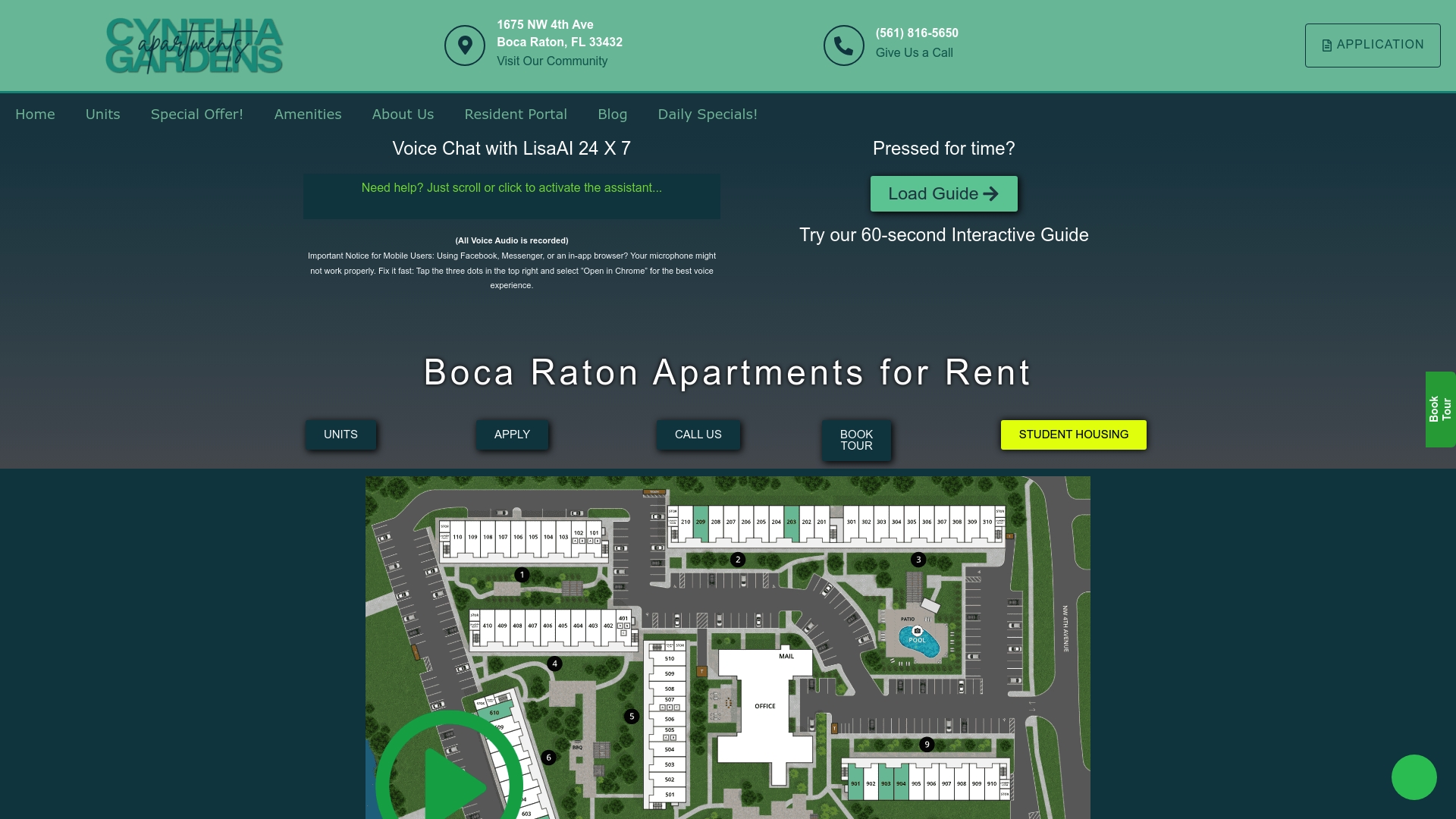
Cynthiagardens offers transparent pricing with no hidden fees, so you know exactly what you owe before you sign. The community’s one-bedroom apartments in Boca Raton pair well-maintained living spaces with a tech-forward approach that includes AI chat support, virtual tours, and an interactive property map. If you want a rental experience where the payment process is as straightforward as the lease itself, explore available apartments and see what Cynthiagardens has available right now.
FAQ
What is electronic rent payment exactly?
Electronic rent payment is the digital transfer of rent funds from a tenant to a landlord using methods like ACH bank transfers, credit or debit cards, or online rent portals. It replaces paper checks and cash with faster, traceable transactions.
Is online rent payment safe?
Digital rent payment platforms use bank-level encryption, making them more secure and traceable than cash or checks. Your transaction history is timestamped and stored, which protects you in any payment dispute.
Can my landlord force me to pay rent electronically?
Not in all states. California, New York, and New Hampshire require landlords to offer at least one non-electronic, non-cash payment option. A lease clause mandating electronic-only payment may be unenforceable in those states.
What is the cheapest way to pay rent electronically?
ACH transfers are the lowest-cost electronic rent payment method, typically charging a flat fee of $2–$3 per transaction. Credit card payments can cost 2%–3% of your monthly rent, which adds up to hundreds of dollars per year.
How does autopay help renters avoid late fees?
Autopay schedules your rent payment automatically each month, eliminating the risk of forgetting a due date. Tenants who pay offline are 23% more likely to pay late than those using online payment methods.