
TL;DR:
- All-inclusive rent consolidates rent and utilities into one predictable monthly payment, but often excludes internet and has usage caps. It tends to be more costly than traditional leases, with potential overage charges and less control over utility providers. Carefully review lease terms, caps, and transparency laws to ensure it matches your usage habits and budget.
You’ve seen the listing: “all-inclusive rent.” It sounds simple. One payment, no surprises. But what is all-inclusive rent, exactly, and does it really cover everything? Not always. Some renters sign a lease expecting zero extra bills, then discover internet isn’t included, or that they owe overage fees after a hot summer. This guide breaks down what all-inclusive rent actually means, what it typically covers, what it usually doesn’t, and how to decide whether it’s the right setup for your budget and lifestyle.
Table of Contents
- Key takeaways
- What all-inclusive rent really means
- How all-inclusive rent compares to traditional rent
- Legal and transparency considerations
- Practical tips before you sign an all-inclusive lease
- My honest take on all-inclusive rent
- Find a Boca Raton apartment with no surprises
- FAQ
Key takeaways
| Point | Details |
|---|---|
| One payment, bundled costs | All-inclusive rent combines your base rent with utilities like water, trash, and electricity into a single monthly amount. |
| Not every cost is covered | Internet, cable, and parking are often excluded, so always read the lease carefully before signing. |
| Fair usage caps matter | Many all-inclusive leases include usage limits, and exceeding them can trigger extra charges. |
| Rent tends to run higher | Landlords price in utility costs and risk, so all-inclusive apartments often cost more monthly than traditional rentals. |
| Lease clarity protects you | Your rental agreement should spell out exactly which utilities are included and how overages are calculated. |
What all-inclusive rent really means
All-inclusive rent bundles rent and utilities into a single monthly payment, rather than billing you separately for electricity, water, trash, and similar services. Instead of tracking four or five separate accounts, you write one check to your landlord and your core housing costs are covered.
Here’s what that typically looks like in practice:
- Water and sewer are almost always included
- Trash and recycling collection are standard in most bundled arrangements
- Electricity and gas are commonly included, though this varies by property
- Internet and cable are less often bundled in long-term leases, despite what renters often assume
- Cleaning services or laundry credits occasionally appear in furnished or short-term units
The exact combination depends heavily on the landlord and the local market. A property in Florida may include electricity for air conditioning while a similar unit in the Midwest bundles gas for heat instead. There’s no universal standard, which is exactly why reading the all-inclusive rental agreement word for word matters.
One detail many renters miss is the fair usage clause. Usage caps are detailed in lease agreements, and if your consumption exceeds the defined limit, the landlord can bill you for the difference. So “all-inclusive” doesn’t mean unlimited. It means costs up to a threshold are covered. Think of it like a cell plan with a data cap. You’re covered until you’re not.
Pro Tip: Before signing any all-inclusive lease, ask the landlord directly: “What is the monthly cap on electricity, and what happens if I exceed it?” The answer reveals a lot about how transparent they’re willing to be.
How all-inclusive rent compares to traditional rent
With a traditional lease, you pay your landlord for the apartment and handle utility accounts separately. You set up your own electricity, choose your internet provider, and pay each bill independently. You have full control and full responsibility.
All-inclusive rent flips that arrangement entirely. Here’s a side-by-side look:
| Feature | All-inclusive rent | Traditional rent |
|---|---|---|
| Monthly bills | One combined payment | Rent plus 3-5 separate bills |
| Budget predictability | High | Varies by season and usage |
| Utility provider choice | Landlord decides | Tenant chooses |
| Control over usage costs | Limited | Full control |
| Risk of overage charges | Possible with caps | No caps, just market rates |
| Setup complexity | None | Requires account setup |
The appeal of all-inclusive housing is real. Utilities-included apartments reduce hassle with multiple accounts and bills, and they’re particularly attractive for first-time renters or anyone who wants one less thing to manage.

The trade-off is cost and autonomy. Rent prices for all-inclusive apartments tend to run higher than traditional leases because landlords factor in both the utility cost and the risk that tenants might use more than expected. You’re essentially paying a premium for predictability.
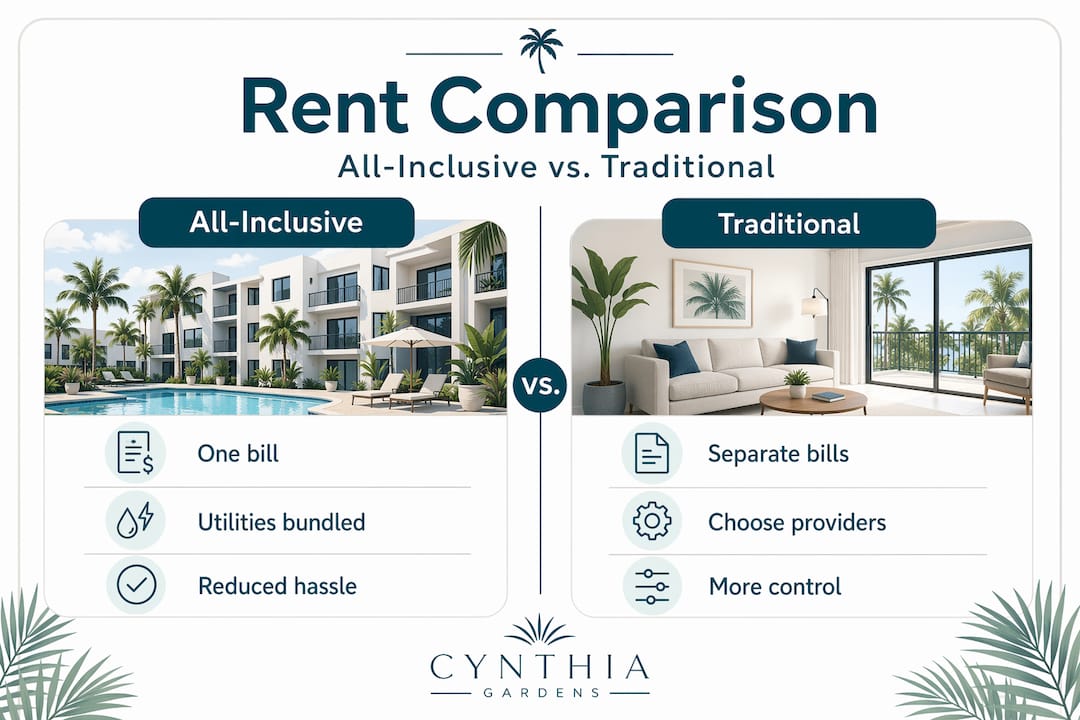
There’s also a loss of choice. Tenants in all-inclusive arrangements lose control over utility accounts and providers. If your landlord uses a slower internet service, you can’t switch without going outside the agreement.
Pro Tip: To see whether all-inclusive rent actually saves you money, research average utility costs for similar apartments in the same area. If traditional rent plus average utilities equals roughly what you’d pay all-inclusive, the convenience may be worth it at no real extra cost.
Legal and transparency considerations
Understanding all-inclusive leases means understanding what the law requires your landlord to disclose. And the short answer is: it depends on where you live.
Some cities are moving toward stronger tenant protections around utility billing. Jersey City passed ordinances requiring landlords to clearly disclose utility cost calculations to tenants. That kind of transparency law is still the exception, not the rule, which means most renters need to do their own due diligence.
A few things to watch for in any all-inclusive lease:
- Which utilities are explicitly named. If a utility isn’t listed by name, don’t assume it’s included.
- How overages are calculated and billed. Ask for this in writing before signing.
- Whether a Ratio Utility Billing System (RUBS) is in use. RUBS allocates shared building utility costs across tenants by factors like square footage or occupancy rather than individual meter readings. RUBS is controversial for fairness and some jurisdictions regulate or ban it outright.
- Landlord maintenance obligations. Regardless of billing method, landlords are legally responsible for maintaining functional utility connections and cannot let service lapse due to non-payment on their end.
The most common mistake renters make is assuming that “utilities included” in a listing headline equals “all utilities, all the time, no limits.” Always get the specifics in writing before you sign.
Understanding your rights before you sign is the single most protective thing you can do. Check out this Boca Raton renter’s guide for a local breakdown of how utility inclusion typically works in Florida leases.
Practical tips before you sign an all-inclusive lease
Deciding whether an all-inclusive setup works for you comes down to three things: your usage habits, your budget tolerance, and how well the lease is written. Here’s a clear process for evaluating any all-inclusive apartment.
-
Get the full list in writing. Ask for the specific utilities included in the lease before touring. If the landlord hesitates, that tells you something.
-
Ask about caps and overage policies. Find out the monthly usage limit for each utility, what triggers an overage fee, and how that fee is calculated. Fair usage clauses are common, and knowing the terms upfront prevents surprises.
-
Compare total costs honestly. Research average utility costs for comparable apartments in the area. Add those figures to the traditional rent price for a similar unit, then compare to the all-inclusive rate. The premium for bundled convenience is often $50 to $150 per month.
-
Consider your usage habits. If you work from home and run multiple devices all day, your electricity usage will be higher than average. If the lease has a low cap, you could face regular overage charges. All-inclusive housing works best for moderate users.
-
Review the lease for RUBS language. If costs are allocated by formula rather than actual usage, understand exactly how your share is calculated.
-
Check what happens when utilities fail. Confirm that the landlord is responsible for service continuity, not you. This is standard in most leases but worth verifying.
Pro Tip: When you find an apartment you like, ask the current or previous tenant what their total monthly cost was, including any overages. That real-world number is more accurate than any advertised estimate.
For a practical look at what transparent pricing in Boca Raton means for renters, Cynthiagardens explains how no-hidden-fee leasing actually works in practice.
My honest take on all-inclusive rent
I’ve seen renters get genuinely burned by all-inclusive leases, and I’ve also seen it work out perfectly. The difference almost always comes down to one thing: whether they read the lease.
All-inclusive rent is a marketing tool as much as it’s a billing structure. Landlords use it to attract tenants who want predictable costs, which is a real benefit. But “predictable” and “unlimited” are not the same thing. The fine print is where the actual terms live.
What I’ve learned is that all-inclusive rent works best for people with consistent, moderate utility habits who genuinely hate managing multiple bills. If that’s you, the slight premium is often worth it. If you’re an aggressive home office worker running three monitors and an air conditioner at full blast all day, you may blow past usage caps regularly.
The landlord and tenant interests aren’t perfectly aligned here. The landlord wants to cap their exposure to cost spikes. The tenant wants truly fixed costs. Those goals only match when the cap is set generously and the overage terms are fair. So my advice is simple: never assume generosity. Read every line, ask every question, and if the landlord can’t answer your questions about caps clearly, that’s a lease worth walking away from.
— Ayman
Find a Boca Raton apartment with no surprises
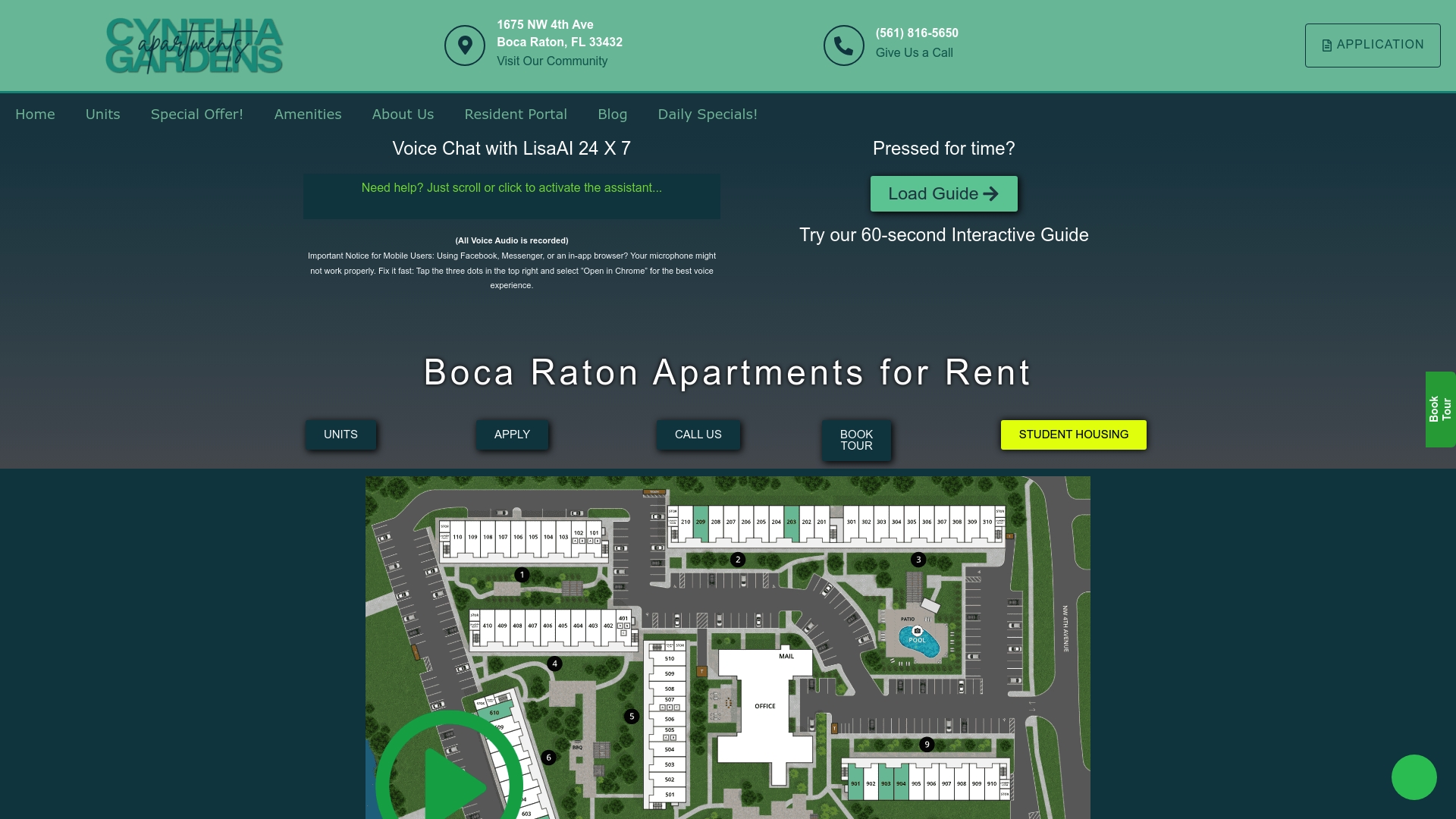
Cynthiagardens is built around exactly the kind of transparent pricing this article is about. Every listing at our Boca Raton apartment community tells you upfront what’s included, what isn’t, and what your actual monthly cost will be. No vague “utilities included” headlines without the details.
If you’re looking for a one-bedroom apartment with utilities included, our community offers well-maintained units with clear lease terms, AI chat support for quick answers, and virtual tours so you can evaluate before you ever step inside. Browse our full range of apartment styles and features to find what fits your budget and lifestyle without the guesswork.
FAQ
What does all-inclusive rent typically include?
All-inclusive rent commonly covers water, sewer, trash, electricity, and gas in a single monthly payment. Internet and cable are less frequently included and should be confirmed in the lease.
Is all-inclusive rent more expensive than traditional rent?
Yes, generally. All-inclusive rent runs higher than traditional rent because landlords price in utility costs and buffer for potential overuse. The premium typically reflects both the service convenience and the landlord’s risk coverage.
Can a landlord charge extra if I use too much electricity under all-inclusive rent?
Yes. Many all-inclusive leases include fair usage clauses with defined caps. Tenants can incur extra charges if their utility consumption exceeds the limits stated in the agreement.
What is a Ratio Utility Billing System (RUBS)?
RUBS is a method where a property’s total utility costs are divided among tenants based on factors like unit size or occupancy, rather than individual meter readings. It’s used in some all-inclusive arrangements and can be subject to local regulation.
How do I know if all-inclusive rent is worth it for me?
Compare the all-inclusive rate to the local average traditional rent plus typical utility costs. If the gap is small and you value billing simplicity, it’s usually worth it. If you use utilities heavily or the lease has tight caps, a traditional lease may cost less overall.
Recommended
- How to Find Affordable Apartments A Renter’s Guide – Luxury Apartments for Rent in Boca Raton | Premium Boca Raton Apartments | Aapartments Boca Raton
- Find 2 Bedroom Apartments Utilities Included | Easy Budgeting – Luxury Apartments for Rent in Boca Raton | Premium Boca Raton Apartments | Aapartments Boca Raton
- Affordable 1 Bedroom Apartments with Utilities Included | Find Your Perfect Home – Luxury Apartments for Rent in Boca Raton | Premium Boca Raton Apartments | Aapartments Boca Raton
- Discover the Best Apartments with Utilities Included You Can Rent – Luxury Apartments for Rent in Boca Raton | Premium Boca Raton Apartments | Aapartments Boca Raton