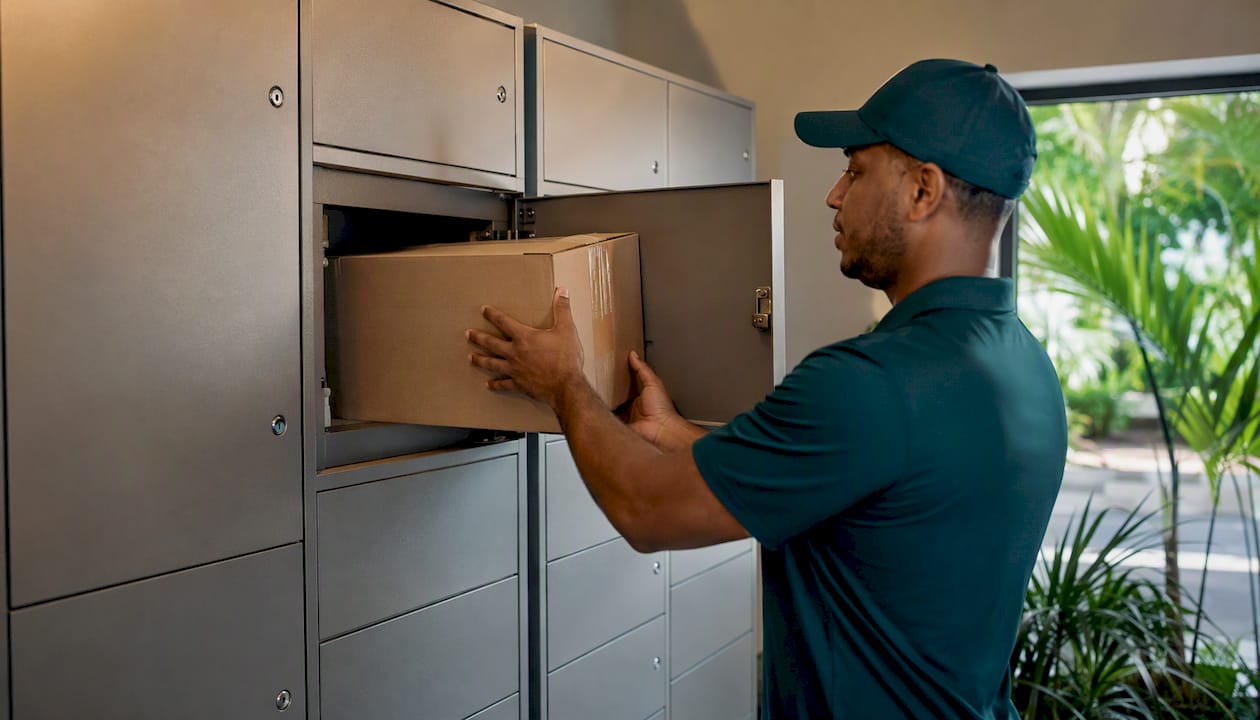
Cynthia Gardens is a residential apartment community in Boca Raton, Florida, offering quiet, garden-style living near Florida Atlantic University, Mizner Park, and Boca Raton’s beaches at 1675 NW 4th Ave, Boca Raton, FL 33432.
TL;DR:
- A secure package room is a controlled space where parcels are stored and retrieved safely, reducing theft and clutter. It combines access control, digital logging, and monitoring to ensure package accountability and resident satisfaction. Proper implementation and policies can significantly decrease theft rates and improve operational efficiency for property managers.
A secure package room is a dedicated, access-controlled space inside a residential building where carriers drop off parcels and residents retrieve them on their own schedule. A secure package room helps protect packages from theft and prevents delivery clutter in common areas.
Package theft is a significant issue for U.S. households, motivating property managers nationwide to treat secure parcel storage as a baseline amenity rather than a bonus feature.
Table of Contents
- What is a secure package room, exactly?
- How does a package room work?
- What features make a package room truly secure?
- Package room vs. parcel lockers: which one fits your building?
- Benefits for residents and property managers
- What does installation cost, and how long does it take?
- What are the downsides of a package room?
- How do you decide if a package room is right for your building?
- Research-backed theft stats and why they matter
- Key Takeaways
- Why the “secure” part matters more than the room itself
- Useful sources and further reading
What is a secure package room, exactly?
A package room becomes secure when it combines three things: controlled access (only authorized people can enter), a digital audit trail (every entry is logged with a timestamp), and active monitoring (cameras that record who goes in and out). Remove any one of those layers and you have a storage closet, not a secure room.
These rooms show up most often in:
- Apartment buildings and multifamily communities with 50+ units, where daily delivery volume makes lobby management unworkable
- Student housing complexes, where residents keep irregular hours and need 24/7 pickup access
- Condominiums and HOA communities, where a staffed front desk is not always practical
- Mixed-use residential buildings, where ground-floor retail complicates open delivery areas
Size varies widely. Buildings dedicate package rooms of varying sizes with shelving and zones for different parcel types, tailored to property size and needs. The key design requirement is that package size flexibility is built in from the start, since carriers deliver everything from envelopes to furniture boxes.
How does a package room work?
The operational flow is straightforward, but each step matters for security.
- Carrier drop-off. A delivery driver uses a carrier-specific access code or fob to enter the room. No staff involvement required.
- Intake logging. The system photographs the package, records a timestamp, and logs the carrier’s credential. Some setups use barcode scanning; higher-end installations use computer vision to read tracking numbers automatically.
- Shelf assignment. Staff or an automated system assigns the package to a labeled slot or zone. Oversized items go to a designated heavy-item area.
- Resident notification. The system sends an automated SMS, email, or app push notification to the resident. The message typically includes the carrier name, package size, and pickup instructions.
- Resident retrieval. The resident uses their individual mobile credential, key fob, or PIN to enter the room and collect their package. Their entry is logged.
- Audit trail update. The system marks the package as retrieved, closing the chain of custody. If a dispute arises later, the log shows exactly who entered and when.
That audit trail is the part most people underestimate. When a resident claims a package never arrived, the log either confirms it was delivered and retrieved or flags a gap that needs investigation. It shifts the conversation from “he said, she said” to documented fact.
What features make a package room truly secure?
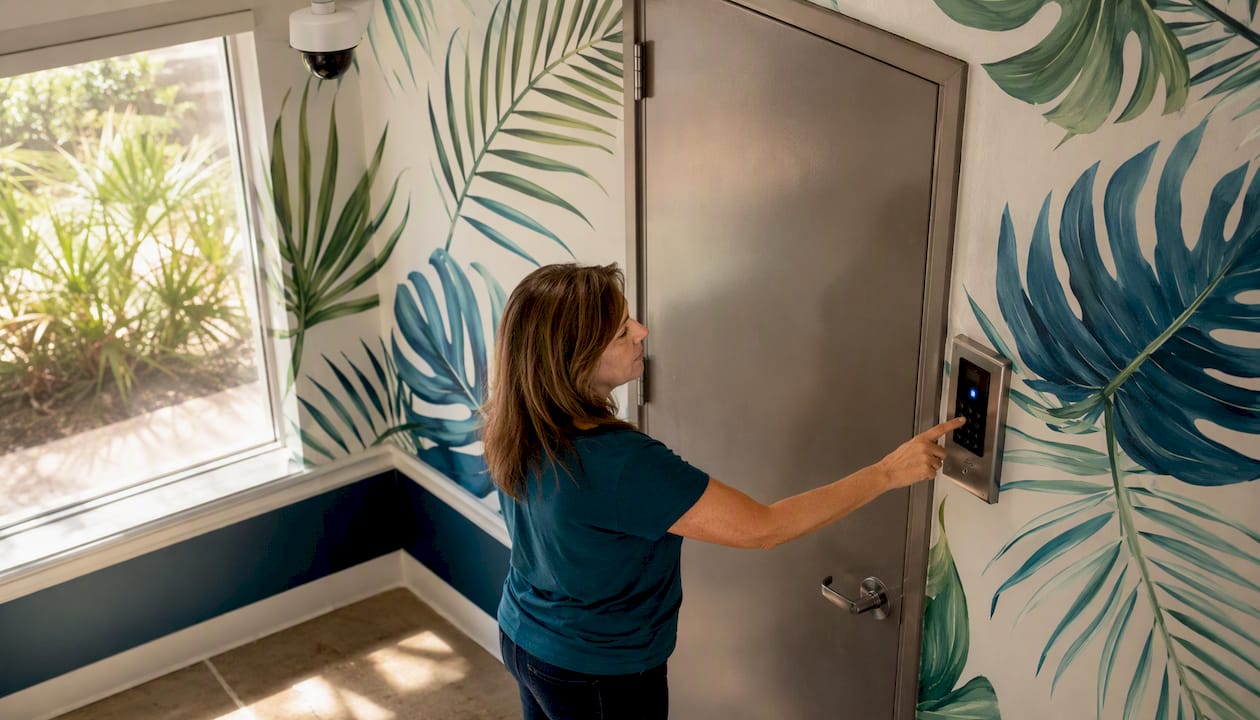
Access control is the foundation, and the type you choose matters more than most managers realize. Shared physical keys and static PINs are a genuine liability: keys get copied, codes get shared, and neither leaves an individual audit trail. Cloud-managed credentials tied to individual residents and carriers solve all three problems. When a resident moves out, their credential is revoked in seconds.
- Access control options: mobile app credentials, RFID key fobs, individual PINs (never shared), biometric readers for high-security installations
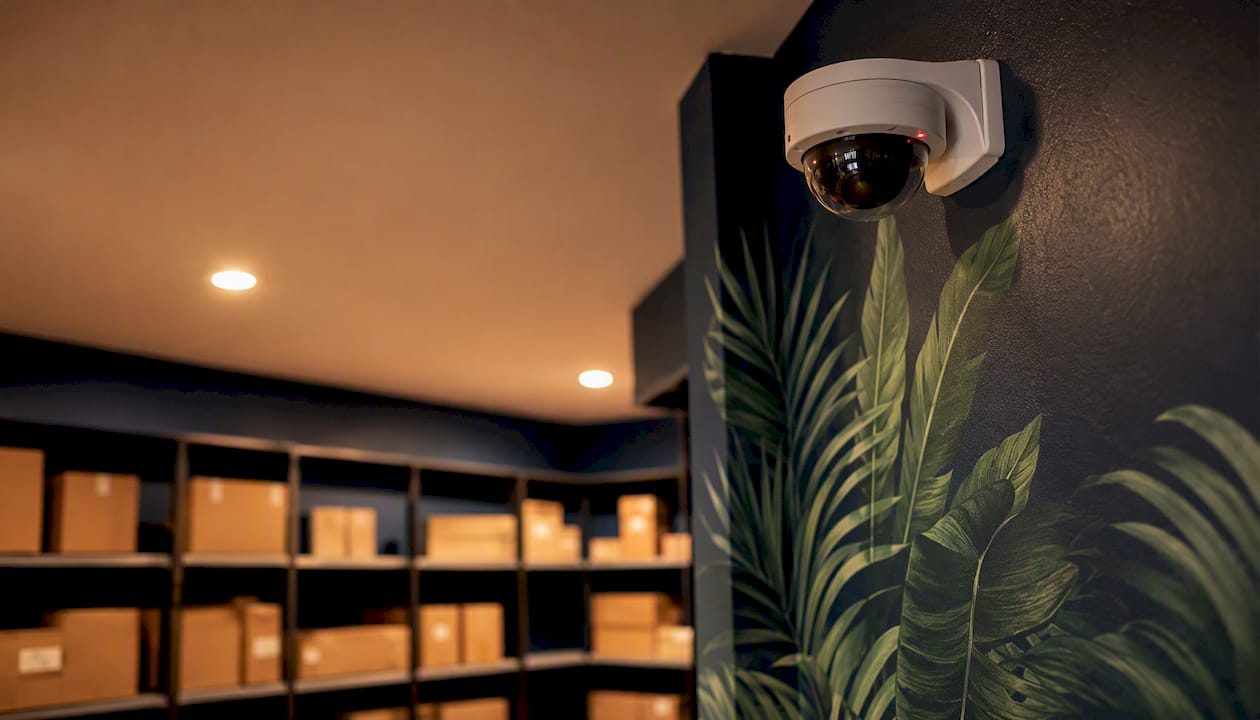
- Video surveillance: cameras should cover the entry point, the full interior, and any blind corners; motion-triggered recording reduces storage costs
- Digital intake logs: timestamped photos at drop-off and retrieval, tied to specific credentials rather than just door-open events
- Package-level tracking: computer vision or guided shelving systems that link a specific parcel to a specific pickup event, not just a room entry
- Shelving and storage design: labeled slots for standard parcels, a heavy-item floor zone, a separate refrigerated section if the building handles grocery deliveries
- Software integration: connection to property management platforms (Yardi, RealPage, or similar) so notifications and logs sync with existing resident records
Pro Tip: Camera coverage confirms who entered the room, but it cannot tell you which package they took. If package-level accountability matters for your building, pair cameras with either individual compartments or a computer vision intake system that photographs each parcel at placement and retrieval.
The smart security technologies that support access control in package rooms overlap heavily with broader apartment security systems, which means a single infrastructure investment can serve multiple purposes.
Package room vs. parcel lockers: which one fits your building?
| Dimension | Access-controlled room | Locker bank | Hybrid approach |
|---|---|---|---|
| Space footprint | Moderate (200–600 sq ft) | Small per unit, large total | Moderate + locker alcove |
| Package size flexibility | High — any size fits | Limited by compartment size | High |
| Upfront cost | Lower | Higher | Moderate to high |
| Ongoing costs | Software, staffing, maintenance | Software, hardware maintenance | Both cost streams |
| Courier drop-off speed | Fast — single entry point | Slower — each parcel needs a compartment | Fast for room; moderate for lockers |
| Security features | Cameras, access log, audit trail | Individual compartment locks, audit trail | Combined |
| Scalability | Easy to add shelving | Requires hardware expansion | Flexible |
| Resident convenience | Self-service, any hour | Self-service, any hour | Best of both |
When a room makes more sense: buildings with highly variable package sizes, tighter budgets for hardware, or strong on-site staff who can enforce intake policies.
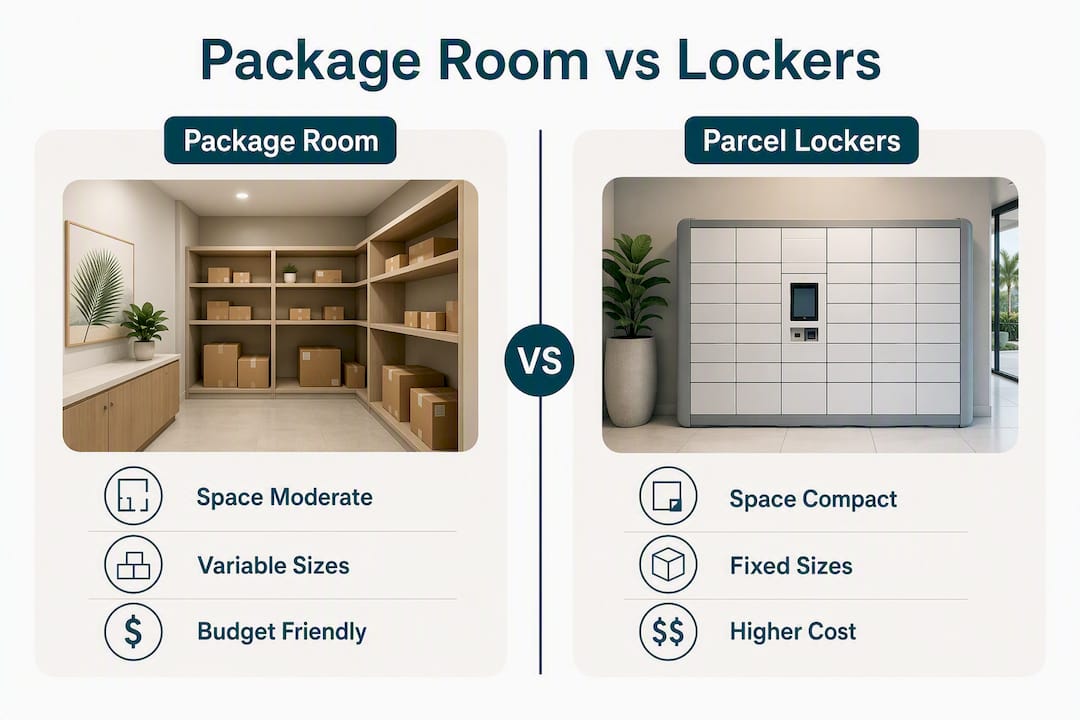
When lockers make more sense: high-value deliveries, after-hours-only buildings, or properties where residents want individual compartment security rather than shared-room access.
The hybrid approach is increasingly the practical answer for higher-volume sites: locker banks handle high-value or after-hours pickups, while an overflow room manages oversized items and delivery surges. Neither system alone handles every scenario as well as the two together.
- Choose a room when budget and package variety are the primary constraints
- Choose lockers when per-package accountability and resident privacy are the priority
- Choose a hybrid when volume is high and both constraints apply
Benefits for residents and property managers
Residents get three things they actually care about: their packages don’t disappear, they can pick up at midnight if they want to, and they get a notification the moment something arrives. That last point matters more than it sounds. Real-time package tracking removes the anxiety of wondering whether a delivery made it, which builds the kind of low-friction trust that keeps residents renewing leases.
Resident-facing benefits:
- Theft reduction from unmanaged delivery areas to nearly zero (<0.1%) in well-run rooms
- Flexible 24/7 pickup without staff assistance
- Instant notifications via SMS, email, or app
- Fewer missed deliveries and carrier redelivery attempts
Property manager benefits:
- Full audit trail for dispute resolution and liability protection
- Reduced front-desk time spent triaging deliveries
- Documented chain of custody that protects the property in case of claims
- Higher resident satisfaction scores, which support lease renewals
Nearly 30% of U.S. households experienced package theft in 2025. A properly managed secure room with access control, cameras, and a digital audit trail can reduce that exposure to a very low level for residents in the building.
What does installation cost, and how long does it take?
Package rooms generally cost less upfront than full locker banks, but the final number depends on the building’s size, existing infrastructure, and the technology tier chosen.
| Cost item | Typical range | One-time or ongoing |
|---|---|---|
| Access control hardware | — | One-time |
| Camera system | — | One-time |
| Shelving and room fit-out | — | One-time |
| Package management software | $50/month | Ongoing |
| Monitoring and maintenance | $100/month | Ongoing |
Ranges are illustrative based on vendor guidance; actual quotes will vary by building size and vendor.
ROI drivers worth quantifying before you budget: theft reduction (fewer resident claims and reimbursements), front-desk hours recovered, and the retention value of a documented amenity that residents cite when renewing.
Implementation timeline:
- Site survey and space planning (1–2 weeks)
- Access control and camera installation (1–3 days)
- Software setup and credential provisioning (3–5 days)
- Carrier onboarding and code distribution (1–2 weeks)
- Resident communication and rollout (1 week)
Most buildings complete the full process in 4–6 weeks from contract signing to first live delivery.
What are the downsides of a package room?
The biggest operational risk is overflow. During peak delivery weeks, a room that works perfectly in October can become a cluttered, unsortable mess by mid-December. Without a documented overflow policy and a pickup-window rule, packages pile up and the room’s security value degrades fast.
- Space constraints: a room sized for average volume will be overwhelmed during holiday surges without a plan
- Courier compliance: not every carrier will follow drop-off protocols; some will leave packages outside the room if the process feels slow or unfamiliar
- Shared-access accountability gap: when multiple residents have room access and no package-level tracking exists, a missing parcel becomes nearly impossible to trace
- Staffing requirements: secure package rooms require active enforcement of intake rules; without it, they drift toward chaos
- No regular pickup policy: packages that sit for weeks create overflow and signal to residents that the system is not managed
Pro Tip: Set a maximum dwell time policy — typically 5–7 days — and send a second automated reminder before that window closes. It keeps the room from becoming a long-term storage unit and reduces overflow pressure during high-volume periods.
Red flags to watch for: no audit logs, a single shared PIN for all residents, cameras that cover only the door (not the interior), and no documented intake procedure for carriers.
How do you decide if a package room is right for your building?
Start with a simple needs audit before committing to hardware.
Decision checklist:
- How many units does the building have, and what is the average daily package volume?
- Is there a dedicated space of at least 150–200 square feet that can be secured?
- Does the building have on-site staff who can enforce intake policies, or will the system need to be fully self-service?
- What is the budget for upfront hardware versus ongoing software costs?
- How often do oversized deliveries arrive, and is there space to handle them separately?
- What does peak-week volume look like, and can the room absorb a 3x surge?
Questions to ask vendors or contractors:
- How are individual credentials managed, and how quickly can a credential be revoked?
- What does the audit record include: door-open events only, or package-level photos and timestamps?
- What camera coverage does the installation include, and are blind spots addressed?
- How does the system handle overflow, and does it alert staff when capacity thresholds are reached?
- What carrier onboarding support is included, and how are new carriers added?
- What is the support SLA for hardware failures?
Policy items to document before go-live:
- Intake rules for carriers (required drop-off procedure, prohibited behaviors)
- Resident pickup windows and maximum dwell time
- Oversized-item handling and notification process
- Procedure for disputed or missing packages
Research-backed theft stats and why they matter
The scale of the problem is not abstract. Package theft affected nearly 30% of U.S. households in 2025, and the rate has climbed steadily as e-commerce volume grows. Global parcel shipping volume has expanded significantly over the past decade, and multifamily properties absorb a disproportionate share of that volume.
Properly managed secure rooms with layered access control, cameras, and digital audit trails can reduce theft rates to a very low level compared to unmanaged delivery areas, according to Postal Solutions.
| Metric | Unmanaged delivery area | Well-run secure package room |
|---|---|---|
| Household theft exposure | ~30% annually (2025 U.S. data) | <0.1% annually (well-run secure package room, Postal Solutions) |
| Dispute resolution speed | Days to weeks (no log) | Hours (timestamped audit trail) |
| Carrier compliance | Variable | Documented per-drop |
| Resident satisfaction impact | Negative | Positive, supports renewals |
For property managers, the liability angle is as important as the theft rate. A documented audit trail showing every package entry and exit is the difference between a defensible position and an expensive he-said-she-said dispute. The NMHC Package Delivery Report consistently identifies package management as one of the top amenity priorities for multifamily residents, reinforcing that this is not a niche concern.
Key Takeaways
A secure package room works because it layers access control, a digital audit trail, and active monitoring into a single dedicated space, making it the most practical theft-reduction tool for multifamily buildings.
| Point | Details |
|---|---|
| Core definition | A secure package room is an access-controlled, monitored, and logged space for parcel drop-off and resident retrieval. |
| When a room is the right choice | Buildings with variable package sizes, moderate budgets, and on-site staff to enforce intake policies benefit most. |
| Implementation priority | Deploy individual, revocable credentials and a digital audit trail before anything else — shared keys and static PINs undermine the whole system. |
| Plan for overflow | Size the room for peak-week volume, not average volume, and set a maximum dwell-time policy from day one. |
| Theft reduction impact | Nearly 30% of U.S. households experienced package theft in 2025; a well-run secure room can reduce theft rates to nearly zero (<0.1%). |
Why the “secure” part matters more than the room itself
The property management industry has spent years debating lockers versus rooms, hardware versus software, staffing versus self-service. What gets less attention is the gap between a room that looks secure and one that actually is.
A door with a keypad is not a secure package room. It becomes one when every entry is tied to an individual credential, every package is photographed at intake, and the system flags anomalies automatically. The physical space is almost secondary. A well-run 200-square-foot room with cloud-managed access and a full audit trail outperforms a 600-square-foot room with a shared PIN and no cameras every single time.
At Cynthiagardens, the focus on tech-forward apartment living reflects exactly this principle: amenities only deliver value when the systems behind them are built to hold up under real-world use. For property teams considering a package room, the practical next step is a one-hour needs audit: count your daily packages, measure your available space, and decide whether your current staffing model can support active enforcement. That audit will tell you more than any vendor pitch.
Useful sources and further reading
- NMHC Package Delivery Report — Industry research from the National Multifamily Housing Council on resident priorities and package management trends
- Swiftlane: How to Set Up a Package Room — Step-by-step implementation guidance covering access control options, cost context, and common setup mistakes
- Statista: Global Parcel Shipping Volume — Data on worldwide parcel volume growth, providing context for why package management demand is rising