
TL;DR:
- Finding a cat-friendly rental benefits from early search planning, detailed pet resumes, and understanding fee structures.
- Private landlords often provide more flexibility than corporate management, making personal judgment calls easier.
Searching for a new place to rent is already stressful. Searching as a cat owner? The challenges multiply fast. You see “pets allowed” in a listing, get excited, then discover that dogs are welcome but cats are not, or that there’s a two-pet maximum you didn’t expect, or that the pet deposit doubles your move-in costs. These tips for finding cat-friendly housing will help you cut through vague listings, prepare a standout application, negotiate smarter, and actually land a place where both you and your cat can settle in comfortably.
Table of Contents
- Key takeaways
- 1. The best tips for finding cat-friendly housing start with timing
- 2. Look beyond the listing for what “cat-friendly” actually means
- 3. Know your legal rights before you apply
- 4. Build a one-page cat resume before you start applying
- 5. Understand every cat-related fee before you sign anything
- 6. Negotiate fees strategically instead of accepting the first number
- 7. Choose between private landlords and property management companies wisely
- 8. Evaluate the unit in person with your cat’s needs in mind
- 9. Plan your cat’s transition into the new space from day one
- 10. Maintain transparent communication with your landlord throughout the lease
- My honest take on renting with a cat after years of doing it
- Find your cat-friendly home at Cynthiagardens
- FAQ
Key takeaways
| Point | Details |
|---|---|
| Start your search early | Begin looking 6 to 8 weeks ahead, since pet-friendly units fill quickly and give you little time to negotiate. |
| Build a cat resume | A one-page document with vet records and behavior notes addresses landlord concerns before they become objections. |
| Know the fee types | Pet deposits, non-refundable fees, and monthly pet rent are three separate charges. Understand each before signing. |
| Negotiate with private landlords | Individual landlords are more likely to bend on pet policies than large management companies. |
| Get everything in writing | A signed pet addendum protects you from surprise policy changes or disputed fees mid-lease. |
1. The best tips for finding cat-friendly housing start with timing
Starting your search 6 to 8 weeks before your move-in date gives you a real advantage. Cat-friendly units are a smaller subset of already-limited pet-friendly inventory, and they move fast. Waiting until the last few weeks means you’re choosing from leftovers, not the best options.
Use platforms that let you apply specific filters like Zillow or Apartment List to narrow results by pet type. Search terms like “cats welcome,” “feline friendly,” and “no breed restrictions” turn up listings that a generic “pet friendly” filter misses entirely.
Pro Tip: Call the property before touring. Ask directly: “Do you allow cats specifically?” Many listings say “pets allowed” but mean dogs only. Confirming upfront saves everyone time.
2. Look beyond the listing for what “cat-friendly” actually means
A listing that says “cats okay” tells you almost nothing about the actual experience of living there with a feline. The real question is whether the space supports a cat’s daily needs without putting you at legal or financial risk.
Look for these specific features when evaluating a unit:
- Screened windows or balconies to allow safe ventilation without escape risks
- Hard flooring options that are easier to clean and less likely to hold odors
- Storage space for cat supplies including litter boxes, scratching posts, and food stations
- Quiet neighbors since cats are sensitive to noise, and a stressful environment can lead to destructive behavior during the adjustment period
- Proximity to a vet clinic or 24-hour emergency animal hospital
Also, pay attention to whether the building has a pet waste station. It signals that management has genuinely thought about pet owners, not just tacked “pets allowed” onto the listing to fill vacancies. These are the details that separate truly cat-friendly living spaces from marketing language.
3. Know your legal rights before you apply
Not every renter knows that certain cats are legally protected from blanket no-pets policies. Under the Fair Housing Act, landlords must accommodate assistance animals, which includes emotional support cats, even in buildings that otherwise prohibit pets. The standard response window is 10 business days.
An emotional support cat is not the same as a pet under housing law. You are not required to pay pet fees for a documented emotional support animal. You are required to provide documentation from a licensed mental health professional.
If your cat qualifies, this is worth knowing before you write off a building entirely. That said, do not attempt to misrepresent a pet as an emotional support animal. It damages trust, and landlords are increasingly savvy about verification.
4. Build a one-page cat resume before you start applying
This single step changes the dynamic of your entire rental application. A well-prepared pet resume shifts the landlord’s thinking from “this person has a cat” to “this is a responsible owner who minimizes risk.”
Here’s what a strong cat resume includes:
- Your cat’s name, age, breed, and weight
- Current vaccination records including rabies and FVRCP
- Spay/neuter documentation
- A recent vet reference with contact information
- Behavior notes (indoor-only, non-aggressive, litter trained)
- A clear photo of your cat looking calm and clean
- A personal reference from a previous landlord confirming no pet damage
Landlords worry about three things: liability, damage, and noise. The strongest pet resume speaks directly to each of those concerns, not just your emotional attachment to your cat. Keep it to one page. No lengthy personal stories.
Pro Tip: Attach a copy of your renters insurance policy that includes pet liability coverage. It tells the landlord you have already thought about worst-case scenarios.

5. Understand every cat-related fee before you sign anything
This is where many renters get blindsided. There are three distinct types of pet-related charges, and conflating them can cost you hundreds of dollars.
| Fee type | Refundable? | Typical range | Notes |
|---|---|---|---|
| Pet deposit | Yes | $200 to $500 | Returned if no damage at move-out |
| Non-refundable pet fee | No | $100 to $300 | One-time charge, not returned |
| Monthly pet rent | No | $25 to $100/month | Ongoing addition to base rent |
You may be charged one, two, or all three of these depending on the property. Always clarify which charges apply and whether they are refundable before signing. The lease may not make this clear on its own.
Always request a written pet addendum that lists the approved animals, all fees with their refundability status, specific rules, and the signatures of both parties. This document protects you from mid-lease policy changes or disputes at move-out. For a deeper look at your rights around pet-related charges, the pet deposit guide at Cynthiagardens covers what renters in Florida specifically need to know.
6. Negotiate fees strategically instead of accepting the first number
Most renters assume pet fees are fixed. They are often not. Negotiating your fee structure works best when you approach it as a risk management conversation, not a plea for a discount.
Offer a higher refundable deposit in exchange for eliminating or reducing the monthly pet rent. For example, if the landlord wants $50 per month in pet rent, propose a $600 fully refundable deposit instead. Over 12 months, the math is identical for them, but you get the money back if no damage occurs.
You can also offer a damage mitigation plan: monthly carpet treatments, use of furniture covers, regular vet check-ups on record. These specifics tell the landlord you have a real plan, not just good intentions.
Pro Tip: Ask if there’s a trial period option where the pet fee structure is reviewed after 90 days of tenancy. Many individual landlords will agree to this, and it removes their perceived risk.
7. Choose between private landlords and property management companies wisely
This is one of the most underappreciated cat-friendly rental tips. Private landlords generally offer more flexibility on pet policies compared to large property management companies, which follow corporate guidelines uniformly.
A private landlord can make a judgment call. They can look at your cat resume, meet you, and decide they feel confident. A property management company usually cannot make exceptions to their pet policy, no matter how compelling your application is.
That does not mean property companies are off-limits. Some larger communities have genuinely cat-forward policies with dedicated amenities. But if you are facing rejection or unusual restrictions, a private landlord is almost always the more flexible path.
Local Facebook groups, neighborhood apps, and community boards are good places to find private landlord listings that never make it onto major rental platforms. These are often the most flexible, least advertised units available.
8. Evaluate the unit in person with your cat’s needs in mind
When you visit a potential rental, you are not just checking whether you like the space. You are assessing it as a cat environment. Walk through it with that specific lens.
Ask the following questions directly to the landlord or property manager:
- Are there any common areas where cats are not allowed?
- What is the policy on noise complaints involving pets?
- Have there been any issues with previous pet-owning tenants?
- Are there any planned fee or policy changes scheduled during the lease term?
Beyond the questions, use the walkthrough to document the existing condition of the unit. Video and photo documentation on move-in day protects your deposit at move-out by establishing a clear baseline. A scratch on the baseboard that was there before you moved in should not cost you money when you leave.
Also assess the neighborhood. Proximity to green space, low traffic streets, and cat-friendly neighborhoods with walkable sidewalks matters for your quality of life even if your cat stays indoors.
9. Plan your cat’s transition into the new space from day one
Finding a good unit is only half the challenge. Helping your cat settle without triggering complaints or damage is the other half. Cats are territorial and respond to new environments with anxiety, which can lead to scratching, vocalizing, or litter box issues if not managed carefully.
Set up a dedicated anchor space before letting your cat explore the whole apartment. A single quiet room with familiar bedding, the litter box, food, and water gives the cat a safe base to decompress. Expand access gradually over a few days.
Review best practices for moving with pets before moving day. Having a plan reduces the chaos, which directly reduces your cat’s stress response. A calm move-in also means fewer scratched walls and less noise, which protects your standing with the landlord from the start.
10. Maintain transparent communication with your landlord throughout the lease
Transparent communication is not just good advice for move-in. It is the foundation of a lease you can renew without drama. If your cat damages something, report it and offer to repair it before it becomes a security deposit dispute. If a neighbor complains, address it proactively.
Landlords who trust you as a tenant are significantly more likely to accommodate future requests, including lease renewals, fee negotiations, and policy flexibility. You built that trust with your pet resume before you even moved in. Keep building it with consistent behavior throughout the lease.
My honest take on renting with a cat after years of doing it
I have helped a lot of renters navigate pet-friendly searches, and the pattern I keep seeing is that people treat the cat as something to apologize for. They hedge, they over-explain, they accept unfair terms because they feel lucky just to be considered.
That framing costs you money and options. The renters who get the best outcomes are the ones who come in prepared and confident. A complete pet resume, upfront documentation, and a clear negotiation offer signals that you are a low-risk, high-responsibility tenant. That is what landlords actually want.
I have also seen people skip private landlords entirely because they assume larger communities are more professional. In my experience, the opposite is often true for cat owners. Individual landlords will make judgment calls. Corporate policies rarely will.
One more thing: do not rush this process. The six-to-eight week window is not just logistical. It is psychological. When you are not desperate, you negotiate better, ask harder questions, and walk away from bad deals. Give yourself that runway.
— Ayman
Find your cat-friendly home at Cynthiagardens
If you are searching for a pet-friendly apartment in Boca Raton that actually delivers on its promises, Cynthiagardens is worth a close look.
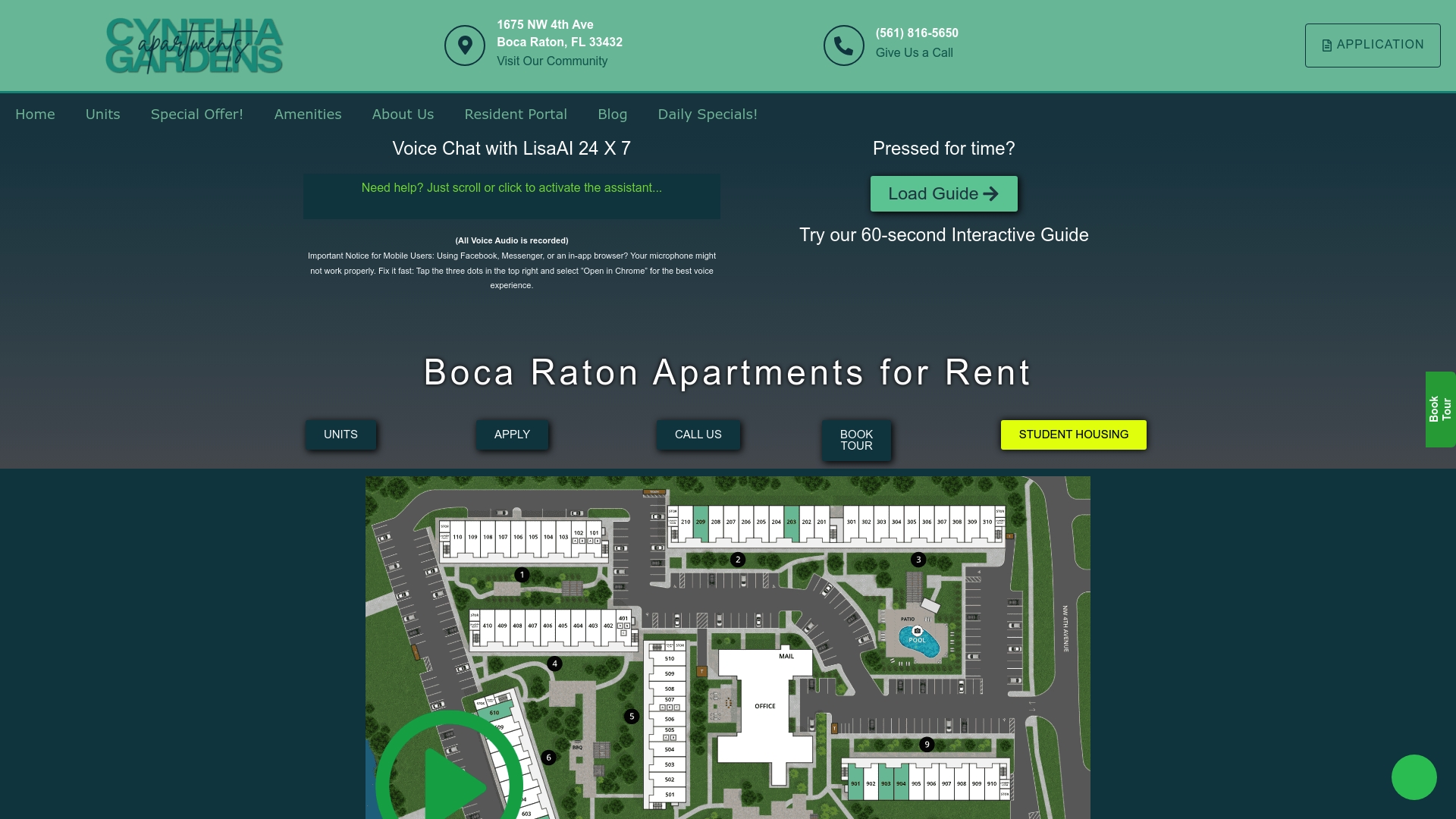
Cynthiagardens offers modern one-bedroom apartments with transparent pricing, no hidden fees, and community policies designed with pet owners in mind. Explore apartment styles and features to see the specific layouts and amenities available, including outdoor spaces and pet-friendly common areas. You can also review the community rules to understand exactly what the pet policies look like before you ever schedule a tour. Virtual tours, AI chat support, and an interactive property map make the process fast and low-pressure.
FAQ
What makes a rental truly cat-friendly?
A truly cat-friendly rental explicitly permits cats by name in the lease, has no vague breed or size restrictions that could apply to cats, and offers features like screened windows and hard floors. Pet waste stations and quiet common areas are signs the management has planned for pet owners.
How do I negotiate pet fees as a cat owner?
Offer a higher refundable security deposit in exchange for reduced or eliminated monthly pet rent, and present a damage mitigation plan alongside your cat resume. Reducing landlord risk with specifics is more effective than asking for a lower number without context.
Do I have to pay pet fees for an emotional support cat?
No. Under the Fair Housing Act, landlords must provide reasonable accommodations for emotional support animals, and pet fees do not apply to documented assistance animals. You will need documentation from a licensed mental health professional.
What should I put in a cat resume for a rental application?
Include your cat’s name, age, breed, photo, vaccination records, spay/neuter status, a vet reference, behavior notes, and a reference from a prior landlord. Keep it to one page and frame it around landlord risk concerns like damage, noise, and liability.
Is it better to rent from a private landlord or a property management company as a cat owner?
Private landlords typically offer more flexibility on pet policies and are more open to negotiation. Property management companies follow corporate policies uniformly, which leaves less room for exceptions, even with a strong application.