TL;DR:
- Walkability significantly influences rental prices, demand, and everyday quality of life for tenants. Improving walkability can raise rents by over $300 monthly, but savings from reduced transportation costs may offset this premium. Renters should assess pedestrian infrastructure and neighborhood safety to make informed, cost-effective housing choices.
Walkability is defined as a neighborhood’s capacity to support daily errands, commutes, and leisure on foot, without requiring a car for every trip. The role of walkability in renting goes far beyond convenience. It shapes how much you pay, how you feel day to day, and how stable your rent will be over time. Tools like Walk Score quantify this on a 0 to 100 scale, but the real picture is more layered. Research from VTPI and RENX shows that 44% of renters in 2024 rated walkable access to retail as a non-negotiable factor. That number tells you exactly how much weight pedestrian access carries in today’s rental market.
How does walkability affect rental pricing and housing demand?
Walkability drives rental prices up, and the data is specific. Improving walkability from a “fair” to a “good” rating correlates with a $302 monthly increase in residential rents and $82 per square foot higher property values. That is not a rounding error. It means a renter choosing between two otherwise identical apartments in different neighborhoods could be paying over $3,600 more per year simply because one block has better sidewalks, denser intersections, and closer retail.
The economic logic is straightforward. Walkability improvements increase local foot traffic, attract new businesses, and raise retail spending in the surrounding area. Landlords in those zones recognize the demand and price accordingly. From an investor’s perspective, walkable neighborhoods attract a wider pool of tenants, shorten vacancy periods, and hold property value better during market downturns.
There is a counterbalancing benefit worth knowing. Walkable neighborhoods reduce car dependency, which means lower transportation costs for renters. A household that eliminates one car can save between $8,000 and $12,000 annually according to AAA estimates. That savings can offset a significant portion of the rent premium, making a walkable apartment genuinely more affordable in total cost terms even when the sticker price is higher.
| Walkability level | Typical monthly rent range | Key features |
|---|---|---|
| Low (Walk Score 0–49) | Lower base rent | Car required for most trips |
| Moderate (Walk Score 50–69) | Mid-range rent | Some walkable destinations nearby |
| Good (Walk Score 70–89) | $200–$300 above low-walkability units | Retail, transit, parks accessible on foot |
| Very walkable (Walk Score 90–100) | Highest premium tier | Daily errands require no car |
Pro Tip: When comparing apartments, calculate total monthly cost by subtracting estimated transportation savings from the rent difference. A $250 higher rent in a walkable neighborhood often costs less overall than a cheaper unit where you need a car for everything.
What lifestyle and quality-of-life benefits does walkability provide renters?
Walkability provides renters with measurable improvements in physical health, daily convenience, and social connection. Reduced transportation costs are the most quantifiable benefit, but the quality-of-life gains extend well beyond the wallet. Research links better pedestrian infrastructure to lower cholesterol prevalence in neighborhood populations, which points to a direct health dividend from simply living somewhere you can walk regularly.
Renters consistently prioritize specific amenities when evaluating neighborhoods. The top factors that walkability delivers include:
- Retail access: Grocery stores, pharmacies, and restaurants within a 10-minute walk reduce errand time and stress significantly.
- Transit connectivity: Walkable neighborhoods typically sit near bus stops, light rail, or bike-share stations, expanding mobility without a car.
- Parks and green space: Proximity to parks supports mental health and provides social gathering points that build community.
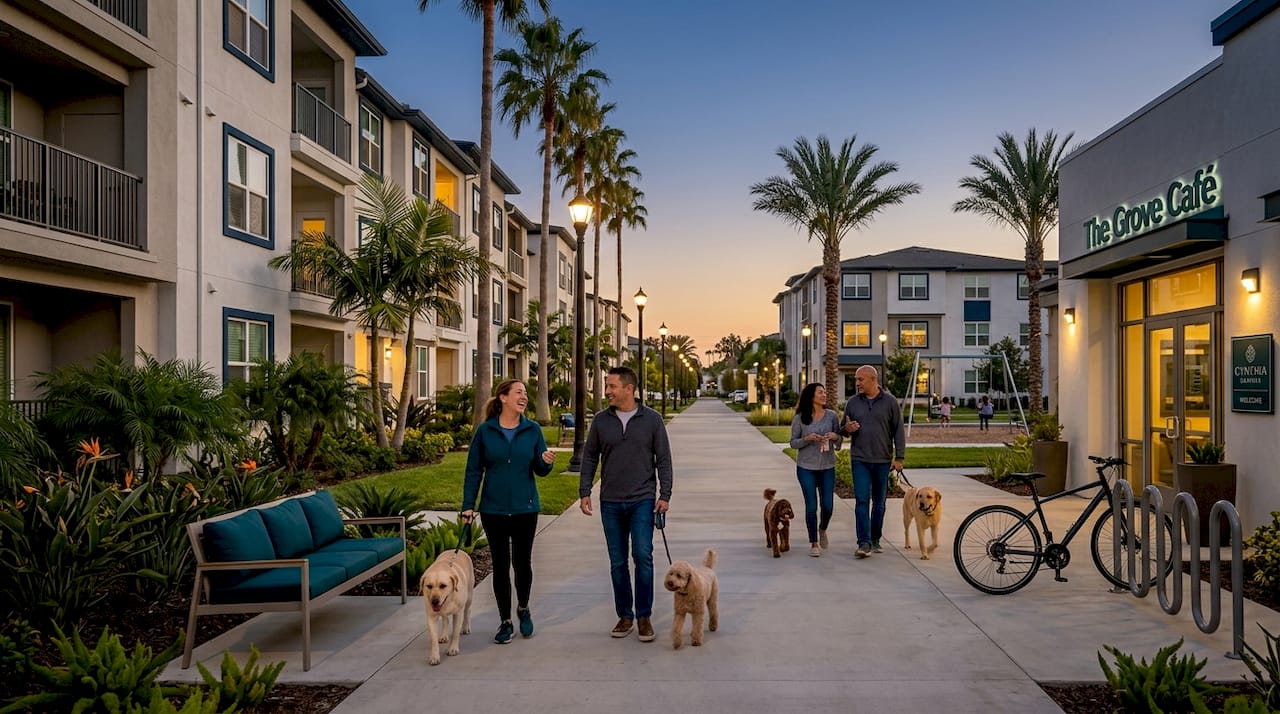
- Safety perception: Well-lit, populated streets with active storefronts feel safer, and that perception directly influences where renters choose to live.
- Reduced commute friction: Living close to work or transit hubs cuts daily commute time, which renters consistently rank as a top quality-of-life factor.
The subjective side of walkability matters as much as the objective metrics. A 2026 multimodal analysis of rent determinants found that perceptions of safety, beauty, and neighborhood liveliness significantly influence what renters are willing to pay. This means a street that feels welcoming and active commands a premium even when its Walk Score is identical to a duller block nearby. For renters, this is worth understanding because it explains why two apartments with the same score can feel completely different to live in.
Pro Tip: Visit any prospective neighborhood on foot at different times of day, including evenings and weekends. A block that looks fine at noon can feel isolated or unsafe at 8 p.m. Your lived experience of walkability matters more than any app score.
You can also explore how apartment convenience factors interact with walkability when evaluating your next rental.
What are the challenges of walkability: gentrification and rent volatility?
Walkability improvements do not benefit all renters equally. A 2025 study linking walkability to neighborhood change found that better pedestrian infrastructure and higher connectivity scores are positively associated with both residential and retail gentrification. In plain terms: when a neighborhood gets more walkable, it often gets more expensive, and existing renters can get priced out.
The mechanism is predictable. City investments in sidewalks, bike lanes, and streetscaping signal to developers and landlords that a neighborhood is on an upward trajectory. New businesses follow foot traffic. Property values rise. Landlords raise rents at lease renewal. Renters who moved in before the upgrades face a choice between absorbing the increase or relocating. This cycle has played out in neighborhoods across Miami, Austin, and Portland, where walkability scores climbed sharply in the years preceding significant rent increases.
Walkability upgrades can accelerate neighborhood change across lease renewal cycles, meaning the risk is not theoretical. It is timed. A renter signing a 12-month lease in a neighborhood with active streetscape projects may face a noticeably different rent offer at renewal. The practical implication is that renters should treat visible infrastructure investment as a forward-looking rent signal, not just a current amenity.
This does not mean avoiding walkable neighborhoods. It means timing your decisions carefully. If you are moving into a neighborhood mid-improvement cycle, negotiate a longer lease term to lock in current rates. If you are evaluating a neighborhood that is already highly walkable and stable, the gentrification risk is lower because the premium is already priced in. The dangerous middle ground is a neighborhood that is just beginning its walkability transformation.
Understanding rental affordability dynamics in your target city can help you read these signals before signing a lease.
How can renters effectively assess walkability when choosing a rental?
Walk Score is a useful starting point, but walkability scores alone should not drive your decision. Street infrastructure quality, intersection density, and actual pedestrian safety vary significantly within the same score range. A neighborhood rated 72 with wide, well-lit sidewalks and frequent crosswalks is a fundamentally different experience from one rated 74 with cracked pavement, no shade, and fast-moving traffic.
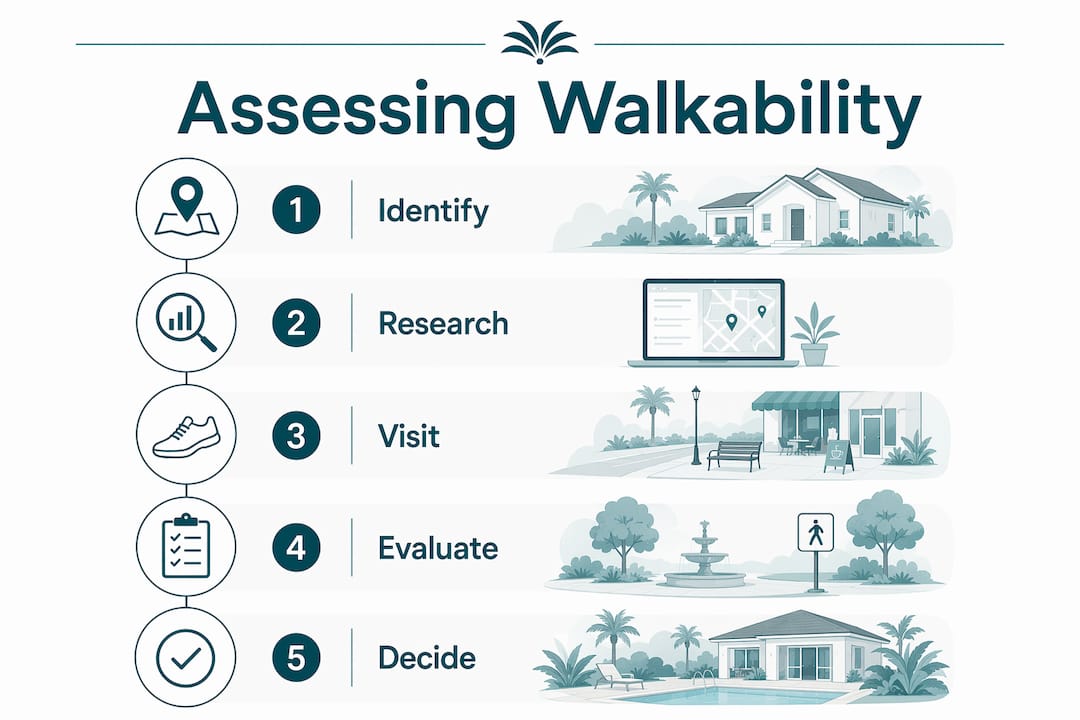
Here is a practical assessment process you can apply to any rental you are considering:
- Run the Walk Score check first. Use walkscore.com to get baseline scores for walkability, transit, and bikeability. This narrows your search before you invest time in site visits.
- Map your actual routes. Identify the three to five destinations you visit most often: your workplace, grocery store, gym, and transit stop. Use Google Maps in walking mode to check real distances and route quality.
- Inspect the physical infrastructure. On your site visit, check sidewalk continuity, crosswalk placement, street lighting, and whether pedestrian signals exist at major intersections. These details determine your daily experience more than any score.
- Assess safety at street level. Look for active storefronts, other pedestrians, and good sightlines. Empty blocks with few windows facing the street feel unsafe regardless of their Walk Score.
- Ask about planned changes. Ask the landlord or leasing agent whether the city has announced any road projects, rezoning, or development plans nearby. These are the early signals of both improved walkability and potential rent increases.
- Check transit frequency. A bus stop two blocks away means nothing if the bus runs every 45 minutes. Use Google Maps or the local transit authority’s app to verify actual service frequency during your commute hours.
Pro Tip: Check your city’s public works or planning department website for neighborhood improvement plans. A streetscape project approved today often translates into a rent increase within 18 to 24 months.
For renters in Boca Raton specifically, apartments near retail and dining offer a practical way to experience walkability benefits without paying the highest urban premiums.
Key takeaways
Walkability is one of the most financially and physically consequential factors in any rental decision, affecting both what you pay and how you live.
| Point | Details |
|---|---|
| Walkability raises rent | Moving from fair to good walkability adds an average of $302 per month to residential rents. |
| Total cost can still favor walkable units | Eliminating car dependency can offset rent premiums through transportation savings of thousands per year. |
| Perception shapes price | Safety, beauty, and neighborhood liveliness influence rent willingness as much as objective Walk Scores. |
| Gentrification is a real risk | Walkability improvements are linked to gentrification; renters should monitor infrastructure investment as a rent signal. |
| Go beyond the score | Sidewalk quality, intersection density, and transit frequency matter more than headline walkability numbers. |
Why I think most renters undervalue walkability until it’s too late
I have reviewed hundreds of rental decisions, and the pattern is consistent. Renters focus on square footage, in-unit laundry, and parking. Walkability gets treated as a nice-to-have rather than a financial and lifestyle variable with real numbers behind it. That is a mistake.
The $302 monthly rent premium tied to improved walkability is not just a landlord’s margin. It reflects what the market has already decided that access is worth. When you choose a less walkable apartment to save $150 per month, you may be spending $400 more on transportation without realizing it. The math rarely works out in favor of the cheaper, less walkable unit.
What I find most underappreciated is the safety and aesthetics dimension. Renters often dismiss subjective neighborhood feel as a soft factor. Research says otherwise. The perceptual factors driving rent include beauty and liveliness alongside hard infrastructure data. A neighborhood that feels good to walk through commands a real premium, and that premium tends to hold its value over time.
My honest advice: treat walkability as a financial decision first, a lifestyle decision second. Calculate your total cost of living including transportation before comparing rents. Visit neighborhoods on foot before signing anything. And if you see sidewalk construction or new bike lanes going in, factor that into your lease length negotiation. The renters who get ahead of these signals pay less and live better.
— Ayman
Find your walkable apartment at Cynthiagardens
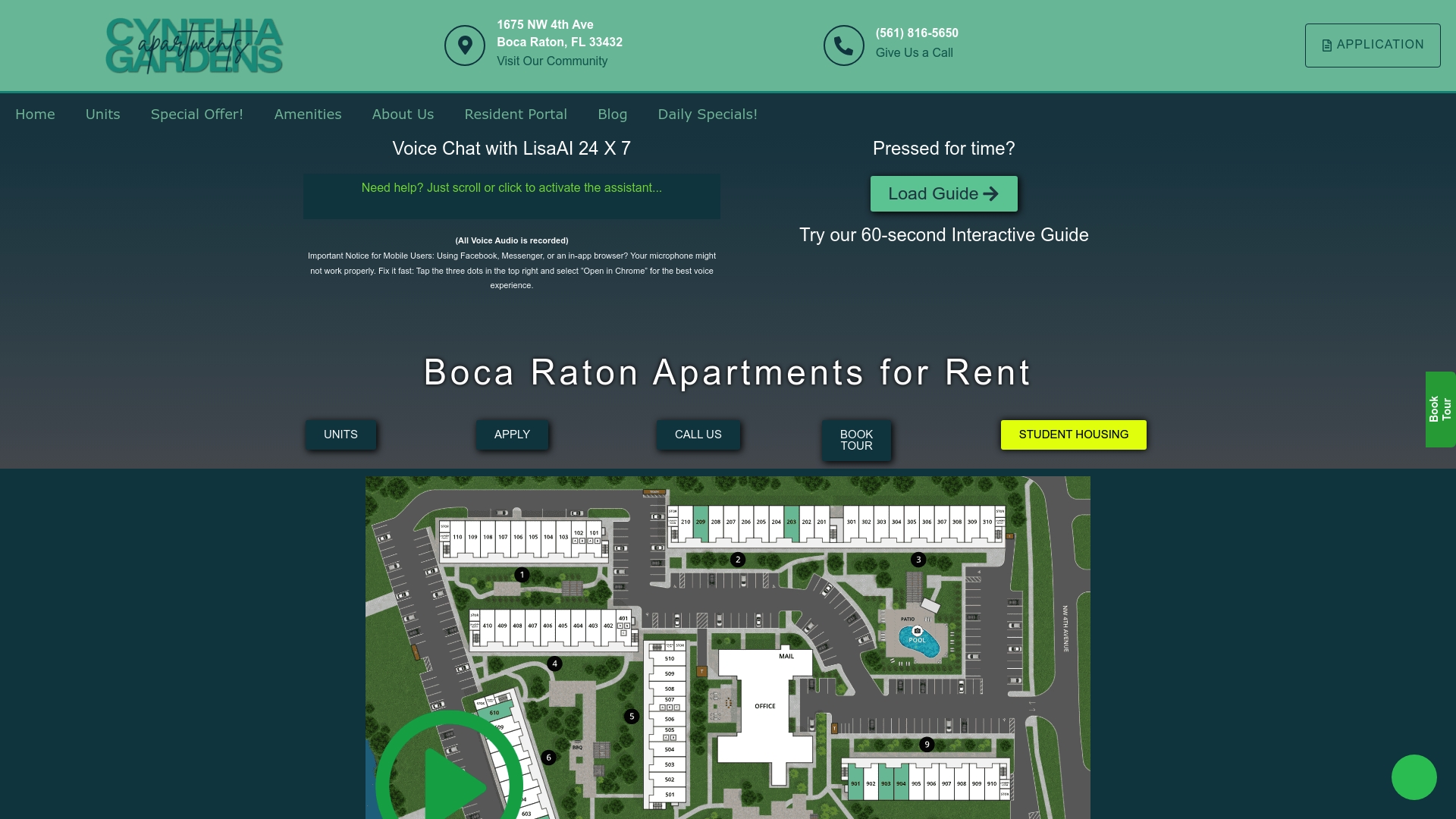
Cynthiagardens is located in Boca Raton, Florida, a city where walkable access to retail, dining, and transit is built into the neighborhood fabric. The community offers one-bedroom apartments designed for young professionals, students, and pet owners who want the benefits of walkable living without the highest urban price premiums. Transparent pricing means no hidden fees, so the rent you see is the total you pay. Explore the full range of apartment styles and features to find the layout that fits your lifestyle. Virtual tours, an interactive property map, and AI chat support make it easy to evaluate your options before you visit in person.
FAQ
What is walkability and why does it matter for renters?
Walkability measures how easily residents can complete daily tasks on foot, including errands, commutes, and leisure. It matters for renters because it directly affects rental pricing, transportation costs, and daily quality of life.
How much more do walkable apartments typically cost?
Improving walkability from a fair to a good rating correlates with an average $302 monthly rent increase. However, reduced car dependency can offset this premium through annual transportation savings.
Does a high Walk Score guarantee a good walking experience?
No. Walk Score provides a useful baseline, but street infrastructure quality and pedestrian safety vary significantly within the same score range. Always inspect sidewalks, crosswalks, and lighting in person.
Can walkability improvements lead to higher rents over time?
Yes. Research links walkability to gentrification, meaning infrastructure upgrades often precede rent increases at lease renewal. Renters should monitor local improvement plans as a forward-looking cost signal.
What should renters prioritize when evaluating a neighborhood’s walkability?
Prioritize proximity to your most-visited destinations, sidewalk continuity, transit frequency, and street-level safety. Generic scores are a starting point, not a substitute for a firsthand walking assessment of your actual daily routes.
Recommended
- The Real Role of Virtual Tours in Renting
- How to Find Affordable Apartments A Renter’s Guide – Luxury Apartments for Rent in Boca Raton | Premium Boca Raton Apartments | Aapartments Boca Raton
- 7 Key Advantages of Affordable Housing for Young Renters
- Apartment parking: Convenience, cost, and your lifestyle