Table of Contents
- Studio vs One Bedroom Apartment: Key Differences Explained
- Floor Plan & Layout Comparison
- Studio Apartment Pros and Cons
- Pros and Cons of One-Bedroom Living
- Average Cost of Studio vs One Bedroom Apartments
- How to Decorate a Small Studio Apartment
- Privacy, Noise, and Lifestyle Considerations
- Which Apartment Type Is Right for You?
Last Updated: June 25, 2026
Choosing between a studio and a one-bedroom apartment is one of the most consequential decisions a renter makes. Understanding the key differences can save you months of frustration and hundreds of dollars. The real distinction is a lifestyle question with a budget component, not purely a budget question.
Studio vs One Bedroom Apartment Differences: What Defines Each Layout
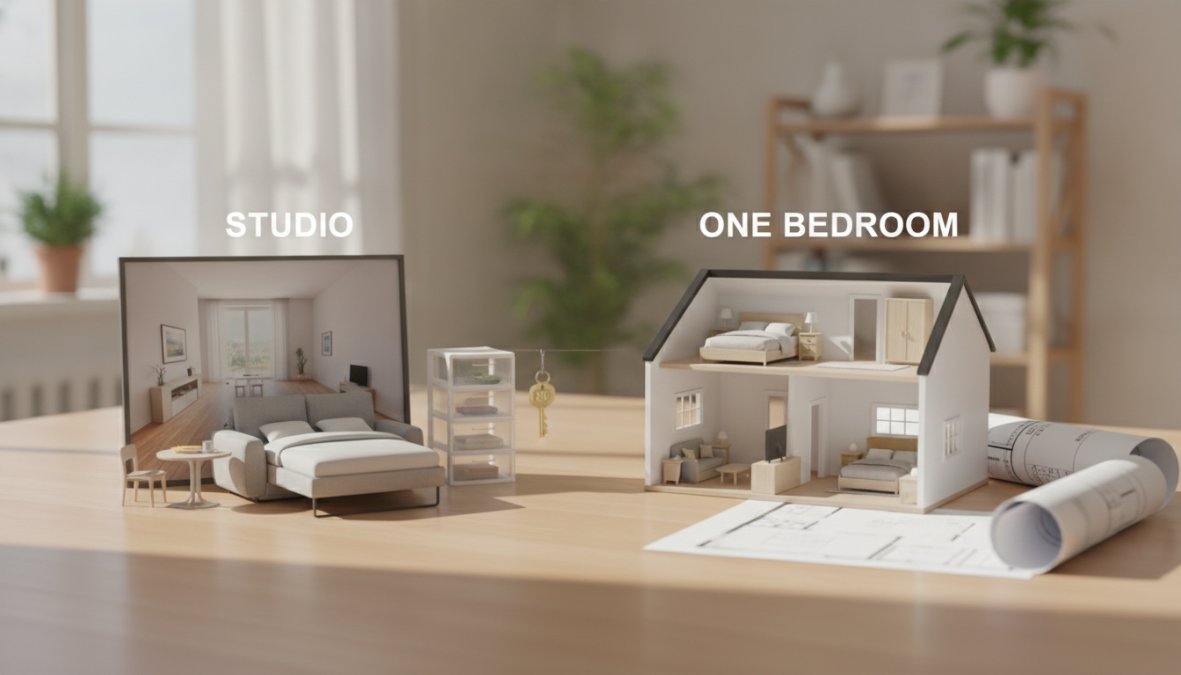
A studio apartment is a single-room unit where the sleeping area, living area, and kitchen share one open-concept space, with only the bathroom partitioned behind a door. A one-bedroom apartment has a physically separated bedroom, a distinct living area, and a separate kitchen or kitchen-adjacent dining space.
Studio apartments typically range from 300 to 600 square feet. One-bedroom apartments generally start around 550 square feet and can extend past 900 square feet. The floor plan difference isn’t just about total square footage, it’s about how that space is organized, and organization shapes daily life in ways raw numbers don’t capture.
[Before touring any unit](/apartment-move-in-inspection-checklist/), sketch out your furniture on paper using the floor plan dimensions. A sofa, bed, desk, and dining table together reveal spatial conflicts that a walkthrough alone often hides.
Floor Plan & Layout Comparison
The open-concept design of a studio apartment is its defining characteristic. Every function of daily life, sleeping, cooking, watching television, and working, happens in one visual field. This creates intimacy and simplicity, but cooking odors travel instantly to your sleeping area, and noise from a late-night movie reaches your pillow without any barrier.
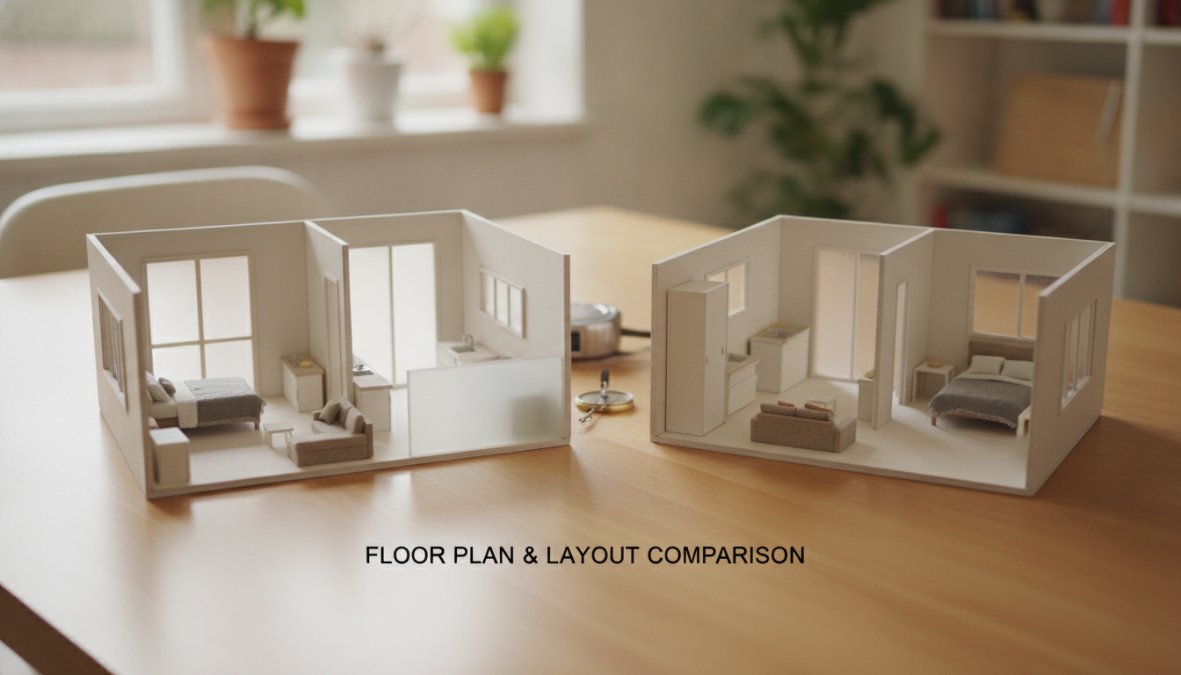
One-bedroom layouts introduce bedroom separation as a structural feature. The bedroom becomes a dedicated retreat. You leave work behind when you close that door. You sleep in a room that doesn’t smell like last night’s dinner. Guests can sit in the living area while you get ready in the bedroom without either person feeling cramped.
Studio Layout and Open-Concept Design
Studio layouts succeed or fail based on how the renter uses the space. Room dividers, lofted beds, and multifunctional furniture can create visual zones, but these solutions require deliberate effort and upfront investment. With fewer interior walls, air moves more freely, which can be a genuine comfort advantage in Florida’s warm climate.
One-Bedroom Layout with Bedroom Separation
One-bedroom apartments introduce a structural boundary that studios cannot replicate with furniture alone. The bedroom door is not a luxury, it’s a functional necessity for anyone who works irregular hours, shares a unit with a partner, or values psychological separation between rest and activity.
According to research on sleep quality and environmental factors from the National Sleep Foundation, light and noise disruption are among the leading causes of poor sleep quality. A dedicated, enclosed bedroom directly addresses both variables.
Studio Apartment Pros and Cons
Studios are the right choice for a specific type of renter, and the wrong choice for nearly everyone else.
Pros of studio living:
- Lower base rent in most rental markets
- Simpler to clean and maintain
- Lower utility costs due to reduced square footage
- Faster to furnish minimally
- Often located in more central urban areas
Cons of studio living:
- No physical separation between sleeping and living spaces
- Cooking odors permeate the entire unit
- Noise levels from one activity affect the entire space
- Limited closet space and storage solutions
- Guest space is essentially nonexistent
- Remote work from a studio creates ergonomic and psychological challenges
Studio apartments work well for renters who are rarely home. If you spend most waking hours outside the apartment, the lack of bedroom separation barely registers. If you work from home, cook frequently, or value privacy, a studio will feel constraining within weeks.
Signing a studio lease without testing your work-from-home setup first is a common and costly mistake. Spend a full workday in a friend’s studio before committing.
Pros and Cons of One-Bedroom Living
One-bedroom apartments serve a broader range of lifestyles, which is why they represent the majority of rental inventory in most markets.
Pros of one-bedroom living:
- Physical bedroom separation improves sleep quality and privacy
- Dedicated living area for entertaining or relaxing
- Better remote work ergonomics with space for a proper desk setup
- Reduced noise bleed between activities
- More closet space and storage capacity
- Suitable for couples without constant spatial friction
Cons of one-bedroom living:
- Higher monthly rent than comparable studios
- More space to furnish, clean, and maintain
- Utility costs run higher due to additional square footage
- Lease terms may require longer commitments in some buildings
Studios ask you to adapt your lifestyle to the space. One-bedrooms adapt to a wider range of lifestyles without requiring behavioral changes.
Average Cost of Studio vs One Bedroom Apartments
Apartment type is one of the most direct cost drivers in any rental market.
Rent Price Differences and Lease Terms
Studios generally rent for less than one-bedroom units in the same building or neighborhood, though the gap varies by location, building age, and amenities. According to Zillow’s 2026 rental market data, one-bedroom apartments in South Florida command a premium over studio units, with the spread widening in walkable, amenity-rich neighborhoods near employment centers and universities.
Lease terms also differ between unit types. Studios in older buildings sometimes offer shorter lease flexibility, while newer one-bedroom communities typically require standard 12-month lease agreements.
Utility Costs and Monthly Budget Breakdown
Rent is only one line item. Utility costs in a studio versus a one-bedroom can shift the real monthly comparison.
Studios typically have lower electricity costs due to smaller square footage, but the difference is less dramatic than renters expect. A well-insulated one-bedroom in a modern building can run comparable utility costs to a poorly insulated studio in an older structure.
| Cost Category | Studio Apartment | One-Bedroom Apartment |
|---|---|---|
| Base Rent | Lower | Higher |
| Electricity/AC | Lower | Moderate |
| Renter’s Insurance | Lower | Slightly higher |
| Furniture Investment | Lower | Higher |
| Storage Unit (if needed) | Often required | Rarely required |
| Total Monthly Estimate | Lower upfront | Higher upfront, better value long-term |
Renters who factor in only base rent often find that a studio’s total cost of living is closer to a one-bedroom than the rent difference suggests, especially once external storage, furniture workarounds, and higher insurance claims are accounted for.
How to Decorate a Small Studio Apartment
Decorating a studio apartment is a discipline in spatial honesty. The goal is to make every square foot serve a clear purpose.
Space Optimization and Multifunctional Furniture
Multifunctional furniture is the foundation of any well-designed studio. A bed frame with built-in storage drawers eliminates the need for a separate dresser. A dining table that folds against the wall reclaims floor space. A sofa with a pull-out bed handles guest space without dedicating a permanent area to it.
The most effective studio layouts use vertical space aggressively. Floor-to-ceiling shelving units create the perception of height and provide storage solutions that horizontal furniture cannot match. Room dividers, whether bookcase-style or curtain-based, create visual zones that make the open-concept space feel intentional rather than cramped.
Storage Solutions and Decluttering Strategies
Storage is where studio living breaks down for most renters. Closet space in studios is typically limited to one small reach-in closet, which forces a choice: aggressive decluttering or creative external storage.
Storage strategies that work in real studio apartments:
- Under-bed storage containers for seasonal clothing and linens
- Over-door organizers for shoes, accessories, and pantry items
- Magnetic knife strips and wall-mounted spice racks to free counter space
- Vacuum storage bags for bulky items like comforters and winter coats
- Furniture with hidden compartments, particularly ottomans and bench seating
The single most important storage decision in a studio apartment is choosing a bed frame with built-in drawers. This one piece of furniture eliminates the need for a separate dresser and reclaims significant floor space.
Privacy, Noise, and Lifestyle Considerations
Privacy is the dimension that studio vs one bedroom apartment differences make most tangible in daily life.
Remote Work Ergonomics and Guest Space
Remote work has fundamentally changed how renters evaluate apartment layouts. A studio apartment presents genuine ergonomic and psychological challenges for full-time remote workers. Working and sleeping in the same visual field blurs the psychological boundary between rest and productivity.
A one-bedroom apartment allows for a dedicated desk setup in the living area, physically separated from the sleeping space. This separation is not just about square footage, it’s about the ability to close the bedroom door at the end of the workday and signal to your brain that work is finished.
Guest space is another area where the differences become practical. Hosting a friend overnight in a studio requires either a pull-out sofa or an air mattress placed in your primary living and sleeping area. A one-bedroom apartment allows guests to use the living room sofa while you maintain your bedroom as a private space.
According to Harvard Health Publishing’s guidance on sleep environment and cognitive performance, maintaining a consistent sleep environment separated from work and social activity supports both cognitive function and emotional regulation. One-bedroom apartments make this separation structural.
Pet Ownership and Air Circulation Challenges
Pet ownership in a studio apartment creates specific challenges. A dog or cat in a studio means pet dander, odors, and pet hair distributed across the same space where you sleep and eat. There is no room to close off.
One-bedroom apartments offer meaningful advantages for pet owners. The bedroom door creates a barrier that keeps pet activity out of the sleeping space and reduces allergen exposure during sleep hours. In Florida’s warm climate, where windows stay open less frequently due to humidity and AC use, this is a more pronounced issue.
Which Apartment Type Is Right for You?
The right apartment type depends on three variables: your lifestyle, your budget, and your tolerance for spatial compromise.
Best for Singles and Young Professionals
Studios are well-suited for single renters who spend most of their time outside the apartment, prioritize location over space, and are actively working to minimize living expenses. A young professional early in their career, living near a job center in Boca Raton, who travels frequently or works long office hours, will find a studio’s limitations barely noticeable.
One-bedroom apartments are the better choice for singles who work from home, value a clear separation between rest and activity, own pets, or expect to host guests with any regularity.
Best for Couples and Growing Families
For couples, a studio apartment is a stress test that many relationships fail. Two people sharing a single open-concept space have no retreat from each other. One-bedroom apartments give couples the minimum viable privacy architecture.
Growing families need at minimum a one-bedroom apartment, and realistically a two-bedroom. A one-bedroom with a young infant is manageable for a short period, but not sustainable long-term.
For renters in Boca Raton, FL ready to move past the studio vs one bedroom apartment differences debate, Cynthia Gardens offers modern one-bedroom apartments with stainless steel appliances, quartz countertops, and a garden-style community that makes the transition from cramped to comfortable feel immediate. According to Apartments.com’s 2026 rental trend analysis for South Florida, well-amenitized one-bedroom units in desirable Boca Raton neighborhoods move quickly, particularly those near FAU and the coastline.
Choosing between a studio and a one-bedroom apartment is ultimately a question of how you want to live, not just what you can afford. Cynthia Gardens offers spacious, modern one-bedroom apartments with high-end finishes, a resort-style pool, and a maintenance-free garden-style community minutes from FAU and the beach, designed specifically for professionals and individuals who want a comfortable, private living environment without compromise. Schedule a tour today and see firsthand why the right floor plan makes every day easier.
Frequently Asked Questions
What is the main difference between a studio and a one-bedroom apartment?
The primary difference lies in bedroom separation. A studio apartment features an open-concept floor plan where the living area, bedroom, and kitchen occupy one large room with minimal partitioning. A one-bedroom apartment has a separate, enclosed bedroom distinct from the living area. This bedroom separation provides privacy, noise reduction, and the ability to close off the sleeping space from cooking odors and daily activities, key factors in the studio vs one bedroom apartment differences.
Is a studio apartment cheaper than a one-bedroom?
Yes, studios typically cost 20-30% less in rent than one-bedroom apartments in the same market. The lower price reflects reduced square footage and fewer amenities. However, utility costs may be similar since a smaller space heats and cools more efficiently. When comparing the average cost of studio vs one bedroom apartments, factor in lease terms, location, and building amenities. Some urban markets show smaller price gaps than suburban areas.
How can I maximize space in a small studio apartment?
Use multifunctional furniture like sofa beds, storage ottomans, and wall-mounted desks. Implement vertical storage solutions with shelving and wall organizers to maximize closet space. Choose light colors and mirrors to create the illusion of larger living area. Decluttering regularly prevents the space from feeling cramped. When learning how to decorate a small studio apartment, prioritize pieces that serve dual purposes and keep the floor plan open to improve air circulation and natural light flow.
Which apartment type is better for remote work?
A one-bedroom apartment offers superior remote work ergonomics because you can dedicate the bedroom as a home office with a door for privacy and noise isolation. Studios require creative solutions like room dividers or corner desks in the living area, which can blur work-life boundaries. If you work from home regularly, the bedroom separation in a one-bedroom provides better focus, professional video call backgrounds, and reduced distractions from cooking odors and household noise.
Can I have pets in a studio versus a one-bedroom apartment?
Pet ownership logistics differ between the two. Studios present challenges because pets spend time in a compact, single-room space with limited air circulation, which can trap odors. One-bedroom apartments allow you to confine pets to specific areas and provide better ventilation. Most landlords impose similar pet policies regardless of unit type, but consider whether a studio's open-concept layout provides adequate space for your pet's comfort and exercise needs.