
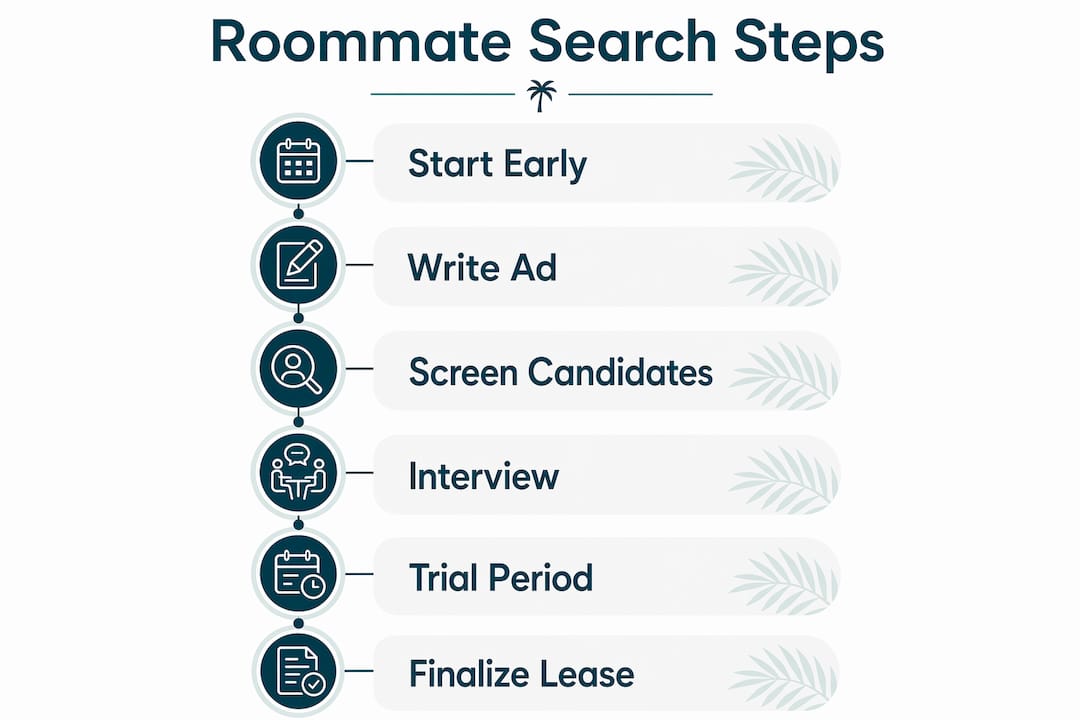
A solid roommate search workflow runs in four stages: prepare your criteria, screen candidates thoroughly, test the arrangement with a trial period, and finalize the lease with proper legal steps. Start the process 4 to 6 weeks before your intended move-in date to allow enough time for vetting candidates, checking references, meeting in person, and completing lease paperwork without cutting corners.
Here is what a complete process looks like at a glance:
- Prepare: Define your habits, budget, and dealbreakers before posting anywhere
- Screen: Use in-person or live video meetings, reference checks, and identity verification
- Trial: Consider a 30 to 60 day trial period before committing to a long-term lease
- Finalize: Have every adult occupant submit an individual application and consent form
Each adult who will occupy the unit must sign their own standalone FCRA consent form before any background or credit check is run. Combining consents is a federal violation under 15 U.S.C. §1681b(b)(2)(A). Get that detail right from the start, and the rest of the process goes much more smoothly.
Table of Contents
- How to prepare for your roommate search
- How to conduct effective roommate interviews and screenings
- How to manage the trial period and finalize the lease
- Common pitfalls and red flags to watch for
- Key Takeaways
- Thinking about leasing a one-bedroom apartment in Boca Raton?
How to prepare for your roommate search
Good preparation is what separates a smooth finding-a-roommate process from a stressful one. Before you post a single listing, get clear on what you actually need, not just what sounds reasonable.
- Define your non-negotiables. Sleep schedule, cleanliness standards, guest frequency, and work-from-home habits matter more than shared hobbies. Daily rhythm compatibility is a stronger predictor of a harmonious living situation than shared interests.
- Set your budget clearly. Know your rent ceiling and how you want to split utilities, groceries, and shared supplies. Vague budget conversations early lead to money fights later.
- Write house rules before you start. Decide on quiet hours, kitchen use, chore rotation, and guest policies before you meet anyone. Unspoken expectations are the leading cause of roommate conflict, according to SpareRoom’s guidance on two-way interviews.
- Choose your platforms intentionally. Social media groups on Facebook and Reddit reach large local audiences quickly. Dedicated roommate apps add structured compatibility data, like lifestyle questionnaires, that generic classifieds cannot offer. For a broader look at finding roommates in Boca Raton, Cynthiagardens covers local platform options in detail.
- Prepare your screening questions in advance. Ask about daily routines, how they handle shared expenses, and what went wrong in past living situations. Specific questions get honest answers; vague ones get rehearsed ones.
- Understand joint and several liability. Every tenant on a shared lease is responsible for the full rent if another occupant defaults. Screen financially with that in mind, not just for your share.
Pro Tip: Write your ad the same way you write your screening questions. If you need someone who keeps the kitchen clean and goes to bed before midnight, say so. The right candidate will recognize themselves. The wrong ones will move on.

How to conduct effective roommate interviews and screenings
Screening is where most people cut corners, and it is the step that determines whether you end up in a good situation or spend months trying to undo a bad one.
- Meet in person or via live video call. Text conversations do not reveal how someone communicates under pressure. A 30-minute coffee meeting tells you more about fit than a week of messages. Respect for personal space is the top quality renters seek in a roommate, cited by 31% of renters, and you cannot assess that through a chat thread.
- Run a two-way interview. You are evaluating them, and they are evaluating you. Both parties should be honest about habits and expectations. Overselling yourself creates the same problems as a candidate who oversells themselves.
- Check references from previous roommates, not just landlords. A landlord tells you if someone paid rent. A former roommate tells you what it was actually like to live with them. Housemate references reveal behavioral patterns that no credit report captures. Ask specifically: Would you live with this person again? How did they handle disagreements?
- Verify identity and income before any money changes hands. Request a government-issued ID, proof of employment or income, and confirmation that they actually control the room or lease they are offering. Reluctance to verify anything, combined with pressure to send a deposit quickly, is the clearest scam signal there is.
- Require individual consent forms. Each adult occupant needs their own standalone FCRA consent form before a background check is ordered. One person’s signature cannot authorize a report on anyone else, regardless of their relationship. See Cynthiagardens’s roommate selection guide for a practical checklist on this step.
How to manage the trial period and finalize the lease
Once you have identified a strong candidate, a trial period gives both of you a chance to test the reality of shared living before locking into a long-term commitment.
- Propose a 30 to 60 day trial if your lease allows it. Discuss upfront what happens if it does not work: how much notice is required, how deposits are handled, and who is responsible for finding a replacement. A trial period turns a one-time screening guess into an ongoing evaluation.
- Put everything in writing before money changes hands. A signed roommate agreement covering rent splits, utility responsibilities, chore rotation, guest policies, quiet hours, and exit procedures is a fundamental protection in shared living. “I never agreed to that” arguments disappear when there is a document to reference.
- Understand joint and several liability fully. As noted in the preparation stage, every leaseholder is on the hook for the entire rent amount if a roommate defaults. That is not just your share. Financial screening needs to reflect that reality for every person on the lease.
- Submit individual applications simultaneously. Apply together, on the same day, to the same unit. Most properties require all co-applicants to go through screening at the same time. One person submitting first and hoping the other gets added later is a common mistake that wastes application fees and delays approval.
- Communicate openly during the trial. Address small friction points early. A minor irritation in week two becomes a genuine conflict by month three if nobody says anything. The written agreement gives you a neutral reference point for those conversations.
Common pitfalls and red flags to watch for
Knowing what to avoid is just as useful as knowing what to do. These patterns appear repeatedly in failed roommate searches.
Rushing the timeline. Starting your search two weeks before move-in forces you to skip steps. The people who end up with bad roommates almost always started too late. Begin 4 to 6 weeks out to allow thorough screening and lease processing.
Prioritizing finances over lifestyle fit. A candidate with a strong credit score who keeps opposite hours and has guests over five nights a week will cause more daily friction than someone with average credit who shares your routines. Lifestyle compatibility drives the day-to-day experience; finances determine whether the lease holds.
Refusing to meet in person or on video. Anyone who insists on text-only communication before a commitment is either hiding something or not serious. This is also the most common pattern in rental scams targeting roommate seekers.
Vague or inconsistent financial answers. If someone cannot clearly explain how they will cover rent, that is not a personality quirk. It is a preview of a problem. Ask directly, and pay attention to hesitation.
No references, or evasive answers about past living situations. Everyone who has rented before can provide at least one reference. If every past roommate was terrible and none of them are reachable, that pattern tells you something.
Pressure to decide immediately. Urgency to move in without time for verification is a red flag in both directions: it can signal a scam, or it can mean the candidate was asked to leave their last place. Either way, slow down.
Skipping individual consent forms. Running a background check on an adult who did not sign their own standalone consent form is an FCRA violation. This step protects everyone involved and cannot be skipped or combined.
Key Takeaways
A structured roommate search workflow, starting 4 to 6 weeks out, combining lifestyle screening with legal compliance, and backed by a written agreement, gives you the best chance of a stable, conflict-free living arrangement.
| Point | Details |
|---|---|
| Start 4–6 weeks early | Beginning the search 4 to 6 weeks before move-in allows time for thorough vetting and lease processing. |
| Screen for lifestyle first | Daily rhythm compatibility predicts a harmonious living situation more reliably than shared interests alone. |
| Meet before committing | In-person or live video meetings reveal communication style and personality that text exchanges cannot. |
| Individual consent required | Every adult occupant must sign their own FCRA consent form; combining consents is a federal violation. |
| Put the agreement in writing | A signed roommate agreement covering rent, chores, and exit terms prevents most common disputes. |
Thinking about leasing a one-bedroom apartment in Boca Raton?
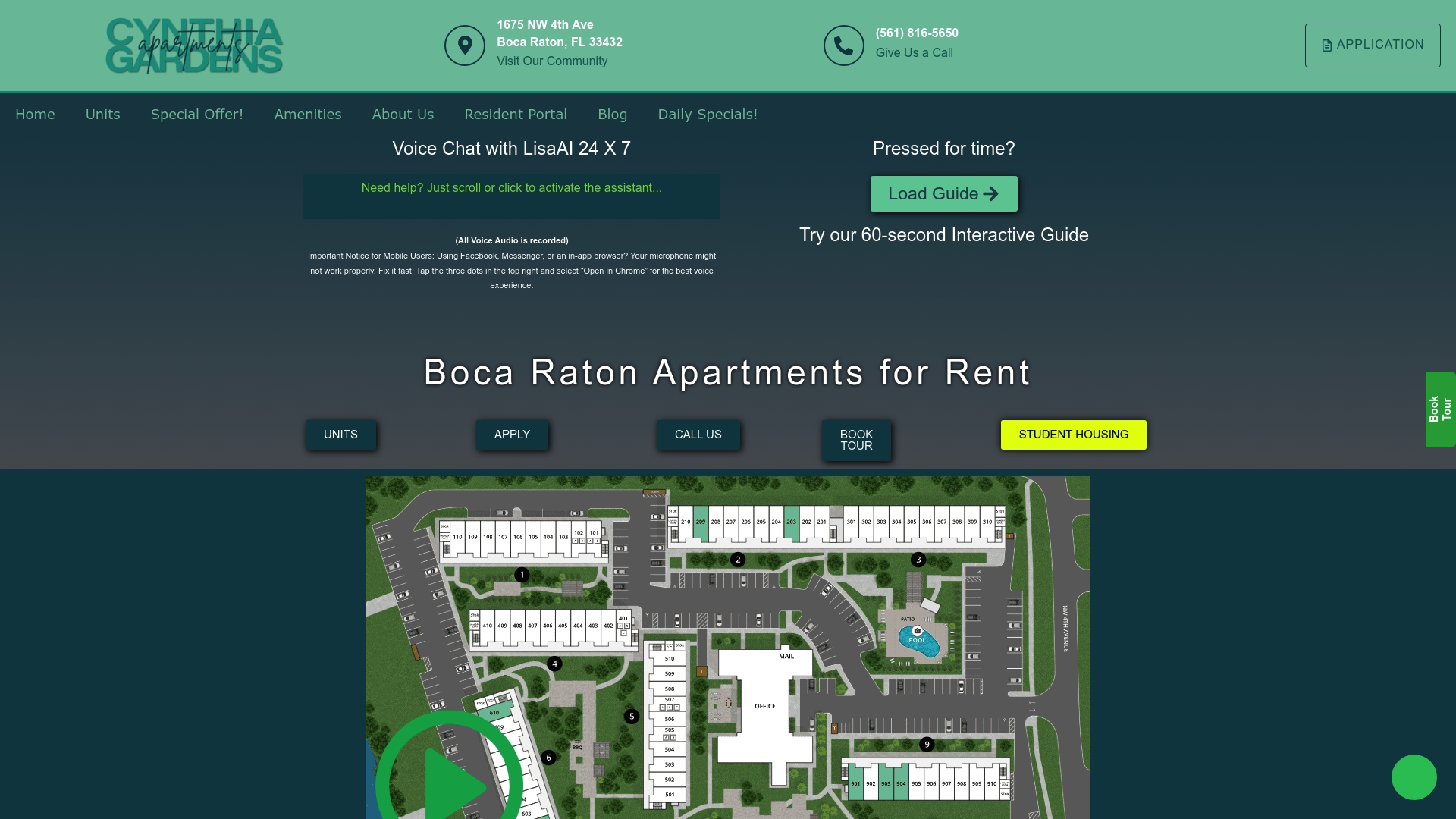
Cynthiagardens offers affordable, well-maintained one-bedroom apartments in Boca Raton with transparent pricing, no hidden fees, and a tech-forward leasing experience that includes AI chat support, virtual tours, and an interactive property map. Whether you are leasing solo or planning to share, the process is built to be fast and clear from your first inquiry. Explore available apartment styles and take a virtual tour today.