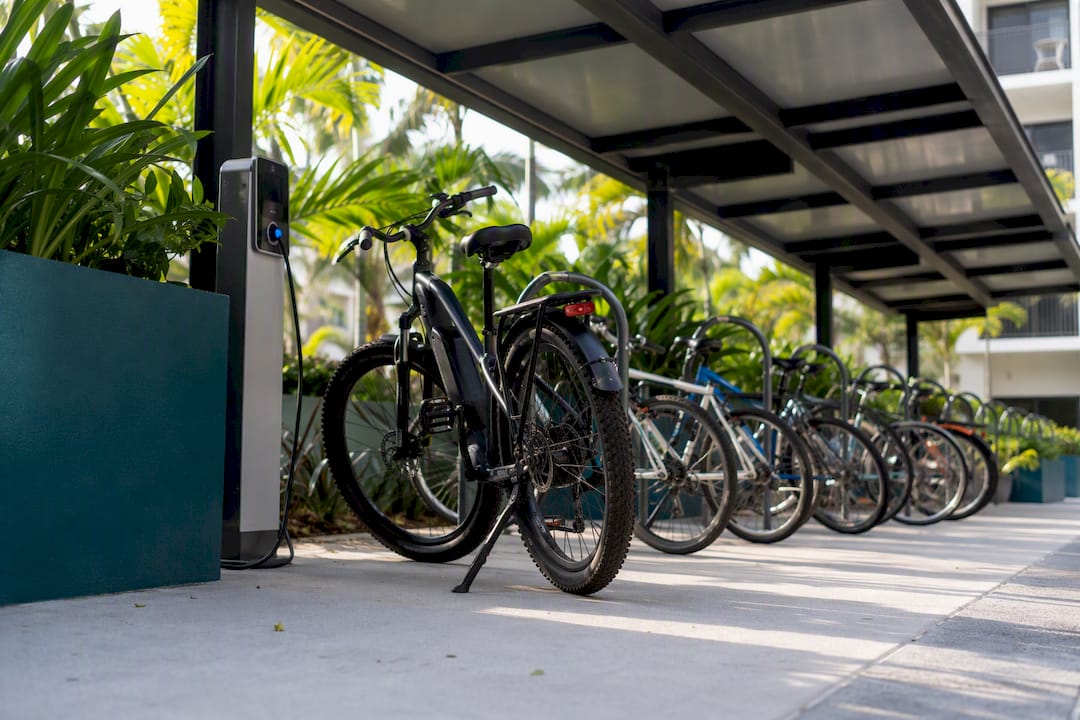
Bike storage exists to do three things at once: keep bikes safe from theft, protect them from weather damage, and make cycling convenient enough that people actually do it regularly. The APBP’s parking guidelines treat this as the baseline standard for any facility, residential or commercial. A systematic review of parking behavior backs this up with hard numbers: better parking access measurably increases how often people ride.
Three things follow from that:
- Security matters more than volume. A dozen unsecured racks do less good than four locked, covered ones.
- Proximity decides whether storage gets used. If it’s not near the entrance or transit stop, people will find a workaround, and that workaround is usually a hallway.
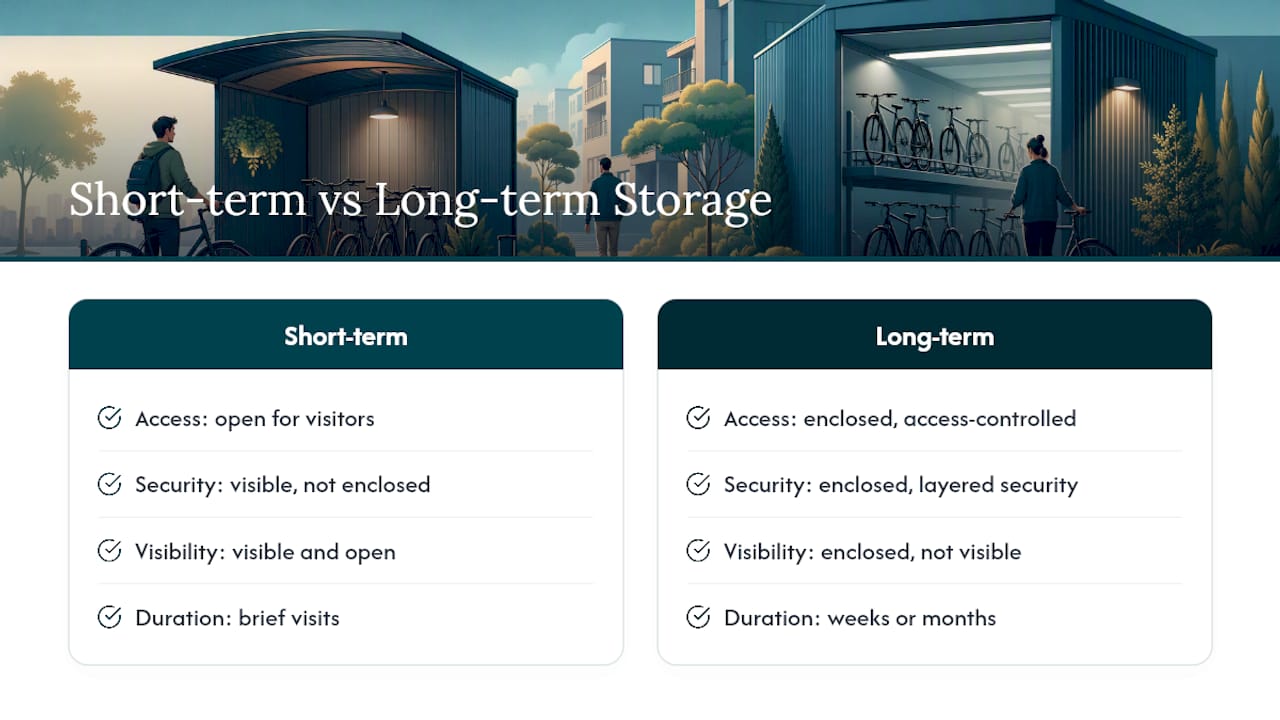
- Short-term and long-term needs are different problems. A visitor locking up for twenty minutes needs something entirely different from a resident storing a bike for a year.
Key Takeaways
Bike storage works best when it separates short-term visitor access from long-term secured parking, sits close to entrances or transit, and plans for e-bike charging from the start.
| Point | Details |
|---|---|
| Security beats volume | A few locked, covered spots outperform a dozen unsecured racks for actual theft reduction. |
| Placement drives usage | Storage far from entrances or transit gets bypassed for hallways and stairwells. |
| Separate short-term and long-term | Visitor racks and resident storage solve different problems and need different designs. |
| Budget for e-bikes now | Retrofitting electrical capacity later costs more than wiring it into the original build. |
| Codes vary by city | Building-code minimums differ widely, so check local standards rather than assuming compliance. |
Table of Contents
- Why the Role of Bike Storage Matters for Security, Value, and Health
- Matching Bike Storage Types to Your Site and Users
- Design Rules That Make Bike Storage Actually Get Used
- What Bike Storage Actually Costs to Build
- What the Research Actually Shows
- Where to Prioritize Bike Storage Investment
- A Planning Checklist for Property Managers
- What Changed When One Property Rethought Its Bike Room
- Bringing Bike Storage Into Your Amenity Plan
- Frequently Asked Questions
- Sources
Why the Role of Bike Storage Matters for Security, Value, and Health
Good bike storage pays for itself in ways that aren’t always obvious until you look at the numbers. Here’s what it actually delivers.
- Theft reduction. Enclosed, access-controlled storage removes the easy opportunity that makes bike theft so common in the first place.
- Weather protection and longer bike life. Rain and UV exposure corrode chains, rot tires, and rust frames faster than most owners expect.
- Space organization and safety. Bikes stacked in stairwells or leaned against railings create trip hazards and fire-code headaches.
- Health benefits for residents and employees. The Harvard T.H. Chan School of Public Health links regular cycling to measurable cardiovascular and metabolic benefits, and storage access is often the deciding factor in whether someone rides at all.
- Sustainability and modal shift. Every bike commute is a car trip that didn’t happen.
- Property marketing and value. Move-in-ready bike storage is now a checkbox amenity for renters comparing buildings.
The research backing benefit number one is specific: one study found that 100 additional parking spaces correlated with a 2.5% greater likelihood of a bike trip starting or ending at that location, and covered racks nearly tripled cycling rates from transit stations compared to uncovered ones, according to the same systematic review.
Separating short-term visitor racks from long-term secured storage isn’t a nice-to-have layout choice. It’s what determines whether residents actually use the facility or lock bikes to their balcony railing instead.
Pro Tip: If you only build one type of storage, you’ll get misuse. Visitors need visible, grab-and-go racks near the entrance. Residents need enclosed, badge-access rooms they trust with an expensive bike overnight. Mixing the two into one undifferentiated rack area is the single most common planning mistake.
Matching Bike Storage Types to Your Site and Users
Not every property needs the same setup, and the mismatch between storage type and actual use pattern is where most facilities fail.
- Simple racks work for quick, short-term visitor parking, nothing more.
- Covered racks add weather protection without the cost of full enclosure.
- Bike corrals (on-street, multi-bike) suit public spaces and retail strips with high foot traffic.
- Lockers give solo, high-security storage for one bike per unit, ideal for e-bikes or high-value road bikes.
- Cages offer shared secure storage for multiple bikes with card or key access.
- Dedicated bike rooms are the gold standard for apartment communities and offices with a real commuter population.
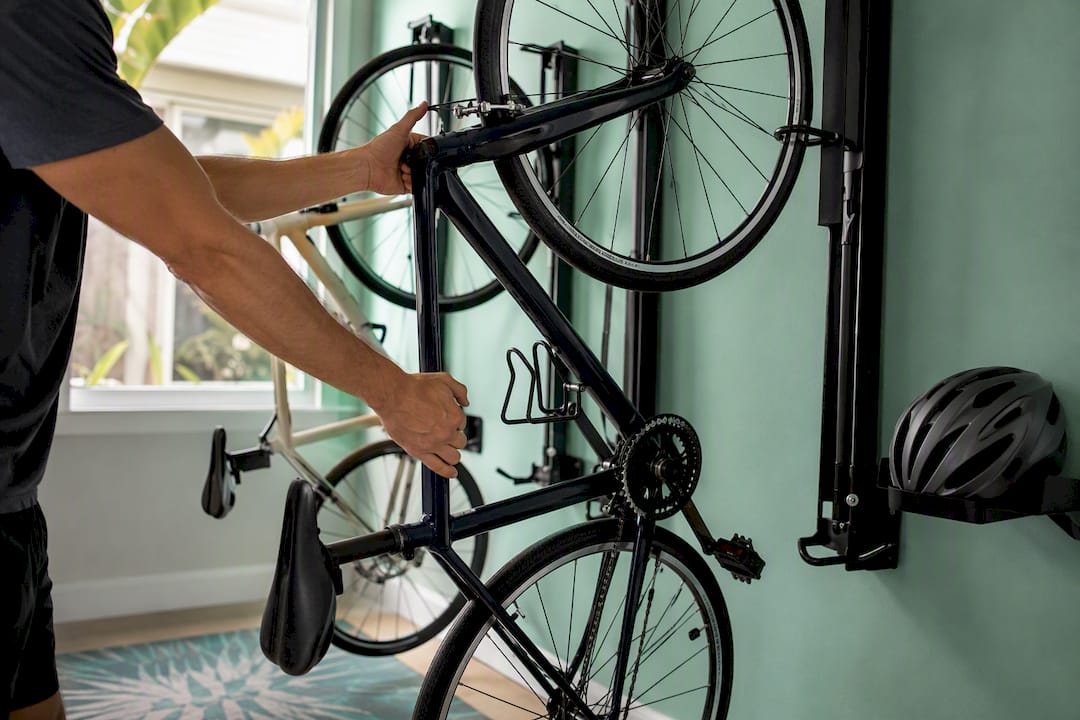
- Vertical and two-tier racks double capacity in tight footprints but need real maneuvering room.
A small apartment courtyard might get by with a covered rack and a few lockers. A mid-density office needs a cage plus shower access. A college campus needs corrals scattered across the quad plus one or two secure rooms for staff. A transit station needs high-capacity racks split clearly between short-term and all-day parking.
Pro Tip: Choose vertical racks only when riders are frequent and comfortable lifting a bike overhead. Casual riders and anyone with a heavier e-bike will avoid a rack that requires real effort, and an unused rack is wasted square footage.
Design Rules That Make Bike Storage Actually Get Used
A bike room nobody uses is worse than no bike room. It still costs square footage and maintenance budget, but delivers none of the benefit.
- Put it close to the action. Storage near the main entrance or transit connection gets used; storage tucked in a back corner gets ignored.
- Make it visible and lit. Poor lighting reads as unsafe, and unsafe storage doesn’t get used regardless of how secure it actually is.
- Leave room to maneuver. Two-tier racks need real aisle clearance, or residents will give up and leave bikes in hallways instead.
- Sign it clearly. Unlabeled storage areas get colonized by strollers, tools, and holiday decorations within a month.
Security has to work in layers, not just one lock on one door. Consider:
- Controlled, badge or fob access limited to residents or employees
- Cage or room construction that runs floor to structural deck, not just to a drop ceiling
- Surveillance coverage and lighting that discourages tampering
- A clear policy on abandoned bikes, so the room doesn’t fill with dead weight
Toronto’s municipal bicycle parking guidelines define long-term parking specifically as enclosed, access-controlled space, and that distinction matters for compliance in many jurisdictions. On the e-bike front, plan electrical capacity into any bike room from day one. Retrofitting outlets into a finished room after residents start asking for charging access costs far more than wiring it upfront, and accessible layouts, wider turning radii, lower hooks, ground-level spots, need to be part of the design from the start, not an afterthought bolted on later.
What Bike Storage Actually Costs to Build
Budgets vary widely by security level, and the jump from basic to fully enclosed is bigger than most planners expect.
- Basic outdoor racks: the cheapest option per bike, suited to visitor parking only
- Covered shelters: a moderate step up for weather protection without full walls
- Individual lockers: priced per unit, best for high-value or e-bike storage
- Enclosed, access-controlled rooms: the highest upfront cost, but the only option that meets USGBC’s long-term storage guidance for security
A peer-reviewed review of city building codes found that quality standards for bike parking vary widely between jurisdictions, and most codes still don’t address e-bike charging at all. That gap means planners often have to exceed local minimums to actually meet resident demand. When interior square footage is expensive relative to outdoor space, a sheltered but uncovered structure is frequently the more realistic budget choice than converting valuable interior area.
What the Research Actually Shows
The systematic review of bicycle parking behavior is the strongest single source tying parking quality to cycling uptake, and it isolates specific design choices, not just raw quantity.
- More parking capacity correlates with more cycling trips originating or ending at that location.
- Covered racks and lockers specifically increase station-origin cycling, in some cited work by nearly three times over uncovered racks.
- Free or low-cost parking increases uptake compared to paid parking, according to the same review, which matters for pricing decisions on locker rentals.
- Rutgers research on childhood active travel suggests habits formed early, including access to secure storage at school, tend to stick into adulthood.
Where to Prioritize Bike Storage Investment
- Residential buildings: long-term secure storage plus e-bike charging, since bikes sit for weeks at a time
- Workplaces: commuter-focused racks paired with showers and lockers for daily riders
- Transit hubs: a high-capacity mix of short-term and long-term parking to handle both commuters and casual riders
- Parks and public spaces: visible corrals near entrances, prioritizing theft deterrence over enclosure
If your budget is limited, fix the highest-theft, highest-demand location first. A half-empty rack in a low-traffic corner can wait.
A Planning Checklist for Property Managers
- Assess current demand: count bikes already on-site, including ones stashed in units or hallways.
- Choose the storage type that matches your resident mix, students, professionals, families.
- Calculate capacity using realistic peak demand, not average daily use.
- Set the security tier: visible racks for visitors, enclosed rooms for long-term residents.
- Budget for e-bike charging even if current demand looks low. It won’t stay low.
- Confirm accessible layout options for residents with disabilities.
- Assign a maintenance plan and a named person responsible for abandoned-bike removal.
- Install clear signage covering access rules and permitted use.
- Set up basic monitoring, camera coverage or periodic walk-throughs.
For an RFQ or scope document, include:
- Expected capacity (bikes per unit or per 100 employees)
- Access control method (fob, key, app-based entry)
- Warranty and maintenance terms
- Installation constraints (ceiling height, floor load, doorway width)
- Electrical requirements for charging stations
Note what’s permitted versus what isn’t: storage rooms are for bikes, not scooters, strollers, or storage overflow, and someone on staff needs to own enforcement of that rule.
What Changed When One Property Rethought Its Bike Room
We had an underused storage closet sitting empty for two years. Converting it into a secure, badge-access bike room with two charging outlets cost less than expected and solved a real problem: hallway clutter dropped almost overnight, and resident satisfaction scores tied to amenities improved. The lesson: don’t guess at demand. Ask residents directly before you build, since assumptions about who actually rides tend to be wrong.
Bringing Bike Storage Into Your Amenity Plan
A well-designed bike room does more for a property than most managers give it credit for. It cuts hallway clutter, reduces liability from tripping hazards, and signals to prospective residents that a community takes maintenance seriously. Cynthiagardens builds this kind of planning into how we think about amenities that support easy living, alongside pet-friendly policies and transparent pricing with no hidden fees. If you’re comparing communities and want a place where the small details, secure storage among them, are actually handled, take a look at our Boca Raton apartment community and its available floor plans.
For a broader look at rider-level safety, the Personal Injury Lawyers of Tampa’s cyclist safety guide covers practical steps that pair well with secure storage in cutting down theft and accident risk.
Frequently Asked Questions
What is the main role of bike storage in a residential building?
Its core role is protecting bikes from theft and weather while making cycling convenient enough that residents actually ride regularly, rather than leaving bikes in hallways or outdoors.
How is short-term bike storage different from long-term storage?
Short-term storage serves visitors for brief visits and stays visible and open. Long-term storage, per APBP guidance, needs enclosed, access-controlled space to keep out non-users for weeks or months at a time.
Do apartment communities need e-bike charging in bike storage?
Increasingly yes. Demand for e-bike charging is rising fast, and retrofitting outlets after a room is built costs more than planning for them upfront.
What makes bike storage secure enough for high-value bikes?
Layered security works best: controlled access, floor-to-deck cage or room construction, lighting, and camera coverage. A cage alone with no other layers is often not enough.
Does bike storage really affect property value or resident satisfaction?
Yes. Secure, well-placed storage is now a common differentiator renters compare between properties, and it reduces the hallway clutter and safety complaints that come from unmanaged bike storage.
Sources
- Bicycle parking: a systematic review of parking behaviour and influence on cycling
- BICYCLE PARKING GUIDELINES (APBP)
- USGBC: Alternative Transportation – Bicycle Storage guidance