
Renters insurance in Florida typically runs about $13 to $24 a month, or roughly $150 to $290 a year, depending on which insurer and ZIP code you’re pricing. MoneyGeek’s 2026 analysis puts the state average near $24 monthly ($289 a year), while NerdWallet’s rate analysis lands closer to $152 a year using a different sample. Both are right, they’re just measuring different coverage baselines. In Boca Raton, NerdWallet’s city table shows an average around $155 a year. Miami and other coastal metros tend to run higher because of storm exposure.
Start your quoting process with these three:
- State Farm — consistently shows up as one of the lower-cost options in state rate analyses
- Security First — a Florida-based insurer that often prices competitively in coastal ZIPs
- Nationwide — competitive pricing plus strong bundling discounts if you also insure a car
If you or a family member has military ties, add USAA to that list. Its rates are frequently the cheapest available, but eligibility is restricted to service members, veterans, and their immediate families. Once you have those quotes, the next move is simple: build a quick home inventory so every insurer is pricing the same coverage amount.
Key Takeaways
Florida renters insurance costs roughly $150 to $290 a year statewide, but hurricane exposure and ZIP-level risk push coastal cities like Miami and the Keys well above that range.
| Point | Details |
|---|---|
| Statewide average | Expect roughly $13 to $24 a month, with coastal cities running higher than inland ones. |
| City variation is real | Boca Raton averages near $155 a year while Miami and the Keys run above the state average. |
| Coverage has three core parts | Personal property, liability, and loss of use are standard; flood requires a separate policy. |
| Deductible and bundling cut costs | Raising your deductible and bundling with auto insurance are the fastest ways to lower a quote. |
| Lease terms often require coverage | Florida law doesn’t mandate renters insurance, but most managed communities do through the lease. |
| Cynthiagardens supports lower-risk profiles | Newer construction and documented security at Cynthiagardens can help residents present a stronger case to insurers. |
This article is general information, not a substitute for advice from a qualified financial advisor. Consult a qualified financial professional about your own circumstances before acting on anything here.
Table of Contents
- How Much Is Renters Insurance in Florida, City by City?
- What Does a Florida Renters Policy Actually Cover?
- What Drives Your Renters Insurance Premium in Florida?
- How Can You Lower Your Renters Insurance Cost in Florida?
- Which Insurers Offer the Cheapest Renters Rates in Florida?
- How Much Coverage Should You Actually Buy?
- What’s Actually in Your Total Renters Insurance Bill?
- Is Renters Insurance Required by Law in Florida?
- How Long Does It Take to Buy Renters Insurance in Florida?
- How Cynthiagardens Helps Boca Raton Renters Manage Insurance Costs
- Sources
How Much Is Renters Insurance in Florida, City by City?
The statewide averages hide a lot of variation. A renter in inland Orlando and a renter in the Florida Keys can buy identical coverage and see meaningfully different bills, because Florida insurers price risk down to the ZIP code, not just the state.
The gap comes down to three things: hurricane and storm-surge exposure, local claims frequency, and property crime rates. MoneyGeek’s data attributes Florida’s above-average renters premiums largely to hurricane risk, and that risk isn’t spread evenly. A unit two blocks from the Intracoastal Waterway carries different underwriting math than one 20 miles inland, even in the same county.
| City | Approximate Annual Cost | Primary Cost Driver |
|---|---|---|
| Boca Raton | ~$155 | Coastal proximity, moderate storm exposure |
| Miami | Above state average | High storm-surge and hurricane exposure |
| Fort Lauderdale | Above state average | Coastal exposure, dense urban claims history |
| West Palm Beach | Above state average | Coastal exposure |
| Orlando | Near or below state average | Inland location, lower storm-surge risk |
| Tampa | Above state average | Bay-area storm-surge exposure |
| Jacksonville | Near state average | Mixed coastal/inland risk profile |
| Naples | Above state average | Direct Gulf Coast hurricane exposure |
| Sarasota | Above state average | Gulf Coast exposure |
| Florida Keys | Well above state average | Highest storm-surge and evacuation-zone risk in the state |
These figures are benchmarks, not quotes. Two apartments in the same building can land on different premiums if their ZIP codes carry different claims histories, according to territory-rating guidance from the NAIC. The only way to know your real number is to run your address through two or three insurers directly.
What Does a Florida Renters Policy Actually Cover?
A standard policy bundles three coverages, and knowing what each one does helps you understand why your quote looks the way it does. According to the Florida Department of Financial Services, renters policies cover personal property, liability, and additional living expenses, and notably do not include flood damage.
- Personal property replaces your belongings after theft, fire, or covered water damage. You’ll choose between actual cash value (depreciated) and replacement cost (what it costs new), and the second option costs more but pays out more.
- Liability covers you if someone gets hurt in your apartment or you accidentally damage someone else’s property. Most policies default to $100,000, though you can buy more.
- Loss of use pays for a hotel and incidental costs if your apartment becomes unlivable after a covered event.
- Flood is excluded entirely and requires a separate NFIP or private flood policy, which matters more in Florida than almost anywhere else in the country.
Pro Tip: Photograph every room and closet with your phone before you sign a policy. A dated photo inventory settles disputes over what you owned far faster than a memory-based list, and it directly supports the coverage limit you actually need.
What Drives Your Renters Insurance Premium in Florida?
Six factors shape nearly every quote you’ll get, and understanding them explains why identical apartments a mile apart can carry different price tags.
- Location and coastal exposure. ZIP-level hurricane and storm-surge risk is the single biggest lever in Florida pricing, a pattern NOAA’s storm events data helps explain at the regional level.
- Coverage limits and deductible. A $50,000 personal property limit with a $500 deductible costs more than $25,000 with a $1,000 deductible, sometimes by a wide margin.
- Building characteristics. Fire-protection class, construction type, and building age all factor into underwriting, per the state’s own guidance.
- Claims history and credit-based insurance score. A clean claims record and a stronger credit-based score both tend to push quotes down.
- Local crime rates. Property-crime patterns in your ZIP code, tracked in FBI crime tables, influence theft-related risk pricing.
- State market conditions. Florida’s broader insurance market, shaped by reinsurance costs and hurricane-linked claims volume, pushes baseline pricing higher statewide compared to inland states.
None of these factors work in isolation. A renter in a newer, gated Boca Raton building with a clean claims history can pay noticeably less than someone with the same coverage in an older coastal building with a history of water-damage claims.
How Can You Lower Your Renters Insurance Cost in Florida?
Small policy tweaks add up fast, and most of them don’t require sacrificing meaningful protection.
- Raise your deductible. Moving from a $500 to a $1,000 deductible often shaves a noticeable chunk off your annual premium, though the exact savings vary by insurer.
- Bundle with auto insurance. Nationwide, Progressive, and Allstate all offer bundling discounts that can beat the price of standalone policies.
- Ask about security and community discounts. Gated access, monitored alarms, and deadbolts frequently qualify for underwriting credits.
- Pay annually instead of monthly. Many insurers shave a few percentage points off the total when you skip the monthly installment fee.
- Choose actual cash value over replacement cost if your belongings are older and lower-value, since replacement cost coverage carries a real premium bump.
Pro Tip: Get quotes about 30 to 45 days before your lease renewal, not the week it’s due. That window gives you time to compare at least three insurers without the pressure of a lapsed policy.
Cheaper isn’t always better, though. If you’ve filed a claim before, a slightly pricier insurer with a faster, more responsive claims team can be worth the extra few dollars a month.
Which Insurers Offer the Cheapest Renters Rates in Florida?
State-level rate analyses consistently point to the same handful of insurers when Florida renters go shopping. Here’s how they stack up on the dimensions that actually matter for a quote.
These numbers reflect published rate-analysis signals, not a guaranteed quote for your address. Progressive itself reports a Florida monthly range between roughly $13 and $27 depending on the renter’s profile, which shows how much a single insurer’s own pricing can swing. Before locking in the cheapest number, check claims-service reputation and read the policy’s exclusions. A $10 monthly gap matters far less than a claims process that drags on for months.
How Much Coverage Should You Actually Buy?
Coverage amount changes your premium more than almost any other choice you make. A $25,000 personal property limit costs less than $100,000, but it also needs to actually match what you own.
- $25,000 personal property / $100,000 liability fits a studio or minimalist one-bedroom with modest furniture and electronics; this tier usually sits near the lower end of Florida’s typical monthly range.
- $30,000 to $50,000 personal property covers most furnished one-bedroom apartments with a reasonable electronics and clothing inventory, and it’s the most common range renters land on.
- $100,000+ liability or scheduled valuables makes sense if you own jewelry, art, or musical instruments above your policy’s standard sublimit, since those items often need a separate endorsement to be fully covered.
If your inventory includes anything flood-vulnerable stored at ground level, remember that flood coverage is a separate purchase entirely, not an add-on to your renters policy.
How to Get Accurate Quotes and Buy a Policy in Florida
- Build a quick inventory. List major items and rough values, then pick a standard coverage amount (most renters land around $30,000 to $50,000) to use across every quote.
- Collect three quotes. Try one independent agent, one direct insurer like State Farm or Progressive, and one online option like Lemonade.
- Compare more than price. Line up deductibles, endorsements, and claims-service reputation side by side.
- Have documents ready. Your lease, move-in date, and any security-system details speed up underwriting, especially around move-in or renewal deadlines.
How Newer Boca Raton Apartment Features Can Influence Your Rate
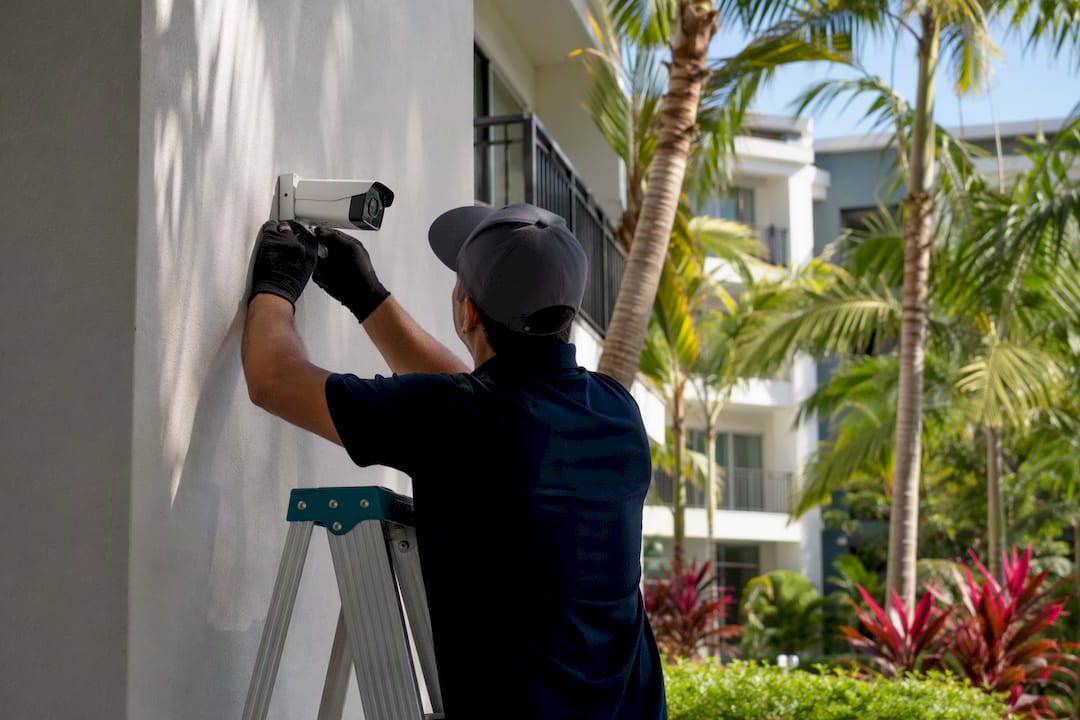
Newer construction with monitored security and documented maintenance often lowers underwriting risk. Ask your leasing office for proof of recent roof, electrical, or security upgrades. That paperwork can support a lower quote.
What’s Actually in Your Total Renters Insurance Bill?
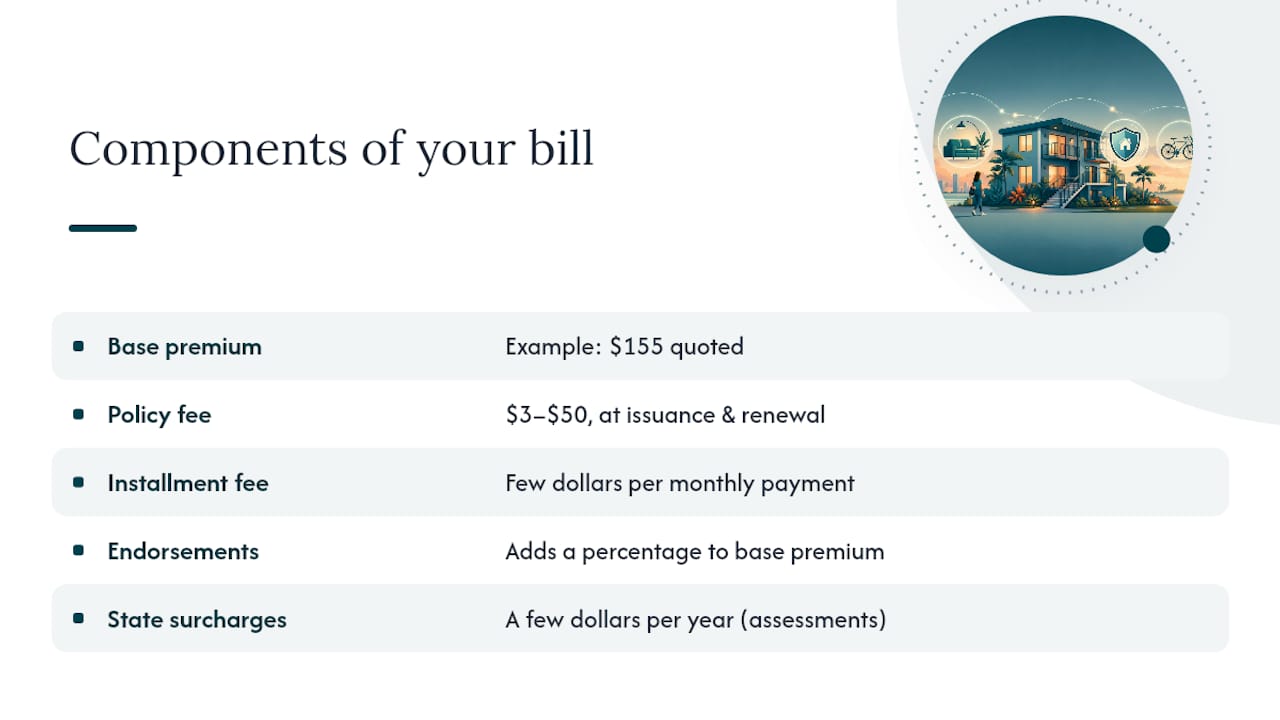
The number an insurer quotes you rarely matches your first invoice exactly, and that gap catches a lot of first-time renters off guard. Your base premium, built from your coverage limits and deductible, is only the starting figure.
Most Florida insurers add a policy fee ranging from a few dollars to around $25 to $50 depending on the carrier, charged once at issuance and again at renewal. If you pay monthly instead of annually, expect an installment fee of a few dollars per payment, which adds up to noticeably more over a year than paying in full. Some insurers also apply a small inspection or underwriting fee for higher coverage tiers.
Endorsements add their own line items. A scheduled personal property endorsement for jewelry or musical instruments adds a predictable percentage to your base premium rather than a flat mystery charge, according to guidance from the Insurance Information Institute. Ask any insurer for a written breakdown before you add one.
State-mandated surcharges are the final piece. Florida’s insurance market includes assessments tied to state guaranty funds and, in some cases, Citizens Property Insurance Corporation’s assessment mechanism, which can show up as a small line item on policies statewide, even for renters who aren’t Citizens customers themselves. These are typically a few dollars a year, not enough to change your insurer choice, but worth recognizing on your invoice so it doesn’t look like an error.
Add it up and a $155 base quote in Boca Raton might land closer to $180 to $200 once fees and any endorsements are factored in. That’s still well within the state’s typical range, but it explains why your final bill and your initial quote rarely match to the dollar.
Is Renters Insurance Required by Law in Florida?
Florida does not require renters insurance by state law. No statute forces you to carry a policy just to sign a lease, unlike car insurance, which the state does mandate.
Most professionally managed apartment communities in Florida include renters insurance requirements in lease agreements, often specifying minimum liability limits. This isn’t a state law. It’s a private contract term, and landlords are within their rights to make it mandatory before handing over keys.
The confusion between “required by law” and “required by lease” trips up a lot of first-time renters. Even where a landlord doesn’t require it, skipping coverage is a real gamble. A landlord’s building policy protects the structure and common areas, not your furniture, electronics, or clothing, and it won’t cover you if a guest gets injured in your unit. That gap is exactly what pushes most renters to carry a policy even when no one is forcing them to.
If your lease does require proof of insurance, most insurers can issue a certificate naming your landlord as an interested party within a day of purchase, so it’s rarely a bottleneck in your move-in timeline.
How Long Does It Take to Buy Renters Insurance in Florida?
Buying a policy is one of the faster parts of moving into a Florida apartment. Most renters can go from first quote to active coverage in under 30 minutes if they have their information ready.
The process breaks down into three quick stages. Getting quotes takes 10 to 15 minutes per insurer if you already know your desired coverage limits, or closer to 20 to 30 minutes with an independent agent who’s comparing multiple carriers for you. Binding the policy, meaning officially purchasing it, happens instantly online with insurers like Lemonade and Progressive, or within a business day when working through an agent for State Farm or Allstate. Receiving proof of insurance, the document your landlord actually wants, typically arrives by email within minutes of purchase and can be forwarded straight to your leasing office.
The one variable that slows things down is timing relative to your move-in date. Quoting a week before your lease starts gives you almost no room to compare options if a price comes back higher than expected. Quoting 30 to 45 days out, closer to your renewal or move-in date, gives you time to run two or three insurers and actually negotiate discounts like bundling or paying annually.
One thing that doesn’t take extra time: switching insurers later. Florida renters policies are typically month-to-month cancellable with no long-term lock-in, so if you find a better rate at renewal, moving your coverage takes about as long as buying it did the first time.
A Resident-Facing Note on Coverage
Cynthiagardens advises every resident to carry renters insurance, not because a landlord’s policy leaves you exposed, but because it doesn’t cover your belongings at all. Build a simple inventory, keep receipts, and consider bundling with auto coverage. Reach out to leasing if you need documentation for your quote.
— Ayman
How Cynthiagardens Helps Boca Raton Renters Manage Insurance Costs
Insurers reward buildings with newer construction, monitored security, and documented maintenance, and that’s exactly the kind of profile Cynthiagardens was built around. Our Boca Raton community offers modern one-bedroom apartments with updated systems, on-site security features, and transparent management records, the paperwork trail that can support a lower renters insurance quote instead of a generic underwriting guess.
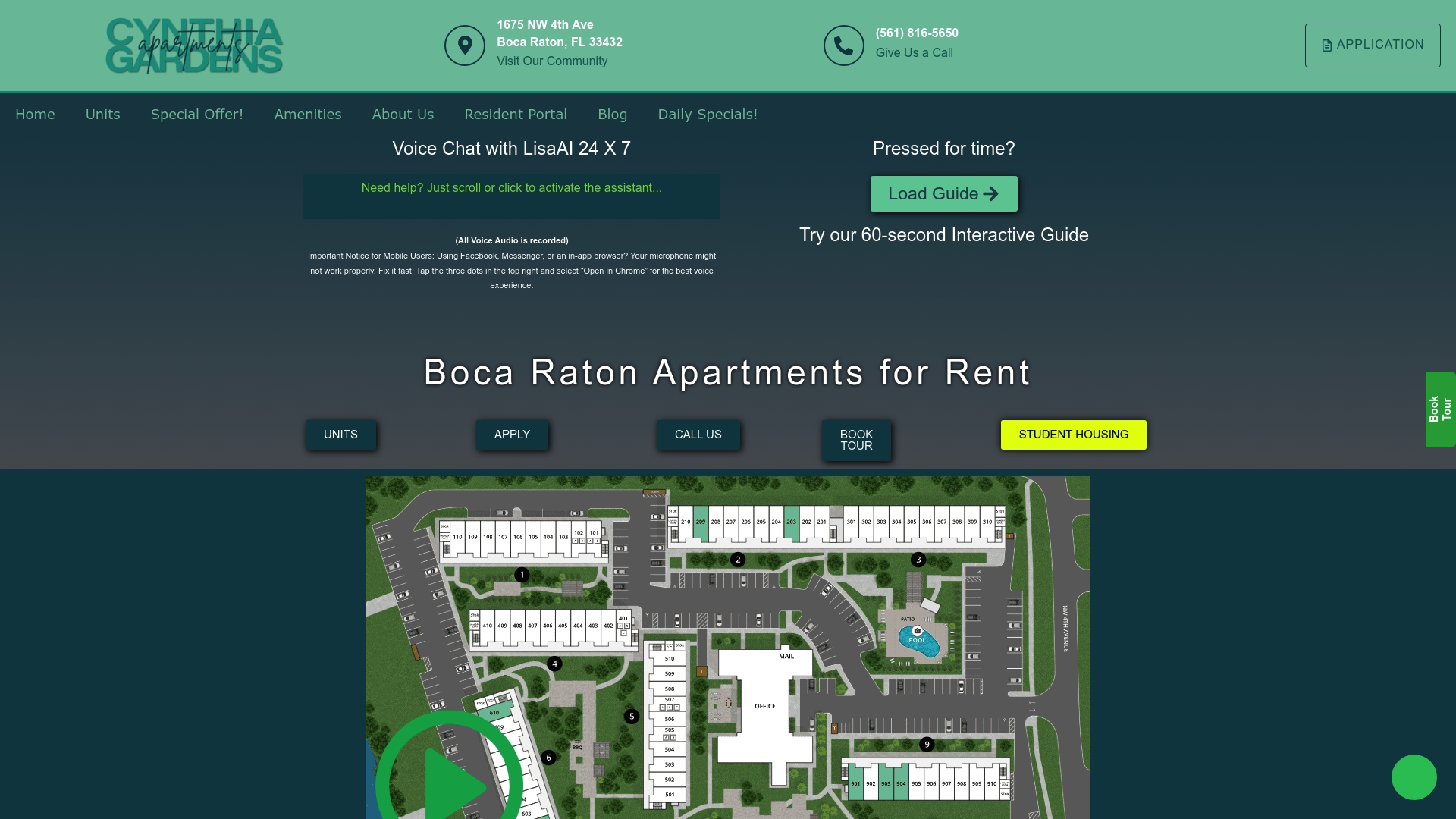
We also keep pricing straightforward with no hidden fees, so the number you see during your tour of our Boca Raton apartment community is the number you actually pay, separate from whatever your insurer quotes. If you’re comparing coverage options while apartment hunting, our team can pull together documentation on recent maintenance and security upgrades to hand to your insurer directly. Explore available one-bedroom layouts and pricing and schedule a virtual tour to see the community features that tend to work in your favor when you sit down to quote renters insurance.
Sources
- Renters’ Insurance Overview — Florida Department of Financial Services
- Renters insurance cost by state — MoneyGeek (2026)
- Renters insurance in Florida — NerdWallet
- Renters insurance facts and statistics — III
- NOAA storm events database
Recommended
- Apartment Insurance: Protecting Boca Raton Renters
- Apartment Living vs House Rental in Florida: 2026 Guide – Luxury Apartments for Rent in Boca Raton | Premium Boca Raton Apartments | Aapartments Boca Raton
- What Is Renters Insurance and How Does It Work – Luxury Apartments for Rent in Boca Raton | Premium Boca Raton Apartments | Aapartments Boca Raton
- Cost of Living Florida 2024 Guide: Save and Budget Smart – Luxury Apartments for Rent in Boca Raton | Premium Boca Raton Apartments | Aapartments Boca Raton