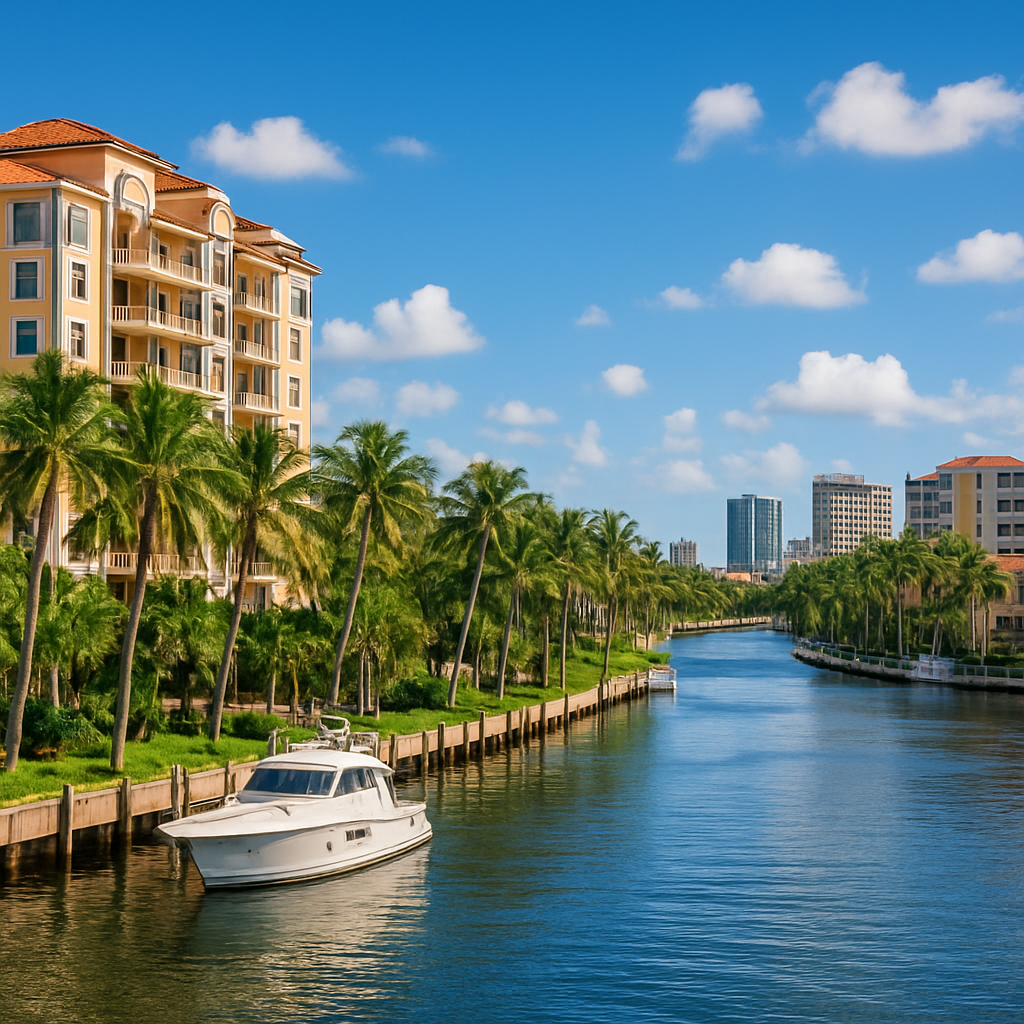
The Ultimate Renter’s Guide to Boca Raton Living
Searching for rental apartments in boca raton as a student or young professional means balancing commute, budget and pet rules. This guide lays out neighborhood tradeoffs, a transparent budgeting method that captures utilities and fees, a practical pet policy checklist, a step by step touring and application timeline, and a straightforward spotlight on Cynthia Gardens for one bedroom renters.
Neighborhoods and who they fit
Bottom line: Boca is not one market — choose neighborhoods based on the commute and lifestyle you actually use. If you value nightlife and walkability, expect to pay a premium for downtown amenities; if budget and predictable parking matter more, look inland and west of I 95 for more affordable options when shopping for rental apartments in boca raton.
Downtown Boca and Mizner Park
Who it fits: Renters who want evenings out, short walks to restaurants, and high walk scores.** Downtown Boca and Mizner Park deliver walkable nightlife, frequent events at Mizner Park Amphitheater, and high-end dining at Royal Palm Place. Expect higher rents for one bedroom units and more high-rise or boutique boca raton apartments with limited free parking and stricter guest rules.
FAU corridor and north Boca
Who it fits: Students and staff who need short, reliable commutes to campus.** The FAU corridor puts you a short drive, bike, or Palm Tran ride from campus and tends to have concentrations of apartments geared to students: furnished apartments, short term rentals, and higher turnover. If minimizing commute time is the priority, this area usually beats downtown for value.
East Boca, Spanish River and beach-adjacent areas
Who it fits: Renters who prioritize beach access and outdoor life.** Expect waterfront apartments in boca raton or Spanish River Circle units to command coastal premiums. The tradeoff is clear: more time enjoying Red Reef Park and Spanish River Park in exchange for higher base rent and, often, longer drives to employers west of I 95 during rush hour.
Town Center and the Glades Road corridor
Who it fits: Commuting professionals who need fast access to I 95 and retail conveniences.** Town Center at Boca Raton and the surrounding Glades Road strip give quick highway access, grocery and mall options, and apartment complexes in boca raton that focus on parking and car-friendly layouts rather than walkability.
Where Cynthia Gardens sits: Cynthia Gardens is positioned for renters who want middle-ground value — close enough to FAU for short commute options and within reasonable drives to beaches and Town Center. For one bedroom renters it combines predictable costs like included utilities with community features many students and young professionals prioritize; book a tour or read short-term options on the Cynthia Gardens site Your Guide to Boca Raton Short-Term Rentals & Homes.
Practical tradeoff to accept: If you pick downtown for lifestyle, budget for higher base rent plus parking and amenity fees. If you pick inland to save money, expect car dependence and longer social trips to Mizner Park or the beaches.
Concrete Example: A FAU graduate student who works part time on campus will often save money and time by choosing the FAU corridor or Cynthia Gardens rather than downtown. In practice that can mean a 10 to 15 minute bike or drive to class and lower monthly costs compared with downtown Boca Raton apartments, where the same one bedroom often costs significantly more and comes with paid parking.
Budgeting: how to calculate true monthly cost
Start with base rent, then stop trusting the sticker price. For anyone shopping rental apartments in boca raton the advertised monthly rent is only the starting point — utilities, pet charges, parking, renter insurance, and amenity or administrative fees turn a neat number into your real monthly obligation.
Step-by-step math you can actually use
Core formula: Total monthly cost = Base rent + Allocated utilities + Recurring fees + Insurance + (Amortized one-time costs). Treat the security deposit and move in fees as upfront but calculate an amortized monthly figure to compare options fairly.
- Base rent: advertised price for the unit.
- Utilities: water/trash, electricity (AC in Boca Raton matters), gas, sewer. Ask which are included — water often is, electricity rarely is in summer.
- Internet/cable: budget for reliable high-speed internet if you work or study from home.
- Recurring fees: pet rent, parking, trash, mandatory amenity fees, storage or garage fees.
- Insurance: renters insurance typically $10–30/month depending on coverage.
- One-time costs (amortized): security deposit, application fees, move-in fees, broker fees. Divide these by your planned months in the unit to compare offers.
Practical insight: In Boca Raton the real kicker is electricity. Buildings that exclude electric bills can surprise you in July and August. If a place includes water and trash but not electric, run a conservative summer electricity estimate before you sign.
Concrete example — compare two realistic use cases
Concrete Example: A student chooses a one-bedroom at Cynthia Gardens with utilities partially included; a young professional picks a downtown one-bedroom with lower base rent but separate utilities. Using example numbers based on current market listings (Zillow and RentCafe), amortize move-in costs over 12 months to compare apples to apples.
| Cost Item | Student (Cynthia Gardens) — example | Professional (Downtown) — example |
|---|---|---|
| Base rent | $1,600 | $1,700 |
| Water/trash | Included | $25 |
| Electricity (summer aware) | $60 (partially included/capped) | $150 |
| Internet | $50 | $60 |
| Renter insurance | $12 | $15 |
| Pet rent | $30 | No pet |
| Parking or amenity fee | Included | $40 |
| Amortized move-in costs | $50 | $150 |
| Total monthly (example) | $1,802 | $2,140 |
Trade-off to watch: a slightly higher base rent that includes predictable utilities usually beats a lower base rent with big summer electric bills. For students and early professionals on fixed budgets, predictability matters more than a small nominal savings.
- Negotiation levers: ask for a utility cap, request parking included, or propose a 13-month lease in exchange for a lower monthly rate.
- Verification steps: request a recent utility ledger or ask management for typical summer and winter electric bills for the unit type.
- When to amortize: if you plan to rent 12+ months, amortize deposits and application fees; if short-term, treat them as cash you must have on move-in.
Next consideration: before you tour, pick two comparable units, run this calculation, and bring the numbers to the leasing office — asking for utility caps or a small concession is easier when you can show the math. For quick market comparison use Zillow and then verify actual inclusions with the property.
Cynthia Gardens spotlight for one bedroom renters
Clear fit: Cynthia Gardens is a practical choice for one bedroom renters who want predictable monthly costs, pet friendly policy, and a quiet community rather than boutique finishes or downtown buzz. The property pairs included basics and on site amenities like a pool with a location that keeps shopping, beaches, and Florida Atlantic University within easy reach.
What the property actually delivers
Included utilities matter: Cynthia Gardens advertises included utilities. In practice that usually means water, sewer, and trash – which removes surprise bills during summer. Do not assume electricity or cable/internet are included; confirm exact line items on the lease because AC-heavy months can still spike your total cost if electricity is separate.
- Pet friendly with conditions: The community accepts pets but expect either monthly pet rent or a refundable deposit and standard weight or breed rules. Bring vaccination records and a pet resume to speed approval.
- On site conveniences: Pool, landscaped grounds, on site management and maintenance are part of the appeal for students and young professionals who do not want to manage yard work.
- Practical tradeoffs: Units emphasize space and value over high end finishes – good for renters who prioritize budget predictability over designer kitchens.
Real-world limitation: If you work from home and need reliable high speed internet, check the building provider options before signing. Many Boca Raton apartment complexes have limited ISP choices or shared wiring that degrades under heavy use. Confirm upload speeds during a tour and ask whether the unit has a dedicated drop or only shared wiring.
Concrete use cases
Student use case: A FAU student on a fixed budget picks a one bedroom at Cynthia Gardens because included water and trash keep monthly bills steady, the pool and common areas reduce the need for off campus entertainment, and grocery runs to nearby shopping are convenient. This reduces both commute friction and variable costs during summer class breaks.
Young professional use case: A commuter who needs weekday parking and a calm evening routine will value Cynthia Gardens if management provides assigned parking and reasonable maintenance response times. The tradeoff is slightly longer drives to downtown Boca Raton nightlife compared with Mizner Park, in exchange for lower rent and predictable bills.
Key point: included utilities here cut bill volatility but do not remove the need to confirm electricity, internet, and any AC usage caps before you sign.
Practical next step: Book a visit with the leasing team or Leasa on the site to see a one bedroom floor plan and check internet speed in the unit. If you want municipal context on commute or local services, consult FAU campus info at Florida Atlantic University and Boca Raton municipal resources at City of Boca Raton.
Takeaway: Cynthia Gardens works best if you prioritize budget stability, pet accommodation, and on site conveniences. Verify internet and electricity details on tour – those two items decide whether a one bedroom there will genuinely lower your monthly stress or simply shift costs into a higher base rent.
Which amenities matter most and how to evaluate them
Start with reliability, not optics. In Boca Raton the features that actually change daily life are things that work consistently: internet that holds during a video call, AC that cools without cycling off, and maintenance that arrives same day when a leak appears. Fancy extras like rooftop lounges and designer furniture matter for Instagram but they do almost nothing for monthly quality of life if basic systems fail.
A practical evaluation framework
- Functionality: Does the amenity serve a real need or is it decorative. Test washers, lockers, gym equipment and the AC on site. Functional beats flashy.
- Cost and access: Is the amenity included or behind an extra fee or reservation system. Ask to see the amenity policy and any pricing in writing.
- Reliability: How often is the amenity out of service and how fast is repair. Ask management for average maintenance response times and recent downtime examples.
- Usage patterns: Is the gym crowded at 6 PM? Is the pool overrun on weekends? Amenities are only valuable when you can actually use them.
- Lease linkage: Are any amenities conditional in the lease, such as gated community access, parking assignment, or resident portal rules?
Concrete Example: On a tour of a Boca Raton apartment complex run a quick internet speed test with a phone or laptop, open the fridge and run the AC for a minute to listen for odd noises, and try a machine in the laundry room. Then ask the leasing agent for the most recent maintenance log entry for the pool or gym and request tenant contact for one or two current residents. Those four steps reveal both condition and how management responds to problems.
- Internet: Insist on provider names, typical speeds in-unit, and whether wiring is fiber or coax. For remote work aim for at least 100 Mbps and ask about peak evening performance.
- Climate control: Verify the AC model, age, and whether thermostat is individual. In Boca Raton an unreliable unit can double your discomfort even if rent is low.
- Laundry and Appliances: Check that washers and dryers are modern, not token machines in a closet. Ask maintenance how often they are serviced.
- Parking and Security: Confirm assigned spaces, guest parking rules, and gate hours. If commute matters, an unassigned lot can add hidden daily friction.
- Pet amenities: Look beyond a grassy spot. Confirm pet policy terms, nearby off leash areas, and any on site waste stations or grooming partnerships.
- Pools, gyms, and workspaces: Test gym equipment condition, ask about reservation windows for workspaces, and watch how communal areas are kept during peak hours.
- Package handling and mail: Ask whether there are lockers, a staffed desk, or frequent package theft incidents. This is a daily convenience that many renters undervalue.
If you must prioritize two amenities for Boca Raton living choose reliable high speed internet and working climate control. Everything else is secondary and negotiable.
Real world tradeoff to accept: A complex with a great social scene and a pool will usually charge more and enforce more rules around use and noise. If your priority is quiet study or steady remote work pick a simpler property with stronger operational standards rather than a flashy community.
Next step: Use this framework on your next tour, score each amenity on function, cost, and reliability, and then decide whether premium amenities justify the price difference. If you want an example property known for practical amenities and included utilities, consider booking a tour with the Cynthia Gardens leasing team via book a tour.
Pet policies and pet owner practicalities
Pet clauses determine more than entry rights; they determine monthly cost and living quality. Read the pet clause line by line before you sign. A seemingly small monthly pet rent can add 2 to 5 percent to your monthly housing cost, breed or weight limits can eliminate otherwise suitable apartments, and vague language around pet damage or odor can become a dispute later.
How to read a pet clause and what matters
Key items to check. Look for whether the fee is a one time non refundable fee or recurring pet rent, whether any portion is refundable, exact weight limits, explicit breed restrictions, and any required documentation such as microchip, vaccinations, or spay neuter certificates. Also watch for language about nuisance behavior or mandatory professional cleaning after move out.
- Fee type and amount – Non refundable fee versus monthly pet rent and how each affects your long term cost
- Deposit versus fee – A refundable deposit protects you but lowers upfront loss if you move out early
- Breed and weight restrictions – Ask for a written list; management often interprets vague wording conservatively
- Behavior and nuisance clauses – Clarify what counts as a violation to avoid surprise fines
- Service and support animals – Request written procedures and where to submit documentation
Tradeoff to accept. Paying monthly pet rent is easier to budget but costs more over a longer lease. A non refundable fee is cheaper long term for a short lease but offers no protection if a pet causes damage. In practice, students on short leases often prefer a one time fee while professionals on longer leases favor refundable deposits or lower monthly rent plus clear damage rules.
Concrete Example: A FAU student with a 35 pound mixed breed toured a downtown Boca property that had a 30 pound limit. The student negotiated by presenting a recent vet reference, vaccination records, microchip proof, and a one page pet resume showing training and past landlord references. Management agreed to allow the dog with a $30 monthly pet rent instead of rejecting the application outright.
Documentation to bring to tours and applications. Carry updated vaccination records, microchip documentation, a brief pet resume or photos, a vet reference, and any previous landlord reference about the pet. Upload these to the application to speed approval and show you are organized.
If pet rent plus utility risk pushes you over budget, prioritize apartments that accept a refundable deposit or that list pet terms clearly in the lease. Ambiguity favors the landlord in disputes.
Local services and practicalities. Use Spanish River Dog Park for off leash time and Boca Raton Veterinary Hospital for routine care and emergency referrals. For a quick read on community parks and rules visit City of Boca Raton Parks. Also consider pet insurance and renter liability coverage to protect against large vet bills and liability claims.
Negotiation tactics that work. Offer a larger refundable deposit, provide landlord references that confirm no damage or complaints, propose a 30 day trial with documented behavior, or agree to professional cleaning at move out. Management responds to low risk and clear accountability more than friendly conversation alone.
Next consideration. When you shortlist boca raton apartment rentals confirm pet terms in writing and compare total cost across units including any recurring and one time pet charges before you commit.
Commuting and transit: get to work or campus efficiently
Most renters in Boca Raton treat a car as the default — and for good reason. Road access, parking and rush hour patterns determine whether a unit is livable for your routine, not just the advertised commute time. Plan around a 7 9 AM and 4 6 PM window on weekdays when Glades Road and I 95 slow down significantly.
Drive routes and realistic travel windows
Key corridors. I 95 is the main north south artery; Glades Road and Yamato Road are the busiest east west connectors to FAU and the business parks. Expect non peak cross town drives of 10 20 minutes; expect 20 40 minutes during peak times depending on origin and whether you need to cross I 95.
| Mode | When it works | Typical time range | Trade off |
|---|---|---|---|
| Drive | Most days and off schedule travel | 10 – 40 minutes | Fastest door to door but fuel, parking and rush hour delays add cost |
| Bus / Palm Tran or campus shuttle | If you live on a route near FAU or Town Center | 20 – 60 minutes | Lower cost but less frequent service and longer trip times |
| Bike | Short trips inside FAU corridor or flat east Boca streets | 5 – 25 minutes | Healthy and cheap but weather dependent and limited secure parking |
| Rideshare or carpool | Occasional trips or when parking is tight | 15 – 45 minutes | Skip parking hassles but cost adds up for daily use |
Practical trade off to evaluate. Cheaper rent further west looks attractive until you add the daily cost of extra time, fuel, tolls and parking. For many early career professionals the time lost in a 30 minute each way commute is worth paying a premium for a nearer unit; students often prefer modest rent savings and will accept longer transit times if a reliable shuttle or bike lane exists.
- Test the actual commute. Drive or ride your intended route during morning and evening rush hours before signing a lease.
- Confirm parking rules. Ask about assigned spaces, guest parking limits, and monthly parking fees; unassigned parking is common and can be a daily hassle.
- Check lease language for parking. Some properties require vehicle registration and impose fines for unregistered cars.
Concrete example: A student living at Cynthia Gardens who commutes to FAU should do a timed drive between 7 30 and 8 30 AM. In real world testing that route typically takes 10 20 minutes off peak and 15 30 minutes during rush hour depending on traffic signals and parking on campus. If the student plans to bike, map the route and verify bike racks at class buildings first.
Transit reality check. Palm Tran and FAU shuttle services exist and are useful for reducing cost, but they are not a full substitute for a car if your schedule includes late nights or irregular shifts. Confirm schedules on the FAU site at FAU and ask property management where the nearest stop is located.
Do a rush hour rehearsal before signing a lease – it reveals parking pain points and realistic door to door times.
Tour checklist, application timeline, and move in day
Direct point: If you want to secure the best units among rental apartments in boca raton, treat tours like inspections and the application like a sprint. A calm, methodical tour plus a ready-to-submit application separates renters who get the unit from those who call back five times and lose it.
What to check on the tour
- Test systems: Run the A/C, check water pressure in kitchen and shower, flush toilets, and open/close windows. If something hums, squeaks, or leaks, note it on the spot.
- Outlet and internet check: Plug your phone and a laptop into several outlets; run a speed test on your phone or laptop to verify real upload/download numbers. Many boca raton apartment rentals have limited ISP choices — low speeds are a valid negotiation point.
- Look for water damage and pests: Check under sinks, around window sills, and behind appliances for stains or mold. Take photos; landlords respect documented evidence more than verbal notes.
- Storage, closet space, and sunlight: Measure or visually confirm it fits your furniture. Ask if storage cages, bicycle racks, or guest parking are assigned.
- Noise and view: Visit during a weekday morning and an evening if possible. Check for road noise from Glades Road or nearby commercial deliveries.
- Security and access: Test door locks, intercoms, stairwell lighting, and ask about package delivery procedures and gate hours.
Practical insight: Don’t assume staged units reflect the specific apartment you will rent. Request to see the exact unit or, if unavailable, a same-floor comparable. Landlords sometimes rotate show units that hide wear found in the actual apartment.
Application timeline — realistic expectations
- Before the tour: Prepare a packet with government ID, last two pay stubs or proof of income, bank statements, and contact info for prior landlord or references.
- Day 0–2 (apply quickly): Submit your application within 24–48 hours after a tour. Competitive boca raton apartments move fast; late applicants often lose units even if they qualify.
- Day 2–5 (screening window): Background and credit checks normally take 24–72 hours. If you need a co-signer, submit their completed form immediately — co-signer delays are the most common approval bottleneck.
- Hold deposit and lease signing: If the property offers a holding deposit, get its terms in writing. Expect to sign digitally and pay initial funds within 24 hours of approval to secure the move-in date.
Trade-off to consider: Putting down a non-refundable holding deposit can lock a unit in a hot market but accept only if the deposit and refund conditions are explicitly written. Verbal promises do not protect you.
Move-in day logistics
- Reserve the elevator/loading dock early: Book two weeks ahead for month-end moves. Ask property management about move-in windows and any fees.
- Do a condition walkthrough: Complete the move-in checklist with management, take timestamped photos of every room and appliance, and keep copies of the signed condition report.
- Utilities and insurance: Confirm utility start dates and set renter insurance effective on your lease start. If utilities are included, get written confirmation of which ones are covered.
- Key, fob, and parking: Verify how many fobs/keys you receive, register your vehicle for assigned parking, and confirm guest parking rules.
- Immediate tasks: Test appliances, run the hot water, check drains, register for the resident portal, and set up auto-pay to avoid late fees.
Concrete example: A FAU grad student toured Cynthia Gardens, ran a speed test, and uploaded pay stubs to Leasa during the tour. The application was approved within 48 hours, the student paid a holding deposit to secure the unit, reserved the elevator for move-in, and started utilities on lease day with no overlap of old apartment billing.
Next consideration: If you need a street or curb permit for a moving truck, check City of Boca Raton moving permits before booking movers — failing to do so can delay move-in and incur fines.
Takeaway: Plan the tour like an inspection, apply within 48 hours with a complete packet, and reserve move-day logistics early — those three steps are the short path from browsing rental apartments in boca raton to moving in without surprises.
Local lifestyle and must visit spots near your new apartment
What shapes daily life in Boca Raton is proximity to three things: water, groceries, and a reliable place to eat after class or work. Renters who prioritize evening social life choose Downtown Boca and Mizner Park; renters who want quiet mornings choose beach-adjacent neighborhoods or inland pockets with tree cover. Those preferences are the single biggest reason two identical one bedroom apartments will list at different rents.
Beaches and outdoor spots
- Red Reef Park – best for snorkeling and a true beach day; arrive early on weekends to avoid paid lot overflow.
- Spanish River Park – quieter beach access and dunes; good for morning runs and dog friendly areas if your lease allows pets.
- Sugar Sand Park – family friendly, bigger green spaces and a science playground; practical when you want a low key weekend without driving to the coast.
Dining, nightlife, and errands
- Mizner Park and Royal Palm Place – the core for dinner and weekend people watching; expect higher parking costs and louder nights nearby.
- City Fish Market and Rocco's Tacos – reliable local favorites for after class or casual client dinners.
- Town Center at Boca Raton – for groceries, chains, and errand runs; a single trip here saves time over multiple smaller runs.
Tradeoff to accept: living steps from Mizner Park gives instant social life but brings traffic and noise on weekend evenings. If you value quiet study time and cheaper rent, prioritize access to transit or a short drive to lifestyle hubs instead of direct walkability.
| Spot | Why go | Practical tip |
|---|---|---|
| Red Reef Park | Beach, snorkeling, coastal trails | Arrive before 9 AM on weekends; lot fills fast and street parking is limited |
| Mizner Park | Dining, events, nightlife | Street meters and private lots – expect paid parking after 6 PM |
| Town Center at Boca Raton | Shopping, grocery runs, essential services | Combine errands into one trip to avoid rush hour on Glades Road |
| Spanish River Park | Calmer beach, birding, early morning runs | Good choice if you want beach access without the downtown crowds |
Concrete example: A student renting a one bedroom near FAU might plan study breaks as follows: early morning run at Spanish River Park, afternoon classes, late lunch at a cafe near FAU, then ride-share to Mizner Park for a weekend show. That sequence keeps weekday costs and noise low while delivering the social life students want on weekend evenings.
Local insight most renters miss: seasonal effects matter more here than in many cities. Winter high season increases traffic, event frequency, and restaurant demand. Summer lowers pedestrian crowds but raises electricity costs for AC – so a unit with included utilities meaningfully changes your lived cost during the hottest months. Confirm which utilities are included before you sign.