
TL;DR:
- Asking detailed, written questions before renting helps renters avoid financial surprises and lease traps. It also reveals how responsive and transparent the landlord is during the inquiry process.
Questions to ask before renting are the facts that clarify your financial commitment, lease conditions, and lifestyle fit before you sign anything. Most renters focus on price and location. The ones who avoid costly surprises ask specific, targeted questions about deposits, maintenance response times, lease exit terms, and landlord behavior. This renting checklist covers every category that matters, from move-in costs to red flags that signal a poorly managed property. Whether you are renting your first apartment or your fifth, the right questions protect your money and your peace of mind.
1. What financial questions to ask landlords before signing
Money questions come first because they reveal the true cost of renting, not just the advertised rent. The listed price is rarely the full picture.
Ask for the exact total dollar amount you need to receive your keys. Move-in costs vary widely depending on pet fees, admin charges, and deposits. That number can shift by hundreds of dollars between properties that look identical on paper.
- What is the total amount due at move-in? Get a written breakdown of rent, security deposit, admin fees, and any pet charges.
- How do I pay rent, and when is it due? Confirm the accepted payment method, whether that is an online portal, check, or bank transfer, and the exact due date.
- What is the late fee, and when does it apply? Some landlords charge after a grace period of three to five days. Others charge on day one.
- How much is the security deposit, and what is the refund policy? Good landlords return deposits within 21 days and provide a move-in checklist to document existing damage.
- Are there application fees or credit check costs? These are non-refundable in most states, so confirm the amount before you apply.
- What is the rent increase history for this unit? Asking for the rent history of the last two tenants tells you what to expect at renewal time.
Pro Tip: Always ask whether the quoted rent applies to the specific unit you are viewing. Listings often show base rates that do not reflect floor-plan premiums or higher-floor pricing.
Understanding your full financial exposure before signing is the single most effective way to avoid budget shock in month one.

2. Which lease terms to clarify before you commit
Lease contracts contain language that can cost you significantly if you miss it. These are the terms that catch renters off guard most often.
Lease length and early termination. Ask for the exact lease term and what happens if you need to leave early. Lease buyout fees for early termination often equal two months’ rent. That is a significant penalty if your job or life situation changes.
Move-out notice requirements. Move-out notice periods typically range from 30 to 60 days. Missing that window can trigger automatic lease renewal or financial penalties. Check your apartment move-out notice obligations before you assume you can leave with 30 days’ warning.
- Does the lease auto-renew? If so, what is the notice period to opt out?
- What are the guest policies? Some leases restrict overnight guests after a set number of nights.
- Can I sublet or add a roommate? Many leases prohibit subletting without written landlord approval.
- What is the pet policy? Confirm breed and weight restrictions, pet deposits, and monthly pet fees separately from the security deposit.
- Can I hang pictures, paint walls, or make small modifications? Some landlords allow it with written permission. Others deduct restoration costs from your deposit.
- What are the landlord’s entry rights? Most states require 24 hours’ notice for non-emergency entry. Confirm this is written into your lease.
Pro Tip: Read the apartment lease renewal clause carefully. Auto-renewal terms are often buried in the final pages of a lease and are easy to miss.
Every one of these points should be in writing. Verbal promises from landlords are not enforceable.
3. What maintenance and amenity questions reveal about a landlord
Maintenance questions are the fastest way to separate a well-managed property from one that will frustrate you for 12 months. Ask specific, scenario-based questions rather than general ones.
| Question | What the answer reveals |
|---|---|
| What is your average response time for a leaking pipe on a Sunday? | Whether 24/7 emergency support actually exists |
| How do I submit a maintenance request? | Whether the process is organized or informal |
| Who handles repairs: staff or outside contractors? | Speed and accountability of the repair process |
| Which amenities are included in rent? | Hidden fees for gym, parking, or laundry |
| Is parking assigned or first-come, first-served? | Whether you will compete for a spot every night |
Good property managers have 24/7 emergency lines and can give you a concrete response time, such as a two-hour plumber arrival for emergencies. Vague answers like “we handle things quickly” are a red flag. Requesting concrete metrics for maintenance response times differentiates well-managed properties from ones that rely on slow, informal communication.
Ask whether the property uses an online portal for maintenance requests. A digital system creates a paper trail and holds management accountable. Properties without one often have slower, harder-to-track repair histories.
Also ask about safety features: working smoke detectors, secure entry systems, exterior lighting, and whether the neighborhood has any known issues. These questions signal to the landlord that you are a thorough renter, and the quality of their answers tells you everything about how they operate.
4. Questions that reveal apartment suitability and landlord transparency
These are the questions most renters skip. They are also the ones that expose red flags before you sign.
Ask about the unit’s rent history. Experienced renters use unit-specific rent history to anticipate renewal increases and negotiate better terms. If the previous tenant paid $200 less per month, ask why the rent jumped.
Ask for the three most common reasons security deposits are withheld. A landlord who answers confidently and specifically is organized and fair. One who deflects or gives vague answers may be looking for reasons to keep your money. Most common deposit deductions relate to cleaning, so ask whether a move-in checklist is provided to document the unit’s condition on day one.
| Transparent landlord | Red flag landlord |
|---|---|
| Provides written move-in checklist | Skips documentation at move-in |
| Answers deposit questions directly | Deflects or gives vague answers |
| Confirms all verbal promises in writing | Relies on handshake agreements |
| Discloses planned renovations or sale | Avoids questions about property future |
| Gives specific maintenance response times | Says “we handle things quickly” |
Ask whether there are any planned renovations or a potential property sale in the next 12 months. A sale can mean new ownership with different policies. Renovations can mean months of noise and disruption.
Pro Tip: Use open-ended questions that start with “How,” “What,” and “Why.” Negotiation experts confirm these formats encourage landlords to give detailed, honest answers rather than simple yes or no responses.
Watch how the landlord behaves during your conversation. Evasiveness, rushing, or irritation at basic questions are silent red flags. A landlord who is impatient with your questions before you sign will be worse after.
Key takeaways
Asking specific, written-backed questions before renting is the most reliable way to avoid financial surprises, lease traps, and unresponsive landlords.
| Point | Details |
|---|---|
| Confirm total move-in costs | Get a written breakdown of every charge before you hand over any money. |
| Verify lease exit terms | Early termination fees often equal two months’ rent; know this before you sign. |
| Test landlord responsiveness | Ask for a specific emergency repair response time, not a general promise. |
| Request unit-specific rent history | Past rent increases predict future ones and strengthen your negotiating position. |
| Watch landlord behavior | Evasiveness during questions is a reliable predictor of problems after move-in. |
What I’ve learned from asking the wrong questions
Renters lose money in predictable ways. They ask about the gym and the parking. They forget to ask who handles a burst pipe at 11 p.m. on a Saturday.
I have seen renters sign leases based on verbal promises about included utilities, only to receive a bill for water and trash on month two. The landlord was not lying. The renter just did not ask the right question in writing. That distinction costs real money.
The most underrated technique is what I call the silent checklist: watching how a landlord responds to your questions, not just what they say. A landlord who sighs at your deposit questions or rushes past the early termination clause is telling you something. Pay attention to it.
Open-ended questions are genuinely more effective than yes or no questions when talking to landlords. “What happens if I need to leave three months early?” gets you more useful information than “Is there an early termination fee?” The first question forces a real answer. The second invites a one-word response.
Take notes during every property visit. Compare landlords the same way you compare apartments: on responsiveness, clarity, and willingness to put things in writing. The landlord who answers every question directly and offers to include verbal promises in the lease is the one worth signing with.
— Ayman
Why Cynthiagardens answers these questions before you ask
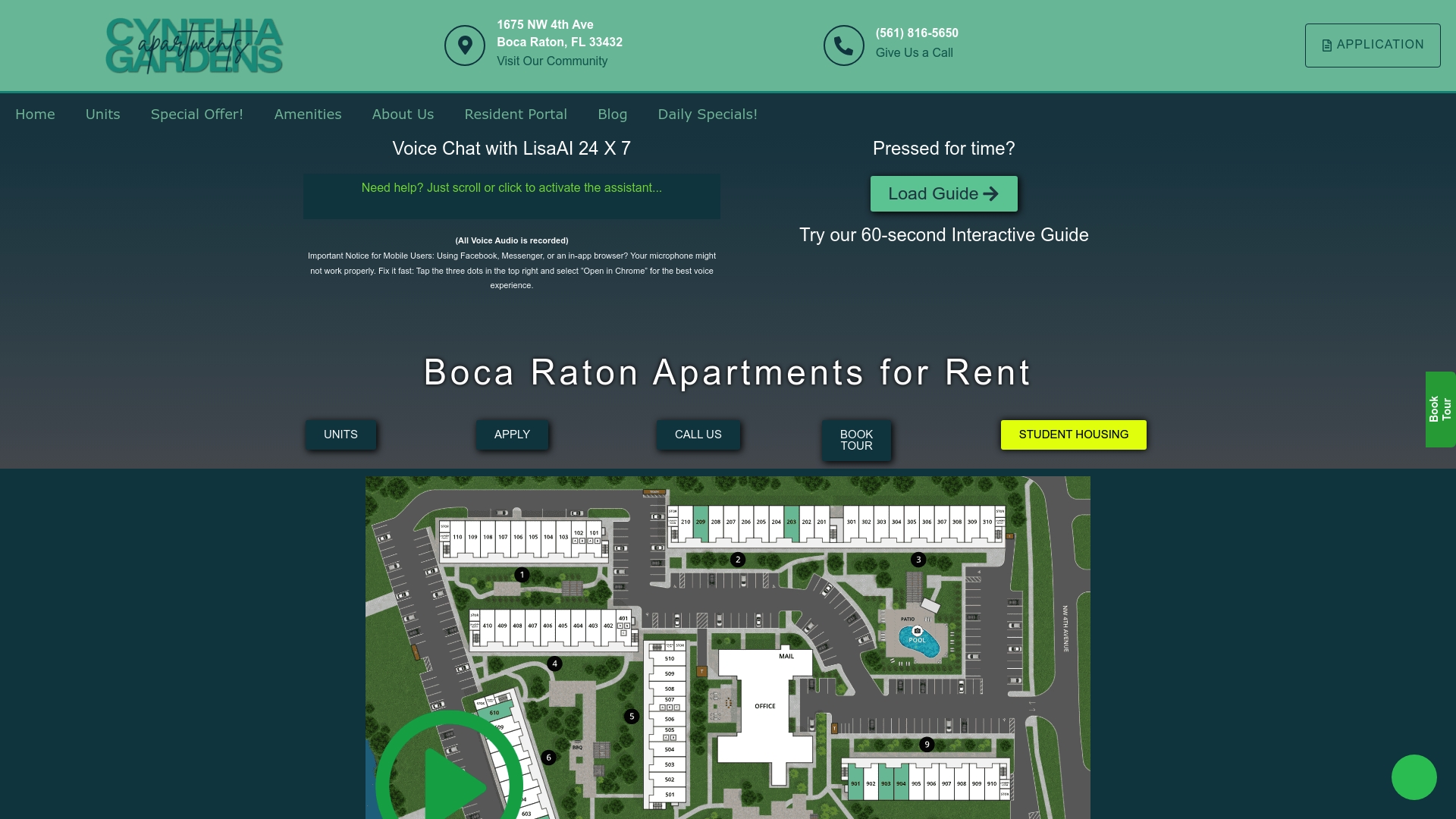
Cynthiagardens in Boca Raton is built around the principle that renters should never have to chase answers. Move-in costs are listed transparently with no hidden admin fees. Lease terms are written in plain language, and the team puts every commitment in writing. Pet owners get clear policies on deposits and fees upfront, with no surprises at signing. Maintenance requests go through an online portal with documented response times, and 24/7 emergency support is a real line, not a voicemail. If you want to see the apartment styles and features available right now, Cynthiagardens offers virtual tours and AI chat support to help you find the right fit before you ever visit in person.
FAQ
What is the most important question to ask before renting?
Ask for the exact total dollar amount required to receive your keys, including all deposits, fees, and pet charges. This single question reveals the true move-in cost, which often differs significantly from the advertised rent.
How much notice do I need to give before moving out?
Move-out notice periods typically range from 30 to 60 days, depending on your lease. Missing this window can trigger automatic renewal or financial penalties, so confirm the exact requirement in writing before you sign.
What are the most common reasons security deposits are withheld?
Cleaning is the most frequent reason landlords deduct from security deposits. Ask your landlord for a move-in checklist on day one and document the unit’s condition with photos to protect your deposit at move-out.
How do I evaluate a landlord’s maintenance responsiveness?
Ask for a specific scenario response time, such as how long it takes for an emergency plumber to arrive on a Sunday. A well-managed property gives you a concrete answer. Vague responses indicate a disorganized maintenance process.
Should I rely on verbal promises from a landlord?
No. Verbal commitments are not enforceable in a lease dispute. Ask for every promise, including included amenities, repair timelines, and rent freeze agreements, to be written into the lease or provided as a signed addendum.
Recommended
- What to Look for in Rental Apartments: A 2026 Guide – Luxury Apartments for Rent in Boca Raton | Premium Boca Raton Apartments | Aapartments Boca Raton
- Apartment Viewing Checklist: 8 Tips for 2025 – Luxury Apartments for Rent in Boca Raton | Premium Boca Raton Apartments | Aapartments Boca Raton
- 7 Essential Steps for an Apartment Hunting Checklist
- How to Find the Perfect Apartment in Your Neighborhood – Luxury Apartments for Rent in Boca Raton | Premium Boca Raton Apartments | Aapartments Boca Raton