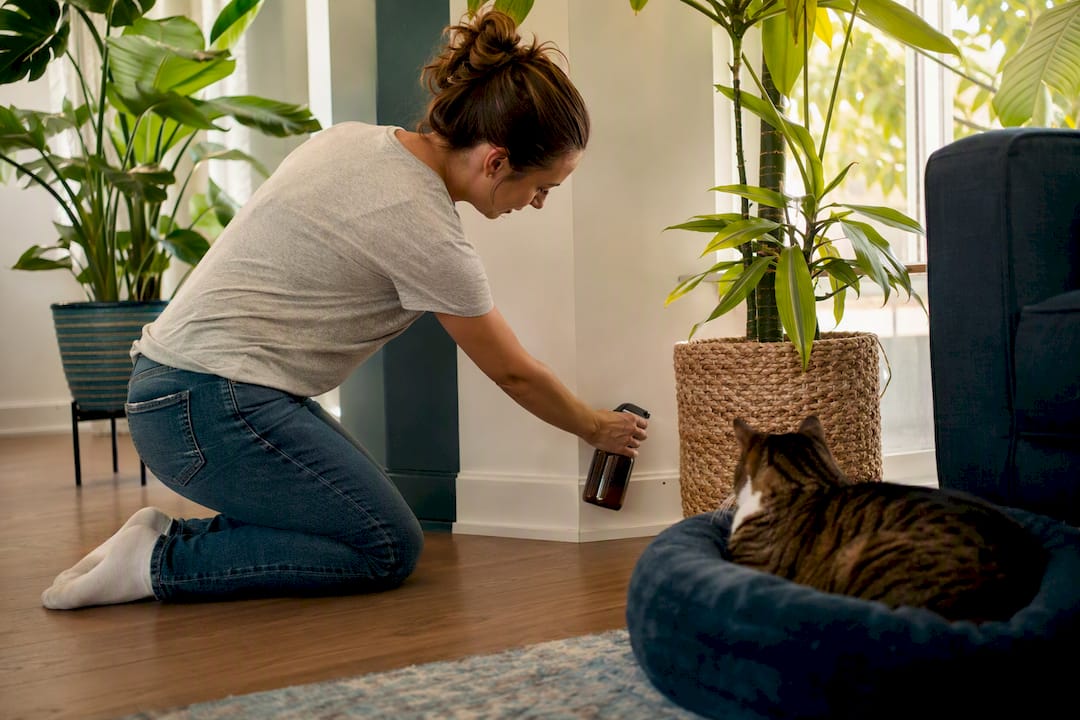
Prevention comes first, always. Seal entry points, remove food and water sources, and clean up clutter before you reach for any product, and if you do need a pesticide, choose one labeled for use around pets and keep animals away until the label’s reentry time has passed. That single sequence, prevention then labeled products then patience, is the backbone of what the EPA calls Integrated Pest Management, and it’s the difference between a pest problem you solve and a vet bill you didn’t see coming.
If you’re mid-crisis right now, dealing with ants in the kitchen or a landlord who just scheduled a treatment, here’s your immediate move:
- Move pet food, water bowls, and bedding out of the area being treated
- Confine pets to a separate, untreated room or arrange a few hours away from home
- Ventilate the treated space once the label allows it, opening windows and running fans
- Keep the product label or packaging within reach in case you need to call for help
Pro Tip: Photograph the product label with your phone before treatment starts. If your pet shows symptoms later, you’ll have the ingredient list and emergency number instantly instead of hunting through recycling.
Labels on pet-related pesticide products are required to carry specific safety statements, including species restrictions and often an emergency contact number, precisely because pet poisonings are preventable when instructions are followed.
TL;DR:
- Sealing entry points and removing food sources are the most effective prevention strategies to reduce pest problems without chemicals.
- Always read pesticide labels carefully to understand species restrictions, reentry times, and emergency contacts before application near pets.
- Using tamper-resistant bait stations for rodents is essential, as open bait or loose pellets pose high risks to curious pets.
- Pet-safe treatments include diatomaceous earth, heat, vacuuming, and biopesticides, but chemical products differ in safety standards depending on use.
- Asking landlords or pest control providers for specific product details and pet reentry information protects pets more effectively than relying solely on marketing claims.
Table of Contents
- What Is Pet Safe Pest Control, Exactly?
- Prevention and Integrated Pest Management: What You Can Do Today
- Which Pet-Safe Products Actually Work?
- Preparing Your Home and Pets Before, During, and After Treatment
- Rodent Control That Won’t Put Your Pet at Risk
- How Do You Choose a Pet-Conscious Pest-Control Provider?
- How Cynthia Gardens Supports Pet-Owning Residents
- Key Takeaways
- What Pet Owners Get Wrong About “Pet Safe” Pest Control
- Sources
What Is Pet Safe Pest Control, Exactly?
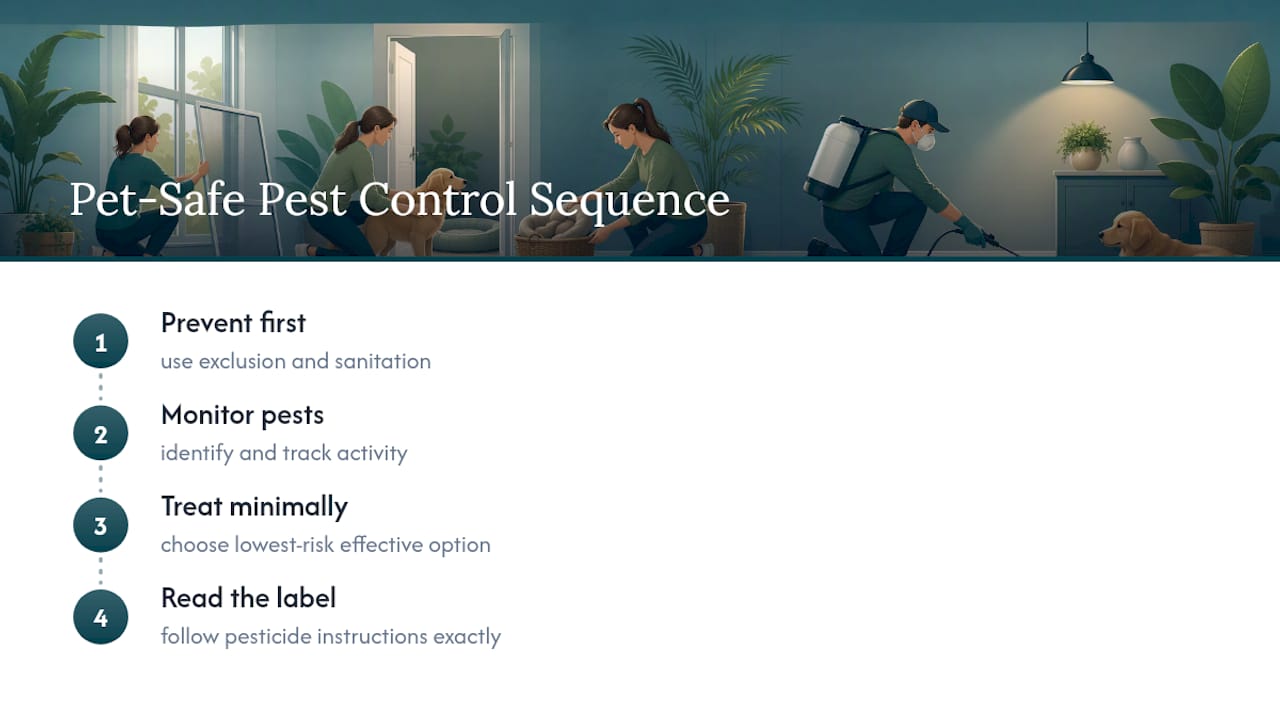
Pet safe pest control isn’t a single product or a certification stamp. It’s a decision-making process that puts prevention first, uses the lowest-risk option that will actually solve the problem, and follows label instructions to the letter when a pesticide is genuinely needed. Some people hear “natural” and assume “harmless,” but that’s not how toxicology works. The safest system is one built on sequence: prevent, monitor, treat minimally, and always read before you act.
Prevention and Integrated Pest Management: What You Can Do Today
Integrated Pest Management, or IPM, ranks your options by risk. Non-chemical prevention sits at the top. Targeted, low-toxicity treatments come next. Broad chemical applications are the last resort, not the first move. The EPA’s Citizens’ Guide to Pest Control and Pesticide Safety frames this hierarchy as the most effective way to cut pesticide reliance, and it works because most pests show up for one of three reasons: easy food, standing water, or an easy way inside.
Here’s a practical starting list for renters and homeowners alike:
- Seal gaps and cracks around baseboards, pipes, and window frames with caulk. Ants and roaches travel through openings smaller than a dime.
- Install or repair door sweeps and window screens. This is often the single highest-impact fix in older apartment buildings.
- Store pet food and human food in sealed containers. An open bag of kibble is an open invitation.
- Fix moisture problems. Leaky faucets, damp bathmats, and standing water in saucers under plants all attract roaches and drain flies.
- Trim vegetation and woodpiles away from the exterior wall if you have a yard or patio.
- Wash pet bedding weekly and vacuum under it. Flea eggs and larvae hide in fabric fibers, not just carpet.
Monitoring matters just as much as prevention. Sticky traps placed along baseboards and under sinks tell you what’s actually in your home before you decide on treatment. Check them every one to two weeks. If you’re seeing droppings, grease trails, or shed insect skins, you have an early warning that lets you act with a targeted response instead of a blanket spray. That distinction, targeted versus broad, is what actually keeps a curious dog or a countertop-hopping cat out of harm’s way. Fewer chemicals in the environment means fewer opportunities for a paw, nose, or mouth to find them.
Which Pet-Safe Products Actually Work?
Not every “natural” label deserves your trust, and not every chemical product deserves your fear. What matters is matching the tool to the pest and using it exactly as directed.
Non-chemical options tend to be the safest starting point:
- Food-grade diatomaceous earth dehydrates the exoskeletons of crawling insects like ants and roaches. It’s abrasive to bugs and essentially inert to mammals when used dry and in low dust concentrations, though you should still keep pets from inhaling clouds of it directly.
- Steam and heat treatments kill bed bugs and their eggs without any chemical residue at all.
- Vacuuming on a regular schedule physically removes eggs, larvae, and food debris that pests depend on.
- Beneficial nematodes applied to soil control grubs and larvae outdoors without harming pets that walk through the treated area.
- Mechanical traps, from sticky boards to enclosed snap traps, work without introducing any toxicant into a pet’s environment.
Low-toxicity chemical categories fill the gap when non-chemical methods aren’t enough. Insecticidal soaps and potassium salt-based products break down quickly and carry a lower mammalian toxicity profile than many conventional insecticides. Products carrying the EPA’s Safer Choice label, or biopesticides derived from naturally occurring bacteria and plant extracts, are formulated and reviewed specifically to reduce risk to non-target species, including household pets.
Here’s where a lot of pet owners get confused: a spot-on flea treatment or flea collar is not the same category as a yard spray or indoor crack-and-crevice treatment. Products applied directly to an animal go through a distinct EPA evaluation, OCSPP 810.3300, which tests efficacy and safety specifically for topical use on cats and dogs. That’s a different testing standard than what governs a general-use insecticide meant for baseboards or yards. Never assume a product labeled for direct animal application is interchangeable with an environmental treatment, or vice versa. The label will tell you which category you’re holding, along with species restrictions, ventilation requirements, and minimum age or weight limits for the animal.
Preparing Your Home and Pets Before, During, and After Treatment
Whether you’re hiring a professional or applying a product yourself, timing is everything.
Before treatment:
- Read the label completely and keep it accessible. It lists reentry times, ventilation needs, and emergency contacts.
- Remove or seal pet food, water bowls, and bedding from the treatment zone.
- Cover or relocate fish tanks and bird cages. Aquatic and avian species are often more sensitive to airborne chemicals than mammals.
- Confine pets to an untreated room, or better yet, arrange a few hours elsewhere.
During treatment: stay out of the treated area yourself, ventilate as the label specifies, and if a technician is present, confirm exactly where bait stations and sprays are placed so you know what to avoid later.
After treatment: most labels specify a drying or reentry window, sometimes a couple of hours, sometimes overnight. Wipe down countertops and pet-accessible surfaces if the label recommends it once that window passes. A homeowner’s cleanup guide covering post-treatment ventilation and surface cleaning is worth bookmarking if this is new territory for you.
Pro Tip: Set a phone alarm for the exact reentry time listed on the label instead of guessing “a few hours.” Labels sometimes specify ranges as precise as two hours for one product and twenty-four for another.
Watch for drooling, vomiting, tremors, or unusual lethargy in the days following any treatment, and keep your vet’s number and an animal poison-control line saved where you can find them fast.
Rodent Control That Won’t Put Your Pet at Risk
Rodent bait is where the highest-stakes mistakes happen, because a curious dog can find and eat an entire block of anticoagulant rodenticide before you notice it’s gone. Tamper-resistant, lockable bait stations are the standard for pet households for a reason: they let rodents access the bait while keeping paws and noses out. EPA guidance on pest control best practices specifically recommends these enclosed stations over open placements.
A few rules worth committing to memory:
- Never use loose bait pellets scattered in a garage, closet, or under a sink.
- Favor enclosed snap-trap devices over open spring traps in any room a pet can reach.
- Second-generation anticoagulant rodenticides (SGARs) are especially dangerous because they accumulate in an animal’s system and symptoms can take days to appear, by which point internal bleeding may already be underway.
- Place stations along walls and travel paths rodents actually use, secured so they can’t be tipped or dragged, and check them on a regular schedule.
If your pet does contact bait or a dead rodent that may have ingested it, don’t wait for symptoms. Bring the packaging or label with you, call your veterinarian or an animal poison-control center immediately, and treat it as urgent even if your pet seems fine in the moment. Anticoagulant poisoning is treatable when caught early and often fatal when it isn’t.
How Do You Choose a Pet-Conscious Pest-Control Provider?
Whether you’re hiring an exterminator or your landlord is scheduling one, you have every right to ask questions before anyone applies anything in a home with animals in it.
Ask these directly:
- What specific products will be used, by brand and EPA registration number?
- Can I see the product label or safety data sheet before treatment day?
- What is the reentry time for pets specifically, not just people?
- Do you use tamper-resistant bait stations, or open bait placements?
- Are you licensed and insured in this state?
Red flags that should make you pause:
- A technician who won’t name the products they’re using or refuses to show you a label
- Blanket indoor fogging or spraying in every room regardless of where the actual pest problem is
- Loose rodent bait placed in open areas instead of secured stations
- Vague answers about reentry time, like “should be fine in a bit”
If you rent, this conversation belongs to your lease relationship too. Tenants have standing to ask landlords for pet-safe methods and written product details before a scheduled treatment, and reviewing your building’s pet policy ahead of time makes that conversation a lot smoother.
How Cynthia Gardens Supports Pet-Owning Residents
Renting with a pet shouldn’t mean guessing at what’s safe. Cynthia Gardens residents can reference our pet-proofing guide for cat owners for practical sealing and storage tips that double as pest prevention, and our pet owner apartment checklist walks through exactly what to move, store, and confirm before any scheduled treatment.
- Pet-proofing and prevention guidance built for apartment layouts, not sprawling houses
- A resident checklist covering food storage, bedding hygiene, and pre-treatment prep
- Clear pet-policy documentation so you know who to contact before a pest treatment is scheduled
If a treatment is coming to your unit or common areas, reach out to property management directly to ask which products are being used and what the pet reentry window looks like. That single email can save you a stressful night.
Key Takeaways
Prevention-first pest management, combined with label-reading discipline and tamper-resistant rodent control, protects pets more reliably than any single “pet-safe” product on its own.
| Point | Details |
|---|---|
| Prevention beats chemicals | Sealing entry points and removing food and water sources cuts pest pressure before you need any product. |
| Labels are non-negotiable | Read species restrictions, reentry times, and emergency contacts before applying anything near pets. |
| Rodent bait needs containment | Use tamper-resistant, lockable bait stations instead of loose pellets or open traps. |
| Topical products differ from environmental ones | Spot-on treatments follow different EPA testing than sprays or yard treatments, so labels aren’t interchangeable. |
| Ask before treatment day | Request product names, labels, and pet-specific reentry times from any technician or landlord. |
What Pet Owners Get Wrong About “Pet Safe” Pest Control
Most advice on this topic treats “natural” and “safe” as synonyms, and that’s the mistake that lands pets in the emergency vet. Diatomaceous earth is genuinely low-risk. So is a properly labeled biopesticide. But plenty of essential-oil sprays marketed as pet-friendly have never been tested against cat physiology specifically, and cats metabolize certain plant compounds far worse than dogs do. The label, not the marketing language on the front of the bottle, is the only reliable source of truth.
The other gap I see constantly: renters assume pest control is something that happens to them, not something they can shape. It isn’t. Asking a landlord for product names before a scheduled treatment isn’t confrontational, it’s basic due diligence, and most property managers respect a tenant who asks specific questions. Prevention inside your own unit, sealing, storage, cleaning, does more to keep your pet safe long term than any product decision ever will. Start there before you worry about which spray to buy.
— Ayman