
A pet resume is a one-page document that presents your pet’s health records, training, temperament, and references so a landlord can approve an application faster and with less doubt. Renters who attach one to a rental inquiry give leasing staff exactly what they need to say yes: proof the pet is healthy, well-behaved, and unlikely to cause damage. The next section breaks down exactly what belongs on it.
TL;DR:
- Pet resumes should include a calm, recent photo and a vaccination summary to quickly confirm the pet’s health and safety.
- A well-structured resume typically covers identification, health records, training, behavior, and references, with references called before submission.
- Third-party screening processes verify claims about breed, weight, vaccination, damage, and noise incidents, with landlord and vet contacts being crucial.
- Sending the pet resume early in the application process, including during inquiries and follow-ups, speeds up approval by providing immediate verification points.
- Clear documentation and a polite offer for a quick meet-and-greet can significantly improve chances of rapid leasing approval.
Table of Contents
- Why Do Landlords Care About a Pet Resume?
- What Should Go on Your Pet Resume?
- How Should You Format and Present the Resume?
- When Should You Send Your Pet Resume?
- How Do Property Managers Actually Evaluate Pet Resumes?
- A Copy-Ready Pet Resume Template
- What Good Pet Documentation Means for Faster Leasing
- Where to Learn More About Pet Screening
- Sources
- FAQ
Why Do Landlords Care About a Pet Resume?
Landlords worry about four things when they see “pet” on an application: property damage, noise complaints from neighbors, aggression toward other residents, and health or pest risks. A pet resume works because it answers those worries before they turn into a rejection.
Keep it to one page, two at the absolute most. Property managers skim dozens of applications a week, and a résumé that reads like a novel gets set aside. A resume should cover:
- Basic identification and a calm photo
- Vaccination and spay/neuter status
- Training history or behavior notes
- At least one reference who can vouch for the pet
A resume supplements formal verification. It doesn’t replace it. Most communities still run a pet screening process that checks breed, weight, and vaccination records against your claims, so everything on the resume needs to hold up under a phone call or a document request.
What Should Go on Your Pet Resume?
Start with the photo. Choose one where your pet is sitting or lying calmly, ideally next to something that shows scale, like a ruler or a familiar piece of furniture. Skip action shots. A dog mid-jump might look fun to you, but to a stranger reviewing 40 applications, it reads as “high energy, possible jumper.”
From there, cover the basics landlords expect to see:
- Identification: name, breed or mix, age, weight, and spay/neuter status
- Health summary: rabies and core vaccination dates, current parasite prevention, microchip number, and vet clinic name and phone number
- Training and behavior: obedience classes completed, certifications such as Canine Good Citizen, and a two- or three-sentence temperament summary (“calm indoors, walks well on leash, not reactive to other dogs”)
- References: veterinarian, trainer (if applicable), and a prior landlord, each with a phone number or email
Pro Tip: Call your references before you list them. A vet or former landlord who answers a surprise verification call without warning tends to give a shorter, vaguer answer than one who was told to expect it.
Experts at the American Kennel Club recommend leading with the photo and vaccination summary specifically because those two items answer a manager’s first question: is this animal healthy and safe to have in the building? Community groups like Pasadena Humane run workshops teaching renters to build exactly this kind of document, which tells you how widely it’s become standard practice, not a gimmick.
One detail renters skip and shouldn’t: the prior-landlord reference. A vet call confirms your pet is healthy. A landlord call confirms your pet didn’t chew through a door frame. Leasing staff weigh both heavily.
How Should You Format and Present the Resume?
Structure matters as much as content. A resume that’s hard to scan gets skimmed, not read.
- Header: pet’s name and photo, your name, phone number, and email, all in the first few lines
- Short “About” paragraph: two or three sentences summarizing personality and daily routine
- Health section: vaccination summary in a small table, spay/neuter status, microchip number
- Training and references section: classes, certificates, and contact info for your vet and prior landlord
- Optional attachments: certificates, vaccination records, or a link to a 30-second video of your pet behaving calmly
Save it as a single PDF. Use a plain font like Calibri or Arial, bold your section headers, and keep the vaccine summary as a simple table rather than a scanned stack of vet paperwork. Pro Tip: A short video link showing calm behavior can tip a hesitant leasing office in your favor, but keep it optional and keep the resume itself under one page. Tone should stay factual and upbeat. Skip anything defensive (“I know some landlords don’t like pit bulls, but…”) and let the documentation speak for itself.
When Should You Send Your Pet Resume?
Timing determines whether your resume gets read or buried. Send it at four points in the process:
- Initial inquiry: mention you have a pet and offer to send a resume before the landlord even asks
- Showing: bring a printed copy to hand over in person
- Application: attach the PDF directly to your rental application, not as a separate follow-up email
- Follow-up: a short note after submitting, reiterating you’re happy to arrange a quick meet-and-greet
Offering a brief meet-and-greet costs you nothing and often settles lingering doubt on the spot. Keep the offer to one sentence: “I’m happy to bring [pet’s name] by for a quick five-minute visit if that’s helpful.” If the property uses a third-party screening platform, attach your resume anyway and ask directly whether the manager needs you to also submit the same details through that system. Offering the information twice, once informally and once through the required channel, speeds up approval rather than slowing it down.
How Do Property Managers Actually Evaluate Pet Resumes?
Most managers run your pet through a standardized screening process, often through a third-party platform that assigns a risk score similar to a FIDO Score. Your resume is persuasive, but it isn’t the record of truth. A consistent screening workflow exists precisely so managers can verify claims instead of taking them on faith.
Here’s what typically gets checked against what you submit:
- Vaccination status and dates, cross-referenced with your vet
- Spay or neuter status
- Breed and weight, especially where a community has size or breed restrictions
- Prior-landlord references, specifically asking about damage or noise complaints
- Any documented bite or aggression incidents
The two verification calls that matter most are the prior landlord, who confirms whether the pet caused damage or noise complaints, and the veterinarian, who confirms vaccinations are current. These two calls often outweigh every other detail on the resume.
Service animals and emotional support animals fall under separate accommodation rules entirely. A pet resume doesn’t change those legal protections one way or the other, and state housing guidance treats assistance animals differently from pets regardless of what documentation you submit. The practical takeaway for a standard pet: include contacts a manager can actually reach, and keep every claim short enough to verify in one phone call.
A Copy-Ready Pet Resume Template
Here’s a skeleton you can fill in tonight:
- Header: pet name, photo, your contact info
- About: two sentences on personality and daily routine
- Basics: breed, age, weight, spay/neuter status
- Health: vaccine summary table, microchip number, vet name and phone
- Training and references: classes or certifications, vet contact, prior-landlord contact
Before you send it, run this checklist:
- Photo is calm, recent, and shows size clearly
- Vaccine summary lists dates, not full medical files
- Vet clinic name and phone number are current
- At least one reference has been called and knows to expect a follow-up
- File is named clearly, something like “PetResume_LastName_PetName.pdf”
Attach certificates or a video link only if you have them ready. A resume with three solid references beats one padded with optional extras.
What Good Pet Documentation Means for Faster Leasing
Clear pet documentation lets a leasing team make a decision in one pass instead of chasing down missing information over three emails. The applications that move fastest through our office are the ones where the vet contact is real and answers the phone, and where the renter offers a short meet-and-greet without being asked twice. That combination tells a leasing team more in five minutes than any amount of paperwork.
— Ayman
Where to Learn More About Pet Screening
For a deeper look at how screening decisions get made, Rent Manager’s overview of pet screening and Buildium’s screening workflow guide both explain the process from the property side. The Humane Society offers renter-focused guidance on expanding pet-friendly housing options and reducing discrimination against pet owners.
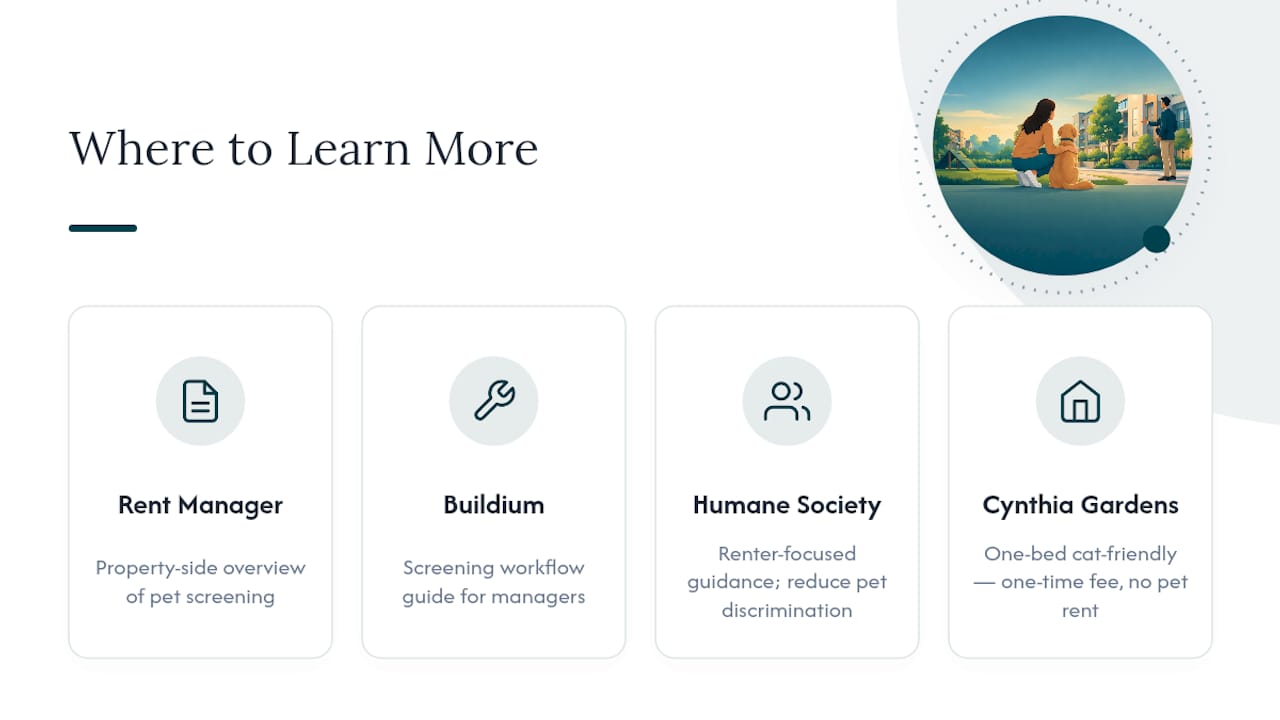
If you’re actively comparing communities, our own breakdown of apartment pet policy basics and what pet screening in rentals actually checks can help you walk into any showing prepared. Cynthia Gardens keeps its own one-bedroom apartments cat-friendly with a one-time pet fee and no ongoing pet rent, which is worth knowing if you’re weighing your options in Boca Raton.
Sources
- What Is Pet Screening, and Why Do Property Managers Use It? – Rent Manager
- A 6-Step Workflow for Easier Pet Screening | Buildium
- Write a dog resume for landlords | AKC expert advice
- Increasing housing options for renters with pets | The Humane Society
FAQ
What Should I Put on a Resume for Pet Sitting or Renting?
Include your pet’s name, breed, age, weight, spay/neuter status, a vaccination summary, microchip number, and contact info for your vet and a prior landlord. A calm, clear photo and a short temperament summary round out a one-page pet resume for apartments that a leasing office can actually verify.
What Does an Apartment Pet Interview Consist Of?
A pet interview, sometimes called a meet-and-greet, usually involves the leasing staff observing how your pet behaves around people and in a common area for a few minutes. It’s informal and short, and offering one yourself often speeds up approval more than any paperwork.
What Do Landlords See on Pet Screening?
Landlords using a third-party screening platform typically see breed, weight, vaccination status, and a standardized risk score. They also check for any documented incident history and confirm the details against what you’ve submitted on your resume.
What Are Some Good Pets for Apartments?
Calm, moderately sized dogs with obedience training and cats that are spayed or neutered tend to fit apartment living most easily, mainly because noise and space concerns are what landlords flag most often. The right pet for an apartment depends less on breed and more on documented behavior and training, which is exactly what a resume is built to show.
Do I Still Need a Pet Resume if the Building Uses Formal Screening?
Yes. A resume doesn’t replace formal pet screening, but it gives the leasing team context and verifiable contacts before the official process even starts, which often makes that process faster.