
Pet rent is a recurring monthly charge some landlords add on top of base rent for keeping a pet in a unit. In Boca Raton, it’s common to see either a one-time nonrefundable pet fee or ongoing monthly pet rent, sometimes both. Assistance animals are treated differently: under federal and Florida law, they generally cannot be charged pet fees or pet rent because they aren’t legally considered pets.
TL;DR:
- Assistance animals are exempt from pet rent and fees under federal and Florida law, as they are not legally considered pets.
- Typical pet costs in Boca Raton include a one-time nonrefundable fee of $300 to $500 per cat, with most properties charging $20 to $50 in monthly rent per pet.
- Landlords can set weight, breed, and pet count restrictions, but must clearly specify these in the lease and cannot impose ongoing fees for assistance animals.
- Combining a one-time fee with a refundable damage deposit is common; understanding whether costs are refundable or not impacts your total annual pet expenses.
- Verifying pet policies, fees, and lease terms online and in writing before paying deposits helps prevent rental scams and misunderstandings.
Table of Contents
- Pet rent vs pet fee vs pet deposit: how to read your lease
- Are pet rents and pet fees legal in Florida for assistance animals?
- What Boca Raton renters actually pay for pets
- How to find and verify pet-friendly rentals in Boca Raton
- How to request a reasonable accommodation for an assistance animal
- How pet rent affects renter eligibility and lease renewal
- Comparing pet policies across Boca Raton neighborhoods and property types
- Local option: why Cynthia Gardens offers a transparent, pet-friendly choice
- Where to verify rules and listings
- Finding your pet-friendly apartment in Boca Raton
- Sources
- FAQ
Pet rent vs pet fee vs pet deposit: how to read your lease
Lease documents mix these terms constantly, and the difference changes what you owe over a year. Here’s what each one actually means:
- Monthly pet rent is a recurring charge added to your base rent for as long as you keep the animal, usually listed as a flat dollar amount per pet per month.
- One-time nonrefundable pet fee is a single charge paid at move-in that covers wear and tear from having a pet; you don’t get it back when you leave.
- Refundable pet deposit is held against actual damage and is returned, in whole or in part, after move-out inspection, similar to a security deposit.
- Per-pet surcharge is any of the above multiplied by the number of animals you keep, often capped at two pets per unit.
Landlords typically phrase these separately in the lease’s fee schedule or an addendum, not buried in the general terms. Watch for phrases like “monthly pet rent of $X” (recurring) versus “one-time pet fee” or “nonrefundable” (single payment). A deposit will usually say “refundable” and describe conditions for the refund.
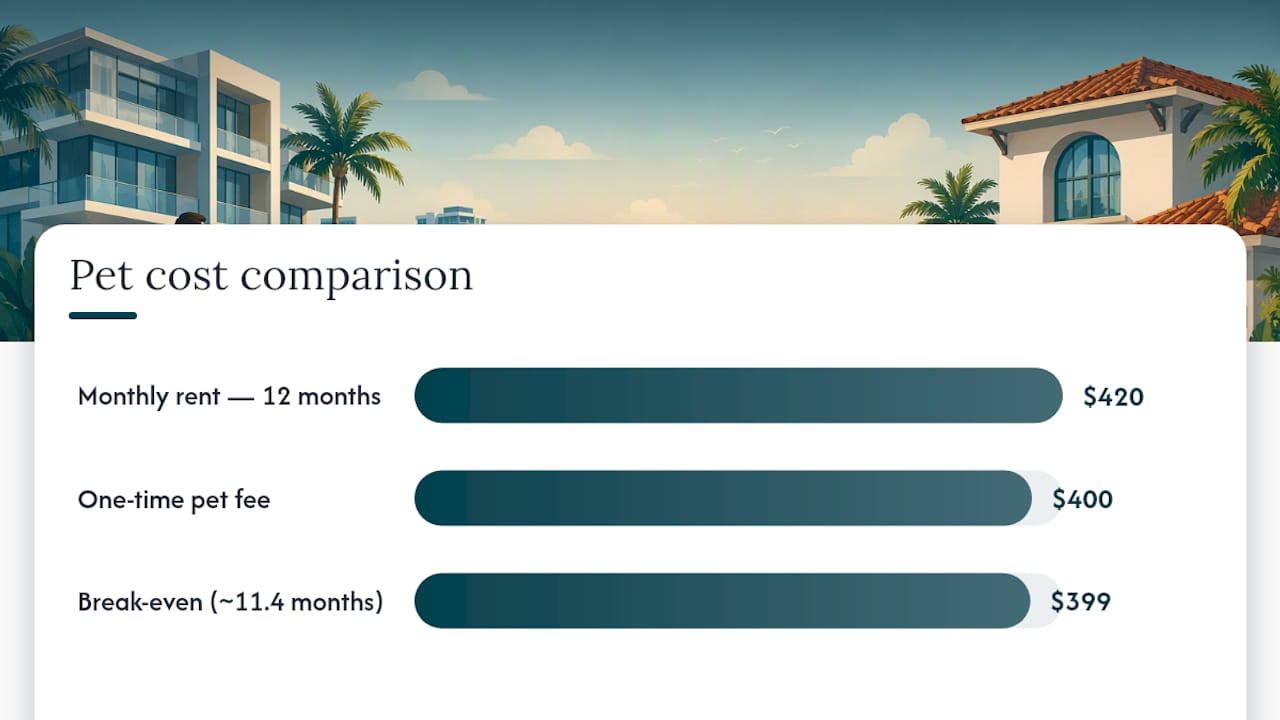
The math matters more than it looks. A $35 monthly pet rent costs $420 over a one-year lease, while a $400 one-time fee costs $400 total no matter how long you stay. If you’re signing a multi-year lease, the one-time fee almost always saves money; if you might break the lease early, monthly pet rent can work out cheaper.
Before signing, run through a quick checklist: where does the fee appear in the document, is it labeled recurring or one-time, is there a per-pet cap, and does the lease specify what happens to a deposit at move-out. If any of that is unclear, ask the property manager to put it in writing before you pay anything.
Are pet rents and pet fees legal in Florida for assistance animals?
Pet fees and pet rent are generally legal in Florida for ordinary pets, but federal and state law carve out a clear exception for assistance animals. Under the Fair Housing Act, HUD guidance states that assistance animals are not considered pets, and housing providers may not charge fees or deposits for them when they’re granted as a reasonable accommodation. That protection covers service animals and emotional support animals alike, regardless of species or training, as long as the animal is tied to a disability-related need.
HUD’s enforcement guidance walks through how housing providers are supposed to evaluate these requests individually rather than applying a blanket policy, and it makes clear that requiring a deposit or fee as a condition of the accommodation is not allowed. On the state side, Florida law reinforces this at the local level:
- Florida Statutes §760.27 prohibits housing discrimination against people with disabilities who request an emotional support animal.
- The statute requires housing providers to consider accommodation requests rather than deny them outright.
- It limits what documentation a landlord can demand, meaning they generally can’t insist on detailed medical records or a specific certification.
HUD and Florida statute F.S. 760.27 both bar landlords from charging pet fees for legitimate assistance animals when granted as a reasonable accommodation, which means a Boca Raton renter with a qualifying animal should not see that charge on their lease at all.
Landlords can ask limited questions when a disability isn’t obvious, such as whether the animal is needed because of a disability and what it does for the person, but they can’t demand access to medical files or require a specific type of certification. If you believe a Boca Raton landlord charged you a fee improperly for a qualifying assistance animal, you can file a complaint with HUD or contact a local legal aid organization for help before escalating.
What Boca Raton renters actually pay for pets
Local listings give a realistic sense of what to expect. One example, Bell Boca Town Center Apartments, lists a one-time pet fee alongside $20 in monthly pet rent per pet, a structure that’s common across the area’s mid-size communities. Other buildings charge only a one-time fee with no ongoing rent, while some charge both a nonrefundable fee and a separate refundable deposit.
Beyond the dollar amount, most Boca Raton leases attach rules to the charge itself:
- Weight limits, often capping dogs around 25 to 50 pounds depending on the property.
- Breed restrictions that exclude certain dog breeds regardless of the individual animal’s temperament.
- Pet count caps, typically one or two animals per unit.
- Proof of current vaccination records and, in some cities, local pet licensing.
Refundable deposits and nonrefundable fees often appear on the same lease for different purposes: the deposit covers potential damage and gets inspected at move-out, while the fee is a flat charge landlords keep regardless of how the pet behaves. That combination is legal but worth double-checking, since some property managers quietly charge both when only one is customary in that building’s fee schedule.
If a listing advertises a pet fee well above what comparable units nearby are charging, or stacks a large deposit on top of monthly pet rent with no clear damage policy, it’s worth asking the leasing office to explain the reasoning in writing before you commit. A fee schedule that can’t be explained clearly is a signal to keep shopping.
How to find and verify pet-friendly rentals in Boca Raton
Finding a legitimate pet-friendly unit takes a few extra steps beyond a basic search, especially with rental scams on the rise. Follow this sequence:
- Start with filtered searches on established platforms, such as Realtor or its Villa del Rio listings, which let you filter by neighborhood and pet policy directly.
- Cross-check the address and management company against the property’s own official website rather than trusting a listing photo alone.
- Ask for a lease PDF before paying any deposit, and read the pet policy section specifically rather than assuming verbal promises match the written terms.
- Pay by credit card when possible rather than wire transfer, cash app, or gift cards, which are much harder to reverse if something goes wrong.
- For remote applications, request a live virtual tour rather than relying only on static photos, and ask the leasing office to confirm pet fees and rent amounts in writing over e-mail.
Pro Tip: Search the exact street address plus “scam” before sending any money. It takes thirty seconds and can save you thousands.
Rental scams specifically targeting pet owners are common enough that the FTC has tracked them closely: tens of thousands of rental scams have been reported since 2020, with millions in reported losses, and many involve fake listings on social platforms combined with requests for risky payment methods. Red flags include a landlord who refuses a phone call, insists on wiring money before you’ve seen the unit, or offers a price far below comparable local rentals.
If a listing feels off, verify the property manager’s identity directly through the building’s official site or by calling the leasing office using a number you find independently, not one provided in the suspicious listing. When in doubt, walk away and keep looking rather than risk a deposit on an unverified unit.
How to request a reasonable accommodation for an assistance animal
A reasonable accommodation request is a formal ask to a landlord to waive a policy, such as a no-pet rule or pet fee, because of a disability-related need. Once granted, it removes any pet fee or pet rent tied to that specific animal.
The process is fairly straightforward:
- Submit the request in writing to the property manager or landlord, ideally before move-in but at any point during tenancy if the need arises later.
- State clearly that the animal is needed because of a disability and briefly describe what the animal does or provides, without disclosing the specific diagnosis.
- Expect the landlord to respond within a reasonable timeframe, though Florida law doesn’t set an exact number of days, so following up in writing after a week or two is reasonable.
- Know that landlords may not apply blanket breed or size restrictions to an assistance animal; an individualized assessment is required when the animal poses a specific, documented safety concern rather than a general breed stereotype.
If a request gets denied or a landlord tries to charge a fee anyway, keep copies of every e-mail and written communication. That paper trail is what you’ll need if you decide to file a complaint with HUD or bring the issue to a local fair housing attorney or legal aid office.
How pet rent affects renter eligibility and lease renewal
Pet rent and pet fees factor into a landlord’s overall income calculation when reviewing your application, since most properties add the monthly pet charge to your base rent when checking whether your income meets their rent-to-income ratio. A unit listing $1,900 in base rent plus $35 in pet rent effectively requires you to qualify for $1,935 a month, which can matter if you’re close to a property’s income threshold.
At renewal time, pet fees are usually locked in by the original lease terms unless the property changes its overall fee schedule for all residents. Some landlords do revisit pet rent at renewal, especially if a pet has caused documented damage or noise complaints during the lease term, so it’s worth asking directly whether your pet-related charges are changing before you sign a renewal.
Assistance animals are the exception here too: because the accommodation isn’t tied to a fee in the first place, renewal shouldn’t introduce a new pet charge for a legitimate service or emotional support animal. If a property tries to add one at renewal, that’s worth raising with the leasing office directly, since the same federal and state protections that applied at move-in still apply.
Comparing pet policies across Boca Raton neighborhoods and property types
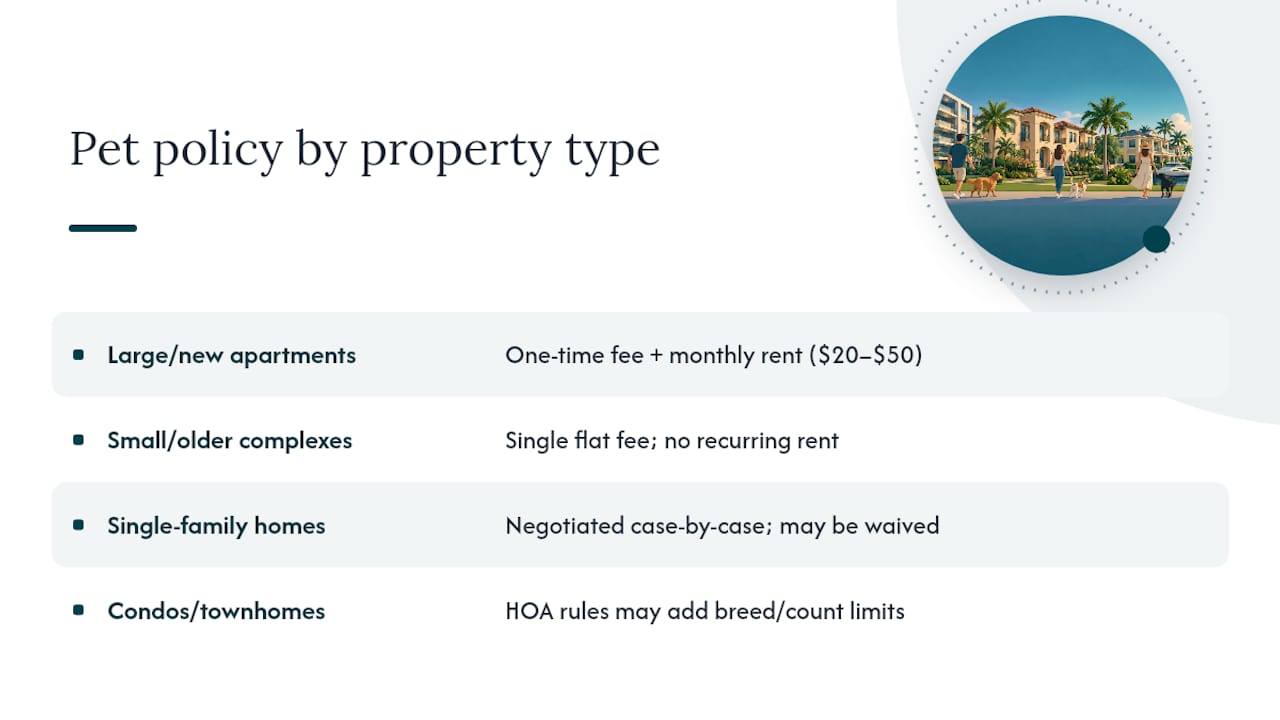
Pet policies vary noticeably depending on the type of property and where it sits in Boca Raton. Larger, newer apartment communities near Boca Town Center or the interstate corridor tend to charge both a one-time fee and modest monthly pet rent, often in the $20 to $50 range, reflecting the amenity-heavy nature of those buildings. Smaller, older complexes and some condo rentals farther from the main commercial corridors more often charge a single flat fee with no recurring rent, since they carry less overhead for shared pet amenities like dog runs or wash stations.
Single-family home rentals scattered throughout residential neighborhoods behave differently again: individual landlords often negotiate pet terms case by case, meaning fees can be lower, higher, or entirely waived depending on the owner’s own experience with pets. Condo and townhome rentals sometimes carry HOA-level pet restrictions layered on top of the landlord’s own policy, such as breed limits or a cap on the number of pets per unit, regardless of what the lease itself says.
The practical takeaway is that neighborhood alone doesn’t predict pet costs as reliably as property type does. A newer, amenity-rich building is more likely to bundle pet rent into its standard fee structure, while a smaller or older property is more likely to charge once and move on.
Local option: why Cynthia Gardens offers a transparent, pet-friendly choice
Some properties take a different approach to pet charges by charging a one-time, non-refundable pet fee for cats, instead of ongoing monthly pet rent. That structure solves one of the most common frustrations renters run into: figuring out the true annual cost of keeping a pet before signing anything.
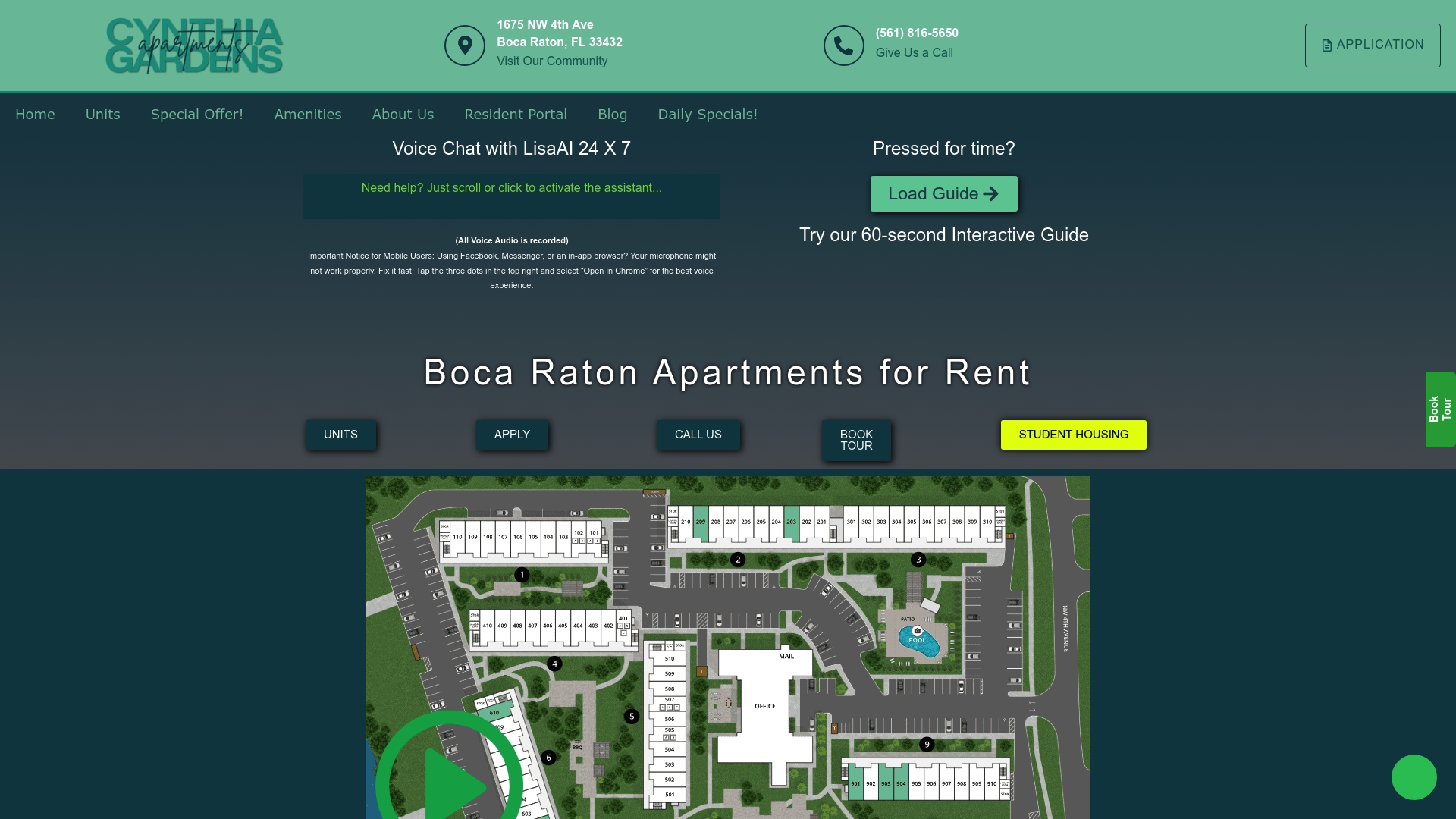
The community pairs that fee clarity with a broader no-hidden-fees approach across its one-bedroom units, which matters when you’re comparing offers that bury pet charges in a separate addendum or vague “additional fees may apply” line. Because leasing happens largely online—including virtual tours and an interactive property map—renters relocating to Boca Raton or applying remotely can verify unit layouts and pet policy details before committing to an in-person visit.
If you’re weighing a move with a cat in tow, it’s worth reading through Cynthia Gardens’ pet policy details for Boca apartments and comparing the fee structure directly against listings that charge ongoing pet rent. The math tends to favor a one-time fee if you plan to stay more than a year, which lines up with how most leases in the area are structured anyway.
Where to verify rules and listings
Cross-check anything you read here against the primary sources before making a decision:
- HUD’s FHEO notice on assistance animals and its enforcement guidance for reasonable accommodation requests.
- Florida Statutes §760.27 for state-level disability housing protections.
- The FTC’s rental scam data and Cynthia Gardens’ own pet-friendly one-bedroom listings for local benchmarking.
Finding your pet-friendly apartment in Boca Raton
If the fee math and legal details above have you ready to actually look at units, Cynthia Gardens rents one-bedroom apartments in Boca Raton priced from $1,990 to $2,220 per month, with a one-time, non-refundable pet fee of $300 to $500 per cat and no ongoing monthly pet rent. That fits renters who want to know their full annual housing cost up front rather than estimating a recurring pet charge over a twelve-month lease.
The leasing process runs almost entirely online, with virtual tours and an interactive property map that let you check layouts and pet policy terms before scheduling an in-person visit, useful if you’re relocating from outside Boca Raton or simply want to compare a few properties without driving between them. Application, administration, and other fees are listed clearly on the fees and policies page, so there’s nothing to discover after you’ve already applied.
If you’re ready to see what’s available, browse current one-bedroom units and check whether a virtual tour fits your schedule this week.
This article is general information, not a substitute for advice from a qualified lawyer. Consult a qualified legal professional about your own circumstances before acting on anything here.
Sources
- FHEO Notice: Assessing a Person’s Request to Have an Animal as a Reasonable Accommodation Under the Fair Housing Act
- Florida Statutes §760.27 — Prohibited discrimination in housing provided to persons with a disability or disability-related need for an emotional support animal
- Rental scams hit home: $65 million reported losses (FTC data spotlight)
- Bell Boca Town Center Apartments Boca Raton, FL | Rentable
FAQ
Is pet rent legal in Florida?
Yes, pet rent and one-time pet fees are generally legal in Florida for ordinary pets, since state law doesn’t cap or ban these charges outright. The exception is assistance animals: under the Fair Housing Act and HUD guidance, landlords cannot charge pet fees or rent for a legitimate service or emotional support animal granted as a reasonable accommodation.
What is the pet policy at Cynthia Gardens?
Cynthia Gardens charges a one-time, non-refundable pet fee of $300 to $500 per cat with no ongoing monthly pet rent added afterward. That structure is detailed on the property’s pet policy and fees pages before you apply.
Are there pet-friendly monthly rentals available in Florida?
Yes, month-to-month and short-term furnished rentals that allow pets exist throughout Florida, including in Boca Raton, though availability and pet terms vary by property. It’s worth confirming directly with the leasing office whether a specific unit offers flexible lease terms alongside its pet policy.
How do I find a rental that accepts pets in Boca Raton?
Start with filtered searches on established platforms like Realtor.com, which lets you search pet-friendly listings by specific Boca Raton neighborhoods such as Sandalfoot Central or Villa del Rio. Always verify the management company’s official website and ask for a written lease before paying any deposit or fee.
What’s the difference between a pet deposit and a pet fee?
A pet deposit is refundable and returned after move-out if there’s no pet-related damage, while a pet fee is a one-time, nonrefundable charge you don’t get back regardless of how the tenancy goes. Some Boca Raton leases include both, so check the lease language carefully to see which term applies to each charge.
— Ayman