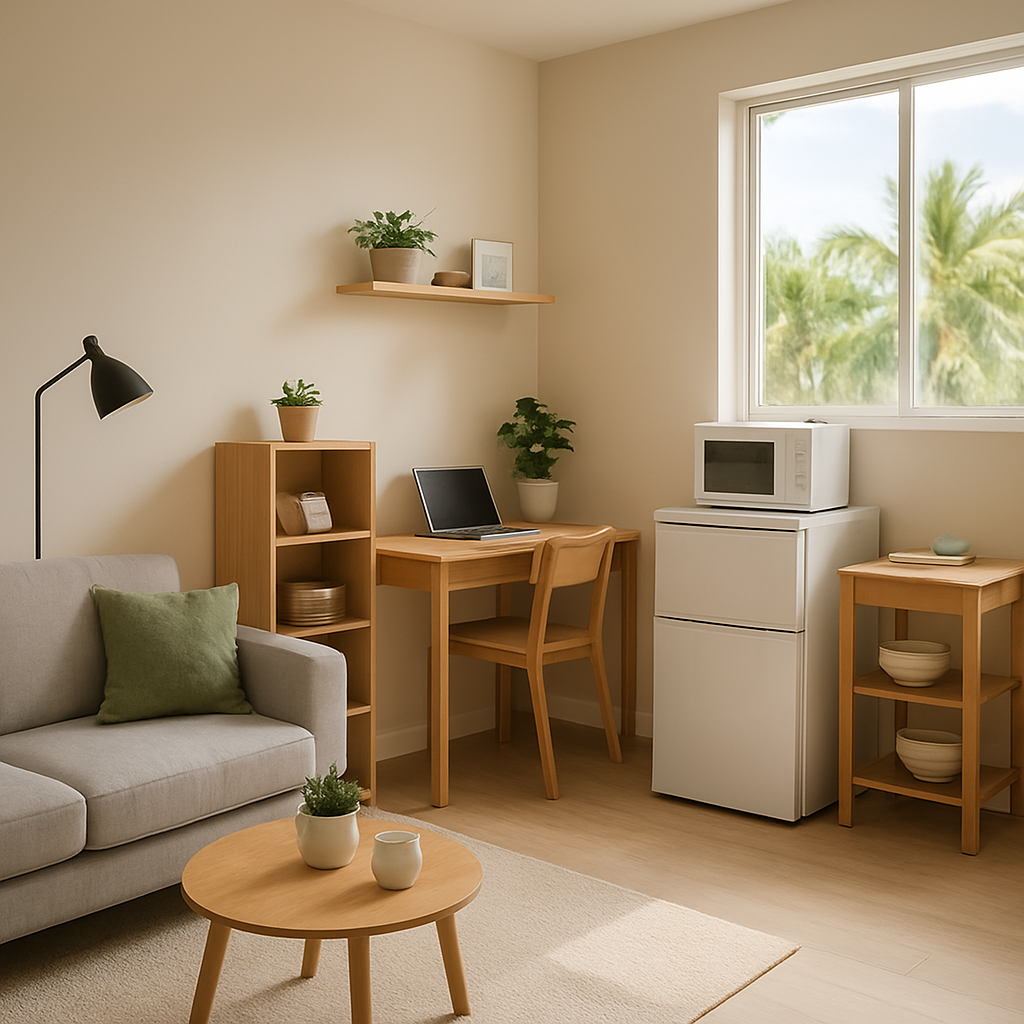
Necessities for Your First Apartment: Space-Saving Must-Haves for Boca Raton Living
Moving to Boca Raton can feel overwhelming when a one bedroom has to function as living room, office and pet zone. This roundup of necessities for first apartment delivers space-saving must-haves, Boca Raton specific tips for humidity and hurricane season, and realistic price and placement advice so you can set up quickly without wasting money.
1. Convertible Sofa Bed or Sleeper Sofa
Essential purchase: a convertible sofa bed is one of the highest‑value items on any first apartment checklist. It replaces a sofa and a guest bed, keeps your one bedroom functional, and matters in Boca Raton where friends and family often visit for weekends at the beach.
Product picks and realistic price ranges
- IKEA FRIHETEN — $300 to $600, built‑in underseat storage; good for tight budgets and frequent converts
- Novogratz Brittany Sofa Futon — $250 to $450, lightweight and style friendly for small living rooms
- West Elm Henry Sleeper — $900 to $1,200, better mattress options and more durable frames for regular overnight use
- What to read before buying: see durability guidance at Consumer Reports to compare frame and mattress types
Sizing and delivery considerations: measure the wall length where the sofa will sit and the pathway from building entrance to the unit. Practical numbers: a full pull‑out often needs 84 to 90 inches of clearance once open; leave 30 to 36 inches of walk space in front. Also verify doorway and stair dimensions—many pieces fail at the hallway, not in the living room.
Tradeoff to accept: sleeper sofas trade off day‑to‑day seating comfort for guest bedding convenience. If you host more than two nights per month, buy a model with an innerspring or memory foam mattress, or plan to purchase a quality mattress topper separately. Cheap futons save money but wear faster and often sag under regular use.
Local buying and testing: try big showrooms in Boca Raton such as City Furniture and test the pull‑out mechanism in person before ordering online. Confirm delivery and assembly options for upstairs units; Cynthia Gardens leasing staff can advise on elevator access and delivery windows—see Cynthia Gardens for community specifics.
Concrete example: in a typical Cynthia Gardens one bedroom, place a FRIHETEN along the longer living room wall with its storage used for hurricane kit items and spare linens. On weekends the sofa converts into a bed for visiting family who come to the beach, while the stored kit stays dry and out of sight.
Key point: prioritize mattress quality and delivery fit over styling. You can always recover upholstery; you cannot fix a sofa that won't fit up the stairs.
2. Wall Mounted Murphy Bed or Loft Bed for Vertical Space
Big payoff for small square footage: a properly chosen Murphy bed or loft bed converts occupied floor into usable living, work, or pet space every day — not just when guests arrive. In Boca Raton one bedrooms where every square foot counts, that vertical move changes how the apartment functions.
Which to pick and why it matters
Murphy bed strength: folds flat against the wall and preserves full ceiling height underneath, so the living area stays open and air circulates freely — a real advantage in South Florida heat. Loft bed strength: raises the mattress up and creates a permanent footprint below for a desk, sofa, or pet zone; good when you need a dedicated workspace.
- Ceiling height: choose a loft only if you have at least 8.5 to 9 feet of ceiling and realistic headroom above the mattress; otherwise a Murphy bed is the safer option.
- Installation and lease tradeoff: Murphy beds bolt to studs and sometimes concrete block; landlords often require pro installation and written permission. Expect to coordinate with property management before you buy — see Cynthia Gardens contact for community policy questions.
- Cost versus durability: cheap kits save money but wear fast; spend on a certified mechanism and solid hardware if you plan to use the bed nightly.
- Climate and comfort: lofts put sleepers closer to hot ceiling air and away from direct AC flow, which can mean running cooling longer or needing a fan at night.
Practical limitation: lofts complicate pet access and emergency egress. Cats may adapt, small agile dogs may not. If you have a larger dog or mobility concerns, a Murphy bed is more practical — you keep the bed at floor level and preserve safer movement around the apartment.
Real-world use case: in a 600 sq ft one bedroom at Cynthia Gardens, a tenant installed a compact Murphy with an integrated fold-down desk. By day the desk becomes a workstation and storage for beach gear; by night the bed lowers over the desk and the apartment returns to a living room. The tenant saved on a separate home office rental and kept the balcony area clear for a pet crate.
Buying judgment: prioritize a tested lift mechanism and proper mounting over flashy finishes. A reliable frame and pro installation reduce future damage claims and protect your security deposit.
3. Vertical and Modular Storage Solutions
Direct point: In a small Boca Raton one bedroom the floor is precious; stacking up instead of out is the single most reliable way to reclaim usable living area while keeping essentials accessible.
Practical picks and material choices
- Custom shelving for closets: modular Elfa or similar systems that are powder coated and ventilated — prices vary by layout, expect $150 to $600; use higher shelves for beach towels and hurricane supplies so they stay dry above mop splashes.
- Cube and modular units: IKEA KALLAX or cube systems with drawer inserts are cheap and reconfigurable — $50 to $250; anchor them to the wall to prevent tipping when you add vertical height.
- Metal utility racks for balcony or pantry: Seville Classics or industrial steel shelving resists humidity better than MDF — $80 to $300; keep boxed items in labeled waterproof bins to guard against coastal moisture.
- Stackable clear bins and risers: use breathable yet elevated containers for shoes and pet supplies to limit mildew and make floor cleaning simple — $10 to $60 per bin.
Tradeoff to accept: taller systems maximize storage but increase risk of tipping and make top shelves hard to reach. In practice, pick a system you can anchor and accept that very top space should be for low frequency items like seasonal gear or a compact hurricane kit.
Installation constraint: many Boca Raton buildings use concrete block or hollow walls that change hardware choices. A freestanding unit anchored to studs is safer for renters than aggressive drilling into masonry. Expect to rent or hire a small hammer drill for pro installs; local handymen can mount heavy tracks in an hour for a modest fee.
Concrete Example: a tenant at Cynthia Gardens converted a narrow coat closet into a vertical pantry using an Elfa system. They moved snacks and paper goods to upper shelves, stored daily breakfast items at chest height, and kept pet food in a sealed bin on the lowest shelf—this freed up the kitchen counter and removed clutter that interfered with airflow around the AC vent.
Misunderstanding to correct: many renters buy shallow floating shelves for looks and then stack too much weight on them. In humid coastal apartments, closed or bin based vertical storage plus breathable materials reduces mold risk and hides sun faded items. Function over fashion wins here.
4. Multi use Fold Down or Extendable Table for Dining and Work
Direct point: a compact fold down or extendable table delivers the most flexible footprint of any dining or desk solution in a one bedroom — it gives you a full surface only when you need it and frees floor space the rest of the time.
Why this solves a real Boca Raton problem
Local constraint: in Boca Raton apartments you trade square footage for proximity to beach and amenities, and that means furniture must be time sharing real estate. A table that tucks away keeps the living area usable for work, pets, and socializing without forcing a separate dining zone.
Recommended styles, materials and price ranges
- Wall mounted fold down: practical for narrow living rooms and entry halls – look for models with steel hinges and a marine-grade top or sealed laminate to resist humidity; typical cost $100 to $450.
- Gateleg/extendable leaf tables: good when you need occasional full seating; pick solid edge banding and reinforced legs to avoid sag over time; expect $150 to $600.
- Drop leaf console to table converters: slim day to day profile, expands to seat 2 to 4; cheap models under $150 work, but spend $250 plus for better stability and finish.
Material judgment: avoid untreated particleboard in coastal settings. Choose sealed laminate, kiln dried hardwood or powder coated metal hardware to prevent swelling and corrosion from humid air and sand tracked in from the beach.
Sizing, installation and workflow tips
- Clearance rule: leave 30 to 36 inches behind seating for comfortable movement when table is open.
- Mounting caution: wall mounted units must be fastened to studs or concrete; get landlord permission and a pro installer if drilling into masonry. Do not rely on drywall anchors alone for load bearing.
- Seating strategy: use two stackable or folding chairs stored under a bed or in a closet, or a narrow bench that slides under when not in use to keep the footprint compact.
Tradeoff to accept: fold down tables save space but usually provide less lateral stability than a full fixed table. If you work on the table daily with a laptop, choose a reinforced wall mount or an extendable table with a center support leg to limit wobble.
Concrete example: a Boca Raton renter placed an IKEA NORDEN gateleg in the living area against the balcony wall; during weekdays it served as a work desk for two with a laptop and paperwork, and on weekends the leaves opened for a four person meal after a beach trip. Folding chairs stack inside a closet and the table top is wiped and dried after each beach day to avoid salt exposure.
Important: verify mounting rules in your lease and check with Cynthia Gardens management before installing permanent hardware. Portable extendable tables are a safe alternative if drilling is prohibited.
For inspiration and compact layout ideas see Apartment Therapy. The practical judgment is simple: prioritize build quality and humidity resistant finishes for Boca Raton, and spend a little more to avoid a wobbly surface you will regret using every day.
5. Kitchen Space Saving Essentials and Nesting Cookware
Practical fact: most Boca Raton one‑bedroom kitchens are shallow and have limited cabinet depth, so you win most by shrinking items, not by buying more. Nesting cookware, removable‑handle pans, collapsible prep tools, and smart lid storage free up both drawer and counter space while resisting the coastal humidity that accelerates rust and mildew.
What to buy and what to skip
Buying judgment: skip the 15+ piece cookware parade. For a small apartment a tight, high-quality kit is better than a bulky full set that sits unused. Prioritize a 10–12 inch fry pan, a 2–3 quart saucepan, a medium sauté pan, and one multipurpose lid system. Add a nesting bowl set and collapsible colander for food prep and storage.
| Item | Why it matters | Typical price |
|---|---|---|
| Joseph Joseph Nest 9 Plus (nesting prep set) | Compresses nine prep pieces into one compact stack; easy to store in shallow cabinets | $35 to $80 |
| T‑fal Ingenio or removable‑handle pans | Removable handle lets pans stack, converts pans to ovenware, reduces footprint | $40 to $150 per set |
| Collapsible silicone colander & measuring cups | Flatten when not in use; lightweight for beach‑to‑kitchen transport | $10 to $30 |
- Sizing tip: measure cabinet depth—upper cabinets are often ~12 inches deep and base cabinets ~24 inches; buy pans that nest vertically without hanging over the front edge.
- Lid storage: store lids vertically on a door‑mount rack or in a slim divider so lids don't eat horizontal space; a small dish rack mounted inside a cabinet door is a high‑value hack for lids and cutting boards.
- Humidity protection: keep frequently used metal pans on the lowest shelf or drawer to avoid condensation near ceilings; add silica gel packs or moisture absorbers in cabinets during the hottest months.
Tradeoff to accept: nonstick pans save cleaning time but wear faster in heavy use and can be damaged if stacked without protection. If you cook nightly, buy one good stainless or enameled pan for high‑heat use and a nestable nonstick for eggs and quick frying. In practice this mix lasts longer and still saves space.
Concrete example: a Cynthia Gardens renter replaced a bulky 12‑piece set with a 3‑piece Ingenio set and a Joseph Joseph nesting prep kit. They mounted a slim lid rack inside the lower cabinet door, nested the pans on a non‑slip liner, and used a slim Seville Classics utility cart for overflow spices and grilling tools. Result: clear counter space near the AC vent and faster cleanup after beach days.
Key point: buy fewer, more versatile pieces. A removable‑handle pan and one sturdy stainless piece cover most meals and save both cabinet space and replacement cost in the long run.
Next consideration: after you pick a compact kit, plan storage workflow: keep daily items within easy reach, stash specialty gear high or in sealed bins, and use a slim rolling cart for temporary staging when you host — this sequence keeps counters clear and prevents humidity damage over time. For layout inspiration check The Spruce small apartment essentials.
6. Over the Door Organizers, Command Hooks and Quick Install Solutions
High impact, low commitment: Over‑the‑door organizers and adhesive hooks are the fastest way to add usable storage in a rental without drilling or changing the footprint. In Boca Raton you get the benefit of extra hanging space for wet beach towels, leashes, and hurricane essentials without risking your security deposit—provided you choose the right fasteners for the surface and climate.
Practical limitation: Adhesive systems perform differently on textured paint, semi‑gloss, and masonry. Humidity shortens adhesive life and metal doors or hidden trim can block over‑door brackets. If you plan to hang anything heavier than a light jacket, factor in anchors or a freestanding alternative—the convenience of no‑drill often comes with a weight and longevity tradeoff.
Where these quick installs work best
- Entryway: hang keys, leashes, a flashlight, and a slim over‑door organizer for flip‑flops to keep sand out of living areas.
- Bathroom: adhesive hooks and a breathable caddy keep wet items off tile floors and allow them to air dry faster in humid conditions.
- Kitchen/Closet doors: slim spice racks or shoe organizers free cabinet space and create a designated spot for beach gear and hurricane supplies.
Quick buys (real world price ranges): small adhesive hooks for $5–15, over‑door shoe/accessory organizers $20–50, and breathable fabric hanging closets/organizers $25–60. Choose products explicitly rated for damp or outdoor use where available and test one hook for 24 hours before hanging valuables.
Concrete example: A Cynthia Gardens renter used two Command outdoor hooks by the front door for leashes and a lightweight over‑door shoe organizer for sandals. After a beach day the leashes and towels dry at the door and the renter grabs a prepacked flashlight and water bottle from the organizer during storm prep. After four months of salty air they swapped one hook for a screw‑mounted peg because the adhesive began to fail at the top of the door.
Judgment call: Decorative hooks and oversized fabric organizers look neat but often fail under repeated wet loads and sun exposure. Prioritize rated hardware and placement—avoid attaching adhesives near AC intakes or in direct sun—and treat adhesive options as semi‑permanent: cheap to install, but plan to replace or upgrade anchors seasonally in coastal settings.
Key takeaway: Use adhesive and over‑door solutions for lightweight, frequently accessed items; for heavier or long‑term loads move to anchored hardware or freestanding racks to avoid damage and repeated replacements.
7. Smart Power Management and Cooling Efficient Accessories
Immediate fact: cooling and humidity drive utility costs in Boca Raton — the right mix of smart controls, targeted fans, and dehumidification will lower runtime for central or window AC without making your apartment uncomfortable.
Practical gear and the limits you need to know
- Smart plugs with energy monitoring: TP‑Link Kasa HS110/HS103 — $20 to $40. Good for scheduling lamps, fans, and dehumidifiers, but do not use for high‑draw window ACs or space heaters; check amp rating on the device.
- Surge protection and power strips: Belkin or APC surge protectors — $20 to $80. Use these for modems, TVs, and chargers and unplug during named storms; surge protection matters in coastal storms.
- Targeted airflow: Honeywell tower fans or Vornado circulators — $50 to $150. Fans let you raise the thermostat by 2–3 degrees while preserving comfort; place them to move cooled air from the AC intake back into living space.
- Dehumidifier: Frigidaire 30–50 pint portable units — $180 to $350. They reduce perceived temperature and let AC run less, but they consume power and need draining or a drain hose — plan floor space.
- Smart AC controllers: Sensibo or equivalent IR controllers — $120 to $200. These let you automate window/portable units in rentals without changing the building thermostat, but they only work with units that accept remote control signals.
- Energy meter for verification: Kill‑A‑Watt or similar — $20 to $35. Measure actual draws before committing; assumptions about savings are often wrong without data.
Tradeoff to accept: smart scheduling and fans give measurable savings, but they do not replace insulation or proper HVAC maintenance. In many rentals the biggest constraint is control — if the thermostat is building‑wide, your best moves are shading, dehumidifying, and local circulation rather than trying to force thermostat changes.
Concrete example: a Cynthia Gardens tenant sets a TP‑Link smart plug on a Honeywell tower fan and a 30‑pint dehumidifier to run two hours before arriving home from campus. By preconditioning humidity and circulating air, they keep the central AC set 2 degrees higher, reduce the need for long overnight AC runs, and protect electronics with an APC surge strip plugged into a monitored outlet. They confirmed utility responsibilities with management before relying on this setup.
Common mistake: buying dozens of cheap smart plugs and expecting big savings. Real reductions come from managing humidity, shading windows, and using quality fans or a dehumidifier on a schedule — not from automating every lamp.
Next consideration: audit what utilities your lease covers and measure device draws with an energy meter before buying gear — that one step prevents wasted purchases and targets the accessories that actually lower bills in a humid, beachside setting.
8. Pet Friendly Essentials and Choosing a Pet Friendly Community like Cynthia Gardens
Straight to the point: if you have a pet, your list of necessities for first apartment must include gear that protects floors and furniture, keeps animals comfortable in heat and humidity, and simplifies compliance with building pet rules.
What to buy first and why it matters in Boca Raton
Cooling and comfort: a quality cooling mat or elevated mesh bed keeps dogs and cats off hot tile and improves airflow; expect to pay $30 to $80. Why this matters: coastal heat and AC cycling make floor temperature swings common — pets left on warm floors pant more and shed more, which increases cleaning needs.
Containment and safe spots: choose a foldable metal crate sized with extra room for a bed and water bowl (small to medium, $60 to $180). Tradeoff to accept: crates reduce roaming damage but take floor space; pick one that collapses and store it vertically when guests arrive or during hurricane season.
Washable protection: buy a washable, waterproof couch cover and machine‑washable pet bedding ($25 to $120). Practical limitation: covers protect upholstery but don’t stop scratching; combine with a scratching post, trim claws regularly, and use textured deterrents where needed.
Quick practical kit for pet emergencies and daily life
- Emergency carrier and ID: hard or soft carrier that fits under airline seats for evacuation; keep microchip info and a copy of vet records in a waterproof bag.
- Compact pet first aid kit: bandages, styptic powder, digital thermometer, and bottled water — assemble for $20 to $40.
- Litter and hygiene: a high‑traction litter mat and a covered scoop; store litter in sealed bins to limit humidity problems.
- Travel leash and harness: quick‑attach harness and short leash for tight patios and elevator rides; stow in entry organizer for storm readiness.
Local consideration: proximity to parks and vet clinics reduces daily friction. Boca Raton has multiple dog‑friendly parks and beaches — check the City of Boca Raton parks pages for nearby routes and off‑leash rules before you commit to a complex.
Lease, deposits and real costs: verify breed, weight limits, pet rent, and refundable deposits in writing. Judgment call: a lower rent apartment that bans certain breeds can cost you more in rehoming fees and stress than paying slightly higher rent at a genuinely pet friendly complex.
Choosing a community: prefer properties that document pet rules, have on‑site green space or dedicated dog areas, and clarify delivery/entry procedures for large items like crates. Cynthia Gardens lists pet friendly features and floor plans — confirm specifics on their site or contact the leasing office before moving in: Cynthia Gardens.
Real tenant scenario: a young professional at Cynthia Gardens kept a mid‑size foldable crate by the balcony, used an elevated bed near an AC vent, and stored a compact emergency kit in the sofa storage. The result: fewer stains, simpler storm evacuations, and faster cleanups after beach trips with a dog — the renter traded a small amount of floor space for a big reduction in daily maintenance time.
Pick portable, washable, and collapsible items. In Boca Raton mobility and humidity resistance beat decorative, permanent solutions for long‑term value.