
A solo move is completely manageable when you follow a phased checklist and hire targeted help for the heavy work. The single most important action you can take right now: download and print the condensed one-page checklist at the end of this article, then work backward from your move date using the phases below.
Here’s the shape of the whole plan:
- Start 6–8 weeks out: set your budget, book your truck or crew, and begin decluttering
- 3–4 weeks out: lock in logistics, buy packing supplies, and downsize aggressively
- 2 weeks out: transfer utilities, forward mail, and pack your first-night box
- Moving day: follow a step-by-step sequence, keep valuables with you, and use low-lift tools throughout
Key Takeaways
A solo move succeeds when you start at least 6–8 weeks out, use low-lift tools for heavy items, and hire labor help for loading and unloading rather than attempting everything alone.
| Point | Details |
|---|---|
| Start 6–8 weeks out | Book your truck or crew and begin decluttering before slots fill and prices spike. |
| Pack your first-night box | Keep it in your car with lease docs, meds, charger, and bedding so it’s always accessible. |
| Use furniture sliders and a dolly | These two tools convert most two-person furniture moves into manageable solo tasks. |
| Hire labor for heavy lifts | A labor-only crew for loading and unloading cuts cost and eliminates the highest injury risk. |
| Cynthiagardens for Boca Raton moves | Move-in-ready one-bedroom apartments with virtual tours and transparent pricing reduce setup work for solo renters. |
Table of Contents
- What should your moving checklist for singles cover first?
- What to do 3–4 weeks before your move
- Two weeks before: utilities, mail forwarding, and your first-night box
- What to finish in the final week before moving day
- Moving day: the step-by-step sequence for solo movers
- What to do in the first 72 hours after your move
- Packing strategies that actually work for one person
- How to hire movers or labor help safely
- Physical safety and emotional wellbeing after moving alone
- How to use the printable one-page checklist
- What solo moving actually teaches you
- Moving to Boca Raton? Cynthiagardens has one-bedroom apartments ready for solo renters
- Sources
What should your moving checklist for singles cover first?
Planning at least 6–8 weeks out is the single biggest advantage a solo mover has over someone scrambling two weeks before move day. When you’re the only person coordinating logistics, every delay compounds. A truck that’s booked out, a utility that takes ten days to transfer, a donation pickup that needs a week’s notice — these are all solvable problems if you start early enough.
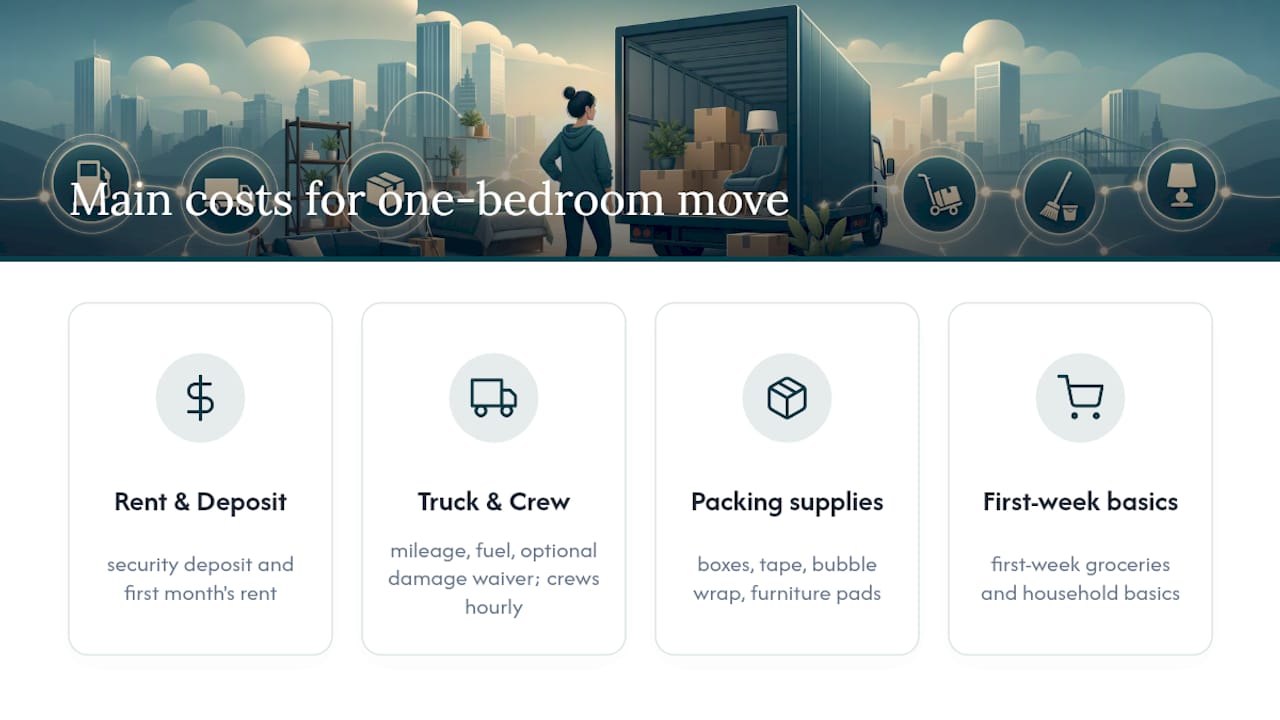
Build a realistic moving budget first. For a one-bedroom move, your main cost categories are: security deposit and first month’s rent at the new place, truck rental or labor crew, packing supplies (boxes, tape, bubble wrap, furniture pads), and first-week groceries and household basics. If you’re renting a truck yourself, factor in mileage, fuel, and the optional damage waiver. Labor-only crews typically charge by the hour with a two-hour minimum.
For decluttering, run a fast triage: keep, sell, donate, or trash. Anything you haven’t used in 12 months and can’t name a specific future use for is a candidate to go. Selling on Facebook Marketplace or OfferUp takes a few days of listing; scheduling a donation pickup through Move For Hunger can happen in parallel.
Pro Tip: *Reserve your moving truck or weekend labor crew the moment you set your move date.
What to do 3–4 weeks before your move
This is the phase where you convert your plan into bookings and boxes. The goal is simple: downsize everything you’re not taking, and lock in every service you’ll need on move day.
Declutter actions:
- Drop clothing and housewares at Goodwill, Salvation Army, or a local thrift store
- Schedule a bulky-item pickup with your city’s sanitation department for furniture you’re not keeping
- List electronics, furniture, and appliances on Facebook Marketplace or Craigslist with a firm pickup deadline
- Recycle paper, old magazines, and broken items rather than packing them
Packing supplies to buy now:
- Small boxes (books, tools, canned goods), medium boxes (kitchen items, linens), large boxes (pillows, lampshades, light clothing)
- Two-inch packing tape and a tape gun
- Permanent markers in two colors for labeling
- Bubble wrap or packing paper for fragile items
- Furniture pads or moving blankets (often rented with the truck)
- Stretch wrap for drawers and cabinet doors
Bookings to confirm this week:
- Truck rental or labor-only crew (confirm date, time, and address)
- Storage unit if you need a staging area
- Moving insurance: check whether your renter’s insurance covers items in transit, or ask your mover about valuation coverage
Pro Tip: Flag the printable one-page checklist in Section 11 now and tape it to your fridge. Checking off physical boxes as you go prevents the “did I already do that?” spiral that derails solo movers.
Two weeks before: utilities, mail forwarding, and your first-night box
Complete all administrative tasks two weeks before your move date. If you wait until the week of, internet activation alone can take 5–7 business days, and you’ll be sitting in a dark apartment on your phone.
Utility and internet transfer checklist:
- Call your electric, gas, and water providers to schedule service transfer or cancellation at your old address and activation at the new one
- Schedule internet installation at the new address; if you’re switching providers, confirm the earliest available date
- Transfer or cancel renter’s insurance and update the address
- Notify your bank, credit card companies, and employer of your new address
Mail and ID updates:
- Submit a USPS mail forwarding request online; it takes 7–10 business days to activate
- Update your driver’s license and vehicle registration with your state’s DMV (most states require this within 30 days of moving)
- Notify your doctor, dentist, pharmacy, and any subscription services
Your first-night box. Pack this box last and load it last so it comes off the truck first. A well-stocked first-night box prevents the frantic search through 30 unlabeled boxes at 11 PM. Include:
- Lease documents and photo ID
- Medications and a small first-aid kit
- Phone charger and a portable power bank
- One set of bedding and a pillow
- Towel, toiletries, and a change of clothes
- Basic kitchen items: one mug, one plate, utensils, coffee or tea
- Snacks and a bottle of water
- Flashlight and a multi-tool
Keep this box in your car, not the moving truck.
What to finish in the final week before moving day
Do these confirmations in the last seven days. By this point, the big decisions are made; this week is about eliminating surprises.
- Confirm all bookings. Call or email your truck rental company and any labor crew to verify the date, arrival window, and address. Get a name.
- Reserve parking. Contact your building manager or city parking authority to reserve a loading zone or block a spot for the moving truck. Some cities require a permit 72 hours in advance.
- Reserve the elevator. If your new building has a service elevator, book it for your move-in window. Missing this step means waiting in a lobby with furniture.
- Collect access codes and keys. Confirm you have the key, fob, or access code for the new unit, the building entrance, and any parking gate.
- Finish packing by room. Every box should be closed, taped, and labeled before move day. Leave out only what you’ll use that night and the morning of the move.
- Label boxes with room, contents, and priority. Use a format like: “Kitchen / Pots and pans / Unpack First.” This lets a labor crew place boxes correctly without asking you every two minutes.
- Create a room-assignment map. Sketch a simple floor plan of the new apartment and mark where each piece of furniture goes. Hand it to your movers on arrival.
- Arrange pet care. If you have a pet, arrange for them to stay with a friend or in a separate room during loading and unloading.
- Charge everything. Phone, laptop, portable speaker, power bank. All of it.
- Confirm parking at the old address. Make sure the truck can pull up close to your entrance.
Moving day: the step-by-step sequence for solo movers
Follow this sequence on move day and you’ll finish faster and with less physical damage to yourself and your belongings.

Morning (before the crew or truck arrives): Do a final walkthrough of every room, closet, and cabinet. Check under beds, inside the oven, and behind doors. Take photos of the old apartment’s condition for your deposit records.
Loading sequence: Start with large furniture and appliances, then boxes from heaviest to lightest. Heavier items go on the truck floor against the cab wall; lighter boxes stack on top. Wrap furniture corners with moving blankets before loading.
Safety checklist:
- Keep your phone charged above 50% all day
- Keep your first-night bag and valuables in your personal vehicle, not the truck
- Confirm your inventory list as boxes are loaded; check it again at the new address
- Use a hand truck or dolly for any box over 30 pounds
- Take a break every 90 minutes; dehydration and fatigue cause most moving-day injuries
Overestimating your physical capacity is the most common solo-mover mistake. If you feel yourself straining on a piece of furniture, stop. No sofa is worth a back injury.
At the new address: Direct the crew using your room-assignment map. Do a walkthrough before the crew leaves to confirm everything is in the right room and nothing is visibly damaged.
Pro Tip: Keep an essentials bag on your person all day: ID, lease documents, medications, cash, and your charger. If the truck breaks down or you get separated from your belongings, you have everything you actually need.
Final sweep of the old place: Check every room one more time, return keys, and photograph the empty unit. Send those photos to your landlord the same day.
What to do in the first 72 hours after your move
In the first 72 hours, unpack in this order: bedroom, bathroom, kitchen. Everything else can wait. Getting a functional sleeping space and a working kitchen turns a chaotic apartment into a livable one fast.
Immediate priorities:
- Test every light switch, outlet, faucet, and appliance
- Confirm internet is active; if not, call the provider immediately
- Check smoke detectors and carbon monoxide detectors; replace batteries if needed
- Document any existing damage with timestamped photos and report it to your landlord in writing within 24–48 hours (check your lease for the exact window)
Meals and groceries. Plan your first week of meals before you move. Stock the basics on day one: eggs, bread, coffee, a few easy dinners. You won’t want to cook elaborate meals while surrounded by boxes, so keep it simple. Apps like Instacart or DoorDash are genuinely useful for the first two or three days.
Organize all moving receipts, mover contracts, and damage photos in a single folder. If a deposit dispute or insurance claim comes up later, you’ll need that paper trail.
Packing strategies that actually work for one person
Pack one room at a time with a strict labeling system. Jumping between rooms creates half-packed boxes and missing items on move day.
Labeling template for every box:
- Room (Kitchen, Bedroom, Bathroom)
- Contents summary (3–5 words: “Pots, lids, cutting board”)
- Priority level: First Night, Unpack First, or Store
Low-lift equipment every solo mover needs:
- Furniture sliders let one person move a heavy dresser or couch across hardwood or low-pile carpet without a second set of hands. They cost under $20 and prevent floor scratches.
- A hand truck or appliance dolly handles boxes over 30 pounds and most kitchen appliances
- Moving straps (also called furniture lifting straps) redistribute weight across your body for awkward lifts
Box-sizing rules:
- Small boxes: books, tools, canned goods, anything dense and heavy
- Medium boxes: kitchen items, folded clothes, small appliances
- Large boxes: pillows, comforters, lampshades, light clothing
Never pack a large box with heavy items. A 50-pound large box is a back injury waiting to happen and a box collapse risk on the truck.
Pro Tip: Color-code your boxes with colored tape: one color per room. When the truck arrives at the new place, the crew can place boxes without reading every label. Blue tape goes to the bedroom, red to the kitchen, green to the bathroom. Simple and fast.
For more apartment-specific moving hacks, especially for elevator buildings and tight hallways, the details matter more than most people expect.
How to hire movers or labor help safely
Consider a hybrid hire if full-service moving is outside your budget: hire a labor-only crew for loading and unloading, and handle packing yourself. Professional movers recommend this approach specifically for solo movers because it cuts cost significantly while eliminating the highest injury risk.
Your three main options:
DIY truck rental fits a single-bedroom move well if you have friends to help load or are comfortable with a labor-only crew. You drive, they load. Budget for the truck, fuel, mileage, and the crew’s hourly rate separately.
Labor-only crew (hired through platforms like HireAHelper or TaskRabbit) shows up at your door, loads or unloads, and leaves. You arrange the truck. This is often the most cost-effective option for a one-bedroom.
Full-service movers handle packing, loading, transport, and unloading. Higher cost, but the right call if you’re moving long-distance or have significant furniture. For interstate moves, FMCSA consumer protections require licensed movers to provide a written estimate, a copy of “Your Rights and Responsibilities When You Move,” and clear liability options.
Vetting checklist before you book anyone:
- Confirm USDOT license number (check it on the FMCSA website)
- Request a written binding or not-to-exceed estimate
- Ask about valuation coverage options (released value vs. full value protection)
- Check reviews on the BBB and Moving directory
- Verify the arrival window and cancellation policy in writing
Questions to ask every mover:
- What’s included in the hourly or flat rate?
- How do you handle fragile or high-value items?
- What happens if something is damaged?
- Do you require a deposit, and is it refundable?
For accreditation verification, IAM (International Association of Movers) maintains a membership directory useful for specialized or long-distance moves.
Physical safety and emotional wellbeing after moving alone
Prioritize physical safety first, then build in social anchors for the first week.
Physical safety checklist for your new apartment:
- Change or rekey the locks on your first day; see the guide on apartment door security to understand your best options and keep safe against unknown key copies
- Test smoke detectors and carbon monoxide detectors; install new batteries
- Locate the circuit breaker, water shutoff, and gas shutoff
- Use proper lifting technique and equipment throughout the move; hire help for anything over 50 pounds
Moving alone is logistically manageable. The emotional side is a different kind of challenge. A new city or a new neighborhood with no established routine can feel isolating in the first week, even if you’re genuinely excited about the move.
Schedule at least one social activity in your first week before you move. A coffee with a coworker, a gym class, a neighborhood meetup through Meetup.com. Having something on the calendar gives you a reason to leave the apartment before the boxes are fully unpacked, and that matters more than it sounds. Keep regular calls with friends and family during the first two weeks; the transition period is real, and staying connected shortens it.
Pro Tip: Join a local Facebook group or Nextdoor for your new neighborhood before you arrive. You’ll know where the good coffee is, who to call for a handyman, and whether there’s a community event in your first week.
How to use the printable one-page checklist
The one-page PDF condenses this entire phased checklist into checkable boxes you can carry on move day. Print it, tape it to a clipboard, and check off tasks as you complete them.
What the condensed checklist includes:
- Timeline milestones by phase (6–8 weeks, 3–4 weeks, 2 weeks, 1 week, move day, 72 hours after)
- First-night box contents list
- Essential contacts section (landlord, utility providers, mover, emergency contacts)
- Vendor vetting checklist (license, estimate, valuation coverage)
- Safety reminders (locks, detectors, lifting equipment)
How to use it: Print double-sided on a single sheet of letter paper. Before move day, fill in your vendor names, confirmation numbers, and new address utility account numbers in the contacts section. On move day, work through the checklist top to bottom. After the move, keep the sheet with your lease documents until your deposit is returned.
To customize it for your move, cross out any phase items that don’t apply (no storage unit, no pet, no elevator) and add any building-specific requirements your landlord gave you.
What solo moving actually teaches you
Moving alone strips away every buffer. There’s no one to blame when a box is mislabeled, no one to split the decision on what to keep, and no one to remind you that you forgot to forward your mail. That’s uncomfortable, but it’s also clarifying.
The checklist approach works not because it’s clever but because it externalizes your memory. When you’re carrying a box up a flight of stairs at 4 PM on move day, you are not going to remember whether you photographed the old apartment’s bathroom. The checklist does that for you.
What most moving guides miss is the energy budget. A solo move isn’t just a logistics problem; it’s a physical endurance event for one person. The movers who do this well aren’t the ones who pack the most efficiently. They’re the ones who hire out the loading and unloading, use furniture sliders instead of brute force, and stop before they’re exhausted rather than after. The first apartment checklist mindset applies here too: get the place livable first, then optimize.
The emotional side is underrated in most checklists. Scheduling a social activity in week one isn’t a nice-to-have; it’s a reset. The apartment will still be half-unpacked. The social anchor is what makes it feel like home instead of a storage unit you sleep in.
Moving to Boca Raton? Cynthiagardens has one-bedroom apartments ready for solo renters
If your move is taking you to Boca Raton, Cynthiagardens offers move-in-ready one-bedroom apartments that cut the setup work significantly. Transparent pricing with no hidden fees means your moving budget stays accurate from the first number you see.
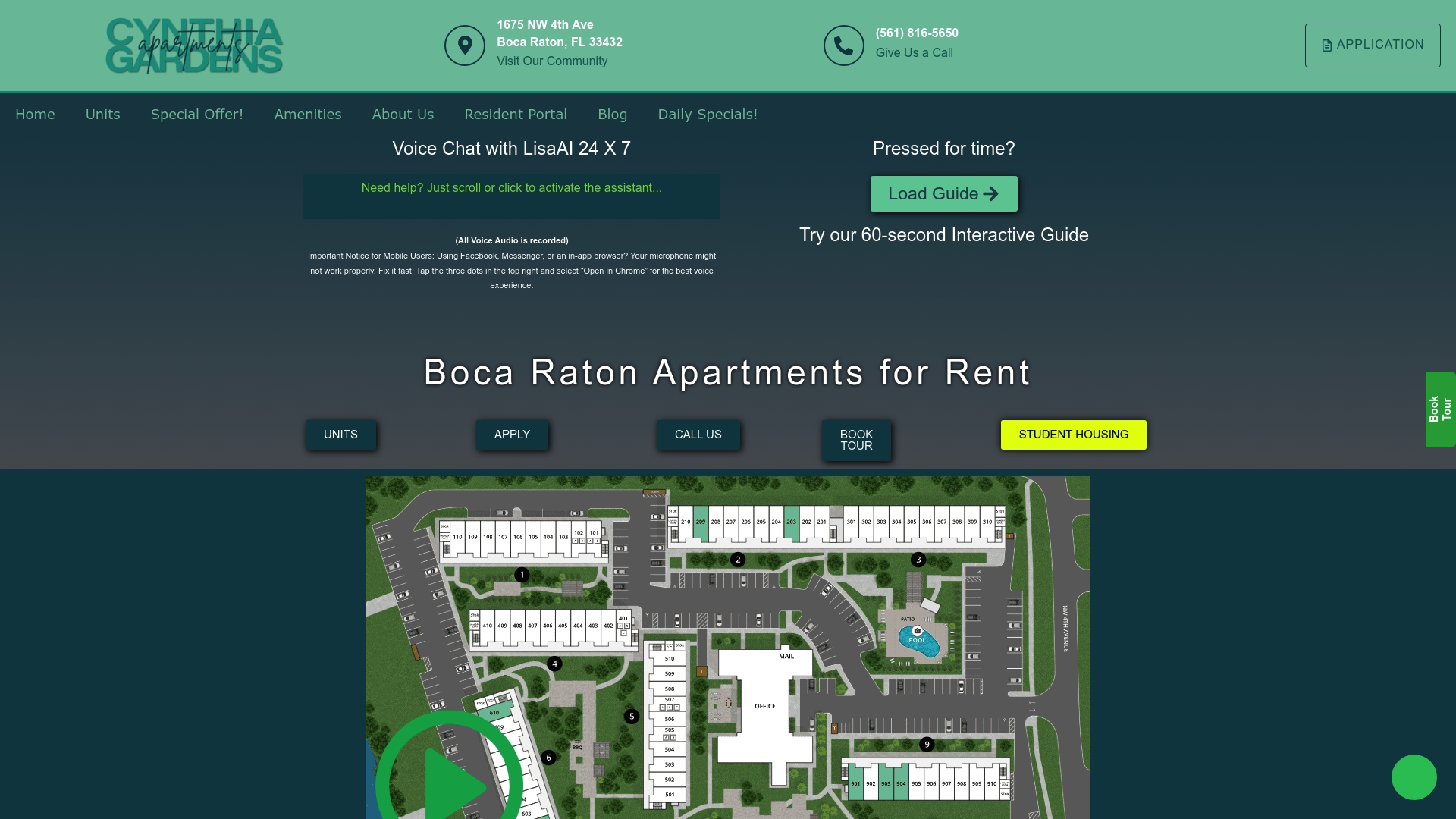
For single renters, two features stand out. Furnished short-term options let you arrive without a truck full of furniture, which is a genuine relief if you’re relocating from out of state. And the virtual tours and interactive property map let you plan furniture placement and confirm room dimensions before you sign anything, so your moving checklist is already half-done before move day.
Browse one-bedroom layouts and availability to see current options. Renting decisions depend on individual fit, budget, and timing, but if Boca Raton is your destination, it’s worth a look before you finalize your move plan.
Sources
These sources back the checklist and give you direct access to consumer protections, mover directories, and donation networks.
Recommended
- Moving to Your New Apartment: The Ultimate Checklist – Luxury Apartments for Rent in Boca Raton | Premium Boca Raton Apartments | Aapartments Boca Raton
- First Apartment Moving Checklist: 8 Essential Steps for 2025 – Luxury Apartments for Rent in Boca Raton | Premium Boca Raton Apartments | Aapartments Boca Raton
- apartment moving tips: 7 hacks for a smoother move – Luxury Apartments for Rent in Boca Raton | Premium Boca Raton Apartments | Aapartments Boca Raton
- First Apartment Setup Guide for Stress-Free Move-In