
Scheduling a move-in appointment comes down to four moves: confirm your lease start date, request a time with the leasing office as soon as your application is approved, clear the money and paperwork that must be done before keys are released, and get the confirmation in writing. Do those four in that order and move-in day stays short and calm. This guide walks through each one for renters in Boca Raton, whether you are a young professional, an FAU student, a single renter on a budget or a cat owner moving with your pet.
TL;DR
- Request your move-in time as soon as your application is approved, not the week you move. Popular dates, such as the first of the month and the weeks around the FAU semester start, fill first.
- Have the money, proof of renters insurance (if your lease requires it), photo ID and utility set-up sorted before the appointment, because keys are usually handed over only after the paperwork is done.
- Ask four things when you book: the exact time window, where to park or load, whether elevators or loading areas must be reserved, and who to call if you are running late.
- If your date moves, tell the office right away and get the new time confirmed in writing.
- At Cynthia Gardens, one-bedroom apartments run $1,990 to $2,220 per month, and the one-time fees are published on our fees page.
Table of Contents
- What a move-in appointment actually is
- Step 1: Pin down your lease start date
- Step 2: Request your time as soon as you are approved
- Step 3: Understand how time slots, loading and parking work
- Step 4: Have documents and money ready
- Step 5: Confirm, then re-confirm
- What happens at the appointment
- If no time is available or your plans change
- A sample timeline for a one-bedroom move
- Student and young professional shortcuts
- Our perspective
- Ready to pick your apartment?
- FAQ
- Sources
What a move-in appointment actually is
A move-in appointment is the agreed time when you pick up your keys, finish any remaining paperwork and start using the apartment. It is separate from signing the lease. You can sign online weeks ahead and still need a set time to get keys, walk the unit and move your things.
Professional leasing training describes the same sequence. The National Apartment Association’s rental-policies training material lists the usual move-in day tasks: re-inspecting the unit, having papers explained and signed, collecting move-in money, handing over keys and a mailbox tag, and doing a move-in inspection and orientation. That list is a good picture of what your appointment should cover, and a good way to judge whether the time you are offered is long enough.
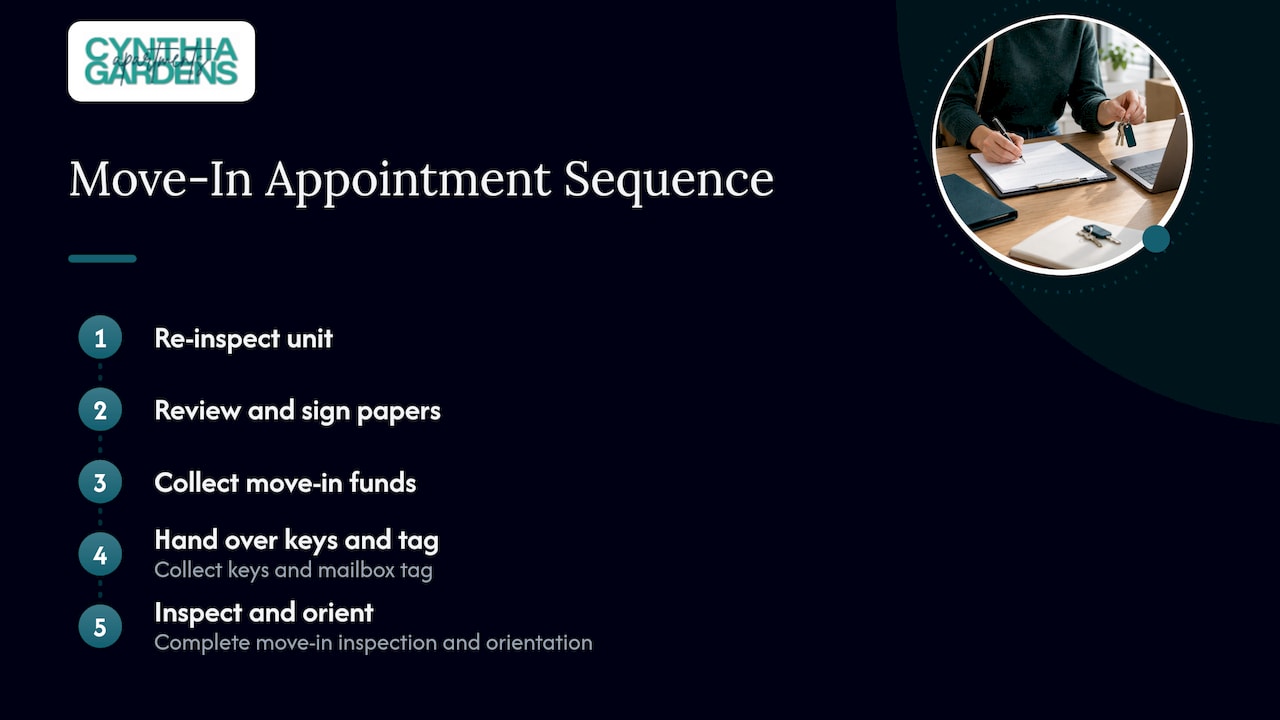
A realistic plan is 30 to 60 minutes with the office for keys, orientation and the walkthrough, then as much time as you need to carry boxes in. Book the office time and your moving help separately in your head, even if they happen on the same afternoon.
Step 1: Pin down your lease start date
Everything else hangs on this date. Check your lease for the move-in date, and note whether rent is due from that date or prorated from it. If you are coming from another rental, line it up with your move-out so you are not paying two rents for longer than you need to.
Students have a second constraint: class schedules and campus housing contracts. If you are moving from a dorm or shared house near FAU, give yourself a buffer day between move-out and move-in. A move that depends on one tight handoff is the kind that goes wrong.
Cats add one more item. If you are bringing a cat, the pet fee and any pet paperwork belong in the same conversation as your start date, so nothing is left to settle at the door. Our pet fee is a one-time, non-refundable $300 to $500 per cat, with no ongoing pet rent, and it is listed with our other fees on the fees page.
Step 2: Request your time as soon as you are approved
How you request a time depends on the building. Some communities take requests through a form, some through a resident portal, others by email or phone. Larger buildings with shared elevators tend to be the most formal.
A documented example shows the pattern. At buildings run by one Florida-based association manager, you submit an online move request form, wait for an email confirmation and allow 24 to 48 hours for approval. After approval, a second email carries a payment link for move fees and a deposit, plus the move restrictions and elevator-reservation instructions. That is a condo or association model, and a garden-style apartment community is usually simpler, but the sequence is the same: request, approval, payment, written instructions.
What to do in practice:
- Ask for your time the day your application is approved. Do not wait for the lease to be countersigned if the office will already hold a slot.
- Offer two or three windows. Offices can fit you in faster when you are flexible, for example a weekday morning rather than a Saturday.
- Avoid the crunch dates. The first and last days of the month and the days before a semester starts are the busiest. If you can move on the 2nd or in mid-month, you will usually find more choice.
- Get it in writing. A confirmation email or text with the date, time and place is your record if anything is later disputed.
If you rent with us, our leasing process is online, with AI chat and voice assistance so you can ask about timing and next steps without waiting for office hours, and virtual and interactive-map tours so you can pick your apartment before you ever schedule a move. Our one-bedroom apartment workflow guide explains how that online process fits together.
Step 3: Understand how time slots, loading and parking work
Time slots exist for one reason: shared space. Elevators, hallways and the few spots near the door cannot handle five moves at once. A slot gives you the use of those spaces for a set stretch of time.
When you book, ask these questions and write down the answers:
| Question | Why it matters |
|---|---|
| How long is my window? | Two hours is plenty for a one-bedroom with a few boxes; a full truck needs more. |
| Where do I park the truck or car? | Loading zones are often short-term and shared. |
| Do I need to reserve an elevator or loading area? | In buildings that require it, the reservation is part of the approval, as in the form-and-email process above. |
| Is there a deposit or fee for the move itself? | Some associations charge move fees and a refundable deposit; confirm before the day. |
| What if I am late or early? | Early arrival often means waiting for your slot, and late arrival may cost you your elevator time. |
| Can I move on weekends or evenings? | Move hours are often limited by quiet hours in the community. |
Two practical points. First, count your trips: a one-bedroom with a bed, a sofa and a desk is roughly a morning of work with two helpers and a cart. Second, if you are renting a truck, schedule the pickup so you arrive at the community on time, not an hour before the office opens.
Step 4: Have documents and money ready
Most delays on move-in day come from something missing, not something broken. Before your appointment, check that you have:
- Government photo ID, the same one you used on your application.
- Move-in payments, in the form the office accepts. Ask in advance. Our published one-time charges include a $75 non-refundable application fee per applicant, a $300 administration fee, a $15 wire transfer fee and a $500 transfer fee, all listed on our fees page. Knowing the full list up front is what lets you budget the day without surprises.
- Proof of renters insurance, if your lease requires it. Read the lease for the required coverage and be ready to show it before keys are handed over.
- Utility and internet set-up. Arrange electricity and internet to start on your move-in date so the lights and Wi-Fi work that night.
- Pet paperwork for your cat, if the lease asks for it, and your cat’s carrier for the trip.
Wire transfers are worth special attention. A transfer can take a business day or more to arrive, so send it early rather than the morning of your appointment.
Step 5: Confirm, then re-confirm
The day before, check three things: the confirmation message, the address of the office or the building entrance you should use, and your payment method. If the community sends move-in instructions ahead of time, read them. They typically contain the parking and loading details you asked about.
A short confirmation message is enough:
Hi, I’m confirming my move-in appointment for [date] at [time] for apartment [number]. I’ll have my ID, payment and proof of insurance. Can you confirm where I should park and who I should ask for?
That message does three jobs: it proves the booking, it flags what you are bringing, and it prompts the office to give you parking details if it had forgotten.
What happens at the appointment
Expect the sequence from the NAA training list above: the office reviews and signs any remaining papers, collects what is due, hands over keys and a mailbox tag, and walks you through the unit and the community. Take the walkthrough seriously. It is the one moment to record the apartment’s condition before your belongings arrive.
Walk each room, test the lights, the faucets, the air conditioning, the appliances and the locks, and photograph anything that is scratched, stained or not working. Then report it in writing the same day. Our move-in inspection checklist goes room by room, and what a move-in inspection is explains why the written record matters.
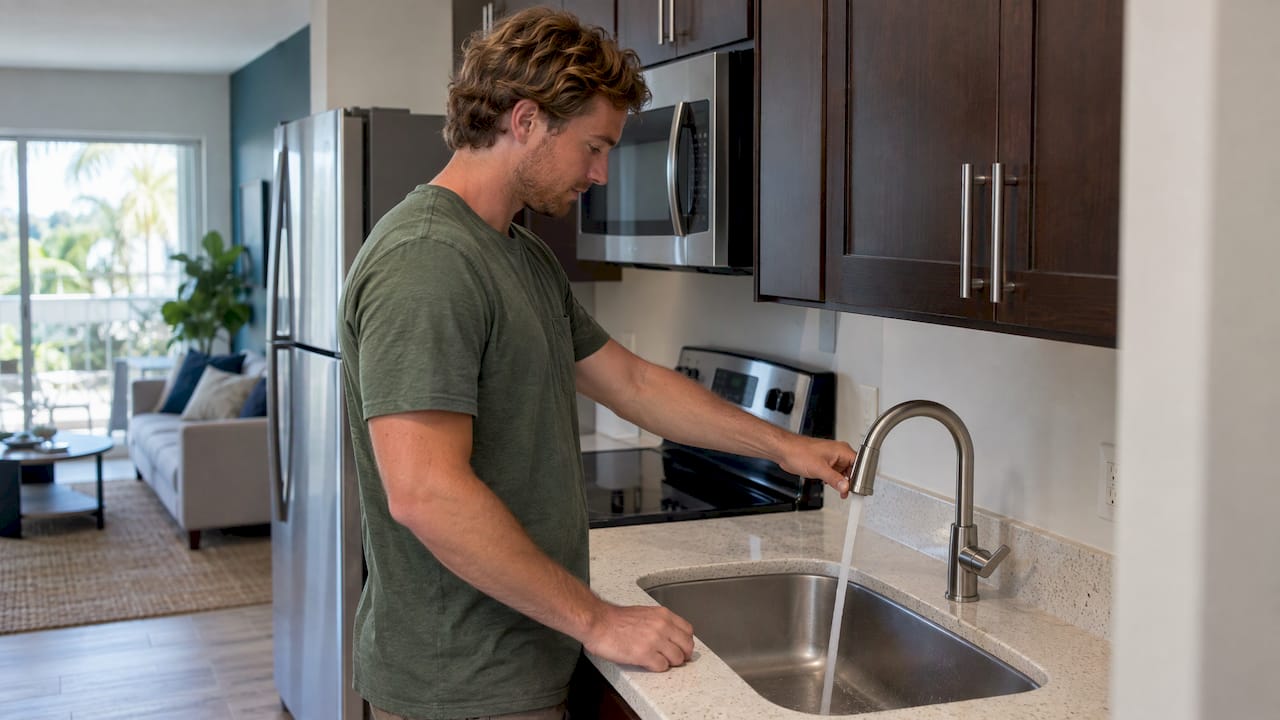
For cat owners, add a few checks: that windows and balcony doors close securely, that nothing in reach is a hazard to a curious cat, and where you will set up the litter box before the first night. Settling your cat in a closed room first, with food, water and a hiding place, is easier than letting it explore during the move.
If no time is available or your plans change
Plans shift: a landlord delays a move-out, a truck falls through, a class schedule changes. Here is what to do.
No slots that work. Ask what the nearest alternatives are, including weekdays and mornings, and whether the office can hold your preferred time once you have signed. Do not accept a vague “sometime that week”. Ask for a specific window.
You need to reschedule. Tell the office as soon as you know. In the association process above, a changed date goes through a move modification form linked in the approval email, or by contacting a moves coordinator by email or phone during office hours. In an apartment community the equivalent is simpler: call or message the leasing office, then ask for the new time in writing, and check whether rent still starts on the original date.
You are going to be late on the day. Call, do not just show up. A late call keeps your key handoff alive; a no-show can push it to the next business day.
A sample timeline for a one-bedroom move
Here is a schedule that works for most one-bedroom renters, counted back from move-in day:
| When | What to do |
|---|---|
| 3 to 4 weeks before | Application approved; request your time slot and ask the questions in Step 3. |
| 2 weeks before | Book truck or helpers; set utilities and internet to start on move-in day. |
| 1 week before | Arrange payments, including any wire; confirm renters insurance if required. |
| 2 to 3 days before | Re-confirm your appointment in writing; pack an essentials box (sheets, towels, chargers, cat supplies). |
| Day before | Confirm parking and loading details; charge phones; plan the walkthrough photos. |
| Move-in day | Keys, walkthrough, photos, report issues the same day, then move in. |
Our first apartment moving checklist and guide to preparing for move-in expand on the packing and set-up side.
Student and young professional shortcuts
FAU students. Semester starts bunch moves together, so book as early as your housing allows and have a backup day. If you are a graduate student with a tight schedule, ask whether a weekday-morning handoff is available.
Young professionals. Your constraint is work time. A handoff before 9 a.m. or at lunch can save you a vacation day, and a virtual tour beforehand means the only thing left to do on the day is move. Our virtual tour page covers how that works.
Single renters on a budget. The cheapest move is the one that avoids repeat trips and extra rent overlap. Move midweek if you can, share a truck with a friend and check that the one-time charges are all in your budget. Our affordable one-bedroom guide covers that side.
Our perspective
Most move-in problems we would want to prevent are about information, not effort. Renters arrive without knowing which payment method is accepted, or where to park, or what the walkthrough is for. Our whole approach at Cynthia Gardens is to put that information in front of you early.
That is why we publish our rent range and one-time fees openly, so the amount you bring on move-in day matches the amount you were quoted. Our one-bedrooms run $1,990 to $2,220 per month, and our fee list is on one page. For cat owners, we charge a single one-time pet fee instead of ongoing pet rent.
It is also why our leasing is online. You can tour virtually, explore the property map, ask questions through AI chat and voice assistance, and apply without driving over first. By the time you schedule your move, there should be nothing left to discover. We built it that way for young professionals, students and pet owners who want a clear path from the first look to the first night in their apartment.
Ayman
Ready to pick your apartment?
If you are still choosing, start with our one-bedroom apartments in Boca Raton: pet-friendly, no hidden fees, with virtual tours and an interactive property map so you can see the floor plan and the community before you apply. Rent is $1,990 to $2,220 per month, and the one-time charges are listed on our fees page.
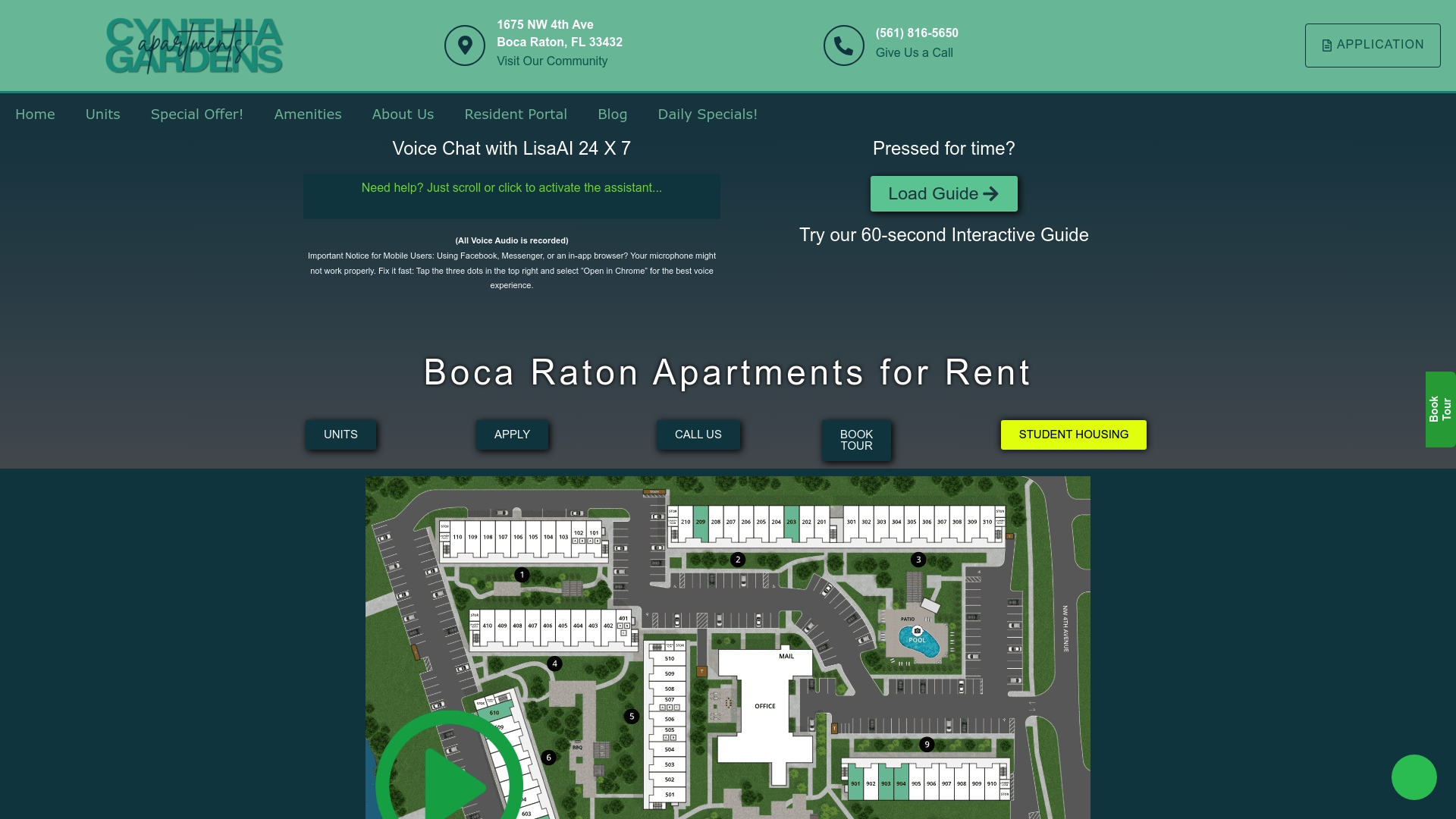
Once you have a unit, the steps above get you from approval to keys without lost time.
FAQ
How far ahead should I schedule my move-in appointment?
Request it as soon as your application is approved, ideally three to four weeks ahead. Busy dates, such as the start of the month and the weeks before a semester begins, fill first. If a form-based approval is required, remember that it can take 24 to 48 hours just to be confirmed.
What should I bring to my move-in appointment?
Bring government photo ID, your move-in payment in the form the office accepts, proof of renters insurance if your lease requires it, and any pet paperwork. Ask the office a few days ahead for the exact list, so there are no surprises when keys are handed over.
How long does a move-in appointment take?
Plan on 30 to 60 minutes for keys, paperwork, orientation and the walkthrough. Carrying your belongings in is extra and depends on how much you have and how many helpers you bring. Ask for a window long enough for both.
What if I need to change my move-in date?
Contact the leasing office as soon as you know and ask for a new time in writing. Confirm whether your rent start date changes too. Where a community uses a form, look for the modification link in your approval email.
Can I move in with my cat on the first day?
Yes, if your pet paperwork and one-time pet fee are settled beforehand. Bring a carrier, set up a quiet room with food, water and a litter box, and keep the door closed while you move boxes so your cat is not startled or lost in the traffic.
Sources
- Scheduling a Move in a W360 Managed Association, Leasing a Unit
- NAA rental policies training material