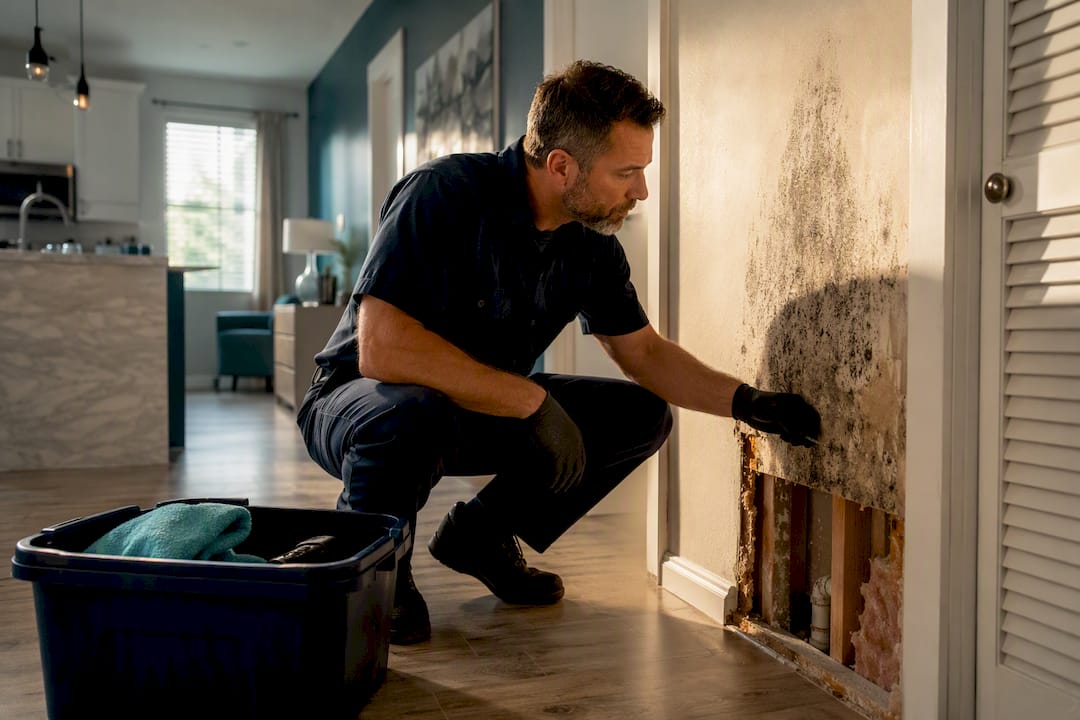
If a landlord’s plumbing leak, roof failure, or broken AC caused the mold, Florida law puts the repair burden on the landlord under Fla. Stat. §83.51. But nothing happens automatically. You have to document the damage, then send a written notice giving the landlord exactly seven days to fix it under §83.56. Anything over 10 square feet legally requires a licensed remediator.
TL;DR:
- Landlords are liable for mold caused by leaks, roof failure, or broken HVAC systems if the damage is documented and they fail to fix it within seven days after written notice.
- Mold larger than 10 square feet requires licensed remediators, and independent assessments can strengthen your legal position in disputes.
- A legally sufficient mold notice must specify exact locations, suspected causes, include photos, and be sent via certified mail with a clear seven-day remediation deadline.
- Florida law emphasizes controlling moisture and requires specific, well-documented notices; routine testing or vague complaints are usually insufficient.
- Responding promptly and documenting all communication, symptoms, and repair efforts is critical to enforcing tenant rights and pursuing remedies like repair-and-deduct or lease termination.
Table of Contents
- What to do first if you find mold in your Florida apartment
- What does Florida law say about landlord and tenant mold responsibility?
- Can mold in an apartment make you sick?
- Does Florida test for mold in apartments, and does it matter?
- How do you write a 7-day mold notice a landlord can’t ignore?
- What happens if a Florida landlord ignores mold complaints?
- How do you hire a mold professional in Florida without getting burned?
- What a maintenance-forward apartment community does differently
- Looking for an apartment that won’t put you in this position?
- Where to verify Florida mold laws and health guidance
- Sources
What to do first if you find mold in your Florida apartment
Mold doesn’t wait for a convenient time to spread, and neither should your response. If anyone in your household is coughing, wheezing, or having sinus flare-ups near the affected area, limit time in that room and increase ventilation immediately.
- Photograph everything with timestamps, including close-ups of the growth and wide shots showing location in the room.
- Check for prior maintenance requests in your email or tenant portal that show the landlord already knew about a leak or moisture problem.
- Note the source, if visible, whether it’s a window seal, a ceiling stain, or a musty smell near an AC vent.
- Save damaged items (or photograph them before discarding) if mold ruined furniture, rugs, or belongings.
- Run a dehumidifier or AC to keep the room below the 60% relative humidity threshold the Florida Department of Health recommends for slowing mold growth.
Do not scrub, bleach, or tear out drywall yourself. Disturbing mold without containment spreads spores through the HVAC system and can make the problem worse before a professional ever sees it.
- Call or email the landlord the same day you find it, in plain language, so there’s a timestamp.
- Keep that message short. The detailed, legally specific notice comes next.
Pro Tip: Save every communication in one folder, even the casual texts. A messy string of complaints, once organized by date, often becomes the strongest evidence in a habitability dispute.
What does Florida law say about landlord and tenant mold responsibility?
Florida doesn’t have a mold-specific statute for rentals, but §83.51 requires landlords to keep rental units compliant with building, housing, and health codes, and to maintain plumbing, roofing, and HVAC systems in working order. Courts generally treat mold caused by an unaddressed leak, a failed roof, or broken AC drainage as a landlord’s problem, especially when the landlord knew or should have known about the moisture source.
Tenant remedies don’t kick in just because mold exists. Under §83.56, you must first serve a written notice specifying the exact defect and giving the landlord seven days to correct it. Vague complaints about “air quality” or “a musty smell” typically don’t meet that bar; the notice has to identify a specific, correctable condition.
Once that seven-day window closes without action, tenants generally have a few statutory paths:
- Terminate the lease and move out
- Repair the issue and deduct the cost from rent (with strict documentation requirements)
- Withhold rent, though this carries real risk if done incorrectly
- Pursue damages for the difference in rental value
Damp, moldy environments are linked to a 30 to 50 percent increase in respiratory problems according to CDC-cited research, which is part of why courts take habitability violations involving mold seriously when the paperwork is solid. The notice’s specificity, and whether you can prove delivery, tends to decide these cases more than the mold itself.
Can mold in an apartment make you sick?
Mold exposure commonly triggers coughing, sinus congestion, throat irritation, and headaches. Children, pregnant people, asthma sufferers, and anyone immunocompromised face higher risk of more serious respiratory symptoms.
The CDC links damp, moldy indoor spaces to a 30 to 50 percent jump in respiratory issues, a range broad enough to cover everything from persistent coughs to worsened asthma control.
- Log symptoms with dates, noting whether they improve when you’re away from the apartment.
- Save any doctor’s visit notes or prescriptions tied to respiratory complaints.
- Run a portable air purifier and keep the affected room’s door closed until repairs happen.
Does Florida test for mold in apartments, and does it matter?
The Florida Department of Health does not conduct private mold testing for individual apartments, and county health departments generally limit themselves to technical consultations rather than lab-grade inspection. The DOH’s guidance focuses almost entirely on controlling moisture, not identifying mold species, because the fix is the same regardless of what’s growing.
Florida law splits mold work into two licensed roles under §468.8411: a mold assessor, who inspects and writes a scope-of-work report, and a mold remediator, who does the physical cleanup. An assessor can’t remediate the same property within 12 months of their own assessment, which keeps one company from diagnosing a problem just to sell you the fix.
Any patch of mold larger than 10 square feet, roughly a card table’s surface, legally requires a licensed remediator. Most visible infestations serious enough to justify lease termination or repair-and-deduct claims clear that threshold easily.
Pro Tip: A $300 to $600 independent assessor report often pays for itself in leverage. Landlords settle faster when a licensed professional’s written scope backs your notice.
- Get an independent assessment if the landlord disputes the extent of the problem.
- Ask any inspector for their DBPR license number before they set foot in your unit.
How do you write a 7-day mold notice a landlord can’t ignore?
A generic complaint email rarely satisfies §83.56. The notice needs specific language a court would recognize as adequate warning.
- State the exact location: “Mold growth on the ceiling and wall of the second bedroom, near the window facing the parking lot.”
- Describe the suspected cause: “Appears linked to a roof leak reported on [date].”
- Set the deadline explicitly: “This letter serves as formal notice under Florida Statute §83.56. You have seven days from receipt to remediate this condition.”
- State your intended remedy if the landlord doesn’t act: lease termination, repair-and-deduct, or rent withholding.
- Attach photos referenced by date so the letter and evidence match up.
Delivery matters as much as content:
- Send it by certified mail with return receipt requested, and keep the receipt.
- Email a copy the same day if your lease allows electronic notice, creating a second timestamp.
- Keep the original letter and every reply, even a text saying “we’ll look into it.”
Weak, informal notices are one of the most common reasons tenant remedies get thrown out in disputes, according to landlord-tenant law analyses. Specificity is what makes the notice legally functional.
What happens if a Florida landlord ignores mold complaints?
Once seven days pass with no repair, you have a few real options, each with its own risk profile.
- Repair-and-deduct lets you hire a licensed remediator and subtract the cost from rent, but you need itemized receipts and the repair has to be reasonable in cost and scope.
- Rent withholding requires depositing the withheld rent into the court registry in some jurisdictions; withholding it into your own account without following procedure can backfire and expose you to eviction.
- Lease termination is available if the landlord fails to cure within the notice period, but you need your paper trail intact before you move out.
If the landlord still won’t budge, you can file a complaint with your county health department, report licensing violations to the DBPR if an unlicensed contractor did prior work, or file in small-claims court for damages under the deposit limit.
Courts weigh photographs, certified-mail notices, and assessor reports heavily. Personal injury lawsuits over mold exposure are notoriously hard to win because proving medical causation meets a tough evidentiary standard; most tenants get further pursuing habitability remedies than a health-damages claim.
Pro Tip: Bring your entire folder, notices, photos, receipts, medical notes, to a consultation even with a free legal aid clinic. An organized timeline often gets you real advice in twenty minutes instead of an hour of backstory.
How do you hire a mold professional in Florida without getting burned?
Look up any contractor’s license number directly through DBPR before they touch your unit. Confirm whether they’re licensed as an assessor, a remediator, or both, since a single company holding both roles on the same job raises the conflict-of-interest concern §468.8411 was written to prevent.
Get at least two bids for remediation work. Costs vary based on square footage, whether drywall or flooring needs replacement, and how deep the moisture has traveled into structural materials.
- Ask for a written scope-of-work, not a verbal estimate.
- Request before-and-after photos as part of the final invoice.
- Keep every receipt; if you end up in a repair-and-deduct dispute, this paperwork is your case.
An independent assessor’s report tends to carry more weight in landlord negotiations than your own photos alone, since it comes from a licensed third party with no stake in the repair contract.
What a maintenance-forward apartment community does differently
Most mold problems trace back to a leak nobody caught in time. Communities that take upkeep seriously check HVAC condensate drains on a schedule, respond to leak reports within days instead of weeks, and monitor humidity in units before it becomes visible growth. Cynthiagardens builds its maintenance and communication approach around documented work orders, so residents aren’t left guessing whether a request was received or ignored.
Looking for an apartment that won’t put you in this position?
Everything above assumes you’re already dealing with a mold problem and a landlord who might not respond fast. The better outcome is never being in that situation. Cynthiagardens is a maintenance-first alternative to apartment communities where leak reports sit in a queue for weeks, built around transparent pricing with no hidden fees and a tech-forward leasing experience that keeps communication in writing from day one.
Every one-bedroom unit at Cynthiagardens in Boca Raton comes with responsive upkeep and an AI chat and voice system that logs your maintenance requests the moment you send them, so nothing gets lost in a phone tag loop. If you’re comparing communities and want to see what proactive maintenance actually looks like before you sign anything, explore available one-bedroom apartments at Cynthiagardens and take the virtual tour to see the units and amenities for yourself.
Where to verify Florida mold laws and health guidance
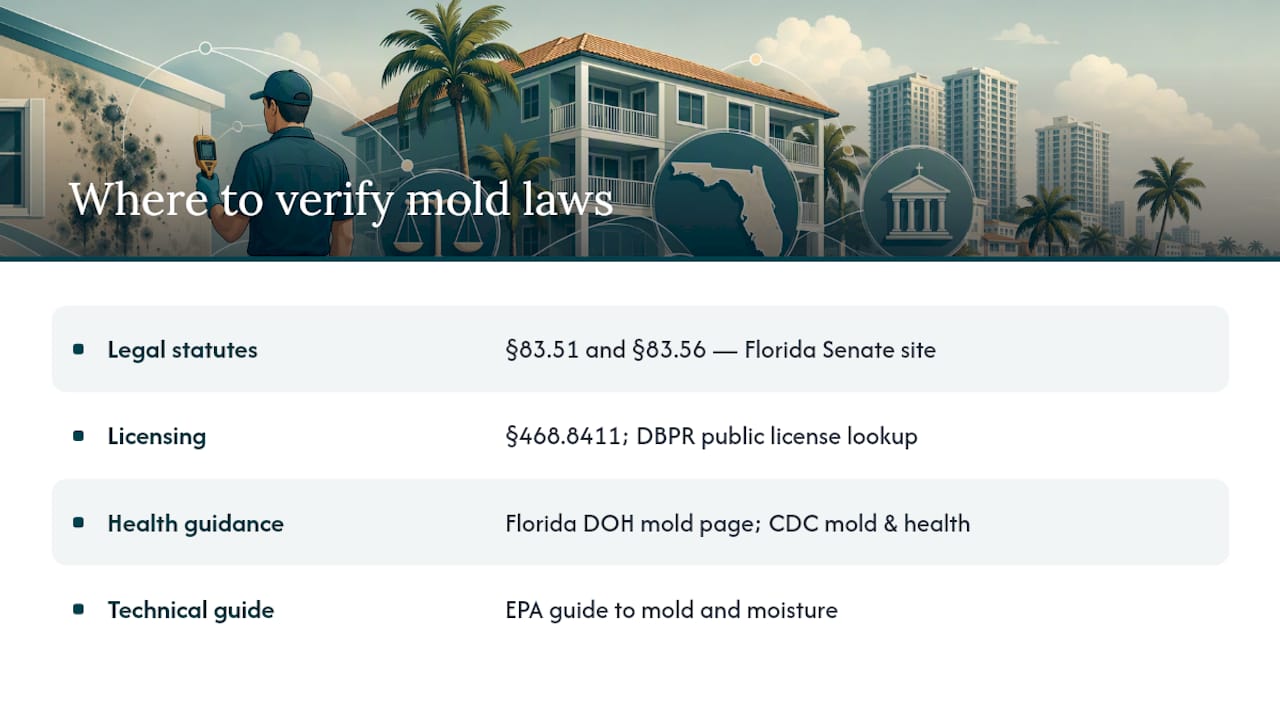
For the legal text itself, read §83.51 on landlord maintenance duties and §83.56 on tenant notice and remedies directly on the Florida Senate’s statute site. For licensing verification, §468.8411 covers assessor and remediator rules, and DBPR’s public license lookup confirms whether a contractor is legitimate. For health guidance, the Florida Department of Health’s mold page and the CDC’s mold and health resource explain exposure risks and prevention in plain terms. The EPA’s guide to mold and moisture is worth reading if you want the mechanics of why fixing the leak always matters more than testing the mold itself.
This article is general information, not a substitute for advice from a qualified lawyer. Consult a qualified legal professional about your own circumstances before acting on anything here.
Sources
- Florida Statutes §83.51 — Landlord’s obligation to maintain premises
- Mold — Florida Department of Health