
Lease break fees typically run one to two months’ rent when your lease has an early termination clause, or the rent owed until a new tenant moves in when it doesn’t. Federal law wipes out fees entirely for qualifying military tenants, and several state laws limit what a landlord can collect even without a clause. Your first move is simple: put your notice in writing and start helping the landlord re-rent the unit immediately.
TL;DR:
- A lease break fee usually equals one to two months’ rent for early termination, but military tenants under the SCRA pay nothing if they follow proper notice procedures.
- Landlords can only enforce liquidated damages if the amount reasonably reflects actual losses and cannot impose penalties beyond the expected re-rental costs if a unit is quickly re-rented.
- Tenants may avoid or reduce fees if they have valid legal grounds such as habitability issues, emergency situations like domestic violence, or compliance with the SCRA, provided they follow notice and documentation rules.
- The obligation to pay rent after breaking a lease depends on whether a clause exists, the speed of re-rental efforts by the landlord, and the remaining lease term, with states often requiring mitigation efforts.
- Acting early, providing written notice with proof, helping re-rent the unit, and documenting all communications can significantly lower lease break costs or help prevent disputes.
Table of Contents
- Understanding Lease Break Fees and How Landlords Calculate Them
- Legal Exceptions That Can Erase or Cap What You Owe
- How Much You’ll Actually Pay: Cost Scenarios Worth Knowing
- How to Reduce or Avoid a Lease Break Fee
- What Happens After You Break the Lease
- Why Transparent Leases Beat Fine-Print Surprises
- A Renter-Friendly Way to Avoid This Problem Next Time
- Sources
Understanding Lease Break Fees and How Landlords Calculate Them
A lease break fee, sometimes called an early termination fee, is the amount your lease says you owe for ending a rental agreement before the term expires. Most leases handle this one of three ways, and knowing which one applies to you changes everything about your exposure.
The first is a flat early termination clause, usually buried in a section titled “Early Termination” or “Lease Break.” It states a specific dollar figure or a formula, most commonly one to two months’ rent, due once you give notice and vacate.
The second is liquidated damages language, a pre-agreed estimate of the landlord’s losses from your early exit. Courts generally enforce these only when the amount reasonably approximates actual damages. A liquidated damages clause that functions as a punishment rather than a fair estimate risks being challenged as an unenforceable penalty.
The third scenario is no clause at all. Here, you’re technically on the hook for rent through the end of your lease term, but state law typically requires the landlord to look for a new tenant rather than let the unit sit empty and bill you for the whole balance.
- Flat fee clauses: fixed amount, usually disclosed upfront
- Liquidated damages: estimated loss, must be reasonable to hold up
- No clause: rent continues until re-rented, subject to mitigation rules
Legal Exceptions That Can Erase or Cap What You Owe
Before you assume you’re stuck paying, check whether you fall into one of the exceptions that override standard lease terms.
The Servicemembers Civil Relief Act (SCRA) lets qualifying active-duty service members end a residential lease with 30 days’ written notice after the next rent due date. Landlords cannot charge a lease-break fee in these cases, full stop, provided you follow the SCRA’s notice requirements and include a copy of your orders.
Many states also protect survivors of domestic violence, sexual assault, or stalking, allowing early termination without penalty when the tenant provides documentation like a protective order or police report. Requirements vary by state, so check your local statute before assuming coverage.
Habitability problems open another door. If a landlord fails to fix serious issues (no heat, active mold, broken locks) after proper notice and a chance to cure, you may have grounds for constructive eviction, which can void your remaining obligation.
The biggest lever for most tenants, though, is duty to mitigate. State duty-to-mitigate rules, domestic-violence statutes, and the SCRA together determine most of what a tenant actually owes after breaking a lease, and mitigation is usually the deciding factor. In states that require it, a landlord who lets the unit sit vacant instead of actively marketing it can lose the right to collect rent for that idle period.
- SCRA: 30 days’ notice, no fee, military orders required
- Domestic violence statutes: documentation required, terms vary by state
- Habitability breach: notice and cure period usually required first
- Duty to mitigate: landlord must make reasonable efforts to relet
Pro Tip: If your landlord ignores showings requests or refuses to list the unit after you move out, save every email. That paper trail is often your best defense if the dispute reaches small claims.
How Much You’ll Actually Pay: Cost Scenarios Worth Knowing
Your real exposure depends heavily on three variables: whether a clause exists, how fast the market moves, and how much lease term remains.
- Lease with a two-month buyout clause. You give notice, pay the specified amount (often equal to two months’ rent), and walk away clean. This is the most predictable and often the cheapest path when a lease actually includes one.
- No clause, but the landlord re-rents fast. You typically owe rent only for the gap between your move-out and the new tenant’s move-in, sometimes just a few weeks in a hot rental market.
- No clause, soft market, long remaining term. This is the expensive scenario. If eight months remain on your lease and the unit sits vacant for three of them, you could owe rent for that full vacancy period even with an active duty to mitigate.
State law sometimes puts a ceiling on the worst-case outcome. Florida Statute § 83.595 permits landlords and tenants to agree in advance to liquidated damages or an early termination fee capped at two months’ rent, as long as the tenant signs a separate addendum, and the statute still requires the landlord to make a good-faith effort to relet. That kind of cap gives Florida tenants a clearer ceiling than states with no equivalent rule.
How to Reduce or Avoid a Lease Break Fee
You have more leverage than most tenants realize, especially if you act early and put everything in writing.
- Reread your lease first. Find the exact notice period (usually 30 to 60 days) and any termination clause language before you say anything to your landlord.
- Send written notice with proof of delivery. Email plus certified mail covers you if there’s ever a dispute about when you gave notice.
- Offer to help re-rent. Volunteer for showings, provide good photos, or draft listing copy yourself. Cooperating on re-rental tends to shorten vacancy time and cuts your total liability compared to walking away and hoping for the best.
- Propose a buyout. One month’s rent plus forfeiting your security deposit is a common opening offer that many landlords accept because it settles things faster than chasing you for rent over several months.
- Document everything if mitigation stalls. If the landlord ignores your help and lets the unit sit, keep records. Tenant-rights organizations or legal aid can advise you on whether that inaction reduces what you owe.
Pro Tip: A signed buyout agreement, even a one-page document both parties initial, ends disputes faster than any court filing ever will.
Talk to a lawyer if the number involved is large, your landlord threatens a lawsuit, or your state’s mitigation rules aren’t clear. A short consultation often costs less than the fee itself.
What Happens After You Break the Lease
Once you’re out, the landlord typically applies your security deposit toward unpaid rent, damages beyond normal wear, or the termination fee itself, and most states require the remaining balance and an itemized statement back to you within a set window, often 14 to 30 days.
If the amount owed is disputed or unpaid, landlords sometimes turn to debt collection or small-claims court, and a resulting judgment can show up on credit reports and future tenant-screening checks. That’s the outcome worth avoiding through negotiation rather than silence.
Keep these on file no matter how the situation resolves:
- Copies of your written notice and delivery confirmation
- Move-out photos with timestamps
- All landlord communications, especially anything about re-rental efforts
- Your final deposit itemization and any demand letters
If you get a demand letter or small-claims summons, respond in writing, request an itemized accounting, and don’t ignore court dates even if you think the claim is weak.
Why Transparent Leases Beat Fine-Print Surprises
Most lease disputes trace back to fine print nobody explained clearly at signing. That’s the real failure point, not the tenant’s decision to move.
Cynthiagardens builds every lease around transparent pricing with no hidden fees, so termination terms are stated plainly instead of buried in cross-referenced clauses. The community’s tech-forward leasing tools, including an interactive property map and virtual tours, also help fill vacancies faster when a unit does open up, which works in a departing tenant’s favor under any reasonable duty-to-mitigate standard.
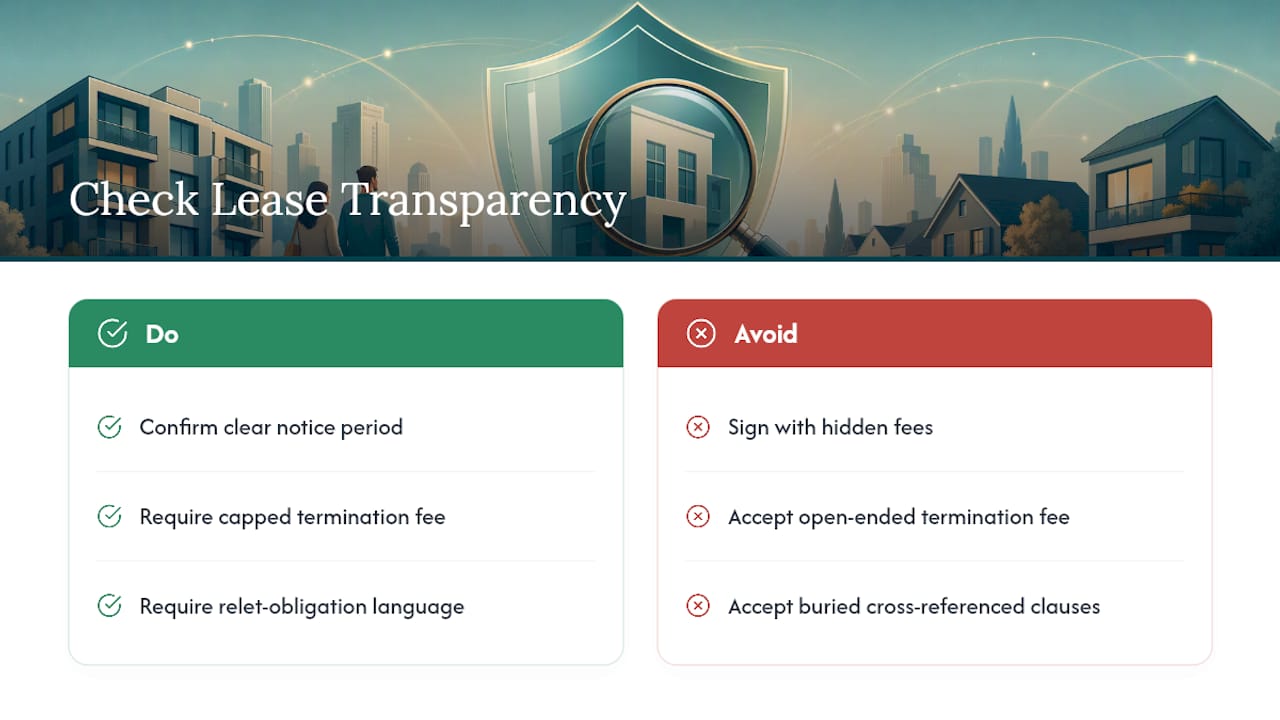
Before signing anywhere, check for a clearly stated notice period, a termination fee that’s capped rather than open-ended, and language describing the landlord’s obligation to relet. Those three details predict most of your future headache or lack of one.
— Ayman
A Renter-Friendly Way to Avoid This Problem Next Time
There’s no getting around it: buyout clauses, mitigation disputes, and demand letters are a hassle no matter how the math works out in your favor. The reader who found this article is usually mid-crisis, not planning ahead, but the fix for next time is picking a lease that doesn’t leave room for the fine-print fights described above.
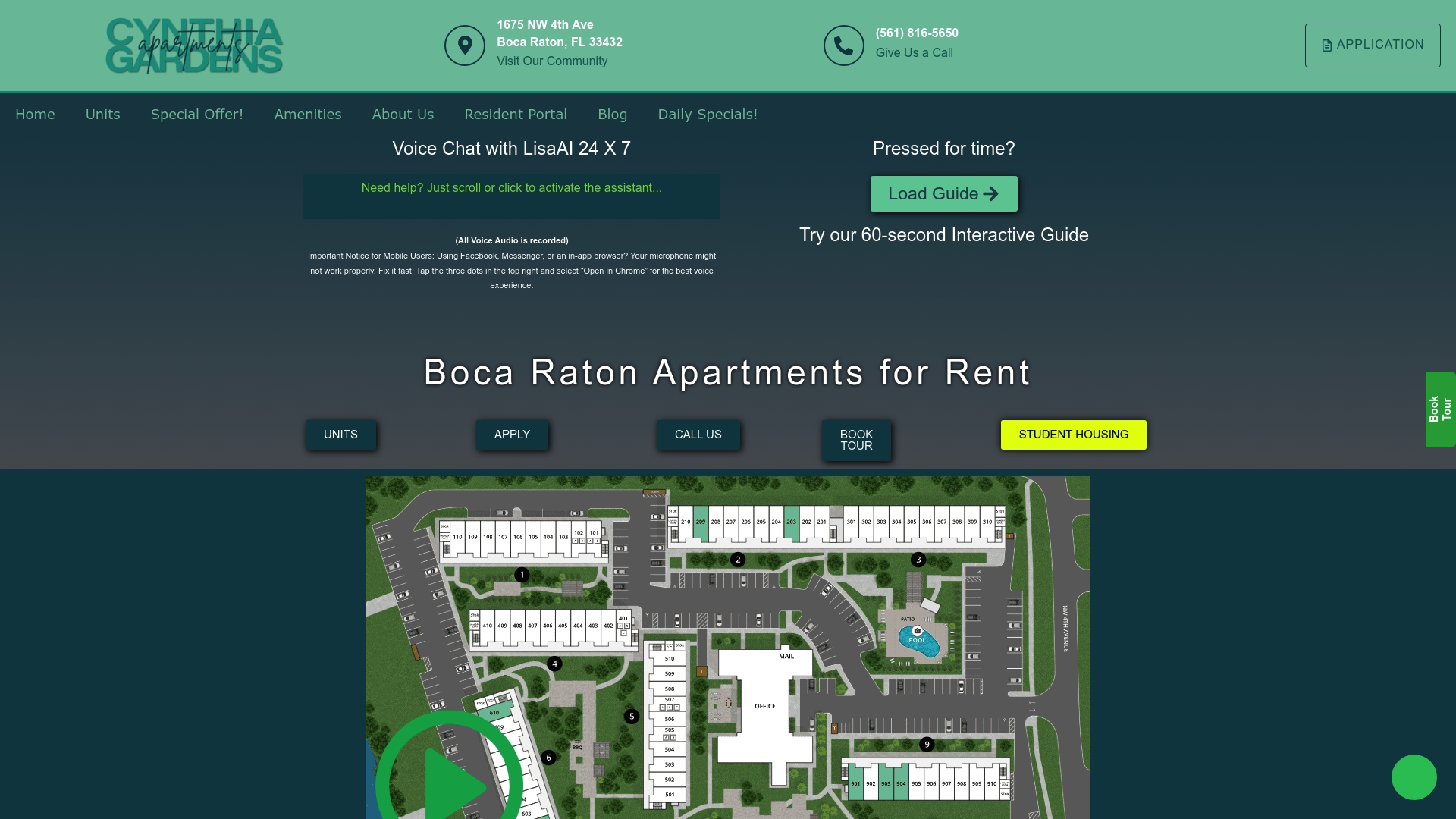
Cynthiagardens offers one-bedroom apartments in Boca Raton with pricing and termination terms stated upfront, not tucked into cross-referenced addendums you need a lawyer to parse. The community is built for young professionals, students, and pet owners who want a straightforward lease and modern amenities without hidden costs showing up later. AI chat and voice support, plus an interactive property map and virtual tours, let you check availability and compare apartment styles and features before you ever visit in person. If you’re searching for your next place after a lease break, or just want a lease you won’t need to decode later, explore Cynthia Gardens’ available floor plans and see what transparent leasing actually looks like.
This article is general information, not a substitute for advice from a qualified lawyer. Consult a qualified legal professional about your own circumstances before acting on anything here.
Sources
- Can You Break a Lease? Legal Reasons and Penalties – LegalClarity
- Lease termination: A renter’s guide to ending your lease – RentCafe
- Florida Statute 83.595 — Choice of remedies upon breach or early termination by tenant