Table of Contents
- The Real Cost of Living in Boca Raton
- Average Rent in Boca Raton and Housing Market Trends
- Hidden Costs: Property Taxes, Insurance, and HOA Fees
- Boca Raton vs Delray Beach: Cost of Living Comparison
- Quality of Life and Lifestyle Benefits Worth the Price
- Income-to-Housing Ratio: Can You Afford It Long-Term?
- Pros and Cons of Living in Boca Raton
- Conclusion
Last Updated: August 11, 2026
The Real Cost of Living in Boca Raton
Is living in Boca Raton worth the cost? That’s the question thousands of professionals, graduate students, and remote workers ask themselves each year. The answer depends on whether your income sustains the lifestyle, whether quality of life justifies the expense, and whether you understand hidden costs extending far beyond rent or mortgage payments.
Boca Raton has transformed into one of South Florida’s most desirable addresses. Housing costs continue to climb, but the real question isn’t whether Boca Raton is expensive, it is, but whether the investment pays dividends in lifestyle, opportunity, and long-term financial stability.
This guide from Cynthia Gardens breaks down the true cost of living in Boca Raton, from visible expenses like rent and property taxes to hidden costs that catch most newcomers off guard. We’ll examine whether your income-to-housing ratio makes sense, compare Boca Raton to nearby alternatives, and help you determine if this community fits your budget and lifestyle goals.
The biggest mistake relocators make is calculating housing costs alone. Property taxes, homeowners insurance, HOA fees, and utilities can add 40-60% to your monthly housing expense. Budget for the full picture before committing to a lease or mortgage.
Average Rent in Boca Raton and Housing Market Trends
Rental prices in Boca Raton vary dramatically based on proximity to the beach, neighborhood quality, and apartment amenities. One-bedroom apartments range across a wide spectrum depending on location and finishes, while two-bedroom units command significantly higher premiums, particularly in gated communities with resort-style amenities.
The housing market has experienced consistent appreciation over the past several years, driven by population migration, limited developable land, and strong demand from domestic and international buyers. This creates both opportunity and risk: long-term residents benefit from property value growth, while new buyers face higher entry costs.
Rental inventory fluctuates seasonally. Winter months (November through March) see peak demand as seasonal residents arrive, pushing prices upward. Summer months offer slightly more favorable rates as the seasonal population departs, though the gap has narrowed as year-round population growth has stabilized demand.
Garden-style apartment communities like Cynthia Gardens typically offer more stable pricing than high-rise buildings, partly because they maintain consistent occupancy and focus on long-term residents rather than short-term seasonal rentals. Newer construction with high-end finishes commands premium pricing, while older properties, even if well-maintained, typically rent for less.
Average rent in Boca Raton reflects a premium market, but variation is substantial. Location within the city, building age, and amenities create price ranges that can differ by hundreds of dollars monthly for comparable square footage.
Hidden Costs: Property Taxes, Insurance, and HOA Fees
Most people focus on rent or mortgage payments and overlook expenses that accumulate quietly each month. In Boca Raton, these hidden costs often exceed expectations.
Property taxes in Florida operate under a homestead exemption system that provides relief for primary residences, but non-homestead and investment properties face full assessment. The effective property tax rate in Palm Beach County applies to assessed home value. For renters, these costs are embedded in rent but rarely transparent. For homeowners, property taxes represent a significant ongoing obligation that increases annually.
Homeowners insurance in South Florida has become increasingly expensive due to hurricane risk, rising construction costs, and claims history. Coastal properties face substantially higher premiums than national averages. Insurers factor in wind damage risk, flood exposure, and high repair costs. Many homeowners find annual insurance bills rival or exceed property tax obligations.
HOA fees in Boca Raton range from modest to substantial depending on community amenities and services. Gated communities with security, landscaping, pool maintenance, and common area upkeep typically charge several hundred dollars monthly or more. These fees increase annually and are non-negotiable if you own in the community. For renters at communities like Cynthia Gardens, maintenance is included in rent, eliminating surprise repair costs and simplifying budgeting.
Utilities in Boca Raton run higher than national averages due to year-round air conditioning requirements. Summer cooling costs spike dramatically from June through September. Electricity rates in Florida are among the nation’s highest, driven by fuel costs and grid infrastructure expenses.
Parking in some Boca Raton communities incurs additional fees. While many apartment communities include parking, premium or additional spaces may cost extra.

HOA fees and property taxes in Boca Raton are not static. Both increase annually, and special assessments for major repairs can spike costs unexpectedly. Factor in 3-5% annual increases when calculating long-term affordability.
Boca Raton vs Delray Beach: Cost of Living Comparison
Delray Beach, located just south of Boca Raton, offers an interesting comparison point for evaluating whether Boca Raton’s costs align with regional alternatives. Both communities share similar geographic positions, climate, and infrastructure, yet their cost structures differ meaningfully.
Housing costs in Delray Beach generally run 10-15% lower than comparable Boca Raton properties, reflecting Delray’s slightly less established luxury reputation, though the gap has narrowed significantly as Delray has undergone revitalization.
Property taxes are virtually identical between the two communities, as both fall under Palm Beach County jurisdiction. The difference emerges in property values: lower home values in Delray Beach translate to lower absolute tax bills at the same rate.
Insurance costs are comparable, as both communities face identical hurricane risk. Delray Beach’s slightly lower property values result in modestly lower insurance premiums, but the difference is marginal.
Lifestyle and amenities differ between the communities. Boca Raton emphasizes established residential neighborhoods, country clubs, and upscale shopping. Delray Beach emphasizes its walkable downtown, beach access, and arts scene. The cost difference often reflects these different value propositions rather than a true affordability gap.
For someone evaluating Boca Raton vs Delray Beach, the decision often comes down to lifestyle priorities rather than pure cost savings.
| Factor | Boca Raton | Delray Beach |
|---|---|---|
| Average Rent (1BR) | Higher | 10-15% Lower |
| Property Taxes | Same Rate | Same Rate |
| Homeowners Insurance | Comparable | Slightly Lower |
| Dining & Entertainment | Upscale | Walkable/Diverse |
| Beach Access | Minutes Away | Immediate |
| Neighborhood Type | Established/Suburban | Urban/Revitalized |
Quality of Life and Lifestyle Benefits Worth the Price
The financial case for living in Boca Raton extends beyond spreadsheets. Lifestyle benefits, proximity to beaches, access to world-class recreational facilities, established neighborhoods, and professional networks, carry genuine value that justifies costs for many residents.
Boca Raton’s location offers immediate beach access. Atlantic Avenue and Mizner Park provide walkable, upscale shopping and dining. The community hosts cultural institutions, performing arts venues, and educational opportunities through Florida Atlantic University (FAU). For professionals in tech, finance, or professional services, the concentration of corporate headquarters creates networking and career advancement opportunities unavailable in smaller communities.
The residential environment emphasizes stability and quality of life. Tree-lined streets, established neighborhoods, and well-maintained commercial corridors appeal to families and professionals seeking refined living. Gated communities provide peace of mind, particularly for those relocating from less secure environments.
Recreation and wellness amenities justify premium pricing for many residents. Golf courses, country clubs, fitness facilities, and water sports access support an active lifestyle. FAU’s presence creates a vibrant student and young professional population, supporting restaurants, bars, and entertainment venues.
For commuters working in Miami or Palm Beach, Boca Raton’s central location provides reasonable I-95 and Tri-Rail access. This geographic advantage translates into time savings and quality-of-life improvements with real financial value.
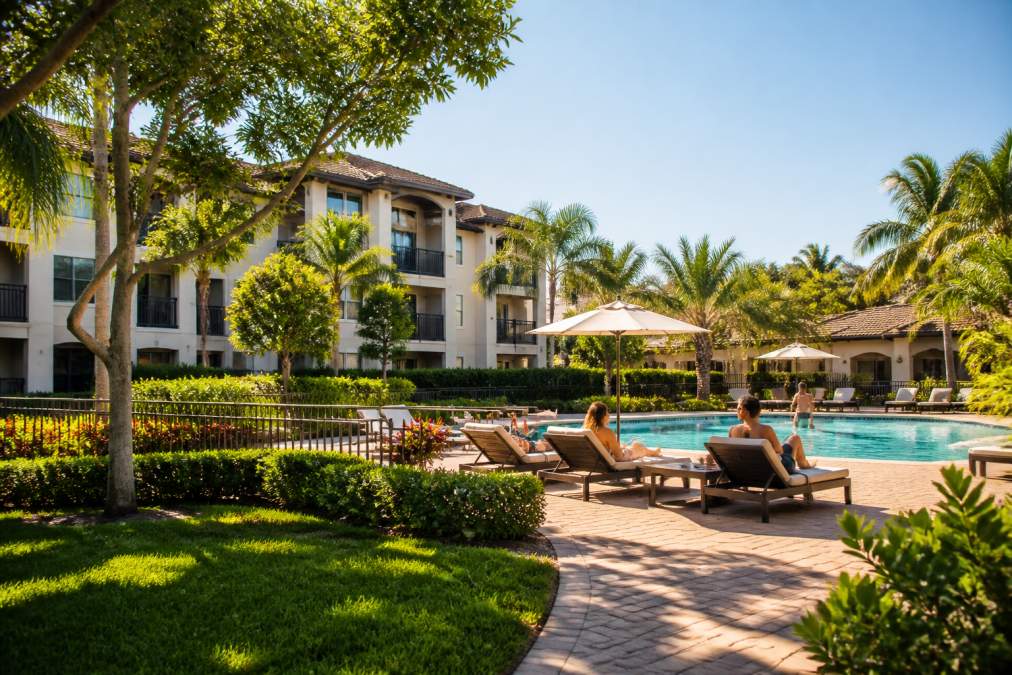
Communities like Cynthia Gardens enhance quality of life through thoughtful design and amenities. The maintenance-free living model eliminates yard work, exterior repairs, and property upkeep stress. Resort-style pools, landscaped grounds, and garden-style architecture create a serene environment appealing to professionals seeking effortless Florida living.
The true value of living in Boca Raton lies in what you gain beyond housing: proximity to beaches, professional networks, recreational infrastructure, and a refined residential environment. For those who use these benefits, the premium pricing becomes justifiable.
Income-to-Housing Ratio: Can You Afford It Long-Term?
Financial sustainability requires that your income supports housing costs without creating stress elsewhere in your budget. The traditional rule suggests housing should consume no more than 28-30% of gross monthly income. In Boca Raton, this threshold becomes critical.
Income under $50,000 makes Boca Raton’s rental market challenging. Even modest one-bedroom apartments consume significant income percentages, leaving limited funds for utilities, food, transportation, and savings. Graduate students often require roommate situations or subsidized housing.
Income in the $60,000-$80,000 range allows comfortable one-bedroom apartment living with reasonable housing ratios. This level supports independent living without financial strain, particularly at communities offering stable, predictable pricing.
Income above $100,000 annually provides flexibility and comfort. Housing costs remain manageable even for larger apartments or modest homes, allowing for savings, investments, and discretionary spending.
Long-term sustainability depends on income growth trajectory. Early-career professionals should evaluate whether expected income growth will support Boca Raton living within 3-5 years. Someone starting at $55,000 with clear advancement to $75,000-$85,000 can justify Boca Raton as a career investment. Static income positions may find costs increasingly burdensome over time.
Remote workers and freelancers face additional complexity. Variable income months create budgeting challenges in a high-cost market. Building emergency reserves becomes essential when housing costs are high and income fluctuates.
Consider disposable income remaining after housing, utilities, insurance, and basic living expenses. If your budget leaves minimal room for savings or unexpected expenses, Boca Raton may be financially risky despite meeting the 30% housing ratio threshold.
Pros and Cons of Living in Boca Raton
Pros of Living in Boca Raton:
Beach proximity and coastal lifestyle appeal to those seeking year-round outdoor recreation. The Atlantic Ocean is minutes away, supporting swimming, water sports, and beach culture.
Professional networks and career opportunities concentrate in Boca Raton and the broader Miami metro area. Tech companies, financial services firms, and professional services organizations maintain significant operations, creating employment density and advancement opportunities.
Established, stable neighborhoods offer residential quality superior to rapidly developing areas. Tree-lined streets, mature landscaping, and well-maintained properties create an appealing environment.
Educational institutions like FAU provide cultural events, research opportunities, and intellectual stimulation. The university’s presence elevates community sophistication and creates networking opportunities.
Diverse dining, entertainment, and cultural offerings reflect the community’s affluence and population diversity. Restaurants, galleries, performing arts venues, and shopping districts cater to sophisticated tastes.
Climate allows year-round outdoor activity. Unlike northern communities with winter weather limitations, Boca Raton supports golf, water sports, and outdoor recreation throughout the year.
Gated communities and security infrastructure provide safety and peace of mind.
Cons of Living in Boca Raton:
Housing costs exceed many alternative communities, creating financial strain for those with modest incomes. Rent, property taxes, and insurance combine to create high overall cost of living.
Hurricane season (June through November) brings weather risk, property damage potential, and insurance costs. While direct hits are infrequent, the risk remains real and affects insurance pricing.
Traffic congestion on I-95 and major arterial roads creates commute challenges, particularly during rush hours and seasonal population spikes.
Summer heat and humidity from June through September create discomfort for those unaccustomed to tropical climates. Air conditioning becomes essential, driving electricity costs upward.
Population density in desirable neighborhoods creates noise, congestion, and reduced privacy compared to less developed areas.
Limited affordability for renters on modest incomes restricts housing options and may require roommate situations.
Seasonal population fluctuations create crowding during winter months, affecting restaurants, beaches, and traffic patterns.
Urban sprawl and development pressure continue to transform the community. Long-time residents sometimes express concern about overdevelopment and loss of character.
Conclusion
Is living in Boca Raton worth the cost? For professionals with household incomes above $75,000, established careers, and commitment to using the community’s lifestyle benefits, the answer is often yes. The combination of beach proximity, professional networks, recreational infrastructure, and refined residential environment justifies premium pricing for those who value these benefits.
For graduate students, early-career professionals, or those with modest incomes, Boca Raton presents financial challenges that may outweigh lifestyle benefits. Alternative communities like Delray Beach offer similar amenities at lower cost, and more affordable neighborhoods in the broader South Florida region provide housing stability without financial strain.
The critical evaluation metric is your income-to-housing ratio and honest assessment of whether Boca Raton’s lifestyle benefits align with your priorities and financial capacity. Calculate the full cost of living, including property taxes, insurance, utilities, and HOA fees, before committing to a lease or purchase.
If you’re seeking maintenance-free living in an established Boca Raton community with modern amenities and convenient access to FAU and local beaches, Cynthia Gardens offers a refined alternative that simplifies relocation logistics. The garden-style community provides resort-style amenities, stainless steel appliances, quartz countertops, and lush landscaped grounds, delivering the lifestyle benefits Boca Raton offers without the complexity of traditional home ownership. Schedule a tour today to experience how Cynthia Gardens can make Boca Raton living seamless and sustainable for your lifestyle and budget.
Frequently Asked Questions
How much money do you need to live in Boca Raton?
Your required income depends on your lifestyle and housing choice. A common benchmark is that housing costs should not exceed 30% of your gross monthly income. With average rent and property ownership costs in Boca Raton, most professionals find a household income of $60,000 to $80,000 annually provides comfortable breathing room, though this varies based on whether you rent or buy and your personal spending habits.
What are the most expensive aspects of living in Boca Raton?
Housing dominates the cost structure, but property taxes in Florida, homeowners insurance, HOA fees in many communities, and utilities add up quickly. Coastal property insurance is particularly expensive due to hurricane risk. Beyond housing, dining, recreation, and maintaining vehicles in the climate also contribute significantly to overall expenses. These hidden costs often surprise newcomers who focus only on rent or mortgage payments.
Is the quality of life in Boca Raton worth the housing market premiums?
That depends on your priorities and financial situation. Boca Raton offers excellent public schools, proximity to beaches, strong job markets in tech and finance, and a well-established residential environment. For young professionals and families prioritizing career opportunities, coastal lifestyle, and educational quality, the premium can justify itself. However, if your primary concern is minimizing housing costs, nearby areas like Delray Beach may offer better value while preserving many lifestyle benefits.
How does Boca Raton compare to other nearby areas for affordability?
Boca Raton typically costs more than Delray Beach and other inland communities, but offers more developed infrastructure and amenities. Your cost-benefit analysis should factor in commute times, school quality, and lifestyle preferences. Neighborhoods within Boca Raton itself vary significantly, so choosing the right area can help balance cost with convenience and quality of life.