Table of Contents
- Why Apartment Cat Introduction Needs a Different Plan
- What You’ll Need Before the New Cat Arrives
- Step 1: Set Up a Base Camp Room
- Step 2: Swap Scents Before Any Face-to-Face Meeting
- Step 3: Introducing Cats in Small Spaces With Controlled Visual Access
- Step 4: Supervised Time Together and Reading the Signals
- How to Cat-Proof a Rental Apartment Before Free Roaming
- Cat Enrichment for Small Apartments That Prevents Conflict
- Frequently Asked Questions
Last Updated: September 19, 2026
Why Apartment Cat Introduction Needs a Different Plan
Bringing home a second cat in a Boca Raton apartment is not the same as doing it in a house with spare bedrooms. The American Association of Feline Practitioners recommends a gradual process that starts with complete separation and scent-based introductions before any visual contact, and that advice gets hard to follow when your whole home is 700 square feet. This guide from Cynthia Gardens walks you through how to introduce a new cat to apartment living without turning your one-bedroom into a war zone.
The core problem is space. In a house, you can park the new cat in a guest room for two weeks. In an apartment, every room is shared territory. So the plan shifts from “separate them” to “manage resources and control access.”
Below, we break the process into four steps you can run in a small space, plus what to buy first and how to keep the peace long term.
What You’ll Need Before the New Cat Arrives
Gather your supplies before the cat comes home. A common mistake is scrambling for a second litter box the night of arrival, which adds stress for everyone.
Core Supplies for a Small-Space Setup
- Two litter boxes, placed apart
- Two food stations and two water bowls
- A tall cat tree or wall shelves for vertical space
- A wire or mesh pet playpen for visual barriers
- Feliway diffusers or calming spray
- A soft blanket or towel for scent swapping
- A sturdy carrier for each cat
Vertical space matters more than floor space in an apartment. Cats resolve tension by going up, not out.
If you have no spare room, a large walk-in closet or a bathroom works as a temporary base camp. Clear one shelf, add a litter box, and you have a functional safe zone.
Step 1: Set Up a Base Camp Room
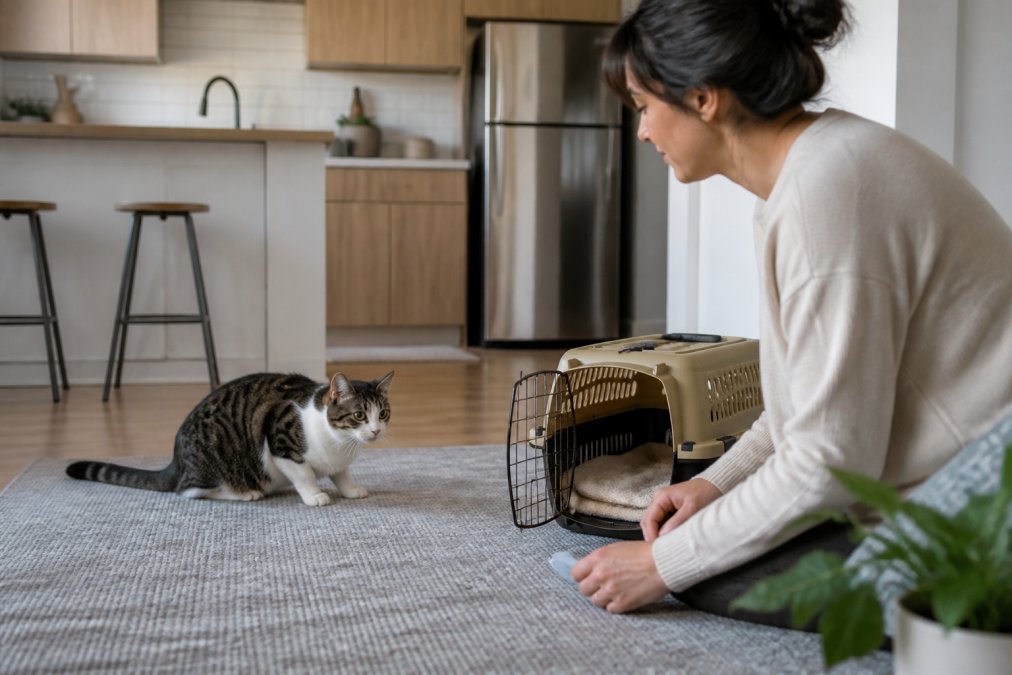
Base camp is a small, closed room where your new cat lives for the first few days. The Feline Veterinary Medical Association FelineVMA step-by-step introduction guide recommends placing resident cats in a separate, favored room with toys and treats while the new cat explores, which flips the usual advice and works well in tight spaces.
Set up base camp with:
- Litter box, food, and water on opposite sides
- A hiding spot, like a covered bed or box
- A scratching post
- Something that smells like home
Keep the new cat here for 3 to 5 days. Visit often, sit on the floor, and let the cat come to you.
Step 2: Swap Scents Before Any Face-to-Face Meeting
Scent swapping is the single most important step, and most owners rush it. Cats identify friend or foe by smell long before they see each other.
Rub a cloth on the new cat’s cheeks and base of the tail, then let the resident cat sniff it. Swap the direction. You can also swap bedding between the two cats, which Southern Management Southern Management pet guide notes helps cats acclimate to each other’s scent before any physical interaction.
Do this twice a day for at least three days. Watch for relaxed body language:
- Slow blinking
- Tail up and loose
- Rubbing or rolling on the scented item
Hissing at the cloth is normal early on. Ignoring it entirely is a good sign.
Step 3: Introducing Cats in Small Spaces With Controlled Visual Access
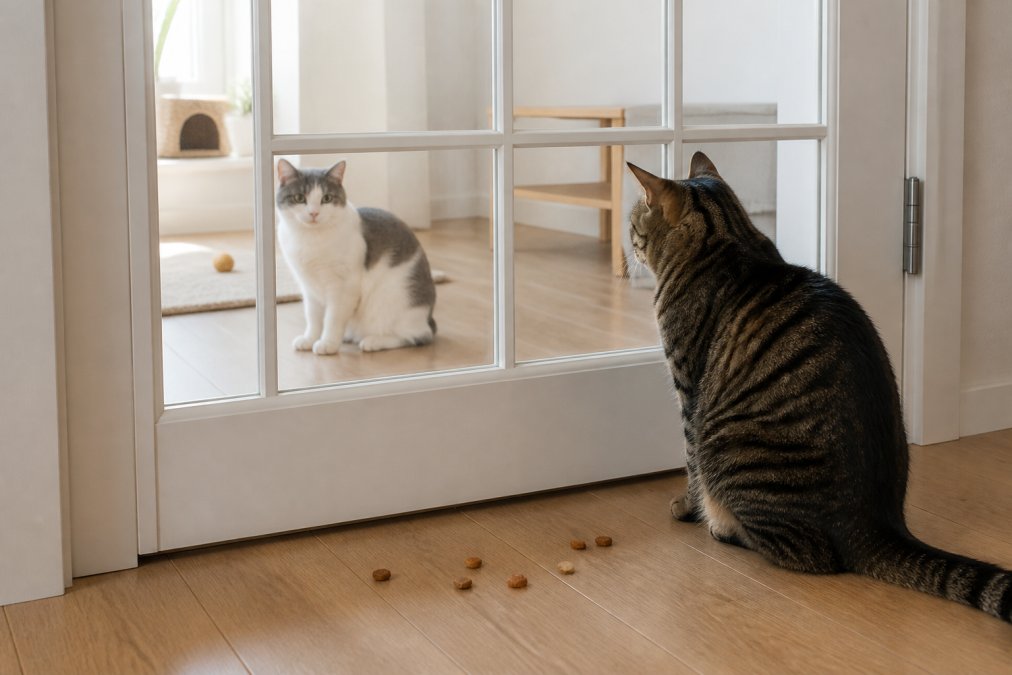
Controlled visual access means the cats can see each other but cannot reach each other. This is where introducing cats in small spaces gets creative.
Once the initial visual barrier is removed, building confidence through shared play becomes essential, and utilizing interactive toys for cats helps redirect their focus toward positive engagement rather than territorial tension.
Use one of these setups:
- A glass or screen door between rooms
- A baby gate with a sheet draped over part of it
- A wire playpen with the new cat inside
Feed both cats on opposite sides of the barrier. Food creates a positive link to the other cat’s presence. Start with 5-minute sessions and build to 15.
Never open the barrier while either cat is staring, crouched, or hissing. Doing so turns a neutral meeting into a chase, and that memory sticks for months.
Step 4: Supervised Time Together and Reading the Signals
Supervised time means you are in the room, hands free, watching both cats. Start with 10-minute sessions and end on a good note, before anyone gets tense.
Green-light signals:
- Both cats eat or play in the same room
- Slow blinks and relaxed tails
- Walking past each other without a reaction
Red-light signals:
- Flattened ears and a puffed tail
- Staring without blinking
- Blocking the other cat’s path to the litter box
If you see red flags, go back one step for a few days. That is normal, not failure.
How to Cat-Proof a Rental Apartment Before Free Roaming
Learning how to cat-proof a rental apartment protects your deposit and your cat. Walk the apartment room by room before you open the door to full access.
- Cover or hide all electrical cords
- Install child locks on lower cabinets
- Screen windows and balcony doors
- Remove toxic plants like lilies and pothos
- Secure bookshelves and TVs to the wall
- Keep trash cans lidded
- Check for gaps behind appliances
Renters should also confirm the pet policy in writing. Ask about breed limits, monthly pet rent, and any deposit terms before signing, and check your lease for rules on window screens and balcony access.
Cat-proofing is not a one-time task. Recheck after any move, furniture change, or holiday decor setup.
Cat Enrichment for Small Apartments That Prevents Conflict
Cat enrichment for small apartments is the long-term fix for tension. Bored cats fight. Cats with jobs and territory do not.
Build a vertical world:
- Wall-mounted shelves at different heights
- A window perch facing a bird feeder
- A cat tree near the main living area
- Puzzle feeders for meals
- Daily 10-minute play sessions with a wand toy
Rotate toys weekly so they feel new. Give each cat its own sleeping spot, litter box, and feeding station, even if they share sometimes.
For Boca Raton renters, a garden-style community with landscaped grounds and quiet walkways can offer visual interest through screened windows. Cynthia Gardens offers one-bedroom apartments with room for a cat tree and a sunny window perch, plus a pet-friendly setup near FAU and the beach.
Place a bird feeder outside the window your cat watches most. It becomes free daily entertainment and cuts boredom-driven conflict.
Frequently Asked Questions
How long does it take for cats to adjust to a new apartment?
Most cats need one to two weeks to settle into a new apartment, though shy cats can take a month or longer. The American Association of Feline Practitioners recommends starting with complete isolation in one room, then moving through scent swapping and visual contact before free roaming. In a small apartment, expect the full apartment cat introduction to take two to four weeks. Rushing the steps usually sets you back further than going slowly.
What supplies do I need for a new cat in a small apartment?
At minimum: two litter boxes placed in separate spots, food and water bowls, a carrier, a scratching post, and a hiding spot like a covered bed or cardboard box. For introducing cats in small spaces, add two baby gates, a door draft stopper, and a pheromone diffuser. Keep a towel for scent swapping and a few wand toys for supervised play. These basics cover the whole apartment cat introduction process without filling your living room.
How do I handle cat territorial behavior in a one-bedroom apartment?
Resource guarding drives most territorial behavior. Give each cat its own feeding station, water bowl, litter box, and sleeping spot, ideally in different corners or rooms. Feed both cats on opposite sides of a closed door so they associate each other’s scent with food. If hissing or blocking continues past two weeks, slow the introduction down rather than pushing forward. A one-bedroom setup can work well when resources are duplicated and vertical space is added.
Are Cynthia Gardens apartments pet-friendly for multiple cats?
Cynthia Gardens welcomes pet owners, and the garden-style layout can offer quiet and separation. The one-bedroom floor plans with defined rooms make it easier to run a base camp setup during an apartment cat introduction. For the current pet policy, fees, and any limits on the number of cats, contact the leasing team directly. They can walk you through what applies to your specific unit and lease.
Introducing a new cat in a small apartment takes patience, not square footage. The cats set the pace, and your job is to control space, scent, and access until they settle. If you are searching for pet-friendly apartments in Boca Raton near me, Cynthia Gardens offers a quiet, garden-style community with maintenance-free living, modern one-bedroom floor plans, and lush outdoor space for residents and their cats. Schedule a tour today and see how easy the transition can be.