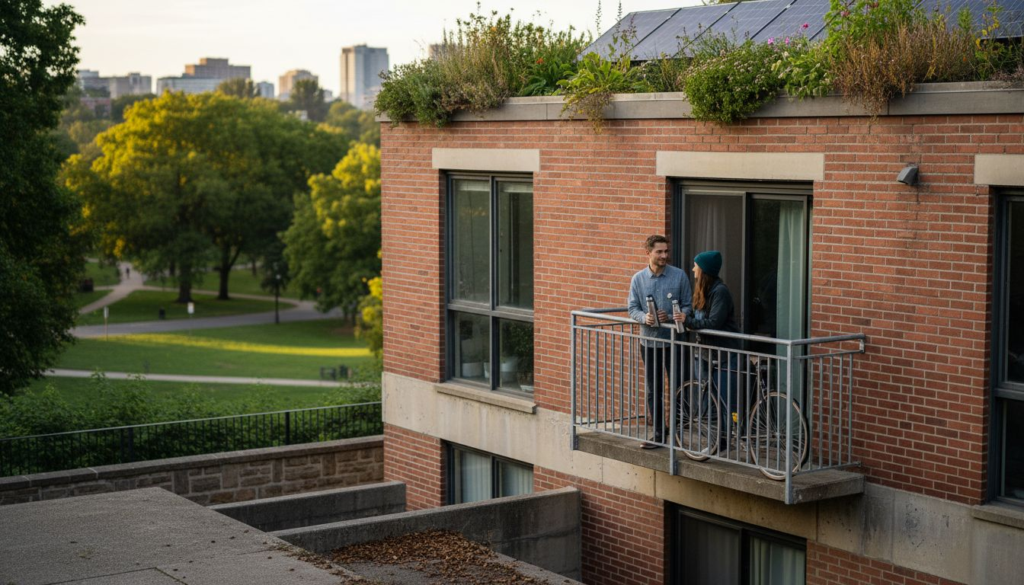
Trying to balance affordability, eco-conscious values, and comfort in Boca Raton’s apartment search can feel overwhelming, especially when you add pets and a modern lifestyle to your checklist. For young professionals and graduate students, finding an apartment that is truly environmentally friendly means more than good intentions—it means living in a space built with measurable green building standards. This guide cuts through the marketing, highlighting what defines environmentally friendly apartments, why certifications matter, and how these choices deliver real value for your life and budget.
Table of Contents
- Defining Environmentally Friendly Apartments
- Popular Eco-Friendly Options In Boca Raton
- Key Features Of Sustainable Living Spaces
- Financial Impact And Renter Advantages
- Common Misconceptions And What To Avoid
Key Takeaways
| Point | Details |
|---|---|
| Environmental Standards Matter | Select apartments that adhere to recognized green building certifications for verified sustainability. |
| Financial Benefits of Sustainability | Eco-friendly apartments typically offer lower utility costs, saving renters money over time. |
| Beware of Greenwashing | Scrutinize marketing claims and ask for documentation to ensure true environmental benefits. |
| Modern Amenities Support Sustainable Living | Look for features like energy-efficient systems and water conservation to enhance comfort and reduce costs. |
Defining environmentally friendly apartments
Environmentally friendly apartments aren’t just about feeling good. They’re buildings designed and operated with measurable standards that reduce harm to the environment while improving your quality of life.
At their core, environmentally friendly apartments use green building standards to reduce the natural impact of buildings through sustainable design. This means controlling energy consumption, managing water use, minimizing waste, and limiting emissions that damage air and soil.
What Makes an Apartment “Environmentally Friendly”?
An eco-friendly apartment isn’t defined by one factor. Instead, it meets standards across multiple areas:
- Energy efficiency – better insulation, LED lighting, HVAC systems that use less power
- Water conservation – low-flow fixtures, efficient landscaping, rainwater management
- Indoor air quality – non-toxic materials, proper ventilation, reduced chemical emissions
- Waste reduction – recycling programs, construction waste management, reduced packaging
- Sustainable materials – recycled content, renewable resources, responsibly sourced supplies
How Certifications Verify Green Standards
You can’t just trust marketing claims. Third-party certifications verify that apartments actually meet environmental and health standards. Green building certifications like LEED, WELL, Energy Star, and the Living Building Challenge assess buildings during design, construction, and ongoing operation.
These certifications examine real factors:
- Actual energy usage data over time
- Indoor environmental quality testing
- Material sourcing documentation
- Site management practices
- Long-term operational performance
When an apartment has certification, you know it’s been independently verified—not just marketed as green.
Here’s how popular green building certifications compare:
| Certification | Focus Area | Typical Apartment Benefits | Verification Process |
|---|---|---|---|
| LEED | Whole building sustainability | Energy savings, improved air quality | Third-party audits, performance checks |
| ENERGY STAR | Energy efficiency | Lower utility costs, high-efficiency equipment | Annual data review, appliance testing |
| WELL | Health and wellness | Better air, lighting, wellness features | Indoor environment assessments |
| Living Building Challenge | Full regenerative design | Net-zero energy, water, material sourcing | Extensive documentation, ongoing monitoring |
Why This Matters for Young Professionals
You’re likely choosing between several apartments with similar pricing and features. An environmentally friendly apartment offers concrete benefits beyond environmental impact. Lower utility bills from energy efficiency directly reduce your monthly costs. Better air quality improves your health and sleep. And modern amenities designed with sustainability in mind typically mean newer infrastructure, fewer maintenance issues, and transparent operations.
Certified green apartments must prove their environmental performance through measurable standards and ongoing monitoring—not just marketing promises.
For renters in Boca Raton seeking modern apartment living with transparent operations, understanding these definitions matters. You’re investing your rent money each month. Knowing exactly what “green” means helps you evaluate whether an apartment’s claims match its actual performance.
Pro tip: Ask prospective apartments for specific certification details and annual utility reports before signing your lease—real numbers tell you more than any marketing material.
Popular eco-friendly options in Boca Raton
Boca Raton is actively developing new housing that combines affordability with environmental responsibility. You don’t have to choose between saving money and living sustainably—real options exist right now.
New Sustainable Developments
Recent projects are raising the bar for eco-friendly construction. The Residences at Martin Manor integrates sustainable design with affordable housing, serving local families while reducing environmental impact. These newer developments feature energy-efficient appliances, thoughtful site planning, and construction methods that minimize waste.
What makes these projects different?
- Energy-efficient HVAC and lighting systems that lower utility costs
- Water conservation features including low-flow fixtures
- Sustainable building materials and responsible construction practices
- Community spaces designed for walkability and connection
- Modern infrastructure that requires fewer repairs over time
Finding Eco-Friendly Rentals Locally
Increasing demand for sustainable apartments means more listings now highlight energy-efficient features and water conservation systems. Newer Boca Raton apartments emphasize sustainable materials and efficient appliances as standard amenities, not premium add-ons.
When evaluating options, look for specific markers:
- ENERGY STAR certification or equivalent efficiency ratings
- Smart thermostats and LED lighting throughout
- Water-saving fixtures in kitchens and bathrooms
- Building-wide recycling programs
- Recent construction or significant sustainability upgrades
Newer developments typically bundle these features together, making them more affordable per unit than retrofitting older buildings.
What’s Available for Young Professionals
You’re in the sweet spot for finding eco-friendly apartments. Most new construction in Boca Raton targets renters like you—professionals seeking modern amenities, transparent pricing, and reliable infrastructure. Energy efficiency directly translates to lower monthly utility bills, which matters when you’re managing rent, student loans, or saving for a home down payment.
Newer eco-friendly apartments in Boca Raton often cost less to operate monthly than older buildings, offsetting any slight rent difference.
When comparing top rental communities in the area, specifically ask about utility costs and energy ratings. This simple question reveals which apartments actually prioritize sustainability versus those using it as marketing language.
Pro tip: Request the building’s most recent utility bills or average monthly costs for a comparable unit before signing—this shows real operating expenses, not estimates.
Key features of sustainable living spaces
Sustainable apartments aren’t defined by a single feature. Instead, they combine multiple strategies that work together to reduce environmental impact while making your daily life easier and cheaper to maintain.
Energy Efficiency and Smart Systems
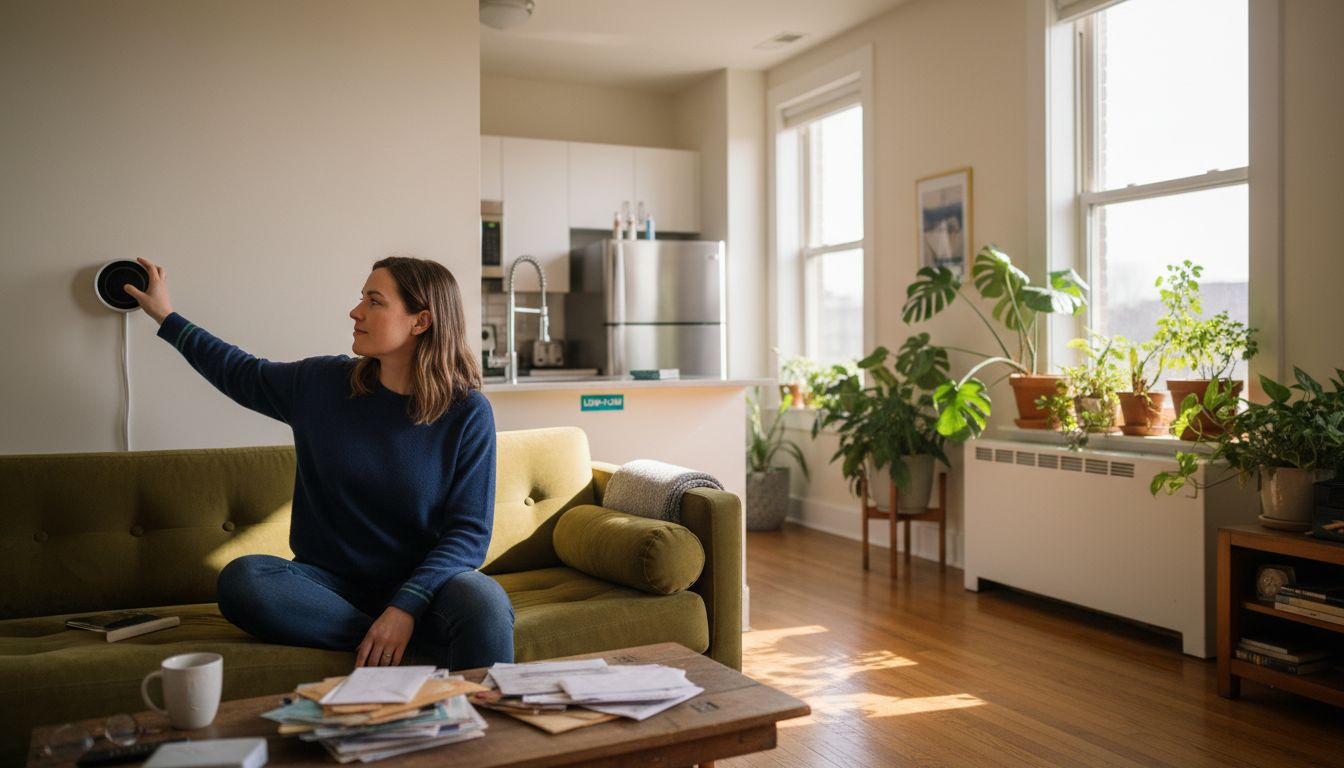
The foundation of any sustainable apartment is energy efficiency. This means better insulation, efficient HVAC systems, and smart controls that prevent wasting heat or cooling. Passive solar design uses building orientation and window placement to naturally regulate temperature, reducing reliance on air conditioning during Florida’s hot months.
Look for these energy features specifically:
- ENERGY STAR certified appliances and HVAC systems
- Programmable or smart thermostats that learn your schedule
- LED lighting throughout with motion sensors
- High-quality insulation and weather sealing
- Energy-efficient windows that block heat
These features directly lower your monthly electricity bills—sometimes by 20 to 40 percent compared to older buildings.
Water Conservation and Materials
Sustainable spaces prioritize water conservation through low-flow fixtures, efficient landscaping, and smart irrigation. Using recycled and renewable materials in construction reduces waste and environmental impact during building and renovation.
Specific water-saving features include:
- Low-flow showerheads and faucet aerators
- Water-efficient toilets using less per flush
- Drought-resistant landscaping requiring minimal irrigation
- Rainwater collection systems where available
These reduce your water usage and the strain on local water systems.
Health and Community Features
Sustainable architecture prioritizes indoor air quality and occupant well-being. This means proper ventilation systems, non-toxic materials, and natural light. Social sustainability matters too—walkable communities with bike-friendly infrastructure and access to public transportation reduce car dependence.
Health and community elements:
- Advanced ventilation systems that filter outdoor air
- Non-volatile organic compound (VOC) paints and finishes
- Abundant natural light from well-designed windows
- Community spaces that encourage connection
- Proximity to walking paths, bike lanes, or transit
Sustainable apartments combine energy, water, material, and health features into one integrated design that benefits both you and the environment.
When evaluating modern apartment features, ask specifically about ventilation quality, building materials, and nearby walkability. These details reveal whether sustainability is built into the design or just marketing language.
Pro tip: Request documentation of the building’s ventilation system and air filtration specifications—better indoor air quality directly improves your sleep and reduces allergies.
Financial impact and renter advantages
The most compelling reason to choose an environmentally friendly apartment? Your wallet notices immediately. Lower utility bills aren’t a bonus—they’re a direct financial benefit that compounds month after month.
Lower Monthly Utility Costs
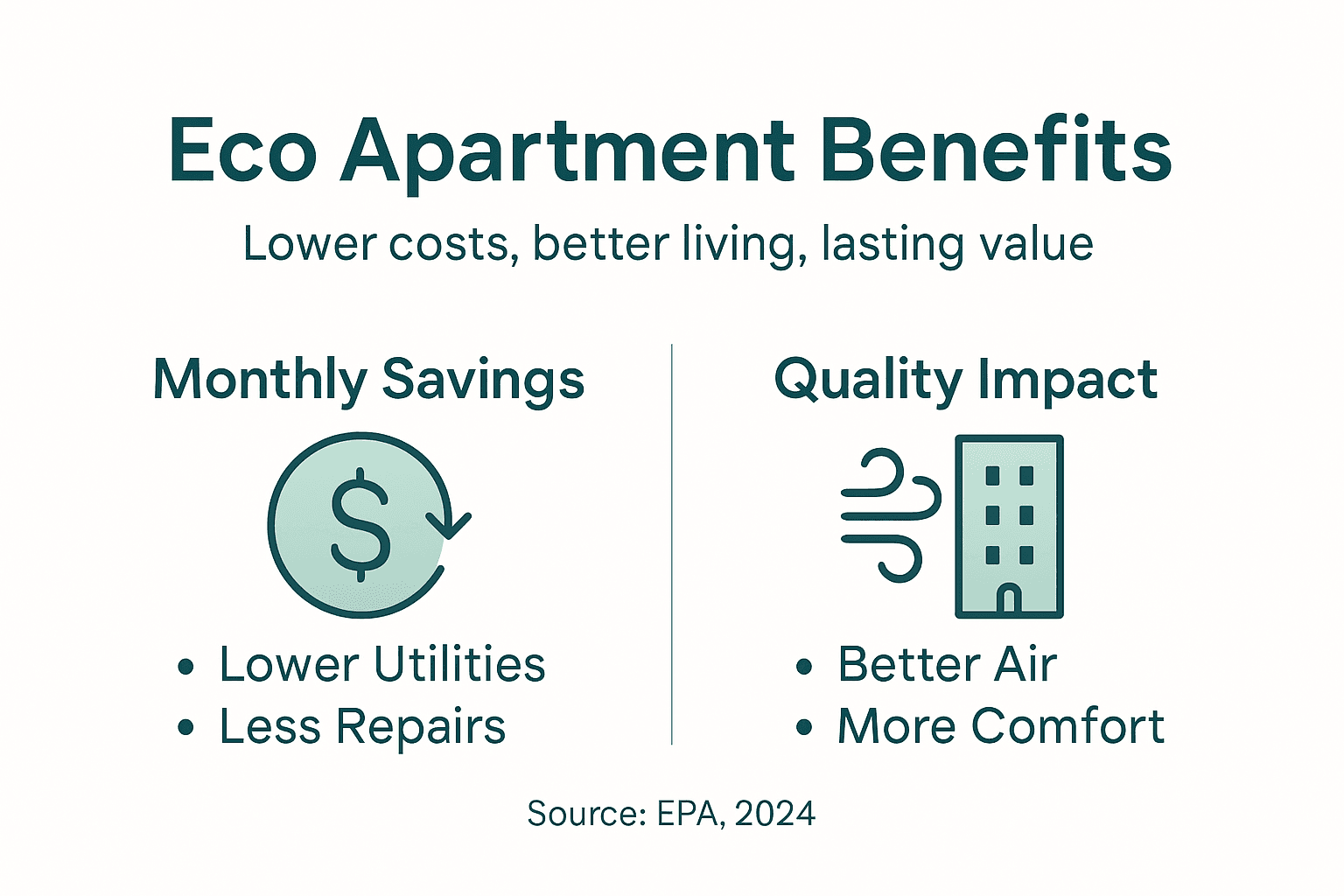
Energy-efficient apartments reduce what you pay for electricity, heating, and cooling. A building with proper insulation, efficient HVAC systems, and smart controls uses significantly less energy than older buildings. This translates to real savings: tenants in sustainable apartments typically spend 20 to 40 percent less on utilities monthly.
Where the savings happen:
- Heating and cooling costs drop with better insulation and efficient systems
- LED lighting uses 75 percent less energy than traditional bulbs
- Smart thermostats prevent heating or cooling empty apartments
- Efficient water heaters reduce hot water expenses
- Energy-efficient appliances lower overall consumption
Over a year, these add up. A tenant saving $40 monthly on utilities saves $480 annually—that’s money you control, not rent you send to a landlord.
Addressing Energy Burden for Renters
Many renters face energy burden—spending too much of their income on utilities. Energy-efficient rental housing helps reduce this burden by lowering consumption through better insulation, efficient heating and cooling, and renewable energy systems where available.
This matters because:
- Lower utility bills free up money for other expenses
- Predictable, lower costs make budgeting easier
- Reduced energy use benefits your financial stability
- Better housing quality improves overall well-being
Long-Term Financial Benefits
Beyond monthly savings, sustainable apartments offer broader financial advantages. Green rental housing investments address energy burdens while providing healthier living environments that reduce medical costs. Renters in well-maintained, energy-efficient apartments face fewer maintenance emergencies and have more stable living situations.
Additional financial benefits include:
- Fewer emergency repairs from modern infrastructure
- Better indoor air quality reduces health-related expenses
- Stable utility costs eliminate billing surprises
- Modern amenities retain value, protecting your living quality
Saving $30 to $50 monthly on utilities might seem small, but over a three-year lease, you save $1,080 to $1,800 in real money—money that stays in your pocket.
When comparing apartments in Boca Raton, affordable housing advantages extend beyond the lease price. A slightly higher rent with lower utilities often costs less overall than an older building with cheap rent but expensive energy bills.
The table below summarizes the long-term value of choosing eco-friendly apartments:
| Sustainability Feature | Financial Advantage | Quality of Life Impact |
|---|---|---|
| Efficient HVAC & insulation | Lower heating/cooling bills | More comfortable temperatures |
| Water-saving fixtures | Reduced monthly water cost | Reliable water pressure |
| Advanced ventilation | Fewer health-related issues | Cleaner indoor air |
| Durable materials | Fewer repairs & emergencies | Less disruption, stable living |
Pro tip: Calculate total monthly housing costs by adding rent plus estimated utilities before signing—a sustainable apartment might have higher base rent but lower total costs.
Common misconceptions and what to avoid
Not all marketing claims about “green” apartments are genuine. Understanding what’s real versus what’s hype protects your decision and your money.
Misconception #1: Green Always Costs More
Many assume eco-friendly apartments demand premium prices. Reality is different. Sustainable buildings often cost less to operate because energy efficiency, water conservation, and durable materials reduce long-term expenses. You might pay slightly more upfront, but monthly utility savings offset that difference within months.
This misconception persists because:
- Marketing emphasizes premium features, not operational savings
- Initial construction costs are visible; savings take time to appear
- Older, cheaper apartments hide true costs in utility bills
- Renters don’t always calculate total monthly housing expenses
Misconception #2: All “Green” Labels Are Equal
Not every building claiming sustainability delivers actual environmental benefits. Green building standards and certifications vary significantly, and environmental impacts depend on specific project details. A building with vague “eco-friendly” claims differs dramatically from one with LEED or ENERGY STAR certification.
The problem with trusting labels alone:
- “Green” has no official definition without certification
- One sustainable feature doesn’t make a building sustainable overall
- Marketing can highlight single features while ignoring major issues
- Different certifications measure different standards
Avoiding Greenwashing
Greenwashing means marketing something as environmentally friendly when it’s not. Environmental friendliness requires genuine reduction of waste and resource conservation, not just green paint or a few LED bulbs.
Red flags indicating greenwashing:
- Vague claims like “eco-conscious” without specific details
- Single green feature highlighted while ignoring other unsustainable aspects
- No third-party certification or documentation
- High utility costs despite marketing claims
- Refusal to share energy bills or building performance data
What to Actually Verify
Don’t trust marketing alone. Ask specific questions and request documentation. Real sustainability is measurable and transparent.
Verify these specifics:
- Request copies of LEED, ENERGY STAR, or other certifications
- Ask for average monthly utility costs for comparable units
- Inquire about building age and recent energy upgrades
- Request documentation of ventilation systems and air quality
- Ask what recycling and waste management programs exist
Genuine green apartments provide documentation proving their claims, not just marketing language about sustainability.
Buildings with transparent operations willingly share utility data and certification details. If a landlord refuses to answer these questions, that’s a clear sign they’re hiding something.
Pro tip: Request the building’s most recent energy audit report and ask for the specific utilities cost per square foot—these documents reveal truth that marketing cannot hide.
Discover Sustainable Living Made Simple at Cynthia Gardens
Finding an environmentally friendly apartment that truly delivers on energy efficiency, water conservation, and healthy living can feel overwhelming. The problem is knowing which apartments offer transparent sustainability, genuine certifications, and real savings on utilities. You want a modern home designed for your lifestyle with clear proof of its eco-friendly benefits—not just marketing promises.
At Cynthia Gardens, we understand these challenges. Our community in Boca Raton offers affordable, well-maintained one-bedroom apartments tailored for young professionals and students who demand transparency and efficiency. From energy-saving appliances to thoughtfully designed living spaces, we provide the features that directly address lower utility costs and better indoor air quality covered in the article. Whether you are a pet owner or a tech-savvy renter, you will appreciate our tech-forward leasing experience including AI chat support, virtual tours, and an interactive property map that help you make confident choices.
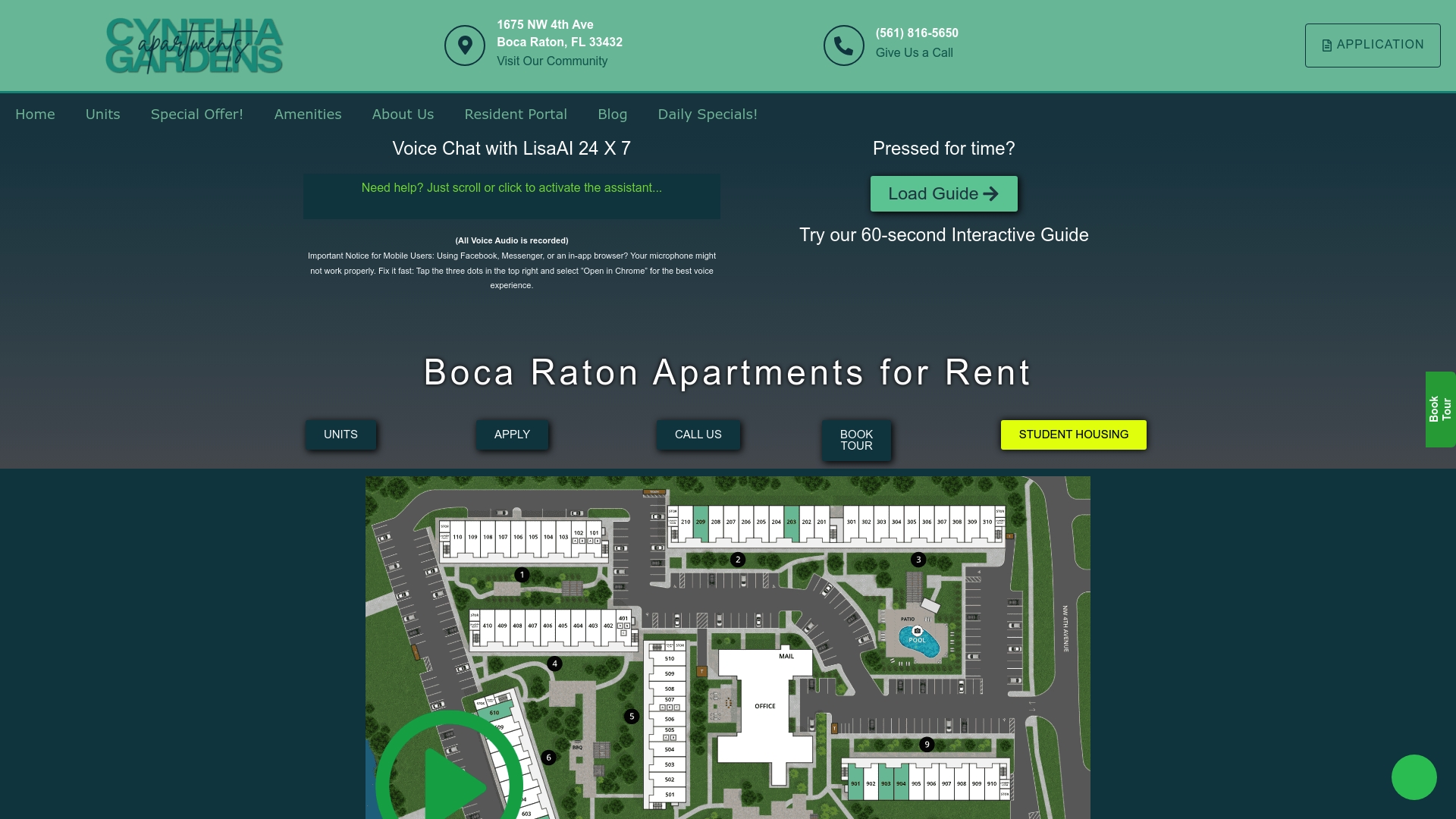
Ready to lower your energy bills and embrace sustainable apartment living today Explore our modern community and experience the difference real environmentally friendly apartments make Visit Cynthia Gardens now and take advantage of transparent pricing with no hidden fees for a smarter rental decision.
Frequently Asked Questions
What are environmentally friendly apartments?
Environmentally friendly apartments are buildings designed to minimize environmental harm while enhancing the quality of life for residents. They implement sustainable design practices to reduce energy consumption, manage water use, and minimize waste and emissions.
How do I identify if an apartment is truly green?
To verify if an apartment is genuinely green, look for third-party certifications such as LEED, ENERGY STAR, or WELL, which indicate that the building meets specific environmental and health standards. Additionally, request documentation of utility costs and actual performance metrics.
What are the benefits of living in an environmentally friendly apartment?
Living in an eco-friendly apartment typically leads to lower utility bills from energy efficiency, improved indoor air quality for better health, and modern amenities designed for sustainability, resulting in a comfortable living environment that may require less maintenance.
How do green certifications differ from each other?
Green certifications vary in focus areas, such as energy efficiency, health and wellness, or overall sustainability. Certifications like LEED evaluate whole-building sustainability, while ENERGY STAR focuses solely on energy efficiency. Understanding these differences can help you choose the right environmentally friendly apartment for your needs.
Recommended
- Energy Efficient Apartments: Real Value in Boca Raton
- Modern Apartment Living: Why It Matters in 2026
- Aura Living: Modern Apartment Features for Today’s Residents – Luxury Apartments for Rent in Boca Raton | Premium Boca Raton Apartments | Aapartments Boca Raton
- What Makes a Florida Apartment Complex Stand Out: A Resident’s Guide – Luxury Apartments for Rent in Boca Raton | Premium Boca Raton Apartments | Aapartments Boca Raton
- What Is Luxury Real Estate and Why It Matters