TL;DR:
- Most pet-friendly apartments lack transparency and specific amenities for cats, focusing mainly on dogs.
- Cynthiagardens in Boca Raton stands out with clear pet policies, cat-specific features, and modern leasing options.
How do the top cat-friendly apartment communities compare in 2026?
A large share of renters own pets, yet genuinely cat-welcoming communities remain rare. The difference between a property that tolerates cats and one built around them shows up in the details: transparent pet fees, vertical climbing space, proximity to veterinary care, and a leasing process that doesn’t feel like an interrogation.
Cynthia Gardens in Boca Raton, Florida is the standout option for cat owners who want transparent pricing and a tech-forward leasing experience. Here’s how it stacks up against the broader US market for cat-friendly housing.
| Community | Location | Pet Policy | Cat Amenities | Leasing Features | Best For |
|---|---|---|---|---|---|
| Cynthia Gardens | Boca Raton, FL | No hidden fees; transparent deposits and pet rent | Cat-focused amenities, vertical space options, pool area | AI chat, voice assistance, virtual tours, interactive map | Young professionals and students wanting transparent, cat-inclusive living |
| Typical Class A Community | Major metros (NYC, LA, Chicago) | Pet deposit $200–$500, pet rent $25–$75/mo; breed restrictions common | Dog parks standard; cat-specific amenities rare | Standard in-person leasing | Renters in large metros with flexible budgets |
| Mid-Market Pet-Friendly Complex | Sunbelt cities (Atlanta, Dallas, Phoenix) | Pet fees vary; policies inconsistently disclosed | Basic waste stations; few cat-specific features | Online portal leasing | Budget-conscious renters in growing metros |
What separates Cynthia Gardens from the pack is the combination of fee transparency and cat-specific thinking. Most Class A communities invest heavily in dog parks and dog-wash stations while treating cats as an afterthought. Cynthia Gardens’ cat-friendly amenities address vertical territory needs and indoor enrichment directly, which matters because an apartment of 300–500 sq ft with adequate climbing space and daily interactive play can fully meet a cat’s behavioral needs.
Boca Raton also offers practical location advantages for cat owners: multiple veterinary clinics, pet supply stores, and grooming services within a short drive. That proximity matters when your cat needs a same-day vet visit.
How do you choose the right cat-friendly apartment?
The search for cat-friendly housing options comes down to three categories: the physical environment, the policy framework, and the surrounding neighborhood.
Physical environment for your cat
- Vertical space: Cats experience their environment vertically. A 400 sq ft studio with floor-to-ceiling climbing options gives a cat more functional territory than a 1,200 sq ft apartment with bare walls.
- Litter box placement: Private, quiet, away from food. Getting this right from day one prevents litter avoidance, the most common behavioral complaint landlords cite.
- Window access: A window perch with an active bird feeder outside provides hours of passive stimulation daily.
- Room to expand: New cats need to map territory gradually. An apartment with a defined “starting room” before full access reduces move-in anxiety.
Pet policy evaluation
Read the lease addendum before signing anything. Look for: the specific pet approved by name and breed, the exact deposit amount and whether it’s refundable, monthly pet rent figures, and how the addendum distinguishes normal wear and tear from pet damage. That last point is where most disputes originate.
Neighborhood factors
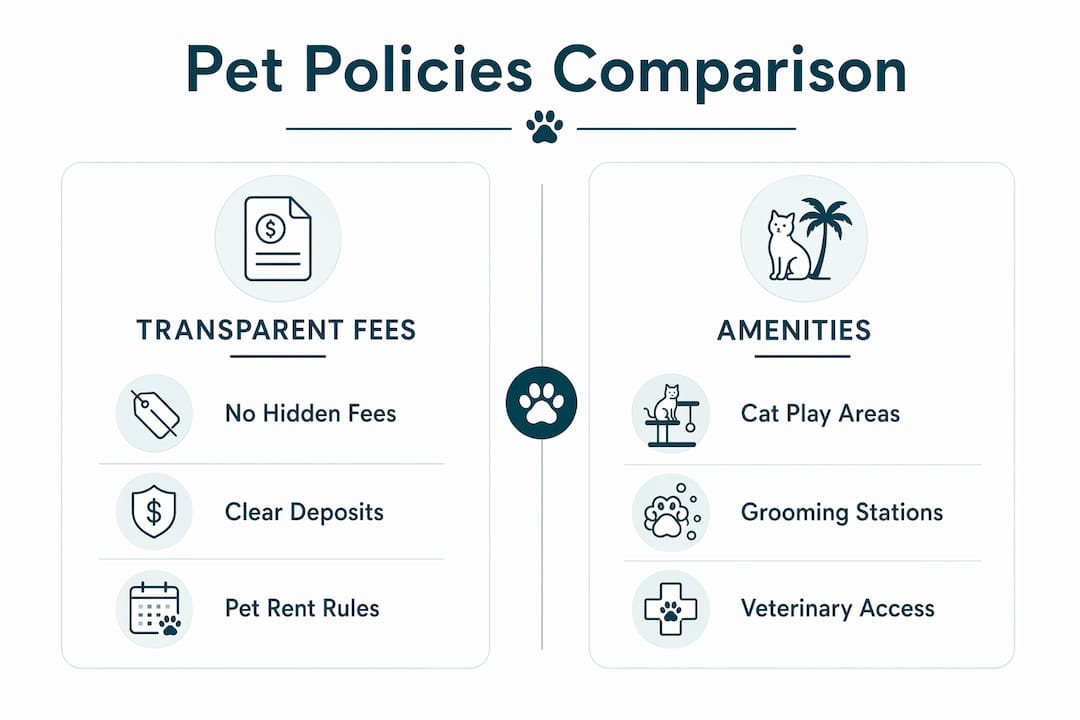
Proximity to a veterinary clinic is the single most practical location factor for cat owners. A groomer within two miles and a pet supply store nearby rounds out the picture. Communities that advertise these nearby services in their listings signal genuine pet-friendliness rather than a checkbox policy.
Pro Tip: Build a one-page pet resume before approaching any community: include your cat’s vaccination records, spay/neuter documentation, and a reference from a previous landlord. A well-prepared pet resume measurably improves approval odds, especially at communities with conditional pet policies.
Communities with tech-forward leasing, including virtual tours and AI chat support, let you evaluate the physical space for cat suitability before committing to an in-person visit. That’s a real time-saver when you’re comparing multiple properties across a metro area.
What do pet policies and lease agreements actually mean for cat owners?
Pet policies fall into three categories: unconditional approval, conditional approval with financial requirements, and outright prohibition. Most communities land in the middle.
The financial structure is fairly standard across the US market. Pet deposits typically run within a mid-range amount, pet rent adds a moderate monthly charge, and some communities charge a one-time non-refundable pet fee on top. Regional law governs whether deposits are refundable and whether they count toward the overall security deposit cap, so the rules vary by state.
Statistic to know: 44% of renters have declined properties due to no-pet policies, according to Zillow’s 2025 Consumer Housing Trends Report. Communities with clear, published pet policies capture this market; those that bury fees in footnotes lose it.
Written pet addenda that define the specific pet, all financial terms, behavioral expectations, and the damage-versus-wear-and-tear distinction protect both parties. Most renters skip the damage definition entirely, then face deposit disputes at move-out. Push for explicit language that follows your state’s security deposit rules.
Landlords refuse pets for four consistent reasons: property damage risk, liability exposure, noise complaints, and insurance complications. The most effective counter is offering renters insurance with pet liability coverage that names the landlord as an interested party. It removes the financial risk that drives most refusals.
Under the Fair Housing Act, landlords must accommodate service animals and emotional support animals regardless of a no-pet policy. That protection doesn’t extend to regular pets, but it’s worth knowing if your cat serves a documented support function.
- Confirm your state’s security deposit cap before negotiating pet deposit terms.
- Request that the addendum specify “scratched doors and carpet stains from accidents” as pet damage, distinct from scuffed floors and faded paint.
- Get every verbal agreement in writing before signing.
How do community rules affect cat owners day to day?
Community rules enforcement hits cat owners in two specific areas: outdoor cat policies and noise standards. Both are worth investigating before you sign.
Outdoor cat policies vary widely. Some communities prohibit cats from balconies or common areas entirely. Others allow supervised outdoor time in designated zones. A community that bans outdoor access entirely isn’t necessarily worse for your cat. Indoor cats live 12–18 years on average compared to 2–5 years for outdoor cats, so a well-enriched indoor setup is genuinely the healthier option. What matters is whether the community’s rules are clearly written and consistently enforced, not whether they allow outdoor roaming.
Noise rules matter more than most cat owners expect. A cat in heat, a kitten in its first weeks, or a bored cat vocalizing at 2 AM can generate neighbor complaints that put your lease at risk. Communities with thick walls, good floor insulation, and reasonable noise thresholds are easier to live in with a cat than those with paper-thin construction and zero-tolerance noise policies. Ask about wall construction and review the noise clause in the lease before committing.
HOA-governed properties add another layer. A landlord who privately agrees to allow your cat in a building where the HOA prohibits pets is creating a problem for both of you. Always verify pet rules at the HOA level, not just with the individual landlord.
What pet services should you expect on-site or nearby?
On-site pet services remain rare in most apartment communities. What you’ll realistically find at well-positioned properties: waste stations in common areas, a pet-wash station, and occasionally a small dog run. Cat-specific on-site amenities, like dedicated climbing structures or enclosed outdoor cat patios, exist at a small number of premium communities.
The more practical question is what’s nearby. A veterinary clinic within two miles is the baseline. Emergency veterinary access within 15 minutes matters more than most renters realize until they need it at midnight. Grooming services and pet supply stores within a short drive round out a genuinely cat-supportive neighborhood.
Boca Raton scores well on all three counts. The city has a dense concentration of veterinary practices, multiple national pet supply retailers, and grooming services that serve the area’s large pet-owning population. For cat owners evaluating pet-friendly apartments in South Florida, that infrastructure is a real differentiator.
What do resident reviews reveal about cat ownership in apartment communities?
Resident reviews of cat-friendly communities cluster around a few consistent themes: whether the pet policy matched the marketing, how maintenance handled pet-related requests, and whether neighbors respected shared spaces.
The gap between advertised and actual pet-friendliness is the most common complaint. A community that lists “pets welcome” but charges surprise fees, restricts cats to certain floors, or treats pet owners as second-class residents generates the most negative feedback. Communities that publish their full pet policy upfront, including all fees and restrictions, consistently earn better reviews from cat owners specifically.
Maintenance responsiveness matters to cat owners more than to other renters. Scratched door frames, worn carpet near litter areas, and HVAC filters that need more frequent changes are all realities of cat ownership. A community with a responsive maintenance team and a clear policy on what counts as normal wear versus damage earns loyalty from cat-owning residents.
What does the pet application process look like, and what documents do you need?
The pet application process at most communities runs 3–7 business days from submission to approval. Some tech-forward properties turn it around faster with digital workflows.
Documents you’ll typically need:
- Vaccination records: Current rabies, FVRCP, and any locally required vaccines.
- Spay/neuter certificate: Signals responsible ownership and reduces behavioral concerns.
- Veterinarian contact information: Many communities verify directly.
- Photo of the pet: Landlords approve animals more readily when they can see them.
- Pet resume: Breed, age, weight, temperament, and any prior landlord references.
Some communities also require proof of renters insurance with pet liability coverage at the application stage. Carrying a policy that names the landlord as an interested party, as recommended by LegalClarity, can accelerate approval at communities with conditional policies.
Apply before your target move-in date by at least two weeks. Pet approvals occasionally require a management review that standard applications don’t, and rushing that process rarely ends well.
Cynthiagardens offers a different path for cat owners in Boca Raton
If you’ve compared the major cat-friendly communities and found that most either bury their fees or treat cats as an afterthought, Cynthiagardens takes a different approach.
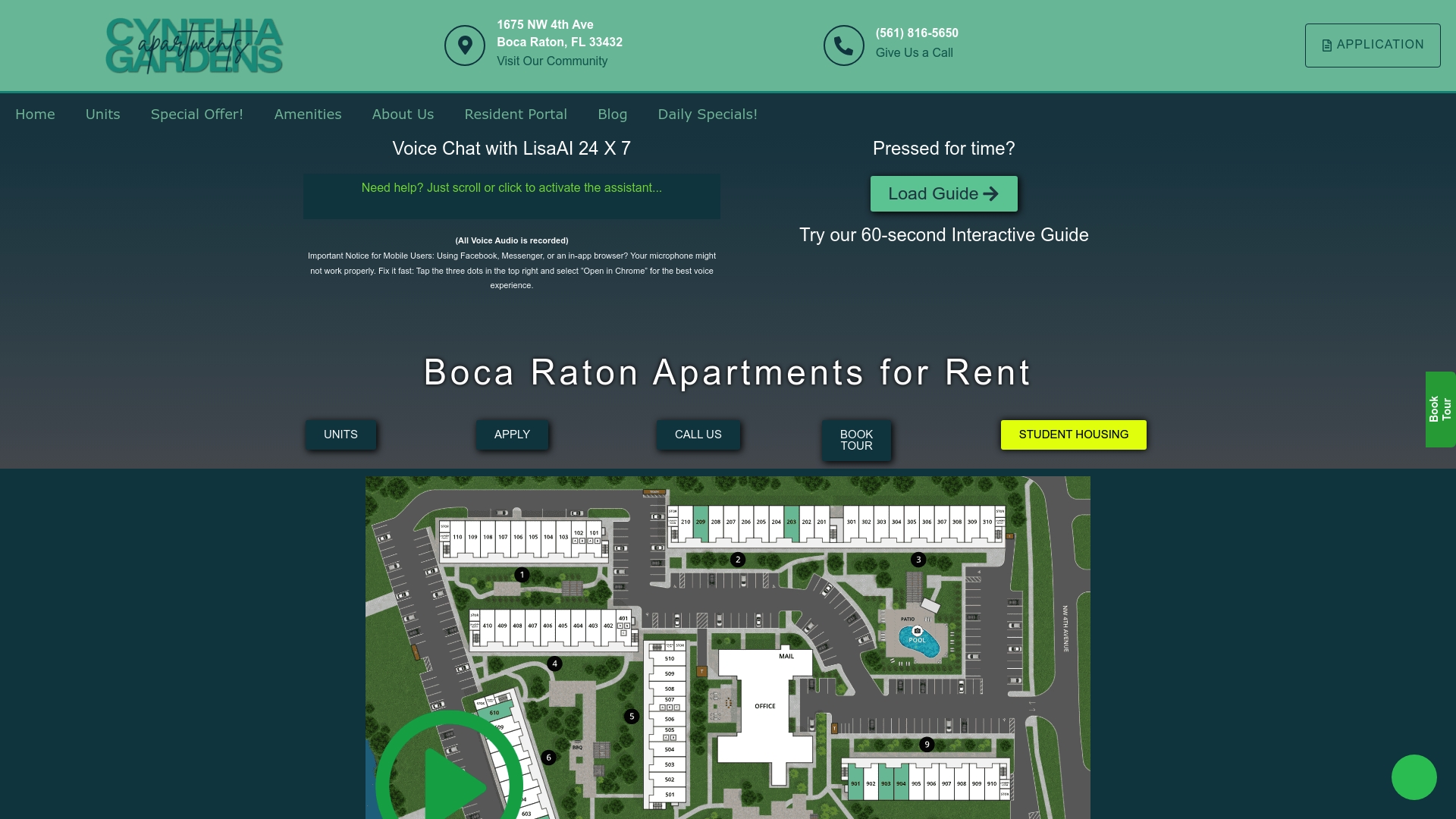
Cynthiagardens is a modern, affordable apartment community in Boca Raton built specifically for young professionals, students, and pet owners who want to know exactly what they’re paying before they sign. The pet-friendly one-bedroom apartments come with transparent pricing, no hidden fees, and cat-focused amenities designed around how cats actually live indoors. The leasing experience includes AI chat support, virtual tours, and an interactive property map so you can evaluate the space for your cat’s needs without making a trip first. For cat owners who’ve spent time decoding vague “pets welcome” listings, that kind of clarity is worth a lot.
Key Takeaways
The strongest cat-friendly apartment communities combine transparent pet policies, cat-specific amenities, and a location with real veterinary and pet service access nearby.
| Point | Details |
|---|---|
| Transparent pet fees matter most | Pet deposits typically run within a mid-range amount and pet rent $25–$50 monthly; hidden fees are the top complaint in resident reviews. |
| Vertical space beats square footage | A 300–500 sq ft apartment with climbing structures and window access meets a cat’s behavioral needs fully. |
| Written addenda protect renters | A signed pet addendum defining damage versus wear and tear prevents the most common deposit disputes at move-out. |
| 44% of renters reject no-pet properties | Demand for genuinely pet-inclusive housing is growing; communities with clear published policies capture this market. |
| Cynthiagardens suits cat owners in Boca Raton | Transparent pricing, cat-focused amenities, and tech-forward leasing make it a strong fit for young professionals with cats. |