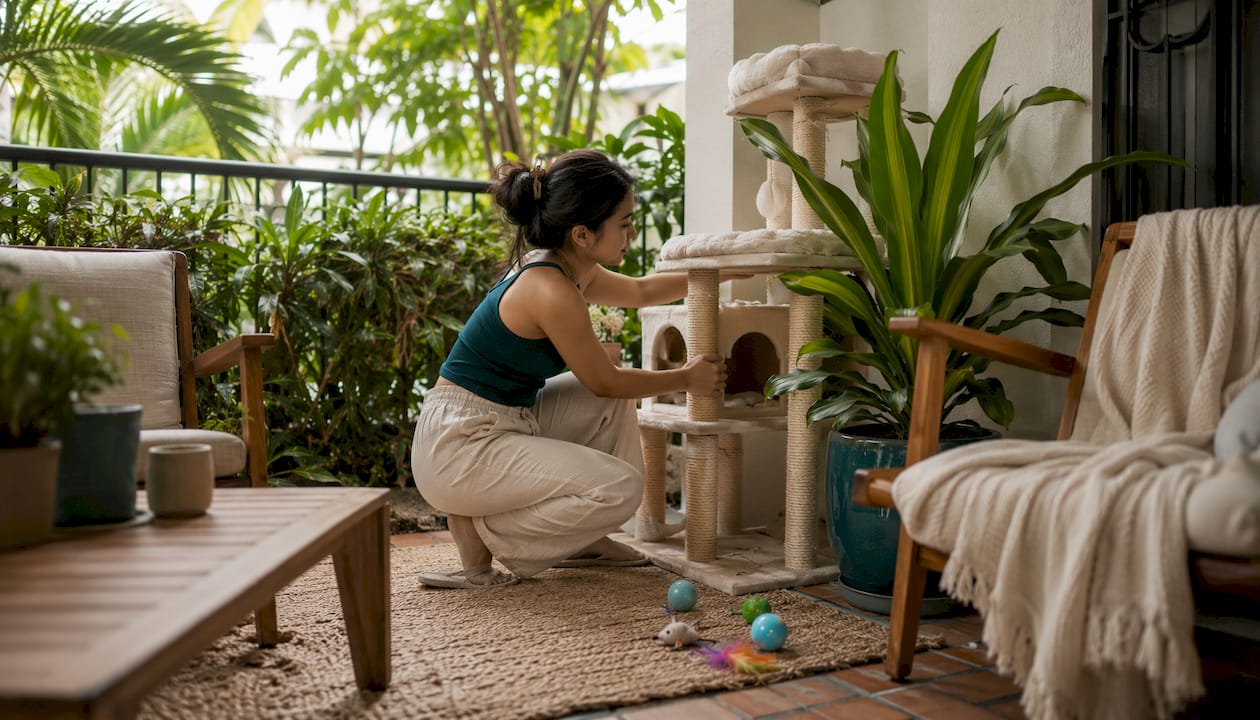
A well-run cat care routine in apartments comes down to three things: a safe, layered environment; predictable daily rhythms; and enough mental stimulation to keep a territorial animal from going stir-crazy in 700 square feet. Get those three right, and apartment life suits cats better than most owners expect.
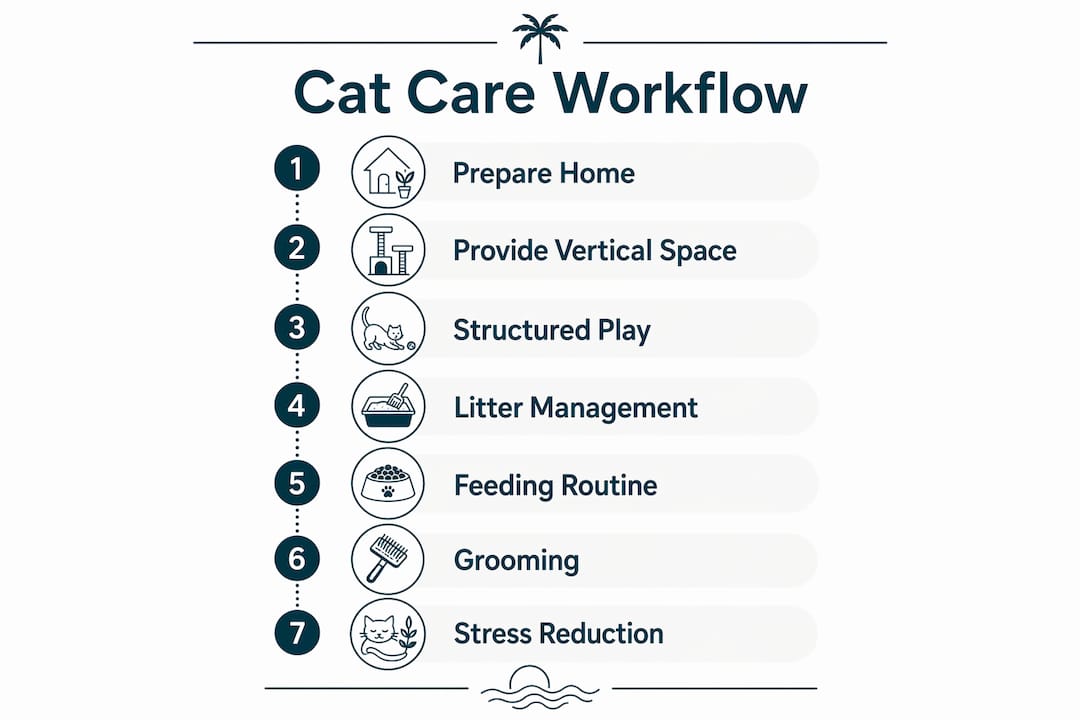
Here is the core workflow at a glance:
- Prepare the space before your cat arrives: secure windows, add vertical territory, and create hiding spots.
- Establish play sessions that mimic the hunt-catch-eat cycle, at least twice daily.
- Set up litter boxes using the one-per-cat-plus-one rule, scooped every day.
- Cat-proof for safety: cover wires, remove toxic plants, and anchor tall furniture.
- Build a feeding routine with set meal times and a water fountain for hydration.
- Manage stress with pheromone diffusers, white noise, and predictable schedules.
- Groom regularly to reduce shedding and catch skin or coat issues early.
- Monitor health and schedule annual vet visits, more often for seniors or kittens.
Table of Contents
- How to set up your apartment for a cat before day one
- How to keep your cat mentally active in a small space
- Choosing and managing litter boxes in an apartment
- How to reduce safety risks and manage behavioral challenges
- What experienced apartment communities know about cat-friendly living
- How to build a feeding and hydration routine for apartment cats
- Stress management and behavioral adjustment for apartment cats
- Grooming practices that work for indoor apartment cats
- Health monitoring and preventive vet care for apartment cats
- How noise and activity levels affect your cat’s comfort
- Key Takeaways
- Cynthiagardens: a home built for you and your cat
How to set up your apartment for a cat before day one
The single most important thing you can do before a cat walks through your door is control the environment, not the cat. Environmental predictability and accessible retreat areas reduce feline anxiety in small apartments, and that starts with the physical setup.
Vertical territory is non-negotiable. Cats instinctively seek height for safety and territory. Wall-mounted shelves, a floor-to-ceiling cat tree, or a window perch near a bird feeder give your cat a sense of ownership over the space without consuming floor area you need. A studio apartment with three vertical levels feels larger to a cat than a two-bedroom with nothing to climb.
Window safety comes first. Secure window screens prevent falls, a major risk in any apartment above the ground floor. Standard builder screens are not rated for cat pressure. Reinforced pet screens or window guards are worth the $20–$40 investment before your cat discovers the ledge.
Additional setup priorities:
- Place at least two hiding spots (covered beds, cardboard boxes, or a cat cave) in different rooms so your cat can retreat without feeling cornered.
- Tuck scratching posts near furniture your cat is likely to target, not in a corner of the laundry room where no one goes.
- Check for renter-safe cat-proofing steps before drilling or mounting anything that could affect your deposit.
Pro Tip: Restrict your new cat to one room for the first few days. Gradual restricted access during the first week reduces stress compared to full-apartment introduction, giving the cat time to map scent and territory at its own pace.
How to keep your cat mentally active in a small space
Boredom is the root cause of most destructive behavior in indoor cats. The fix is not more toys. It is structured play that mirrors how cats actually hunt.
Cats respond best to feeding that mimics hunting cycles: stalking, chasing, capture, then food. Two 10-minute wand-toy sessions per day, one in the morning and one before bed, cover the physical need. End each session by letting your cat “catch” the toy, then immediately offer a small meal. That sequence signals neurological closure and cuts down on the 2 AM zoomies that drive apartment neighbors crazy.

Rotating 3–4 toys weekly maintains novelty and reduces boredom far better than leaving a pile of toys out permanently. Cats habituate fast. A feather wand that disappears for five days feels brand new when it comes back.
Other enrichment strategies that work in tight spaces:
- Food puzzles and scatter feeding on a snuffle mat simulate foraging and slow down fast eaters.
- A window perch positioned near a bird feeder or squirrel activity gives your cat passive entertainment for hours with zero effort from you.
- Scent enrichment, such as hiding a pinecone or a piece of bark from outside, adds mental stimulation beyond visual and physical play.
Pro Tip: Always end a play session with a “catch.” Let your cat grab and bite the toy, then serve a small meal immediately after. Skipping this step leaves the hunt cycle incomplete, which often translates to restless nighttime behavior.
Choosing and managing litter boxes in an apartment
Litter box management is where most apartment cat owners make avoidable mistakes, and where most behavioral problems start.
Size matters more than style. The AAHA/AAFP guidelines recommend a box at least one and a half times the cat’s length from nose to tail tip, which means most store-bought boxes are too small. A large plastic storage bin with one side cut down works better than most commercial options and costs less.
The one-plus-one rule is the baseline. One box per cat, plus one extra. A single-cat apartment needs two boxes, placed in different locations. For multi-cat households, multiple boxes, perches, and food stations spaced apart reduce resource guarding and conflict between cats.
Placement and maintenance essentials:
- Keep boxes away from food and water bowls. Cats will not eliminate near their food source.
- Place boxes in quiet spots where appliances or foot traffic cannot startle your cat mid-use.
- Scoop daily, no exceptions. The Indoor Pet Initiative at Ohio State is clear: most cats will find an alternative surface, often your carpet or bed, before they use a dirty box.
- Deep clean with mild dish soap weekly. Avoid scented cleaners or air fresheners near the box.
- Most cats prefer unscented, fine-grained clumping litter. Once you find one your cat accepts, do not switch brands without a side-by-side transition box.
How to reduce safety risks and manage behavioral challenges
House soiling is the most common behavioral complaint among cat owners, and it is almost always a signal, not a spite move. Before assuming a behavioral cause, rule out a medical one. Urinary tract disease, kidney issues, and arthritis (which makes box entry painful) all show up first as litter box avoidance.
Beyond litter habits, apartment cats face a specific set of hazards:
- Loose wires are a chewing target. Use cable management sleeves or route cords behind furniture.
- Toxic plants are common in apartments. Lilies, pothos, and philodendrons are all dangerous to cats. The ASPCA maintains a full list worth bookmarking.
- Small objects like rubber bands, hair ties, and twist ties cause intestinal blockages if swallowed.
- Scratching posts placed near your cat’s favorite furniture redirect the behavior without punishment. Horizontal cardboard scratchers work for cats that prefer flat surfaces.
Behavioral note: Veterinary clinicians recommend ruling out medical causes like urinary tract disease before addressing any elimination problem as behavioral. A vet visit first saves weeks of misdiagnosis.
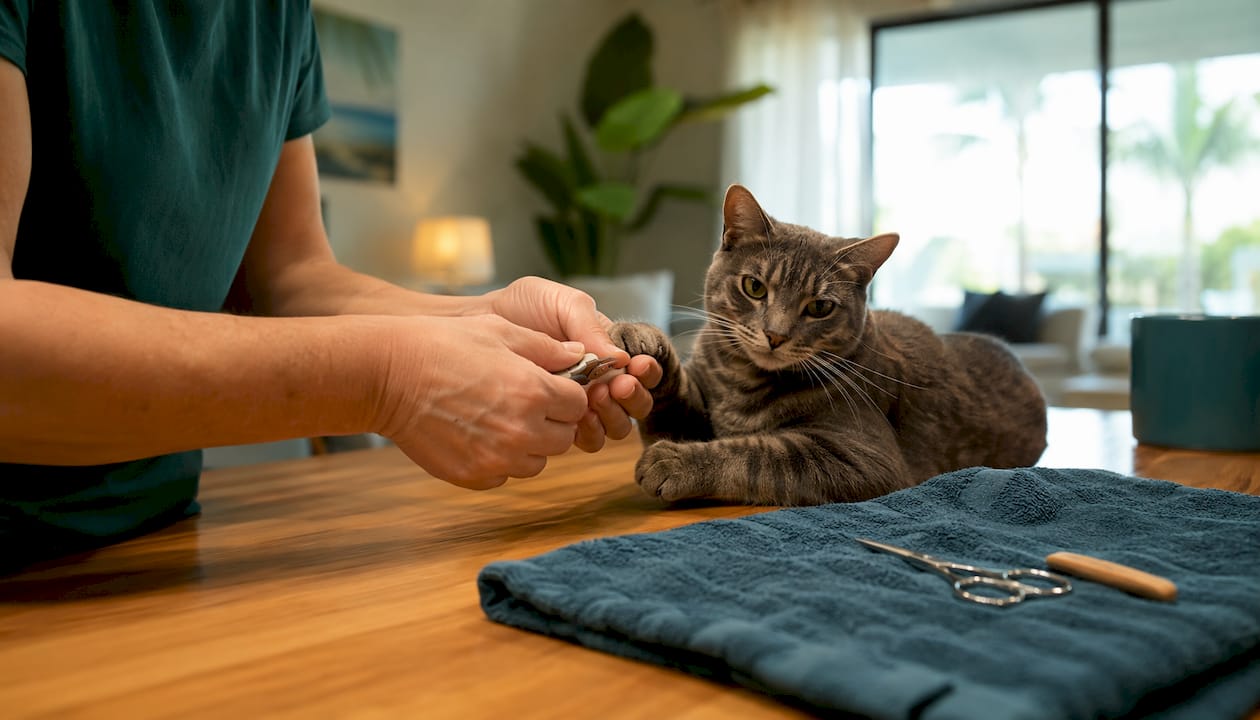
Trim nails every 2–3 weeks to reduce scratch damage to furniture and floors. If your cat resists, start with one paw per session and pair it with a treat.
What experienced apartment communities know about cat-friendly living
Property management teams that work with pet owners daily develop a clear picture of what actually supports cat wellbeing in apartment settings, beyond what any single owner might notice.
At Cynthiagardens, a pet-friendly apartment community in Boca Raton, the approach centers on transparency and practicality. Clear pet policies remove the guesswork about what is allowed, which lets cat owners plan their setup without anxiety about lease violations. Knowing your weight limits, deposit structure, and approved modifications upfront means you can invest in cat trees and wall shelves with confidence.
Key property-level factors that support a healthy cat care workflow:
- Proximity to veterinary services matters more than owners realize until an emergency happens. Apartments near established vet clinics or 24-hour animal hospitals reduce response time when it counts.
- Consistent maintenance keeps apartments free of gaps, broken screens, and HVAC issues that create escape routes or air quality problems for indoor cats.
- Community resources, including neighbor networks and local pet supply access, fill gaps that no single apartment amenity can cover.
Reviewing cat-friendly apartment amenities before signing a lease gives you a concrete checklist: window screen quality, floor type (hard floors show litter scatter; carpet traps dander), and storage space for supplies all affect daily cat care quality.
How to build a feeding and hydration routine for apartment cats
Scheduled meals beat free-feeding for apartment cats on two counts: they give you a daily health check (a cat that skips a meal is telling you something), and they anchor the play-eat-groom cycle that keeps behavior predictable.
Feed twice daily at consistent times. Morning and evening meals align with a cat’s natural crepuscular activity peaks, when they are most alert and hungry. Measure portions based on your cat’s weight and the food manufacturer’s guidelines, adjusted by your vet for age and activity level.
Hydration is where most owners fall short. Cats have a low thirst drive and evolved to get most of their water from prey. Dry-food-only diets leave many cats chronically underhydrated. A circulating water fountain encourages drinking by keeping water moving and oxygenated. Place it away from the litter box and food bowl, ideally in a second room, to encourage your cat to seek it out.
Stress management and behavioral adjustment for apartment cats
Chronic low-grade stress is the hidden problem in apartment cat care. It does not always look dramatic. It shows up as over-grooming, hiding, reduced appetite, or increased vocalization.
Synthetic feline facial pheromones like Feliway are a recommended first-line tool for reducing stress behaviors. Plug a diffuser into the room where your cat spends the most time. Results typically appear within 2–4 weeks. Pair it with a consistent daily schedule: same feeding times, same play windows, same sleep spots. Cats are creatures of routine, and unpredictability is genuinely stressful for them.
For cats sensitive to outside noise, a white noise machine near their sleeping area buffers the sounds of hallway traffic, neighbors, and street noise. This is especially useful in urban apartments where ambient sound levels are high throughout the day.
Grooming practices that work for indoor apartment cats
Indoor cats shed year-round rather than seasonally, because artificial lighting disrupts the natural molt cycle. Regular brushing manages that shedding before it becomes a carpet and furniture problem.
Brush short-haired cats at least once a week; long-haired breeds like Maine Coons or Persians need daily attention to prevent matting. Use a slicker brush for general coat maintenance and a fine-toothed comb to check for skin irritation, parasites, or unusual lumps. Grooming sessions also double as a hands-on health check.
Wipe your cat’s eyes gently with a damp cloth if you notice discharge, particularly in flat-faced breeds. Clean ears monthly with a vet-approved solution. Keep nails trimmed on the 2–3 week schedule mentioned earlier, and brush teeth several times a week with cat-specific toothpaste to reduce periodontal disease, one of the most common health issues in adult cats.
Health monitoring and preventive vet care for apartment cats
Annual wellness exams are the baseline for adult cats. Kittens and seniors need visits every 6 months. The 2021 AAHA/AAFP Feline Life Stage Guidelines emphasize that indoor cats still require full preventive care, including core vaccines, parasite prevention, and dental assessment, regardless of their limited outdoor exposure.
Watch for these changes between vet visits:
- Weight loss or gain of more than half a pound over a month
- Changes in litter box frequency, volume, or consistency
- Increased water consumption, which can signal kidney disease or diabetes
- Behavioral shifts like sudden aggression, hiding, or reduced grooming
Keep a simple monthly log. A note on your phone with your cat’s weight, appetite, and litter box habits takes two minutes and gives your vet useful trend data that a single exam cannot capture.
How noise and activity levels affect your cat’s comfort
Apartment noise is not just a human problem. Cats hear frequencies well above human range, and sudden loud sounds trigger a stress response even when the cat appears calm. HVAC systems, washing machines, and hallway noise all register.
White noise machines and pheromone diffusers work together to create a calmer acoustic environment. Place your cat’s primary sleeping area away from the front door and exterior walls where noise peaks. If you work from home with frequent video calls, give your cat a quiet retreat room it can access freely during those hours.
Your own activity patterns matter too. Cats sync to their owner’s schedule over time. If you keep irregular hours, your cat’s sleep and feeding rhythms will be disrupted. Consistent wake times, even on weekends, help maintain the predictable routine that keeps apartment cats behaviorally stable.
Key Takeaways
A structured cat care workflow in apartments, built around vertical space, daily play, and consistent routines, covers the full range of a cat’s physical and behavioral needs within limited square footage.
| Point | Details |
|---|---|
| Vertical territory first | Cat trees, wall shelves, and window perches satisfy territorial instincts without consuming floor space. |
| Litter box sizing | Boxes should be at least one and a half times your cat’s length; most store-bought options are too small. |
| Play mimics hunting | End every session with a “catch” and a meal to complete the hunt-eat cycle and reduce nighttime activity. |
| Stress management tools | Feliway diffusers and white noise machines reduce chronic low-grade stress from apartment noise. |
| Annual vet baseline | Adult cats need yearly wellness exams; kittens and seniors need visits every 6 months. |
Cynthiagardens: a home built for you and your cat
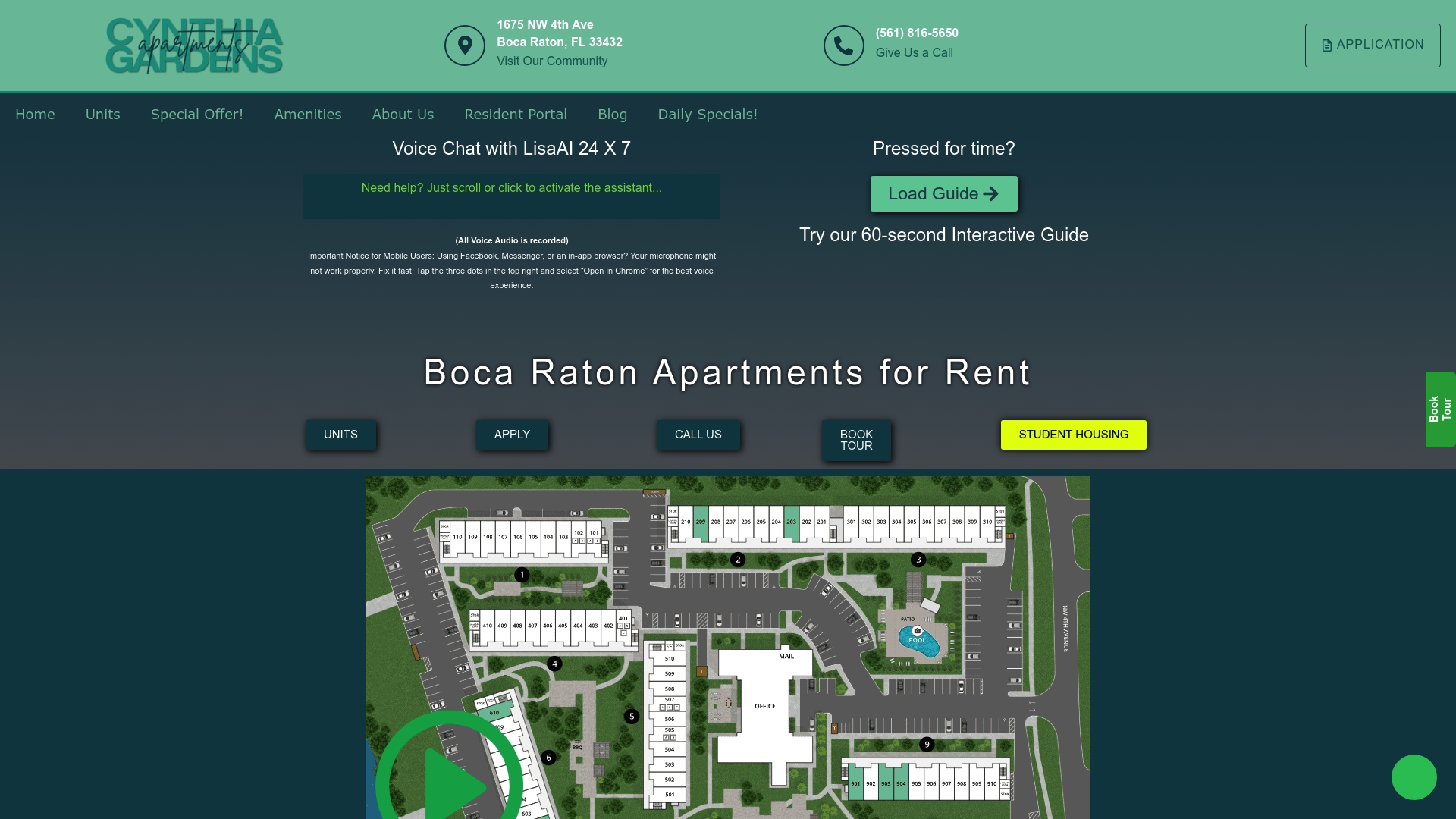
Cynthiagardens is a modern apartment community in Boca Raton, Florida, designed with pet owners in mind. Transparent pet policies, well-maintained units, and a tech-forward leasing process, including virtual tours and AI chat support, make finding the right home straightforward. Explore apartment styles and features built for comfortable living with cats, or check the floor plans designed for cats to find the layout that fits your setup best.