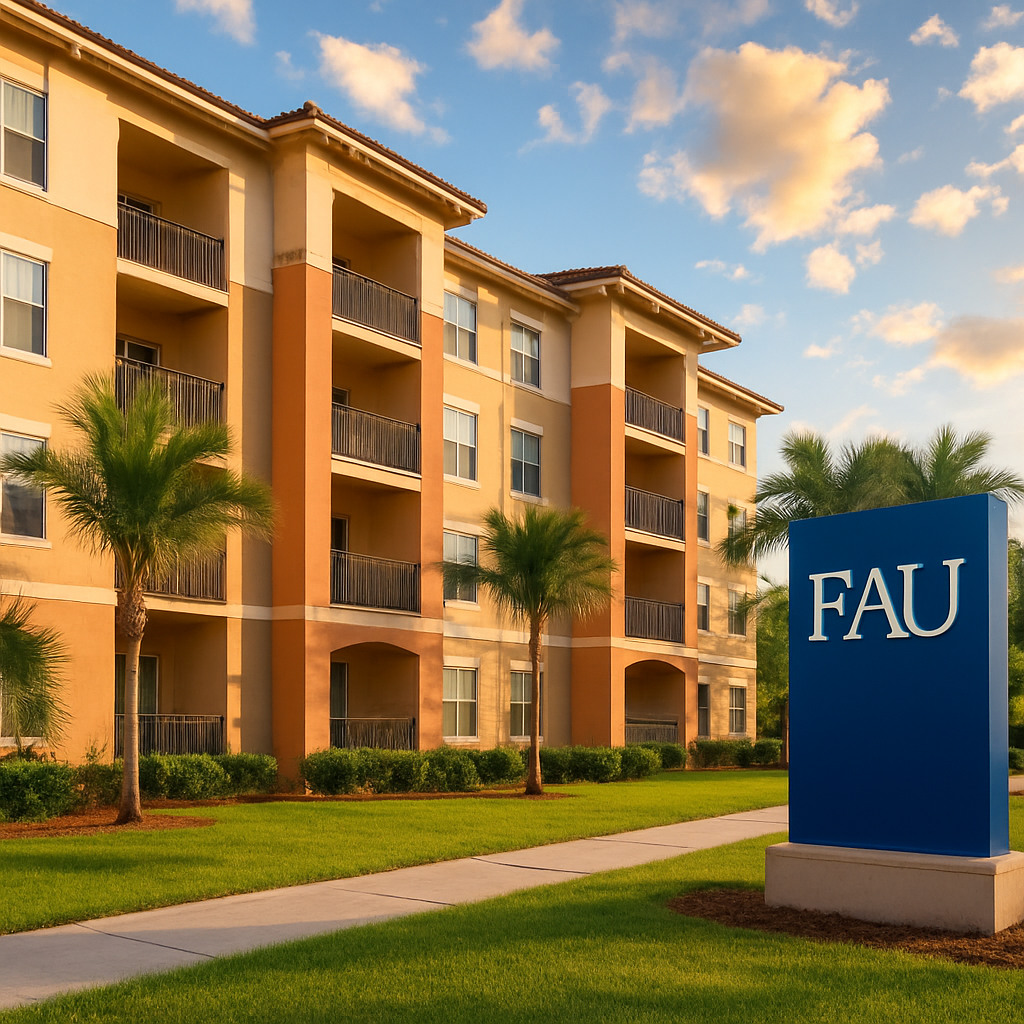
Student-Friendly Apartments Near FAU: A Complete Guide
Searching for apartments near fau boca is overwhelming; short deadlines, confusing listings, and campus parking rules make a quick, bad decision easy. This guide gives practical criteria to compare commute options, build a realistic monthly budget that includes utilities and fees, prioritize student-focused amenities, and follow a short touring and application checklist, with a real-world look at Cynthia Gardens as a student-friendly example.
How to measure commute and choose the right location
Measure commute as door-to-door time during class hours, not peak-freeway minutes. That means timing the trip from your front door to your classroom or lab entrance at the actual hour you will travel, including walking from parking, waiting for a bus, or locking a bike.
How to measure door-to-door commute
Use Google Maps with the departure or arrival time set to your class schedule to get realistic drive and transit estimates. For transit, cross-check times and routes on PalmTran. For biking, use the cycling layer in Maps and add a safety check for bike lanes and crosswalks. Always add a buffer for parking, lock up, and walking to the building – that buffer is often the part students forget.
- Drive: Check routes at class times, then add 8 to 15 minutes for finding a space and walking to campus.
- Bus/transit: Confirm scheduled arrival windows on PalmTran and add typical wait time and first/last mile transfer.
- Bike: Verify protected bike lanes or low-traffic streets and estimate sheltered bike parking time.
- Walk: Walkability is only realistic if the route is safe at night and under 20 minutes door-to-door.
- Parking rules: Confirm FAU permit zones and costs on FAU Parking Services before assuming you can drive every day.
Practical thresholds to use as a baseline. Aim for under 15 minutes driving, under 30 minutes transit, or under 20 minutes biking for daily commutes. Those are not absolutes – accept longer trips for cheaper rent only if you can reliably make the schedule without burning study time.
A common tradeoff is cheap rent farther from campus versus lost time and unpredictability. Ten extra minutes each way adds up – a 20 minute round trip five days a week is nearly 7 hours a month. That is time you could use for studying, work, or sleep. In practice many students underestimate this cost when chasing lower rent.
Transit and parking realities in Boca Raton
Boca Raton has usable bus coverage around FAU but routes can be sparse outside peak hours. If you plan to rely on PalmTran, map the full trip including transfer wait times and the final walk; do not assume the bus will match your class start exactly. If you plan to drive, verify whether a parking permit is required for your faculty lot and whether guest parking rules will affect weekend schedules.
Concrete Example: Cynthia Gardens sits in central Boca Raton and often gives students a short drive to FAU. Before you commit, set a Google Maps departure to a typical Monday 9 AM class from the Cynthia Gardens address to FAU main campus, note the door-to-door time, and then check FAU Parking Services for where that permit will place you on campus. That hands-on check separates a reasonable commute from a daily time sink.
If you are comparing several apartments near fau boca, measure every route door-to-door at the actual times you will travel and include parking or transfer time.
Decide your acceptable commute threshold now and verify door-to-door times in peak hours before touring or signing. That single check will keep you from trading cheap rent for lost time.
Budgeting framework: rent, utilities, move-in costs, and hidden fees
Rent is the headline, not the whole bill. Students commonly underbudget by 15 to 25 percent because they forget utilities, parking, deposits, and recurring pet or amenity fees. Build a total monthly number before you compare commute or amenities.
Monthly budget checklist
- Base rent: the quoted price on listings such as Zillow or Apartments.com.
- Electricity and A C: can swing a lot in Boca Raton – estimate a range rather than a single number.
- Water, sewer, trash: sometimes included, sometimes billed separately – confirm.
- Internet: essential for students – budget for 100 300 Mbps plans if streaming or remote classes are required.
- Renter insurance: inexpensive but required by many properties – typically 10 to 20 per month.
- Parking permit or guest parking fees: campus parking rules can force daily costs or permit purchases.
- Pet rent and deposits: monthly pet rent plus refundable or non refundable deposit.
- Maintenance or amenity fees: some complexes add utility caps, trash fees, or amenity access charges.
| Item | Typical monthly range (Boca Raton near FAU) | Example – Cynthia Gardens one-bedroom (illustrative) |
|---|---|---|
| Base rent | 1200 – 1800 | 1400 |
| Electricity | 40 – 120 | Included |
| Water / trash | 0 – 40 | Included |
| Internet | 40 – 80 | 50 |
| Renter insurance | 10 – 20 | 12 |
| Parking | 0 – 100 | 0 – verify with property |
| Pet rent | 0 – 50 | 20 |
| Estimated total monthly | 1340 – 2210 | 1482 |
Practical tradeoff: included utilities buy predictability at a possible premium. If you prefer a fixed monthly payment during the academic year – choose included utilities. If you can control high electricity use and want to shave base rent, the lower rent plus variable utilities route can be cheaper but requires discipline and contingency funds.
Concrete example: A student compares a private unit listed at 1300 plus average utilities of 120, against a Cynthia Gardens one-bedroom listed at 1450 with utilities included. The all in cost is 1420 for the private unit and 1450 at Cynthia Gardens. The difference is small, but Cynthia Gardens removes spikes from summer A C bills and eliminates the hassle of separate accounts and deposits.
One-time and upfront costs to plan for
- Security deposit: commonly one month rent but can be higher for students without credit – plan for 1 to 2 months.
- Application fees: 25 to 100 per applicant – budget for each roommate.
- Holding deposit or administrative fees: 100 to 300 to hold a unit, sometimes credited to first month.
- Utility deposits and account setup fees: if utilities are not included you may need deposits for electric or internet.
- Move in essentials: furniture, kitchen gear, cleaning supplies, and small repairs – a one time buffer of 300 to 700.
Guarantor and limited credit reality: many students need a co signer or use guarantor services. These services add cost and application steps. If you do not have a co signer, confirm early whether the community accepts TheGuarantors or Insurent and what evidence of income or scholarship they will accept.
Final consideration: before signing, run a three month worst case cost estimate – summer A C high, any refundable deposits lost, and possible parking charges – then compare against the simpler, predictable option of included utilities if budgeting certainty matters more than saving a small amount each month.
Student-focused amenities and lease features to prioritize
Start with two nonnegotiables: internet and lease length. For students near FAU those determine daily life more than a pool or showy gym. Make internet speed and contract dates your opening filters when comparing apartments near fau boca.
Amenities that actually matter for students
Practical priority list. Below are amenities that reduce friction for study, part time work, and shared living. Use these to eliminate listings quickly.
- Reliable high speed internet – Aim for 100 Mbps download as a baseline for video lectures and livestreams; 200 to 300 Mbps if several roommates stream or game at once.
- Quiet study space or business center – A locked room or dedicated study lounge beats a rooftop gym for productivity.
- Onsite laundry – In building or in unit to avoid lost hours between classes.
- Secure bike storage and easy bike routes – Practical if you want to bike to campus rather than fight for parking.
- Clear parking and guest rules – Check permit cost and guest parking because FAU parking rules are strict.
- Maintenance response and SLA – Ask how quickly they fix AC and plumbing; long delays are common in South Florida and ruin a semester.
- Furnished options and short term leases – Useful for exchange students or internships but expect a premium.
- Pet friendly policy with clear fees – Pet friendliness is common but fee structures vary widely. Confirm deposits and monthly pet rent.
Tradeoff to accept. Luxury extras like a concierge, tennis courts, or large on site gym look nice but typically add 5 to 15 percent to monthly rent. For most FAU students swapping one luxury for faster internet, safer entry systems, or included utilities gives better value.
Lease features to read and negotiate
Focus on flexibility and liability. Students move on academic calendars. Short term leases, subletting rules, guarantor policies, and early termination terms matter more than paint color.
- Lease length and alignment with semesters – Check if they offer 8 to 12 month or semester aligned contracts to avoid paying for summer when you are away.
- Subletting and roommate swap rules – If you plan to graduate or study abroad you need to sublet. Some complexes allow it easily, others do not.
- Guarantor/co signer options – If you lack credit check for acceptable guarantor services or if the management accepts third party guarantors.
- Utility billing and caps – Confirm which utilities are included or capped and how they bill common area usage.
- Late fee and rent increase clauses – Look for scheduled rent escalations and notice windows for renewal offers.
Concrete example: A graduate student taking multiple synchronous classes and a night lab needs stable upload speeds more than a pool. They pick a one bedroom with 200 Mbps, wired Ethernet in the living room, and responsive maintenance. Cynthia Gardens lists one bedroom apartments with included utilities which simplifies budgeting and shortens move in planning; schedule a tour to confirm internet setup and wiring before signing by visiting the Cynthia Gardens leasing page at Cynthia Gardens apartments.
Common misunderstanding. Many students assume included amenities justify higher rent without doing the math. Always compare total monthly cost after estimating utility usage and any pet or parking fees. Included utilities can be the better deal if the property has reasonable usage caps.
Do not pay a premium for a fancy gym if it forces you to cut essentials like strong Wi Fi or a shorter lease aligned with semester dates.
If you want a second check before committing use FAU Off Campus Life resources at FAU Off Campus Life to confirm lease compliance with university guidance and to find roommate matching leads.
Neighborhoods and local conveniences around FAU
Neighborhood choice changes your day-to-day faster than any amenity list. Pick a spot for easy grocery runs and quiet study nights, and you will save time and headaches every week; pick only for proximity to campus and you may pay extra for noise, parking headaches, or a small unit.
Neighborhood clusters worth knowing
- FAU corridor (Glades Road / University Drive): Shortest trips to class and lots of rental inventory aimed at students. Buildings here often charge for parking or require campus permits; expect mixed retail rather than nightlife.
- East Boca (Mizner Park / beachside): Walkable dining, cafes, and nightlife. Rents trend higher; you trade monthly cost for evening convenience and more study-friendly cafes.
- West of I-95: Lower rents and newer single-family pockets. Good if you have a car; not ideal if you rely on walking or late-night transit.
- Spanish River / South of campus: Calmer, more residential and family-friendly. You get quieter streets, green spaces, and some larger 2-bedroom options suitable for roommates.
Local conveniences students actually use
- Grocery access: Publix locations are the baseline for weekly shopping. Check walking or short-drive time to a supermarket before you sign.
- Study-friendly cafes: Places around Mizner Park and the downtown corridor double as reliable remote-study spots with long hours and decent Wi-Fi.
- Beaches and parks: Red Reef Park and Spanish River Park are practical weekend escapes and useful for pets and exercise.
- Medical and urgent care: Proximity to a clinic matters more than students admit when midterms hit; map one before moving in.
- Short-term sublets and furnished options: East Boca and the immediate FAU corridor have the most semester-length furnished listings and sublets on boards and FAU Off-Campus Life.
- Transit stops: If you plan to use buses, verify routes and schedules via PalmTran. Not every stop runs late at night.
Practical tradeoff to weigh: Walkability and nightlife convenience almost always increase rent. In practice, students on tight budgets are better served by a slightly farther unit that includes utilities or has a quiet study lounge, rather than paying premium for a tiny studio next to restaurants.
Concrete example: A student who needs evening study spaces and part-time shifts will do better near Mizner Park even if the drive to campus is a few extra minutes. They gain cafes open late, walking access to restaurants after a shift, and easier social life; the tradeoff is higher monthly rent and more foot traffic outside the building.
What most people misunderstand: Many assume everything near campus is cheaper because of student inventory. In Boca Raton the opposite is often true for blocks with nightlife or beach access. Look behind the listing price – included utilities, free parking, or an on-site study room can be the real value.
Next consideration: After you shortlist neighborhoods, cross-check current listings on Zillow and FAU community boards, and factor in construction or new developments that can raise noise and future rents.
Touring and vetting checklist for in-person and virtual visits
Treat every tour like a short audit. Your goal is to collect verifiable facts, capture deal breakers fast, and leave with a list of items you can put in writing before you sign.
In-person tour checklist
- Wi-Fi and cell signal: Run a quick Speedtest on your phone and check cell signal strength in the bedroom, kitchen, and living area. If Wi-Fi is advertised, ask which provider and whether the connection is shared by the building.
- Water and plumbing: Turn on every faucet and shower. Check hot water speed, water pressure, and for slow drains or stains under sinks that suggest leaks or mold.
- Appliances and outlets: Plug a phone charger into every outlet, test the stove and microwave, open and close the refrigerator and washer dryer. Note any inconsistent temperatures or noises.
- Pest and odor check: Look in corners, under sinks, and inside cabinets for droppings, glue traps, or chew marks. Smell for musty or chemical odors that staging can hide.
- Noise at peak times: Visit between 5pm and 7pm if possible to sample traffic and neighbor noise. Stand outside by windows and at the nearest bus stop to evaluate real-world sound levels.
- Parking and access: Drive the route at the time you would arrive for classes. Confirm assigned parking stall size and guest parking rules and get a photo or drawing of the lot layout.
- Security and safety: Test door locks, check window latches, confirm working smoke detectors, and inspect lighting for common areas and walkways at dusk where possible.
- Measure for fit: Bring a tape measure or phone app. Measure bedroom doorways, closet depth, balcony dimensions, and wall lengths for your bed, desk, and couch.
- Maintenance record and response time: Ask how maintenance requests are submitted, average turnaround, and for an example recent request and resolution. If they cannot supply a basic response time, mark as a concern.
- Get documents: Ask for a sample lease, current utility inclusions or caps, pet policy in writing, and a move-in/out checklist to review before committing.
Virtual tour checklist
- Live walkthrough first: Insist on a live video call rather than a pre-recorded tour so you can direct the camera to areas of concern and ask follow up questions in real time.
- Timestamped videos: If a live call is not possible, request timestamped, unedited videos of the specific unit, the parking area, a typical hallway, and the pool or study room.
- Ask for measurements and floor plans: Request a floor plan with exact dimensions and ask the leasing agent to measure door frames and closets on camera so you know what furniture will fit.
- Proof of utilities and bills: Request a recent utility invoice or a written breakdown showing which utilities are included, what caps exist, and historical averages if available.
- Noise and building activity evidence: Ask the agent to record a 30 second audio sample at the unit during a busy time. If they refuse, that is a red flag.
- Verify occupancy status: Confirm whether the unit is staged or occupied. Staged units hide wear and tear; occupied unit photos or videos provide a more accurate picture.
- Request the lease draft: Get the exact lease language emailed to you and read it before you decide. Do not accept verbal promises about repairs, waived fees, or utilities.
Concrete Example: A second year FAU student used a live virtual tour to confirm a furnished one-bedroom would fit their queen bed and desk. The leasing agent measured door clearances and closet depth on camera, which avoided a wasted in-person trip and let the student negotiate inclusion of a storage locker before signing.
Trade-off to accept: Virtual tours save time but miss smells, pest signs, and late night noise. If the unit is farther than a 20 minute drive, use a virtual tour to shortlist properties, then do an in-person check for the top two picks.
Next consideration: After the tour, compare findings against your commute, budget, and study environment priorities and either schedule a follow up visit or request the lease draft and utility breakdown before you commit.
Timing your search and securing a lease around the academic calendar
Timing is the lever that saves money or costs you convenience. Start with the academic calendar and work backward: for fall semester moves begin a focused search three to four months before your move-in target; for spring or midterm moves two months is usually enough.
Inventory and price rhythm. Listings for apartments near FAU Boca spike in late spring as outgoing students list sublets and complexes advertise fall openings. Rents are often lowest in late summer when landlords want units filled before classes begin, but the best floor plans and furnished options disappear early.
Practical timing steps
- T minus 4 months: Build a short list using Zillow, Apartments.com, and FAU off-campus resources. Bookmark 6 to 10 units and note move-in windows and whether utilities are included. Use FAU Off-Campus Life as a parallel feed for student sublets.
- T minus 8 to 6 weeks: Tour preferred units, confirm parking permit timing with FAU Parking Services via FAU maps and parking, and ask for sample leases showing exact start and end dates.
- T minus 4 weeks: Decide. Request a holding deposit if you need time to finish paperwork. Expect nonrefundable holding fees in many complexes; get the refund policy in writing.
- Within 2 weeks of move: Confirm utilities transfer or included utility details, schedule move-in and check-in times, and verify any campus permit or garage access rules that begin the first week of classes.
Trade-off to accept: Locking early secures the unit and the layout you want, but it reduces leverage for negotiating concessions. Waiting buys negotiation room late in the cycle but risks paying a premium or losing furnished and pet-friendly options, which are scarce close to FAU peak move dates.
Concrete example: A rising junior needed a 1-bedroom near FAU Boca for fall and began searching in April. By May they secured a one-bedroom at Cynthia Gardens with utilities included and a late August move-in. Because they started early they got a preferred floor and pet approval, at the cost of committing a holding deposit two months earlier than some peers.
Quick-turn solutions when timing does not align. Use semester sublets listed on FAU community boards, short-term furnished units on Apartments.com or Airbnb for a month-to-month stopgap, or negotiate a prorated rent start with the leasing office. These are more expensive per month but prevent scrambling in week one of classes.
Negotiation and signing tactics
- Ask for one concession only: waived application fee, a small rent credit, or a delayed move-in date without additional rent. Pick the concession that matters most to you.
- Get holding deposit rules in writing: what triggers refund, timeline for lease signing, and any penalties for late move-in.
- If credit is thin: present a guarantor, proof of scholarship or family support, and a calendar of expected income. Mentioning that you are a student at FAU and aware of campus parking cycles sometimes speeds approval.
Final decision point. If the unit fits your commute threshold, budget after utilities, and lease dates match the semester schedule, sign and secure a holding deposit. If move-in timing is uncertain, budget for 4 to 6 weeks of overlap between leases or plan a short-term rental to avoid last-minute compromises.
Cynthia Gardens spotlight: what makes it student-friendly
Straight to the point: Cynthia Gardens is student-friendly because it removes common friction points students actually care about – predictable monthly cost, a pet-friendly policy, and a low-key community that fits busy schedules more than flashy amenities. That combination matters more in practice than having a gym or rooftop lounge when you are balancing classes, a part-time job, and move-in timing.
Features that matter for FAU students
- Included utilities: One-bedroom units at Cynthia Gardens list utilities included which simplifies budgeting and reduces billing surprises during summer or winter usage spikes.
- Pet-friendly without heavy fuss: The community accepts pets and supports small-dog ownership; still confirm deposit and monthly pet rent so you can compare total monthly cost.
- Practical location: Close enough for a quick drive to FAU and near grocery and dining options – useful for students who commute by car or rely on rideshare.
- Community feel and leasing support: Tropical gardens, quiet common areas, and a leasing team including Leasa to help schedule tours or answer lease questions quickly.
Tradeoff to acknowledge: Cynthia Gardens prioritizes predictability and value over being the absolute closest walkable complex to campus. If your priority is a five-minute walk to class or nonstop student social events at the building, you may prefer properties directly on the Glades Road corridor. For most students who drive, bike, or use occasional transit, the tradeoff is worth the cost stability and calmer living environment.
Concrete example: A graduate student working evenings at a nearby retailer chose a one-bedroom at Cynthia Gardens because included utilities removed an estimated monthly variable of about $60 to $100, making it easier to manage a fixed paycheck. The pet-friendly policy meant no last-minute rehoming decisions for the student who owns a small dog, and the leasing team arranged a weekday evening tour through Leasa so the move aligned with the semester schedule.
What to verify on your tour: Ask for a sample lease and a recent utility statement that shows what included utilities cover and any caps. Confirm exact pet size and breed rules in writing, and check parking assignment rules since FAU permits and campus parking constraints influence whether you need on-site parking long term.
Practical judgment: For students prioritizing stable monthly cost and a low-maintenance lifestyle, Cynthia Gardens often beats cheaper listings that hide high utility bills or stricter pet rules. For students who need absolute proximity to campus amenities at walking distance, expect to trade off some of that predictability.
If you want specifics from the source, view Cynthia Gardens details and book a tour at the property site or check FAU off-campus guidance to see how the community lines up with university parking and housing rules: Cynthia Gardens guide and FAU Off-Campus Life.
Next step: if Cynthia Gardens fits your priorities, schedule a live tour, get the lease and utility details in writing, and compare the total out-the-door monthly number to two other FAU-area options before committing.