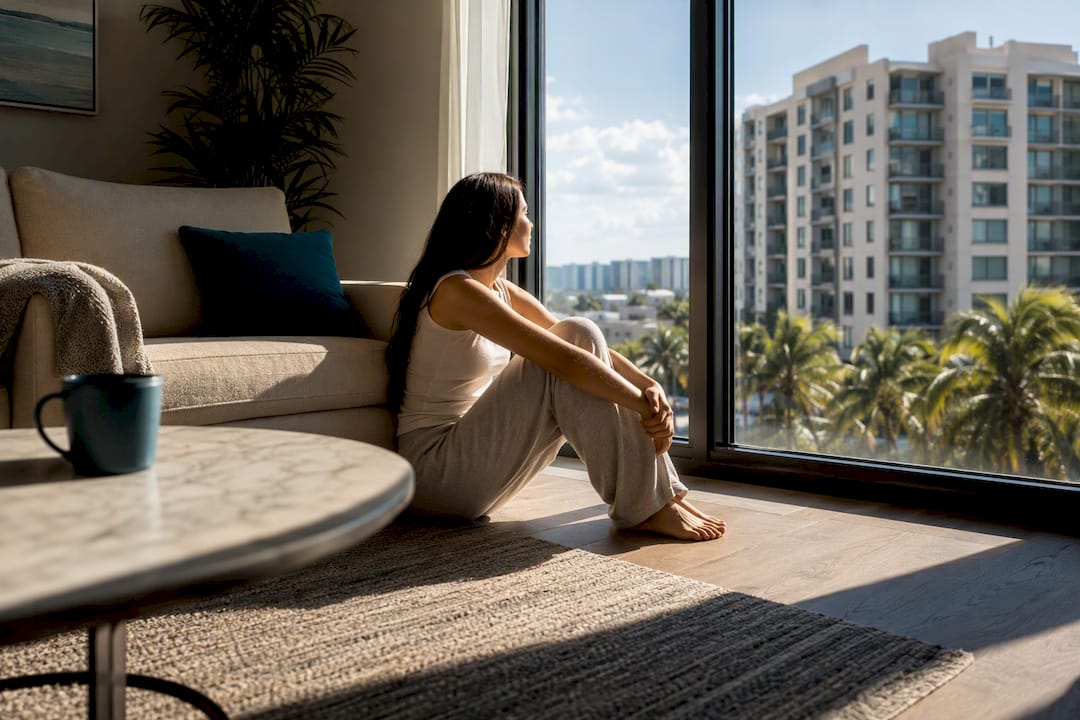
South-facing units get the most total daylight and the most winter sun, which makes them the theoretical winner for brightness. But the floor you’re on and what’s blocking your windows usually decides how much of that light you actually get. Before you sign anything, check the floor level, scan for buildings or trees across the street, and confirm your read with a sun-path app rather than trusting the listing’s compass label.
TL;DR:
- Floor level and surrounding obstructions often outweigh orientation in determining actual sunlight in an apartment, making upper floors and corner units preferable.
- South-facing units provide the most overall daylight, but neighboring tall structures may block winter sun, reducing effective brightness.
- Testing actual light at the intended time of day, especially winter midday, offers a more accurate assessment than listing photos or labels.
- Brightness and glare issues can be fixed with simple solutions like reflective paint, blinds, or light bulbs, but excessive heat from west-facing units may require shading or HVAC checks.
- For plant care, south-facing windows support sun-loving species, while dim north-facing rooms often need grow lights to sustain indoor greenery.
Table of Contents
- Understanding Apartment Sun Exposure by Direction
- Why Floor Level and Obstructions Beat Compass Direction
- How to Verify Sun Exposure Before You Sign
- How Sunlight Affects Comfort, Energy Bills, and Rent
- Simple Fixes for Too Little or Too Much Sun
- How a Modern Community Handles Sun Exposure Transparency
- Sun Exposure and Your Indoor Plants
- Health Effects of Living in a Sun-Deprived or Sun-Rich Apartment
- Sun Exposure and Furniture, Flooring, and Fabric Damage
- A Few Rules of Thumb Before You Commit
- Checking Your Next Apartment’s Sun Exposure With Cynthiagardens
- Sources
Understanding Apartment Sun Exposure by Direction
Orientation sets the baseline for apartment sun exposure, but each direction behaves differently depending on the time of day and the season.
- South-facing: Gets the most daylight hours overall, plus low-angle winter sun that reaches deep into a room. In summer, the sun rides higher and doesn’t penetrate as far, though heat gain can still spike in warm climates.
- East-facing: Bright mornings, faded afternoons. Good for early risers, home offices, and anyone who wants sunlight without the peak-heat consequences.
- West-facing: Strong, often intense light from midafternoon into evening. Great for sunset views, but glare and heat buildup are real issues in summer, especially without shading.
- North-facing: No direct sun, just steady, diffuse daylight all day. Rooms stay evenly lit with almost no glare, but they run noticeably dimmer, particularly in winter.
None of these is universally “best.” A night-shift worker might prefer a north-facing bedroom for uninterrupted daytime sleep. A plant enthusiast wants south or west. The right exposure depends on your routine, not just the compass reading on the listing.
Why Floor Level and Obstructions Beat Compass Direction
A south-facing unit on the third floor, staring at a six-story building across a narrow street, can get less usable light than a north-facing unit on the twelfth floor with open sky. Orientation is a starting assumption. What’s actually in front of your window is the deciding factor.
- Estimate the obstruction angle. Count the stories of the building across the street and compare that to your own floor. As a rough rule, if the opposing structure is roughly as tall as the distance between buildings, expect it to block a meaningful chunk of low-angle winter sun, even on a south exposure.
- Favor corners and upper floors. Corner units pull light from two directions instead of one, and higher floors clear more rooflines, trees, and neighboring structures. Simulation research on daylight performance backs this up: Ecotect-based modeling shows middle, interior units frequently score worse on daylight metrics than side or upper-floor units with the same orientation, largely because of how window position and obstructions interact.
- Do the remote scouting. Pull up a satellite view of the block, check street view for tree canopy or awnings, and ask the leasing office directly how tall the building across the street is using this checklist for property viewings to guide your questions and observations. That single question resolves more uncertainty than any listing photo.
How to Verify Sun Exposure Before You Sign
Listing photos are shot at the best possible hour with every light on. That tells you almost nothing about what your evenings will actually look like.
- Confirm the exact floor and unit position on the building’s layout, not just the unit number.
- Tour with the lights off. If a room still feels usable at midday with the blinds open, that’s a real signal.
- Use your phone’s compass app to confirm which way the windows actually face. Listings mislabel orientation more often than you’d expect.
- Check a satellite view for anything within a block that could cast a shadow: buildings, mature trees, parking structures.
- Visit at the time of day you actually care about. If you work from home in the morning, tour in the morning.
Tools built specifically for this problem go further. SunCast lets you plug in an address and see a sun-path and shadow simulation for any date, which is useful for spotting how winter sun angles differ from summer ones at the same window. A practical orientation checklist recommends testing winter midday sun as your worst-case scenario. If a unit gets meaningful light at winter midday, it will almost certainly perform fine the rest of the year. If it fails that test, a few bright summer afternoons won’t make up for six months of gloom.
If you’re renting from a distance, ask for a video walkthrough shot at midday with the blinds open, or use an AR sun-path overlay during a virtual tour to estimate exposure before you ever set foot in the unit.
How Sunlight Affects Comfort, Energy Bills, and Rent
Daylight changes how a space feels almost immediately. Rooms with strong natural light read as larger, cleaner, and calmer than the same square footage lit only by lamps, and that perception carries real financial weight.
A quasi-experimental pricing analysis found that access to sunlight and a view accounted for a meaningful share of the price difference between otherwise comparable apartments, with one study context putting the effect at a meaningful share of the price difference between otherwise comparable apartments is accounted for by access to sunlight and a view. The same research noted that willingness to pay for sunny orientation tends to rise with a unit’s relative height. Tenants on higher floors value clear sightlines and unobstructed light more, in part because pollution and visual clutter matter less up there.
The flip side is heat. A west-facing unit with no shading can turn into an oven by 5 p.m. in July, pushing air conditioning to run harder and longer. If you’re weighing a sunny unit in a hot climate, check the HVAC system’s condition and ask whether the building’s cooling capacity accounts for west or top-floor heat loads. A bright apartment that costs you an extra $40 a month in cooling isn’t necessarily a bad trade, but it should be a known one, not a surprise on your first summer bill.
Simple Fixes for Too Little or Too Much Sun
Most sunlight problems, in either direction, are fixable without a renovation.
- For dim units: Paint walls in high-reflectance whites or light neutrals, hang a large mirror across from your main window, and swap in daylight-balanced bulbs in the 5000K to 6500K range. Clear anything crowding the windowsill; even a tall plant can block a surprising amount of light.
- For overheated units: Install reflective or blackout blinds, add solar shades on the worst-offending window, or apply a temporary solar film that cuts glare without blocking the view entirely.
- Ask your landlord to inspect the AC before peak season and clean exterior windows, since grime alone can cut incoming light by a noticeable margin.
Pro Tip: Test bulb color temperature before buying a full set. A 6500K bulb reads as cool, almost clinical, in a north-facing room but can make a dim east-facing unit feel genuinely sunny by midmorning.
How a Modern Community Handles Sun Exposure Transparency
Some apartment communities list unit orientation and floor placement on their interactive property maps, so prospective renters can see roughly what direction their windows face before booking a tour. Virtual tours let you walk a unit at your own pace and gauge how much natural light comes through, without relying on staged listing photos.
- Confirm the floor and building position on the interactive map before scheduling a visit.
- Use the virtual tour to check light levels at different points in the layout.
- Ask leasing directly about nearby structures if you want a specific time-of-day read.
This kind of upfront detail matters more for remote renters, who otherwise have no way to catch a mislabeled exposure until they’re already unpacking boxes.
Sun Exposure and Your Indoor Plants
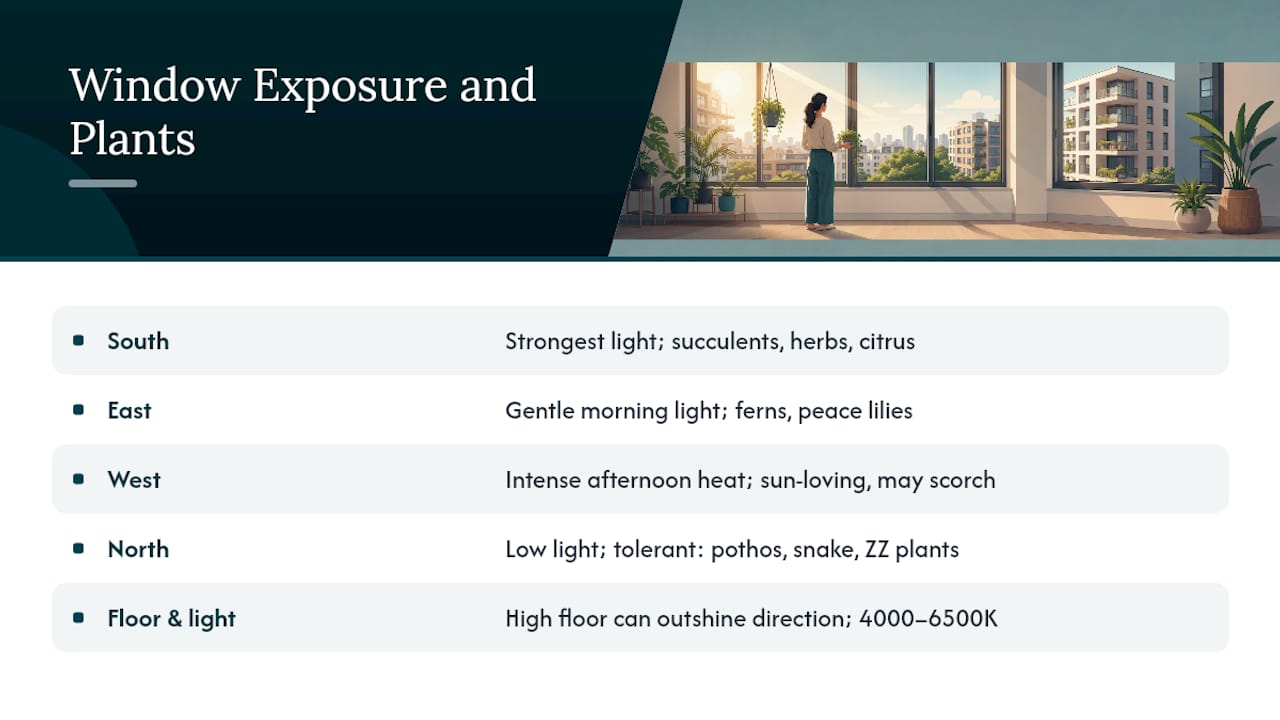
If you’re hoping to keep a windowsill garden alive, orientation determines almost everything you can grow. South-facing windows deliver the strongest, most consistent light and support sun-loving plants like succulents, herbs, and citrus. East-facing windows suit plants that prefer gentle morning light and can scorch under harsher afternoon sun, like ferns or peace lilies.
West-facing windows can support the same sun-loving plants as a south exposure, but the intense afternoon heat sometimes stresses leaves, especially glass-pressed against a hot pane in summer. North-facing rooms are the hardest for plants. Without direct sun, most flowering species struggle, though low-light tolerant plants like pothos, snake plants, and ZZ plants do fine.
Floor level plays a role here too. A north-facing unit on a high floor with open sky can outperform a south-facing unit buried behind a taller building, since the deciding factor is total light reaching the leaf, not the compass direction alone. If your unit runs dim, a simple grow light in the 4000K to 6500K range can keep herbs and leafy greens productive year-round, effectively substituting for what the window can’t provide.
Health Effects of Living in a Sun-Deprived or Sun-Rich Apartment
Regular exposure to natural light through your windows supports your body’s circadian rhythm, which affects sleep quality, mood, and alertness. Apartments with little direct sun can leave residents relying more heavily on artificial light and screen time to compensate, which isn’t the same input for your body clock. Direct sunlight through glass doesn’t meaningfully boost vitamin D synthesis, since standard window glass blocks most UVB rays, so a bright apartment isn’t a substitute for time outdoors if vitamin D is a concern.
Moisture control is where exposure matters most for physical health. North-facing units and ground-floor apartments tend to stay cooler and more humid, creating conditions where mold can take hold, particularly in bathrooms, closets, and any wall that shares space with an exterior surface. Sunlight helps dry out moisture and inhibits mold growth in the rooms it actually reaches, which is one reason older buildings with deep, dark interior units often report more humidity complaints than bright, cross-ventilated ones.
If you’re touring a north-facing or heavily shaded unit, ask about the building’s ventilation and whether previous tenants reported any moisture issues. A dehumidifier and a consistent airflow habit, cracking windows when weather allows, go a long way toward offsetting what a dimmer exposure can’t fix on its own.
Sun Exposure and Furniture, Flooring, and Fabric Damage
Direct sun is quietly hard on your belongings. UV rays break down dyes and fibers over time, which is why a couch pushed against a west-facing window often fades unevenly, darker on the side that never sees direct light, noticeably lighter on the sun-struck arm. Wood flooring and furniture can shift in tone too, sometimes darkening, sometimes bleaching, depending on the finish and the wood species.
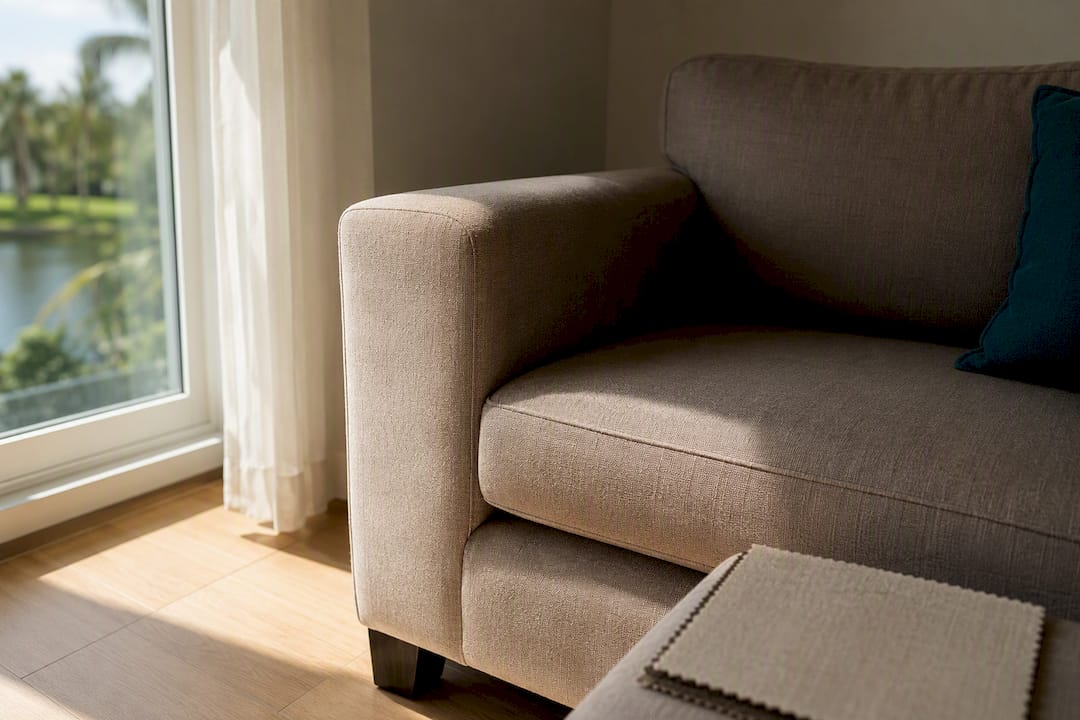
South and west exposures cause the most damage over time simply because they deliver the most cumulative UV hours. Leather is especially vulnerable, drying out and cracking faster under sustained sun than under diffuse north light. Artwork and photographs fade fastest of all, which is why framing shops routinely recommend UV-filtering glass for anything hung on a sun-facing wall.
The fix is mostly about placement and barriers. Rotate furniture periodically so fading happens evenly rather than in one obvious patch, use UV-blocking window film on the worst-offending panes, and keep anything irreplaceable, like art or heirloom textiles, away from direct afternoon light entirely. None of this means avoiding a bright unit. It just means treating strong sun as a design constraint, the same way you’d plan around a small closet or a narrow hallway.
A Few Rules of Thumb Before You Commit
Check the floor and obstructions before you trust any orientation label. Tour at the actual time of day the light matters to you, and cross-check with a compass or satellite view rather than taking a listing’s word for it. If you’re renting remotely, insist on a midday video with the blinds open. It tells you more in thirty seconds than any photo gallery will.
— Ayman
Checking Your Next Apartment’s Sun Exposure With Cynthiagardens
Cynthiagardens publishes unit orientation and floor placement on its interactive property map, so you’re not guessing which way your windows face before you tour. Compared to relying on a leasing agent’s verbal description or a handful of staged photos, this gives you an actual starting point to verify with a compass or sun-path app before you commit to a visit. The virtual tours let you walk through a layout and judge daylight for yourself, at whatever hour fits your schedule, rather than settling for whatever time slot a showing happens to land on.
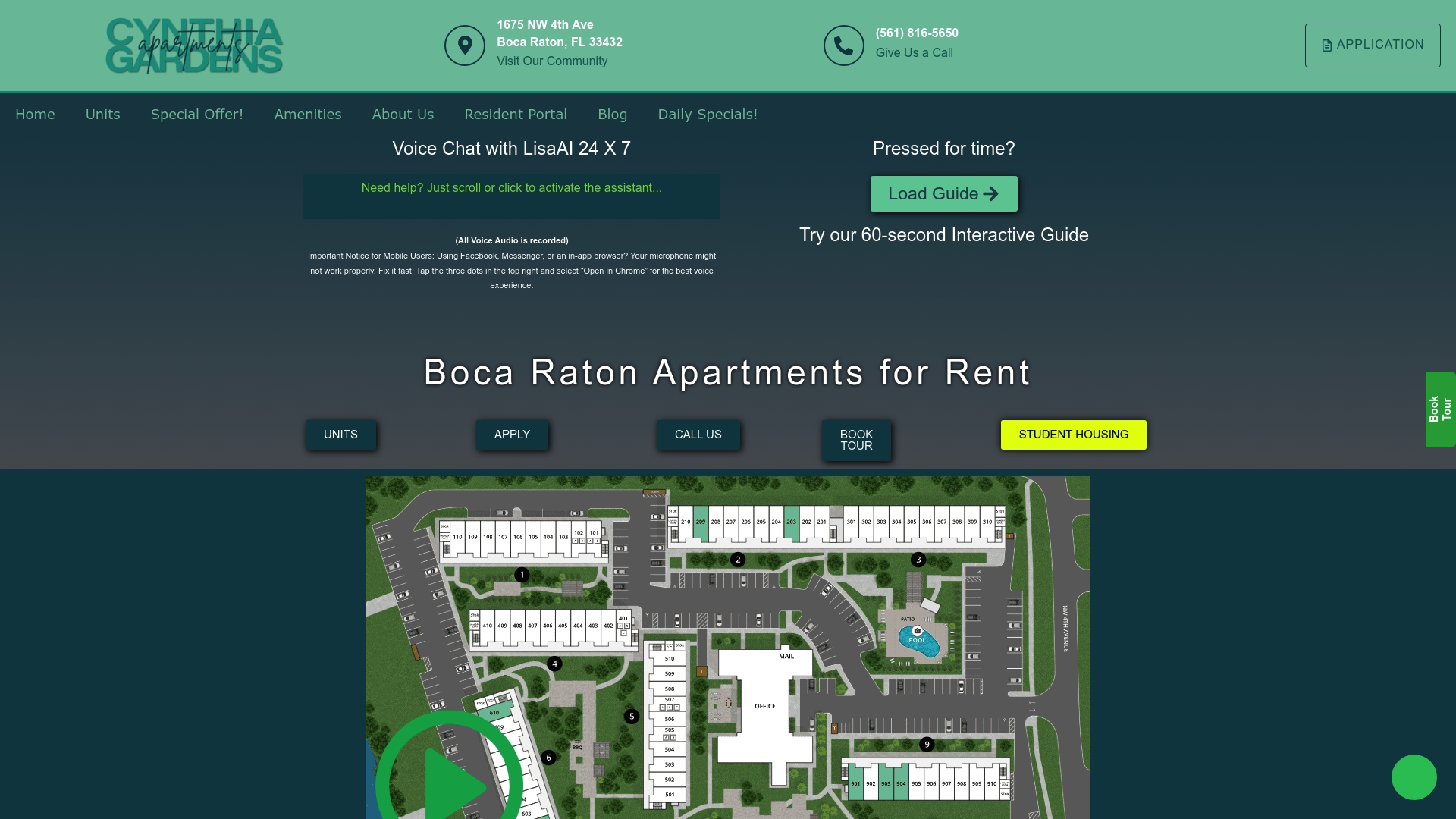
If natural light is a dealbreaker, browse available one-bedroom apartments in Boca Raton and note the floor and exposure listed for each unit, or contact the leasing team directly to ask about a specific apartment’s sun exposure before you schedule an in-person tour.
Sources
- Daylight performance and façade design (Ecotect simulation)
- The value of an apartment with sunlight and a view: A quasi-experimental analysis
- Check Apartment Sunlight Before Renting | SunCast
- How to Check Sun Orientation Before Renting or Buying an Apartment | Coffee in the Sun