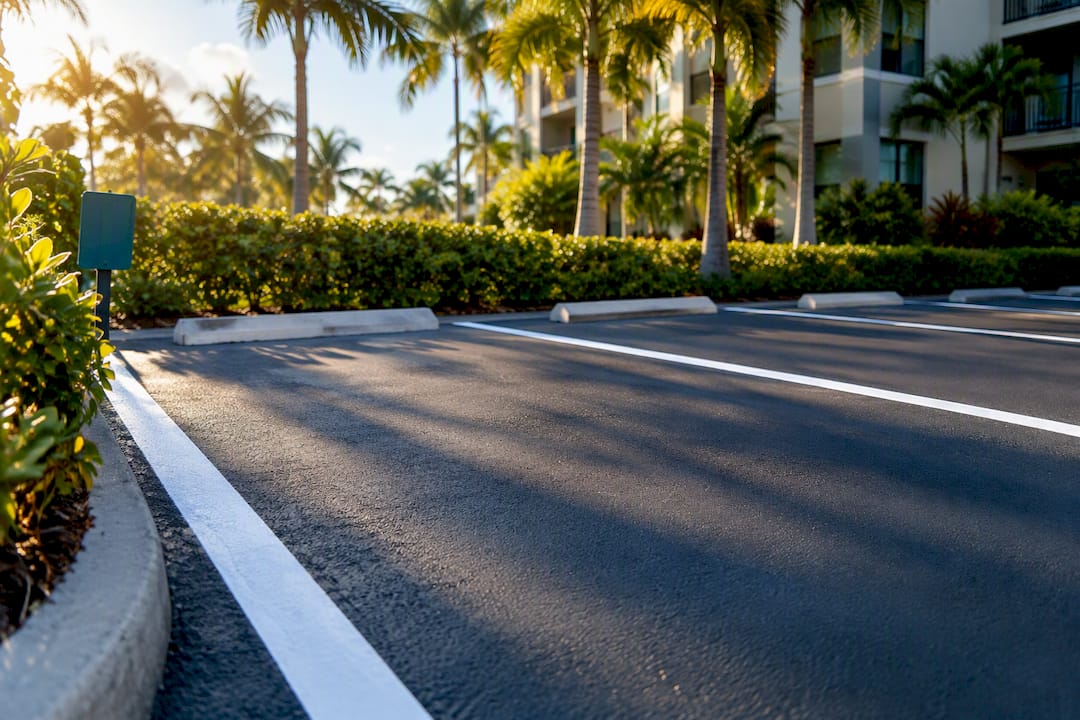
In Boca Raton, apartment parking is either bundled into rent or billed separately, and separate fees typically run from $0 for an open, unassigned spot up to roughly $100 to $200 or more a month for a reserved or garage space. Guest permits and EV charging usually cost extra on top of that. Before you sign anything, confirm the exact terms in writing and check the posted signage on-site, since Florida law puts the burden on you to know what’s posted.
TL;DR:
- Many Boca Raton apartments charge separate fees for reserved or garage parking, often ranging from $100 to $200 or more monthly, depending on the space type.
- Florida law requires clear signage, a 15-minute grace period, and a defined invoice and appeal process for parking charges, which renters should document carefully.
- Lease language may lump parking registration and reserved space fees together, but they are different costs that must be clarified before signing.
- When comparing units, consider that parking fees can add up to $900 annually, significantly increasing the total housing cost beyond the headline rent.
- Transparent communities post their parking fee structures online and provide virtual tools, making it easier to confirm costs and policies before leasing.
Table of Contents
- Apartment Parking Fees in Boca Raton: What You’ll Actually Pay
- Florida Law on Private Parking: What Protects You
- Breaking Down the Fee Types You’ll See on a Lease
- Your Pre-Lease Parking Checklist
- What Parking Actually Adds to Your Monthly Rent
- What Transparent Parking Policies Should Look Like
- See Transparent Parking Terms for Yourself
- Sources
- FAQ
Apartment Parking Fees in Boca Raton: What You’ll Actually Pay
Fee structures vary more than most renters expect. Some Boca Raton communities fold one parking space into the base rent with zero line-item charge. Others treat every space as a separate product, priced almost like a mini-lease of its own.
A common industry pattern, drawn from how local listings typically itemize the charge, prices a parking add-on somewhere in a broad monthly band, with one space often included and additional or reserved spaces costing more. That range moves depending on whether the spot is a surface lot, a covered carport, or an enclosed garage. Garage and covered parking sit at the top of the range almost everywhere in South Florida, since covered spaces protect cars from sun and storm damage, a real concern given the region’s heat and hurricane season.
Here’s how the common billing models break down:
- Included in rent: one unassigned surface spot per unit, no separate charge.
- Flat monthly fee: a set add-on for a guaranteed reserved space, regardless of vehicle type.
- Tiered by location: pricing that climbs based on proximity to the building entrance or covered structure.
- Per-additional-vehicle fee: a second or third car in the household triggers its own charge, often the steepest line item.
- Occasional or guest fee: a smaller daily or event-based charge for visitors, separate from resident rates.
Optional charges, as opposed to bundled ones, usually include guest permits, extra-vehicle spots, and reserved or covered spaces. What’s rarely optional is a base, unassigned space. Most Boca Raton communities guarantee at least one spot per lease, but whether that spot is free or priced is something you have to ask about directly, since advertised rent alone rarely tells the full story.
Florida Law on Private Parking: What Protects You
Florida Statute 715.075 gives private property owners, including apartment communities, the authority to set their own parking rules and rates. That authority comes with conditions. The rules and rates have to be posted where drivers can actually see them, and the law builds in a mandatory 15-minute grace period before any towing or fee action can be taken against a vehicle.
What the statute requires: clear posted signage, a 15-minute grace period, a formal invoice process for any parking charge, and a defined appeal window if you want to dispute it.
The practical upshot: your leverage as a renter comes almost entirely from documentation. If a community’s signage is vague, outdated, or missing, that’s a real problem for them, not just an inconvenience for you. Take these steps whenever you’re touring or already living somewhere with paid parking:
- Photograph every parking sign you see, including the date.
- Ask the leasing office for a written fee schedule, not just a verbal quote.
- Request the exact appeal procedure and timeline in writing before you need it.
- Keep copies of any parking invoice and note exactly where and when it appeared on your vehicle.
If a charge does show up, the statute requires a defined invoice and appeal process, and disputes typically move to neutral third-party review if management denies your appeal.
Breaking Down the Fee Types You’ll See on a Lease
Not all parking charges work the same way, and lease language often blurs the lines between them. Here’s how the main categories typically function:
- Assigned or reserved spot fees. These are recurring monthly charges for a guaranteed space, and they’re mandatory only if you specifically request or receive a reserved assignment. A standard unassigned spot usually stays free or included.
- One-time registration or permit fees. Some communities charge a single upfront fee to register a vehicle and issue a parking decal or gate remote, separate from any ongoing monthly rate.
- EV charging fees. Multifamily developments in Boca Raton increasingly install EV charging stations, and city ordinance permits property owners to charge for that access, whether through a flat monthly add-on or metered usage billing.
- Penalty invoices and towing fees. These appear when a vehicle is parked without a permit, in the wrong spot, or past the grace period, and they can run considerably higher than a standard reserved-spot fee, sometimes including a separate towing company invoice on top of the community’s own charge.
Pro Tip: Ask specifically whether the “parking fee” listed in your lease covers a reserved space or just registration. Those two things get lumped under the same label constantly, and they are not the same cost.
Your Pre-Lease Parking Checklist
Before you sign, walk through this list on the tour and again when you review the lease draft.
Ask on-site:
- How many spaces come with the unit, and is at least one guaranteed?
- Is reserved or covered parking available, and what’s the waitlist like?
- What’s the guest parking policy, and does it require a permit or registration?
Get in writing:
- The full fee schedule, including any planned increases over the lease term.
- A copy or photo of the posted signage referenced in your lease.
- Confirmation of the invoice and appeal process required under Florida Statute 715.075.
Pro Tip: Email the leasing agent a short written summary of everything they told you verbally about parking. If terms shift later, that email becomes your dated record.
If a fee seems steep relative to comparable units nearby, ask directly whether it’s negotiable or waivable, especially during slower leasing seasons. Some communities will concede on add-on fees even when they hold firm on base rent.
What Parking Actually Adds to Your Monthly Rent
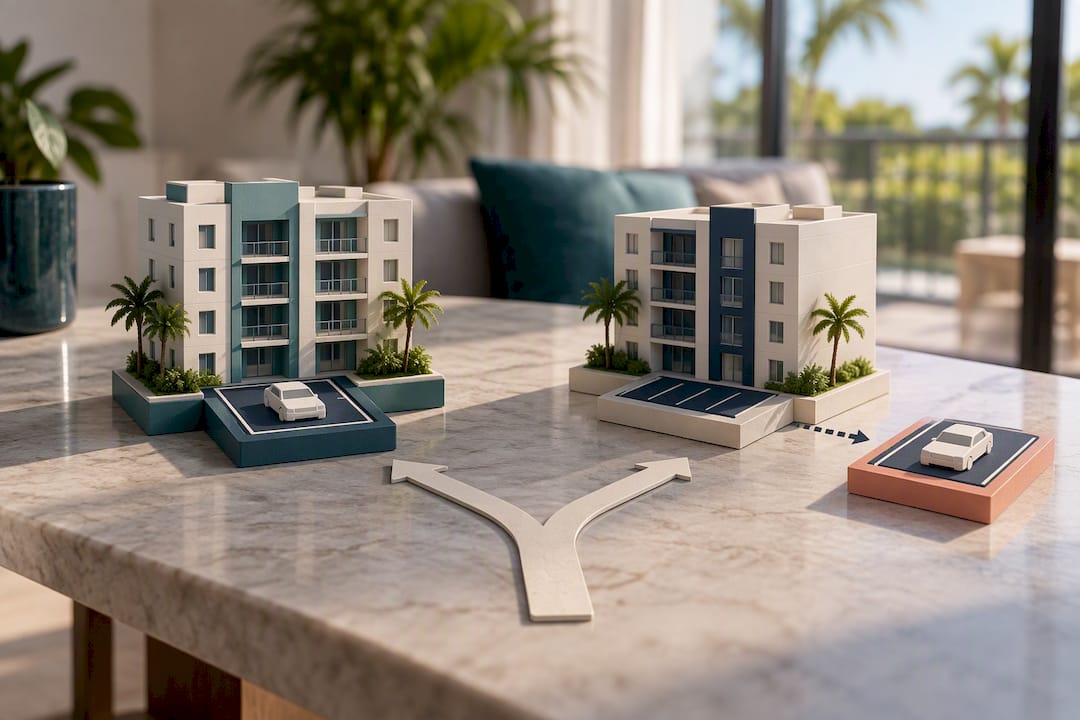
Run the math before you commit. Say a unit advertises at a given rent with no parking fee. A second option, at the same base rent, charges $75 a month for a reserved spot. A third adds a $150 covered-garage fee. Over a 12-month lease, that gap between the cheapest and priciest option adds up to $900, money that never shows up in the headline rent figure.
Local rent-data shows median one-bedroom rents in Boca Raton sitting well above many other Florida metros, and HUD’s regional housing analysis places the area among the higher-cost markets in the region.
For a worker earning $20 an hour, roughly $3,467 a month before taxes, a $150 parking fee stacked onto an already high base rent can push total housing cost well past the common guideline of spending no more than 30% of income on rent. That’s exactly why the fee line deserves the same scrutiny as the rent figure itself.
What Transparent Parking Policies Should Look Like
The clearest sign of a well-run community is a landlord willing to put every fee in writing before you ask twice. Some communities post their fee structures openly and provide virtual tours and interactive property maps to help prospective renters confirm parking locations and layouts without guessing. That’s the standard worth requesting anywhere you tour, not just here.
— Ayman
See Transparent Parking Terms for Yourself
Most of the guesswork around parking fees disappears once a community actually publishes its numbers. Cynthiagardens lists monthly rent for its one-bedroom apartments at $1,990 to $2,220, and publishes every add-on, including the application, administration, and pet fees, instead of burying them in lease fine print.
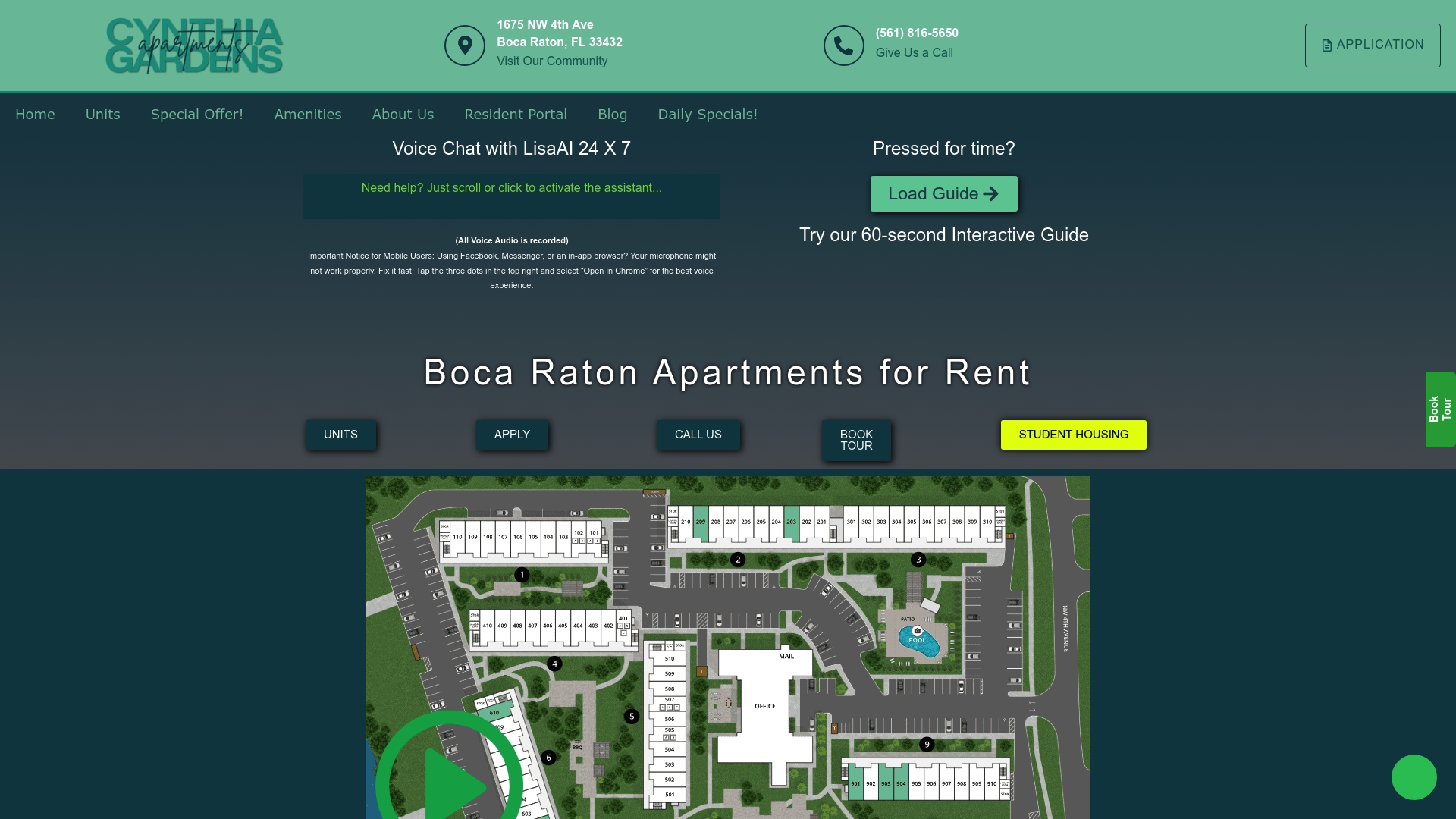
Some communities are pet-friendly, requiring a one-time cat fee and no ongoing pet rent. Leasing may run through a digital process that includes AI chat support and virtual tours, allowing prospects to confirm layouts and parking access before scheduling an in-person visit. If you’re comparing communities and want a fee sheet you can actually read, browse available one-bedroom units and check the posted policies for yourself.
Sources
Review Florida Statute 715.075 for your legal rights, the HUD housing market analysis for rent trends, City of Boca Raton parking pages for public rates, and current median rent data for budgeting.
- Florida Statutes §715.075 — Vehicles parked on private property; rules and rates authorized
- Comprehensive Housing Market Analysis: West Palm Beach–Boca Raton–Delray Beach, FL (HUD)
- 1-Bedroom apartment rent in Boca Raton, FL — RentDataNow
FAQ
Do I have to pay for parking at my apartment?
It depends entirely on the community. Many Boca Raton apartments include one unassigned space in the base rent, while reserved, covered, or additional spaces often carry a separate monthly charge that can run $100 to $200 or more. Always check the lease language rather than assuming a fee applies or doesn’t.
What are the parking rules in Boca Raton?
Private apartment communities set their own parking rates and rules under Florida Statute 715.075, but they must post those rules clearly and provide a minimum 15-minute grace period before towing or fining. For public street and metered parking, the City of Boca Raton’s parking pages list rates and enforcement details separately from private lease terms.
Can I afford $1,000 rent making $20 an hour?
At $20 an hour, gross monthly income is roughly $3,467, which puts $1,000 in rent at about 29% of income, right at the common 30% affordability guideline. Adding a parking fee on top pushes that percentage higher, so it’s worth including any parking charge in your total housing cost before deciding a unit fits your budget.
Are parking fees included in rent?
Sometimes, but not always, and it varies by community and even by unit type within the same property. The only way to know for certain is to ask for the written fee schedule and confirm whether the number quoted for rent already accounts for a parking space or excludes it entirely.