
Searching for an affordable one-bedroom apartment in Boca Raton with a pet can feel like a maze of confusing listings and unclear fees. For young professionals and FAU students, time matters as much as money and finding a place should not mean endless paperwork or hidden costs. Modern apartment finder services act as intermediaries, combining tech-savvy search tools, clear pricing, and personalized support so you can focus on living, not just looking.
Table of Contents
- Apartment Finders: Definition And Misconceptions
- Key Features Of Apartment Finder Services
- How Tech-Driven Apartment Searches Work
- Transparent Pricing And Pet-Friendly Options
- Comparing Apartment Finders Vs. Diy Searches
- Common Pitfalls To Avoid When Renting
Key Takeaways
| Point | Details |
|---|---|
| Understanding Apartment Finders | They serve as intermediaries connecting renters with available properties, utilizing technology to streamline searches and facilitate the rental process. |
| Legal Clarity | Modern apartment finders operate within clear legal frameworks, ensuring transparency and protecting renters’ rights. |
| Value of Technology | Tech-driven platforms provide features such as personalized search, virtual tours, and AI support, making apartment hunting more efficient. |
| Cost Transparency | Quality apartment finders reveal all associated costs upfront, allowing renters to avoid hidden fees and make informed decisions. |
Apartment finders: definition and misconceptions
When you hear the term “apartment finder,” you probably think of a service that helps you locate rental units. That’s accurate, but the definition goes deeper than most people realize. An apartment finder is essentially an intermediary service or platform that connects renters with available properties, handling the legwork of searching, filtering options, and presenting them to you in an organized way. But here’s where misconceptions enter the picture: many renters assume apartment finders are exclusively third-party services that charge fees, when in reality, modern apartment finders range from traditional brokers to digital platforms to the leasing offices themselves offering tech-forward search tools. The core function remains the same—they eliminate the friction between you and the apartment you’re looking for.
One of the biggest myths is that apartment finders operate in a legal gray area. People often worry about their rights when using these services, which stems partly from historical confusion about property ownership and finder rights. Understanding lost property laws and finders’ legal standing clarifies how modern apartment finder services differ from outdated concepts. Today’s apartment finders operate within clear legal frameworks as legitimate rental intermediaries. They don’t claim ownership of properties—they simply facilitate the rental process. Another common misconception is that all apartment finders work the same way. You might assume they all charge expensive upfront fees or take a percentage of your rent, but transparent, modern apartment finder platforms often operate differently. Some charge one-time fees, others are free to renters (compensated by landlords), and some like our service at Cynthia Gardens offer zero hidden fees and straightforward pricing from the start.
There’s also confusion around what apartment finders actually do versus what they don’t. They’re search engines for rentals, not real estate agents who can negotiate on your behalf (though some services include both). They don’t guarantee you’ll get approved for a specific apartment, and they don’t make leasing decisions. What they do provide is access to inventory, filtering tools, virtual tours, and often AI-powered support to answer your questions instantly. For young professionals and FAU students in Boca Raton, understanding this distinction matters because it shapes your expectations. You’re not paying for guaranteed placement; you’re paying for convenience, transparency, and faster access to available options. When you explore your ideal apartment in Boca Raton, a proper apartment finder tool should handle the tedious parts while you focus on making the actual decision.
Pro tip: When evaluating any apartment finder service, ask upfront about all fees, what’s included in the search process, and whether they offer virtual tours or AI chat support—transparency here signals whether they’re genuinely designed to serve your needs or just push you toward a quick rental.
Key features of apartment finder services
Modern apartment finder services pack far more functionality than just listing available units. The backbone of any solid apartment finder is personalized search capability. These services let you filter by budget, location, pet policies, lease length, and specific amenities that matter to you. Instead of scrolling through hundreds of listings manually, you input your preferences once, and the service handles the heavy lifting. For FAU students and young professionals in Boca Raton, this means you can narrow results to pet-friendly one-bedroom units under a certain price point within walking distance of campus or your workplace. Beyond basic filtering, quality apartment finders offer transparent pricing comparison. You see all costs upfront—rent, deposits, fees, everything. No surprises on move-in day. Many services like ours also provide affordable housing program matching to help renters understand what subsidies or assistance programs they might qualify for, which is especially valuable if you’re stretching a student budget.
Another critical feature is virtual tour access and interactive property maps. Instead of scheduling five different in-person showings across town, you explore units from your dorm or apartment using high-quality video tours. Interactive maps let you see exactly where the property sits relative to restaurants, transit, libraries, and other spots that matter to your lifestyle. This saves hours of wasted time and travel. Modern apartment finders also handle application guidance and documentation support. The process can feel intimidating, especially for first-time renters. A good finder service walks you through what landlords need, helps you organize your documents, and explains leasing requirements clearly. This reduces rejections and speeds up approval times significantly.
What sets newer apartment finder services apart is AI-powered chat support and voice assistance. You can ask questions at midnight, get instant answers, and schedule tours through voice commands. This convenience factor matters when you’re juggling classes, work, and apartment hunting. The service also coordinates with leasing offices to schedule tours and explain leasing requirements on your behalf, saving you from playing phone tag. One often-overlooked feature is cost transparency at zero charge to renters. Because apartment communities pay commissions when leases execute, you pay nothing for the finder service itself. This removes the barrier of expensive broker fees that used to plague apartment hunting. For your situation, this means you get professional search tools and support without adding to your rental costs.
Below is a summary of key features offered by modern apartment finder services:
| Feature | What It Provides | Impact on Renters |
|---|---|---|
| Personalized Filtering | Search by budget, location, etc. | Matches rentals to true needs |
| Transparent Pricing | All fees shown upfront | Avoids surprises, aids budgeting |
| Virtual Tours & Maps | Explore units digitally | Saves travel, aids quick review |
| AI Chat/Voice Assistance | Instant, 24/7 support | Answers questions, faster action |
Pro tip: Use the AI chat feature to ask questions about pet policies, lease flexibility, and move-in costs before scheduling a tour, so you only visit apartments that actually meet your needs and budget.
How tech-driven apartment searches work
Tech-driven apartment searches have fundamentally changed how renters find homes. Instead of printing out classified ads or driving around neighborhoods looking for “For Rent” signs, you now input your preferences into a platform and get curated results instantly. The mechanics behind this involve artificial intelligence and machine learning algorithms that understand what you actually want versus what you think you want. When you filter for pet-friendly one-bedroom apartments under $1,500 near FAU, the system doesn’t just match those exact criteria. It learns from your behavior. Which listings do you click? How long do you spend viewing each property? Do you check out the amenities or jump straight to the lease terms? The AI captures these patterns and refines future suggestions to match your real priorities. This personalization happens in real-time, meaning your search results get smarter the more you interact with them.
The technology powering these searches also integrates multiple data sources to provide predictive insights. AI-assisted apartment search systems analyze employment patterns, neighborhood trends, rental price movements, and availability data to help you understand not just what’s available today, but what’s likely available soon. For example, if several leases in a building expire in August, the system flags that building as having upcoming availability. This prevents you from wasting time on buildings with zero turnover. The mapping and filtering infrastructure draws from census data and real estate market analysis to show you commute times to specific locations, nearby transit options, walkability scores, and neighborhood demographics. You’re not just seeing an address anymore; you’re seeing context about that address and how it fits your lifestyle.
On the backend, tech-driven platforms streamline the entire rental workflow beyond just searching. Virtual tour technology lets you explore units in 360-degree video or interactive tours from your laptop or phone. Application submission happens digitally with electronic signatures. Payment processing is secure and tracked. Your documents stay organized in one dashboard instead of scattered across emails. For renters like you juggling classes, work, and apartment hunting, this means you can complete most of the apartment search and initial application process without visiting the leasing office once. The technology also reduces human error. You fill out your application once, and the system populates it consistently across all platforms. No more accidentally putting the wrong date on different forms.
Pro tip: Start your search by creating a detailed profile with all your preferences (budget, pet type, must-have amenities, commute distance), then let the AI suggest properties rather than scrolling endlessly through listings you already know won’t work.
Transparent pricing and pet-friendly options
If you own a dog, cat, or other pet, finding an apartment that welcomes them shouldn’t mean paying hidden fees or facing surprise charges at lease signing. Transparent pricing means you see every pet-related cost upfront. No mystery deposits. No unexpected monthly surcharges. Quality apartment finder services break down exactly what you’ll pay: pet deposit amount, monthly pet rent (if applicable), and any breed or size restrictions that might affect you. For example, you might see “$250 pet deposit, $25 monthly pet fee, dogs under 50 pounds welcome.” This clarity lets you compare total costs across buildings before committing time to tours or applications. When searching for apartments in Boca Raton, this matters enormously because pet fees can add $300 to $600 annually to your rent. The best apartment finders display this information prominently so you can filter by affordable pet options from the start. Clear pet policy communication helps renters make informed choices about their living situation without surprises later.

Beyond just listing fees, modern pet-friendly apartments are moving away from blanket breed and size restrictions toward individualized evaluations. Instead of “no pit bulls” or “dogs must weigh under 25 pounds,” progressive policies ask questions about your specific pet’s behavior, training, and temperament. An apartment finder worth using helps facilitate this conversation. The platform might include space for you to describe your pet, upload vaccination records, or even note training certifications. This shifts the focus from stereotypes to actual risk assessment. Pet-friendly housing policies increasingly emphasize individualized pet evaluations rather than broad prohibitions, recognizing that a well-trained large dog is less risky than an untrained small one. For you as a renter, this means better odds of approval and more honest conversations with leasing teams.
When using an apartment finder in Boca Raton, prioritize services that let you filter specifically for pet policies. Some platforms allow you to input your pet type, weight, and even breed to instantly see compatible properties. This eliminates wasted effort applying to buildings that won’t accept your companion. The finder should also show you which buildings charge pet fees versus which offer pet-friendly units at no extra cost. You’ll occasionally find truly pet-inclusive properties that don’t charge anything beyond standard rent, though these are less common. The transparency extends to application requirements too. A good finder clarifies upfront whether you’ll need vaccination records, pet insurance, or a pet reference letter. This preparation prevents rejections and speeds the approval process. You’re not just finding an apartment anymore; you’re finding one specifically designed to accommodate you and your pet without financial surprises or discriminatory policies.
Pro tip: Request a written pet policy from any apartment before signing, and use the apartment finder’s documentation tool to keep vaccination records, pet liability insurance, and any reference letters organized in one place for quick submission.
Comparing apartment finders vs. DIY searches
You could spend your weekend scrolling through rental listings on multiple websites, calling leasing offices, and driving across Boca Raton for tours. That’s the DIY approach. Or you could use an apartment finder and reclaim that time. The difference comes down to efficiency, information access, and risk. When you search DIY, you’re starting from scratch every time. You find listings on one site, notice they overlap with another, question whether prices are current, and waste hours verifying availability. An apartment finder curates options specifically matched to your criteria, confirms they’re still available, and presents them in one organized place. You skip the redundancy and get straight to actual decisions.
Beyond time savings, apartment finders reduce what economists call information asymmetry. Landlords know more about their properties, lease requirements, and what they’re willing to negotiate than you do. Professional apartment finder intermediaries help bridge this information gap by providing expert knowledge about market standards, typical lease terms, and negotiation tactics. A finder knows which buildings have flexible move-in dates, which allow subletting, and which are known for responsive maintenance. They’ve handled hundreds of applications and understand exactly what documentation landlords want and in what format. DIY renters often learn these lessons the hard way through rejections or unfavorable lease terms. Another practical advantage is cost. You pay nothing directly. Apartment finders operate commission-based models where property owners fund the service, not renters. This means you get expert assistance without the broker fees that traditionally plagued apartment hunting. DIY searches might seem free, but your time has value. Spending 20 hours searching, visiting wrong apartments, and negotiating lease terms yourself costs far more than the convenience of a professional finder.
That said, DIY searching offers one real advantage: total autonomy. You control exactly where you look and what you consider. An apartment finder narrows options based on algorithms and availability, which could theoretically exclude a gem you would have found yourself. In practice, though, this rarely matters because good finders let you adjust filters and explore outside their suggestions if something catches your eye. The real distinction is this: DIY works fine if you have unlimited time, enjoy administrative tasks, and don’t mind trial and error. For young professionals juggling classes and work, or anyone moving to an unfamiliar city, an apartment finder eliminates friction and accelerates results. You’re not sacrificing choice; you’re gaining time and confidence that you’re making informed decisions based on complete information.
Here’s how apartment finders and DIY searches compare on important factors:
| Factor | Apartment Finder Service | DIY Apartment Search |
|---|---|---|
| Time investment | Minimal – streamlined process | High – manual searching and calls |
| Cost to renter | Typically free, landlord-funded | No fee, but hidden time costs |
| Information access | Curated listings, expert insights | Varies, often incomplete data |
| Risk of mistakes | Lower – guided process | Higher – self-guided, error-prone |
| Customization | Algorithm-based with filters | Full control, manual adjustments |
Pro tip: Even with an apartment finder, set aside time to read actual lease documents before signing, and don’t hesitate to ask the finder or leasing office to explain any terms you don’t understand completely.
Common pitfalls to avoid when renting
Renting your first apartment feels exciting until you hit unexpected barriers. The most common pitfall is underestimating financial requirements. Landlords want proof you can afford rent, which means income verification, credit checks, and often a security deposit equal to one or two months of rent. If you’re a student or early-career professional, these hurdles feel steep. Before applying anywhere, check your credit report for errors and gather documentation showing your income. If your credit isn’t strong, explain it honestly. Many landlords appreciate context over perfection. Another financial pitfall is missing hidden costs. Renters often focus on monthly rent and forget about application fees, administrative fees, pet deposits, parking charges, and utility deposits. Understanding all upfront costs helps prevent financial surprises that could strain your already tight student or entry-level budget.
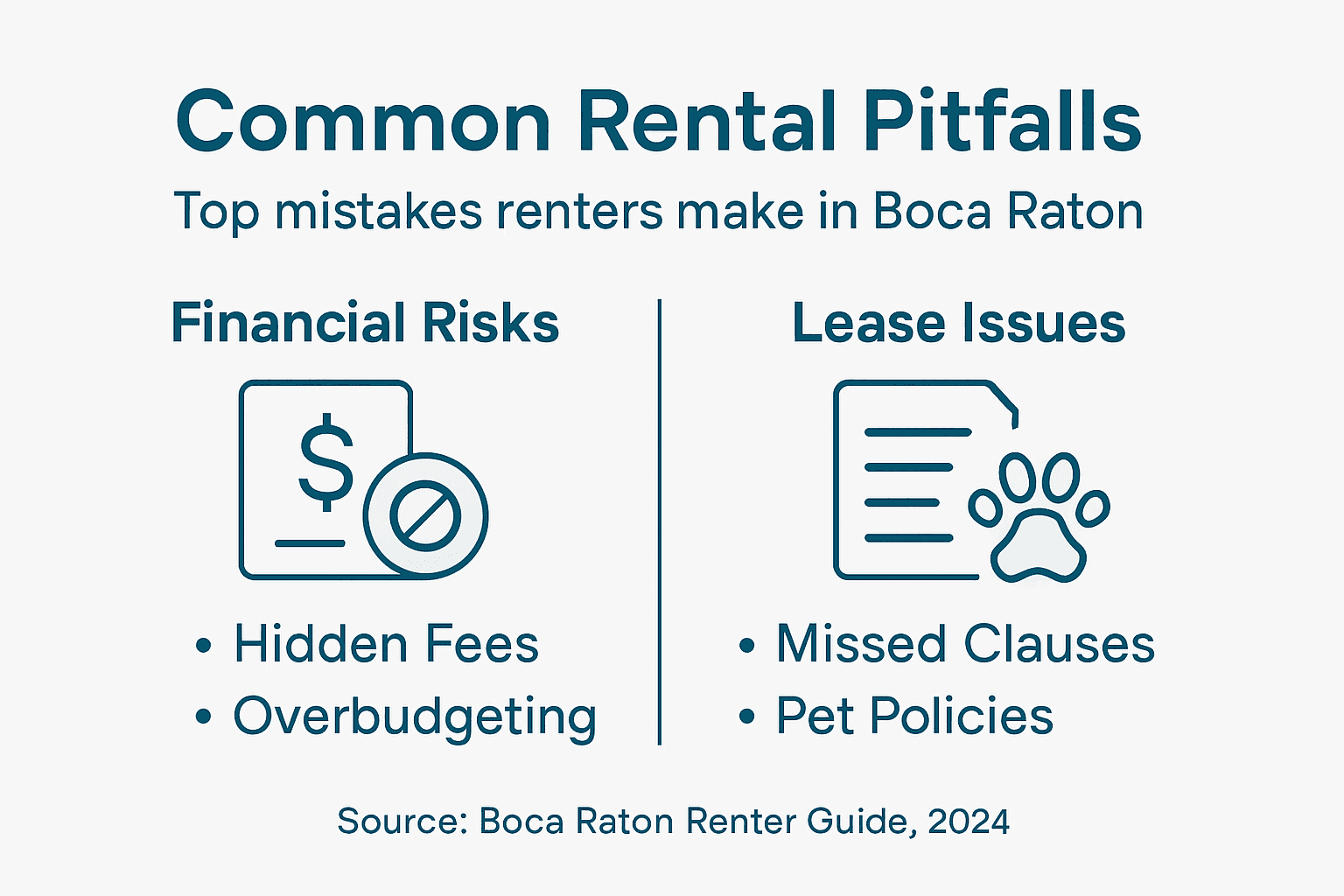
A second major pitfall is signing a lease without reading it carefully. Leases contain clauses about maintenance responsibilities, early termination penalties, noise restrictions, and guest policies that directly affect your living experience and wallet. Take time to read every section. Write down questions. Ask your landlord or apartment finder to explain anything unclear. Don’t assume verbal promises are binding; get modifications in writing. A related mistake is not verifying that the landlord complies with local housing codes. Some landlords operate outside regulations, and you’re the one who suffers if something breaks or gets unsafe. Request proof of liability insurance and ask whether the building meets Boca Raton housing standards. The third pitfall is poor unit inspection before signing. Take photos and videos of the apartment’s condition on move-in day, noting any existing damage, stains, or broken fixtures. Document everything in writing. This protects your security deposit later when you move out. Landlords can’t charge you for pre-existing damage if you’ve documented it upfront. Many students skip this step because they’re excited to move in, and it costs them money months later.
Finally, avoid the pitfall of incomplete application preparation. Gather references, pay stubs, identification, and proof of past housing compliance before applying. Having everything organized accelerates approval and shows landlords you’re serious and reliable. Many renters scramble at the last minute, make mistakes on applications, and face rejection. An apartment finder helps prevent some of these pitfalls by clarifying lease terms upfront and guiding you through the process, but ultimately you’re responsible for reading agreements and protecting yourself.
Pro tip: Before signing anything, write down three questions you have about the lease or building, ask them directly to the leasing manager, and request written confirmation of their answers to avoid disputes later.
Simplify Your Apartment Search with Cynthia Gardens in Boca Raton
Searching for the perfect apartment can feel overwhelming with so many options, hidden fees, and unclear pet policies. This article highlights the challenges renters face like confusing pricing, limited transparency, and time-consuming searches. If you want to avoid the stress of scattered listings and unclear terms, our modern approach at Cynthia Gardens offers exactly the solution you need. We provide transparent pricing with no hidden fees, pet-friendly apartments with clear policies, and a tech-forward leasing experience featuring AI chat support, voice assistance, virtual tours, and an interactive map to help you find your ideal home quickly and confidently.
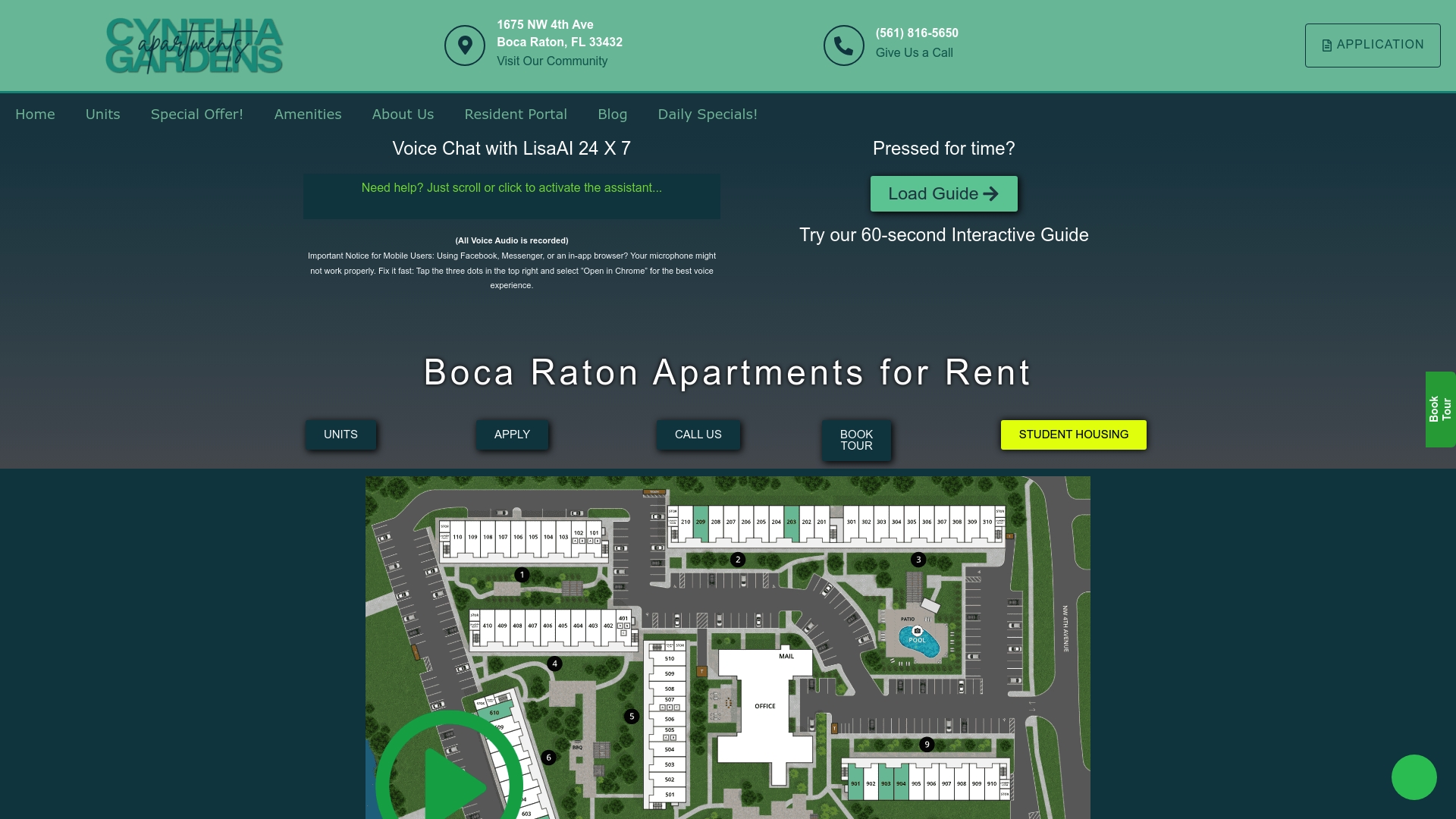
Experience the difference of a truly transparent and efficient apartment finder right here in Boca Raton. Visit Cynthia Gardens to explore our affordable one-bedroom apartments tailor-made for students, young professionals, and pet owners. Take advantage of our virtual tours and AI-powered support to get answers and schedule visits instantly. Don’t wait to make your move easier and smarter. Start your search today at https://cynthiagardens.com and take control of your rental journey.
Frequently Asked Questions
What are apartment finders and how do they work?
Apartment finders are services or platforms that connect renters with available rental properties, handling the search, filtering, and presentation of options based on your preferences. They help streamline the apartment-hunting process by providing curated listings tailored to your needs.
What benefits do modern apartment finders offer compared to DIY searches?
Modern apartment finders save you time with a streamlined process, offer curated listings, provide information transparency, and reduce the risk of mistakes in rental applications. Unlike DIY searches, apartment finders often have insider knowledge about properties and can assist with documentation.
Are there any hidden costs when using an apartment finder?
No, reputable apartment finders typically operate on a commission basis funded by landlords, meaning renters usually pay nothing directly. It’s essential to ask about any fees upfront to ensure complete transparency.
Can apartment finders help me find pet-friendly apartments?
Yes, many apartment finders allow you to filter specifically for pet-friendly options. They provide clear information about pet policies, fees, and restrictions, helping you find a suitable apartment for you and your pet without unexpected costs.
Recommended
- Unlocking Paradise: Your Ultimate Boca Raton Apartment Finder Guide – Luxury Apartments for Rent in Boca Raton | Premium Boca Raton Apartments | Aapartments Boca Raton
- The Ultimate Guide To Finding Your Ideal Apartment In Boca Raton – Tips And Tricks – Luxury Apartments for Rent in Boca Raton | Premium Boca Raton Apartments | Aapartments Boca Raton
- Discover Your Perfect Apartment in Boca Raton, Florida – Luxury Apartments for Rent in Boca Raton | Premium Boca Raton Apartments | Aapartments Boca Raton
- Apartments for Rent in Boca Raton, FL – Luxury Apartments for Rent in Boca Raton | Premium Boca Raton Apartments | Aapartments Boca Raton
- Comment choisir un avocat immobilier adapté à vos besoins – Avocat Immobilier Paris