
Most American renters in Boca Raton face a tough reality as over two-thirds spend more than 30 percent of their income on housing. Affordable, pet-friendly one-bedroom apartments are more than just a wish for young professionals and graduate students—they are essential for financial stability. Transparent pricing and tech-forward leasing now offer a smarter path to securing a home that suits your budget, lifestyle, and furry friends without sacrificing peace of mind.
Table of Contents
- Defining Affordable Housing and Common Myths
- Types of Affordable Housing in the U.S.
- How Affordability Is Determined and Regulated
- Income Limits, Qualifications, and Application Steps
- Benefits and Challenges for Boca Raton Renters
Key Takeaways
| Point | Details |
|---|---|
| Understanding Affordable Housing | Affordable housing is defined by federal guidelines as housing where costs do not exceed 30% of gross income, ensuring financial stability for residents. |
| Addressing Myths | Myths about affordable housing reducing property values or community quality are unfounded; well-planned developments can enhance diversity and economic stability. |
| Types of Programs | Various affordable housing models exist, including Housing Choice Vouchers and public housing, each supporting low-income households through different mechanisms. |
| Navigating Application Processes | To secure affordable housing, applicants should meticulously prepare documentation and understand eligibility requirements to enhance their chances of approval. |
Defining Affordable Housing and Common Myths
Affordable housing represents a critical solution for ensuring accessible living spaces for individuals and families with limited financial resources. According to federal guidelines, affordable housing is defined as residential accommodations where occupants spend no more than 30 percent of their gross income on housing expenses, including utilities and basic maintenance costs. Federal policy defines housing affordability through a carefully calculated metric designed to ensure households can maintain financial stability.
The concept of affordable housing extends beyond simple cost considerations. Housing affordability varies significantly across different regions and income levels, creating complex challenges for urban planners and policymakers. Most affordable housing programs target very low-income families, typically those earning below 50 percent of the Area Median Income (AMI), with some initiatives supporting households up to 80 percent AMI.
Several persistent myths surrounding affordable housing continue to distort public perception. Contrary to popular belief, affordable housing developments do not inherently reduce property values, compromise neighborhood safety, or diminish school quality. Research consistently demonstrates that well-planned affordable housing integration can positively contribute to community diversity and economic stability. These misconceptions often stem from unfounded stereotypes rather than empirical evidence.
Pro Tip: When searching for affordable housing, calculate your maximum affordable rent by multiplying your monthly income by 0.3 to ensure you stay within recommended financial guidelines.
Types of Affordable Housing in the U.S.
Affordable housing in the United States encompasses a diverse range of housing solutions designed to meet the needs of low and moderate-income households. Various housing types provide innovative approaches to addressing housing accessibility, each offering unique strategies to reduce living costs and increase housing options for residents.
Federal programs support multiple affordable housing models, including tenant-based rental assistance and project-specific developments. The primary types of affordable housing include Housing Choice Vouchers (Section 8), public housing, Low-Income Housing Tax Credit (LIHTC) developments, and alternative housing solutions. Government initiatives provide critical support through programs like HOME Investment Partnerships and Community Development Block Grants, which help fund and sustain affordable housing across the nation.

Innovative housing options have emerged to address affordability challenges, including micro units, co-living spaces, accessory dwelling units, manufactured homes, and tiny homes. These alternative housing models offer creative solutions for individuals and families struggling with traditional housing markets. Each type provides unique benefits, from reduced construction costs to more flexible living arrangements that can significantly lower monthly housing expenses.
Pro Tip: Research local housing authority programs and explore multiple affordable housing options to find the best fit for your budget and lifestyle needs.
Here is a summary comparing common types of affordable housing in the U.S.:
| Housing Type | Main Qualification | Typical Benefit | Common Challenges |
|---|---|---|---|
| Housing Choice Vouchers | Income below local AMI | Rent flexibility | Long waiting lists |
| Public Housing | Low-income households | Subsidized rent | Limited availability |
| LIHTC Developments | Income-based eligibility | Modernized facilities | Competitive application |
| Alternative Models | Varies by program | Lower costs, flexibility | Regulatory complexity |
How Affordability Is Determined and Regulated
Housing affordability is a complex system determined by multiple interconnected factors involving government agencies, regulatory bodies, and economic metrics. State public utility commissions play a crucial role in establishing just and reasonable rates that balance consumer protection with utility company sustainability. These regulatory frameworks consider critical elements like household income, utility expenses, and regional economic conditions when defining affordable housing standards.
The determination of housing affordability typically relies on the standard metric of households spending no more than 30 percent of their gross income on housing and utility costs. Utility ratemaking processes significantly impact overall housing affordability, with regulators implementing upstream interventions to prevent excessive billing. Affordability calculations consider multiple variables including median family income, regional cost of living, utility rates, and local economic conditions.
Regulatory mechanisms involve complex interactions between federal, state, and local agencies to ensure housing remains accessible for low and moderate-income residents. These agencies develop policies that protect vulnerable populations while maintaining economic incentives for housing development. Strategies include tax credits, subsidies, zoning regulations, and targeted assistance programs designed to create sustainable affordable housing ecosystems.
Pro Tip: Always calculate your total housing costs, including utilities, to determine true affordability beyond just monthly rent.
The following table breaks down how affordability is calculated and regulated:
| Factor Considered | Why It Matters | Who Regulates |
|---|---|---|
| Gross Household Income | Sets rent contribution limit | HUD, local PHAs |
| Utility Rates | Influences total housing cost | State utility commissions |
| Area Median Income | Defines eligibility thresholds | Federal agencies |
| Local Cost of Living | Impacts affordability metric | Local governments |
Income Limits, Qualifications, and Application Steps
Housing program eligibility requirements are carefully structured to ensure affordable housing reaches those most in need. Income categories are defined by complex metrics that categorize households based on their earnings relative to the Area Median Income (AMI). These categories include extremely low-income (below 30% AMI), very low-income (below 50%), and low-income (below 80%), with each tier determining specific housing assistance opportunities.
Qualification processes extend beyond simple income verification. Local public housing agencies evaluate multiple eligibility factors including legal residency, social security verification, rental history, and background checks. Applicants must provide comprehensive documentation demonstrating their household composition, income sources, and compliance with program-specific requirements. Preference is often given to vulnerable populations such as homeless individuals, families with children, seniors, and people with disabilities.
The application process for affordable housing typically involves several strategic steps. Prospective applicants must first identify appropriate housing programs, gather required documentation, and complete detailed application forms. Many local housing authorities maintain waiting lists with priority rankings, meaning timing and thorough preparation can significantly impact one’s chances of securing affordable housing. Additional considerations include meeting citizenship requirements, passing background screenings, and demonstrating ability to maintain stable tenancy.
Pro Tip: Organize all income verification documents, rental history records, and identification paperwork before beginning your affordable housing application to streamline the process.
Benefits and Challenges for Boca Raton Renters
Boca Raton’s rental market presents a complex landscape of opportunities and challenges for residents, characterized by rising housing costs and increasing demand. The city’s rental ecosystem offers diverse housing options, but simultaneously confronts significant affordability barriers. Rental dynamics in this affluent South Florida community reflect broader economic tensions between market-rate housing and accessible living spaces for essential workers and middle-income professionals.
Nearly two-thirds of Boca Raton renters currently spend more than 30% of their income on housing, creating substantial economic strain for local workers. The challenges extend beyond pure cost, impacting critical workforce sectors like education and healthcare. Essential workers such as teachers and nurses increasingly face difficult choices between long commutes and unaffordable local housing, threatening the community’s economic sustainability and professional infrastructure.

Positive developments are emerging through legislative initiatives like the Live Local Act, which aims to accelerate affordable housing development and create more balanced residential opportunities. These efforts seek to harmonize community growth with housing accessibility, introducing innovative approaches to address the city’s complex housing needs. The ongoing transformation involves carefully negotiating between preserving neighborhood character and expanding housing options for diverse income groups.
Pro Tip: Research local housing assistance programs and explore emerging affordable housing developments to identify potential cost-saving rental opportunities in Boca Raton.
Discover Affordable Living at Cynthia Gardens in Boca Raton
The article highlights the pressing challenge Boca Raton renters face in finding affordable housing while managing rising costs and limited options. If you are a young professional, student, or pet owner struggling to stay within recommended financial guidelines such as spending no more than 30 percent of your income on housing, Cynthia Gardens offers a solution designed for your needs. With transparent pricing and well-maintained one-bedroom apartments, we help ease the burden of high rent and long waiting lists mentioned in affordable housing discussions.
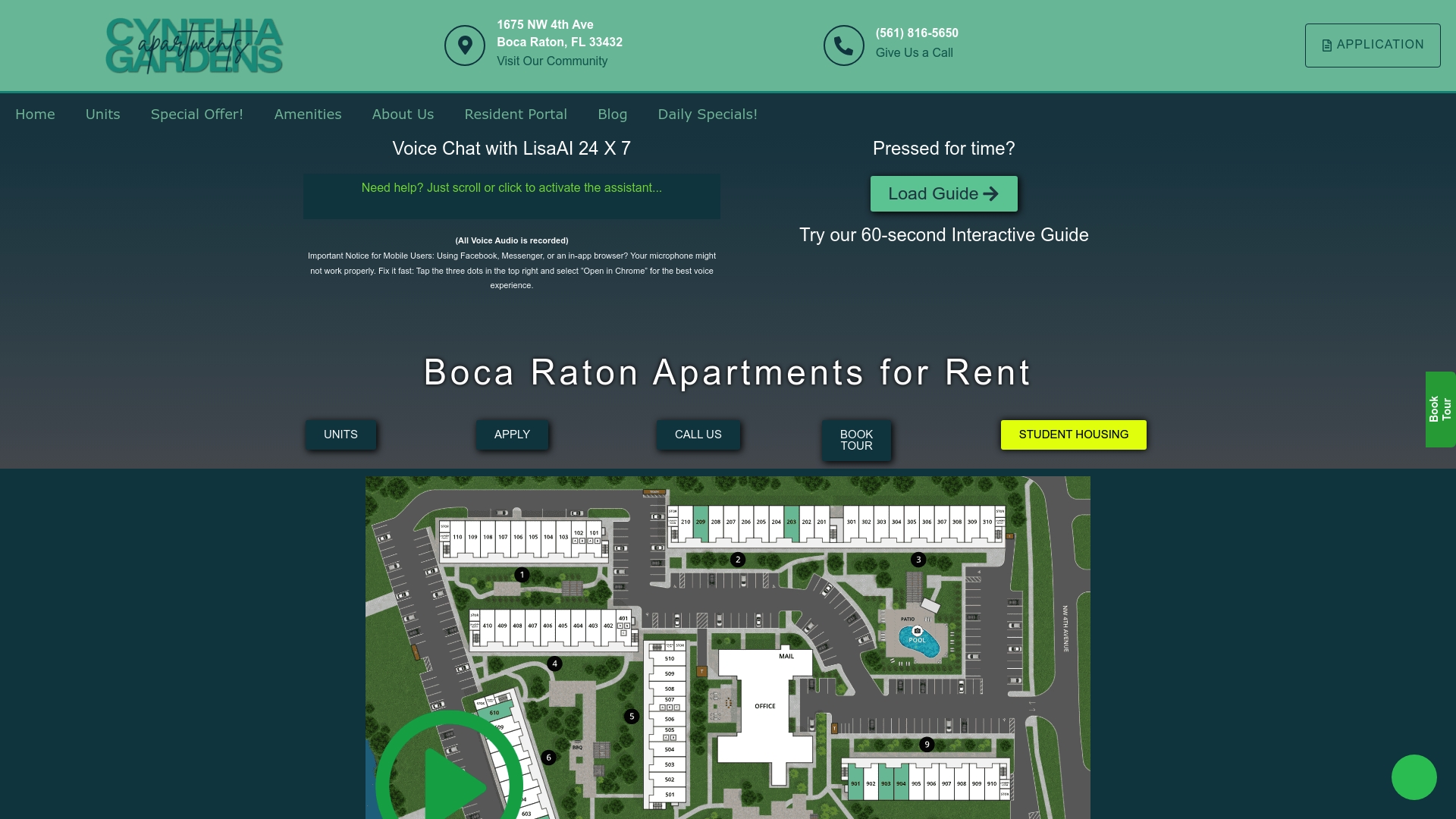
Take control of your housing search with our tech-forward leasing experience featuring AI chat support, voice assistance, virtual tours, and an interactive property map. These tools help you quickly find a home that suits your lifestyle and budget without the stress of lengthy applications or hidden costs. Visit Cynthia Gardens now to explore our affordable apartment community, or learn more about how we support the Boca Raton community through innovative housing at our landing page. Don’t wait—start your path to affordable, convenient living today and join a community that values your needs.
Frequently Asked Questions
What is considered affordable housing in Boca Raton?
Affordable housing in Boca Raton is defined as residential accommodations where occupants spend no more than 30% of their gross income on housing-related expenses, including utilities.
How does income impact eligibility for affordable housing?
Eligibility for affordable housing is structured around income categories based on the Area Median Income (AMI), which includes extremely low-income (below 30% AMI), very low-income (below 50% AMI), and low-income (below 80% AMI).
What challenges do Boca Raton renters face in finding affordable housing?
Many renters in Boca Raton face challenges such as high rental costs, with nearly two-thirds spending more than 30% of their income on housing, which creates economic strain, particularly for essential workers.
What initiatives are being introduced to improve affordable housing in Boca Raton?
Legislative initiatives such as the Live Local Act aim to accelerate affordable housing development and create more balanced residential opportunities to meet the community’s diverse housing needs.
Recommended
- Discover Your Dream Home: Exciting Boca Apartments for Rent Await You! – Luxury Apartments for Rent in Boca Raton | Premium Boca Raton Apartments | Aapartments Boca Raton
- apartment boca raton fl – Luxury Apartments for Rent in Boca Raton | Premium Boca Raton Apartments | Aapartments Boca Raton
- Top Reasons to Live in Boca Raton Apartments – Luxury Apartments for Rent in Boca Raton | Premium Boca Raton Apartments | Aapartments Boca Raton
- Apartments for Rent in Boca Raton, FL – Affordable Rental Options – Luxury Apartments for Rent in Boca Raton | Premium Boca Raton Apartments | Aapartments Boca Raton
- Understanding Micro House Interior: Space-Saving Concepts – FunLifeNow