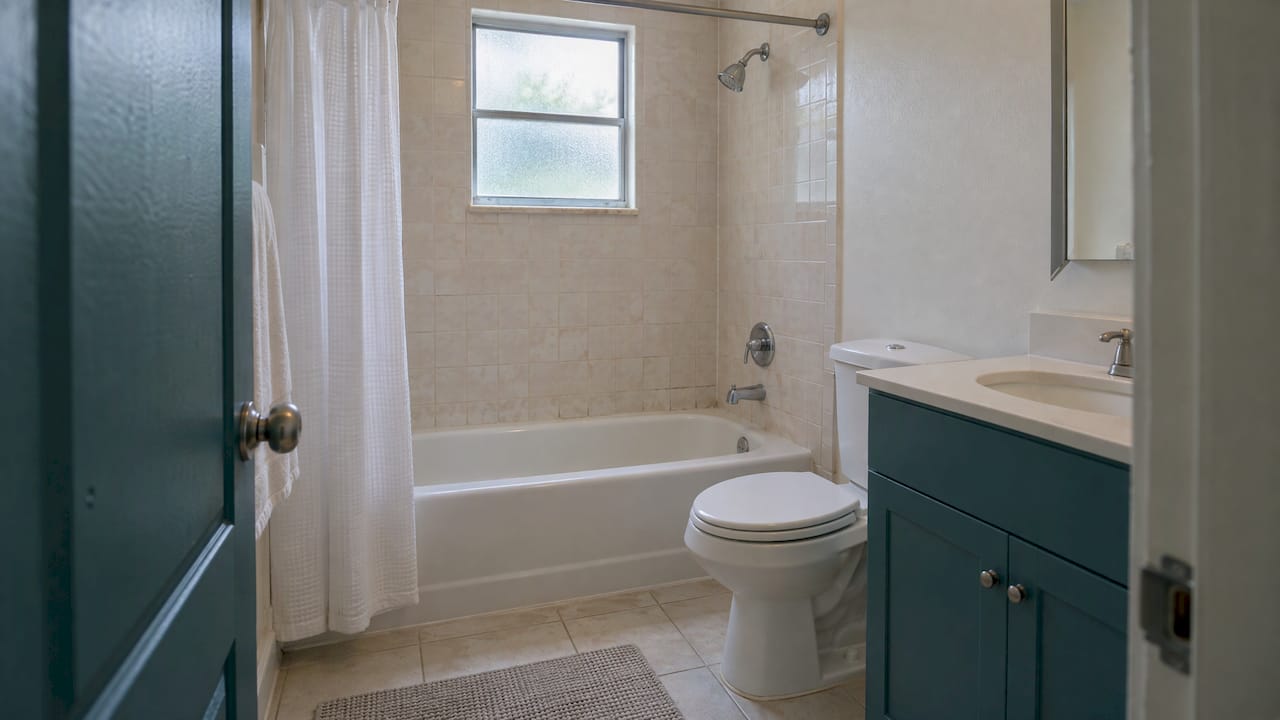
For most single renters, students and young professionals, a bathtub-shower combo is the safest pick in a one-bedroom apartment, because it gives you a daily shower and a tub for the occasional soak or for washing a cat. A shower-only bathroom is the better daily fixture if you never plan to use a tub. As a renter you don’t choose the fixture after you sign, so the real decision is what to look for on the tour. At Cynthia Gardens, our one-bedroom apartments in Boca Raton are listed at $1,990 to $2,220 per month, with fees published on our site.
TL;DR
- A shower needs about 9 sq ft of floor, a standard tub about 13 sq ft, so a shower-only layout frees space in a small bathroom.
- A shower usually uses less water, but only if you keep it short: a 10-minute shower at 2.5 gpm uses about 25 gallons.
- If you have a cat, or may adopt one, a tub makes rinsing and bathing easier than a shower stall.
- Renters can’t remodel, so judge the bathroom on the tour: footprint, water pressure, ventilation, grout and caulk condition.
- One bathroom and a tub you might use? A combo covers both needs.
Table of Contents
- The three setups you will meet
- Space: why the footprint matters
- Water use: shorter showers win, but not by as much as you think
- When a shower is the better fit
- When a tub earns its space
- Washing a cat: tub or shower?
- What to check on the tour
- Quick decision guide
- Find a one-bedroom that fits your routine
- FAQ
- Sources
The three setups you will meet
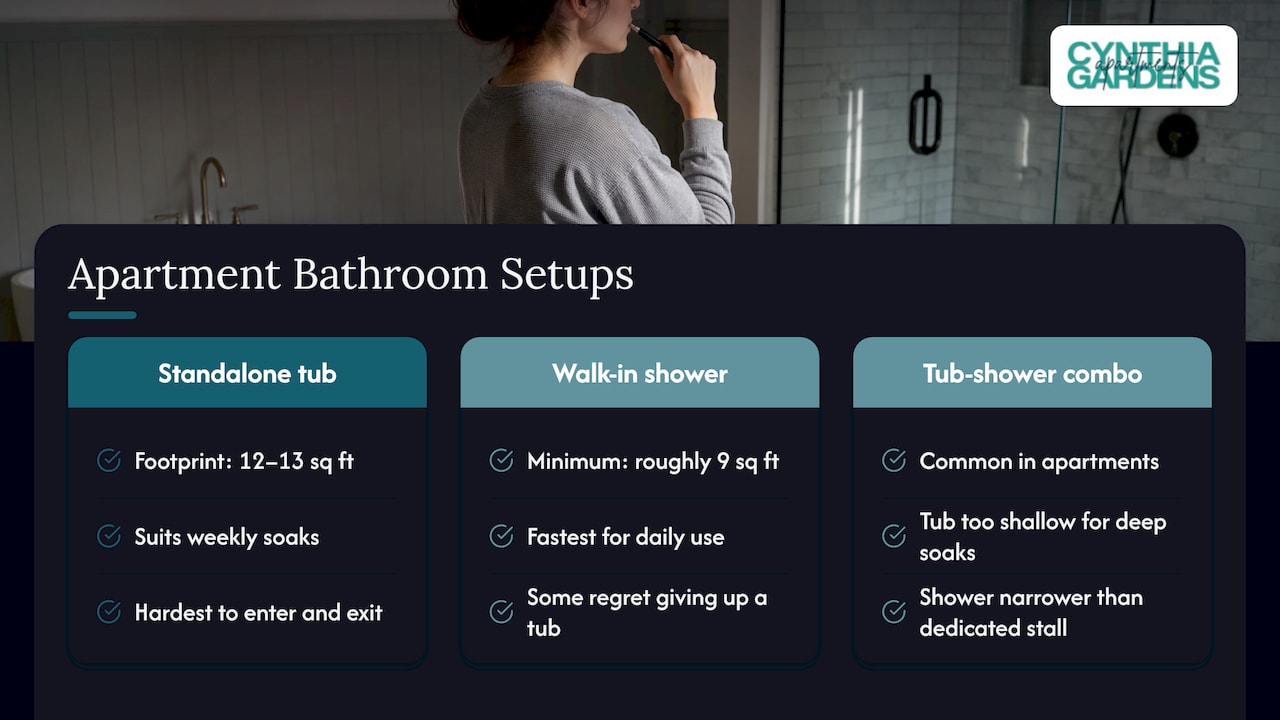
Apartment bathrooms come in three basic forms.
A standalone tub takes about 12 to 13 sq ft and suits weekly soaks, but it is the hardest to step in and out of, according to Horow’s bathtub and shower guide.
A walk-in shower needs roughly 9 sq ft at minimum. The same guide calls it the fastest option for daily use, and notes some people regret giving up a tub entirely.
A tub-shower combo is a tub with a shower head and curtain or glass panel above it. Hansons notes combos were created to save space and are common in apartments and guest baths. The trade-off is that neither use is perfect: Block Renovation says the tub is too shallow for a deep soak and the shower narrower than a dedicated stall.
In a one-bedroom, the combo is by far the most common because it fits the standard small bathroom. That is the layout you should expect, and it is a good one for most renters.
Space: why the footprint matters
Angi puts a standard tub at about 13 sq ft and a standard shower at about 9 sq ft, and says the average bathroom is around 40 sq ft. In a bathroom under that, a shower feels less cramped.
Geberit USA gives comfortable minimums: a shower tray at least 32 inches wide and long, and a tub at least 60 inches long by 24 inches wide. Use those numbers when you walk through a unit. If you can stand in the shower with your elbows out and close the door without bumping the toilet, it works. If you tower over the showerhead, check its height. Geberit suggests about 78 inches.
A tub apron can also cramp a tiny bathroom. That is why some studio and micro-unit designs use a walk-in stall, as George Build Shop describes. In a full one-bedroom bathroom, a tub with a shower above it is a comfortable fit.
Water use: shorter showers win, but not by as much as you think
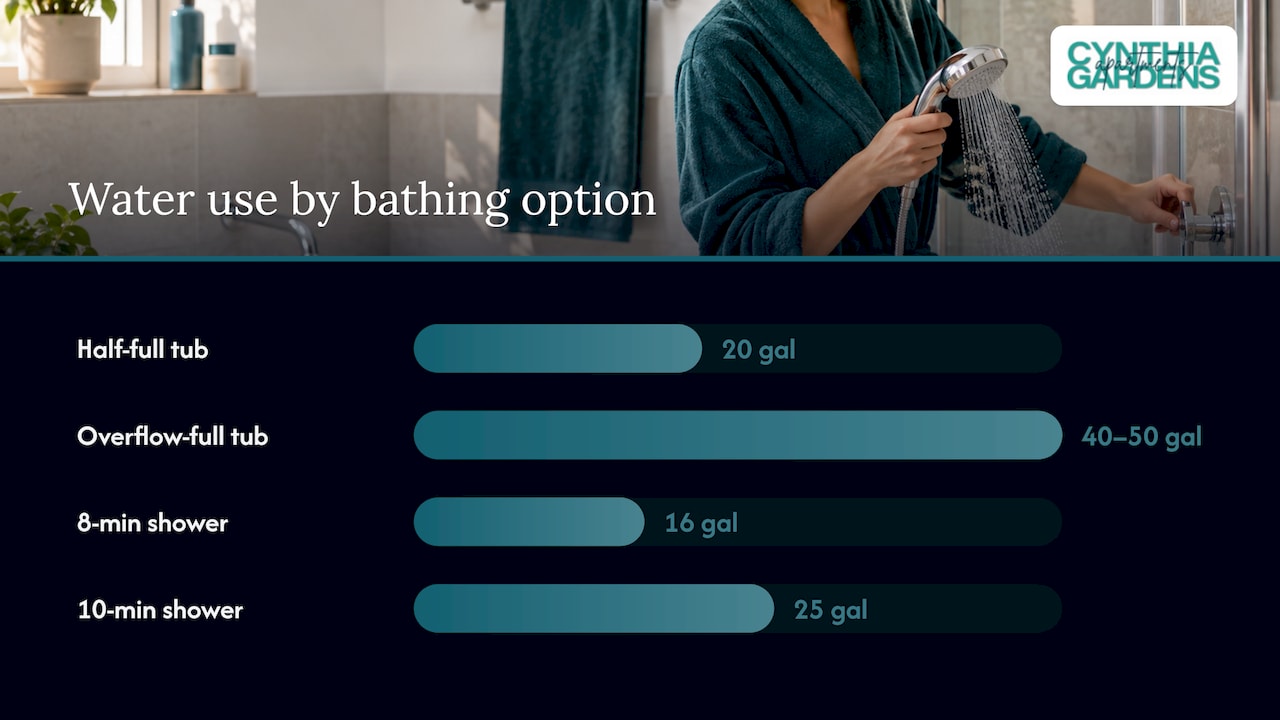
The numbers vary by source, so here is the range:
| Use | Approximate water |
|---|---|
| Typical bathtub, half full | about 20 gallons |
| Bathtub filled to the overflow | 40 to 50 gallons |
| Average American shower (about 8 minutes) | roughly 16 gallons |
| 10-minute shower at 2.5 gpm | 25 gallons |
The tub figures and the average shower come from a municipal water conservation guide. The 10-minute figure follows from the federal maximum flow for showerheads of 2.5 gallons per minute, and EPA WaterSense labeled heads max out at 2.0 gpm. The EPA guide also says about two-thirds of showerhead water is hot, so cutting shower time saves energy as well as water.
The takeaway: duration decides. A short shower beats a full tub. A 20-minute shower can use as much as a bath. Block Renovation notes that showering is about 17% of indoor water use, so the fixture choice barely moves a bill. Many leases include water, so check yours on the fee and lease details page before assuming it affects your budget.
When a shower is the better fit
A shower is the better daily fixture if you live alone, shower in a few minutes and almost never soak. Geberit says that with one bathroom in a rental, a shower is usually the best solution because it needs less space, saves time and allows easier access. Horow reaches a similar view for solo and couple routines.
Students and young professionals on a tight morning schedule benefit most: a clean, quick shower with good pressure matters more than a deep tub.
When a tub earns its space
A tub is worth having if you:
- like an occasional soak after a long shift or a hard study week;
- have, or plan to adopt, a cat;
- want somewhere to soak a stained rug, a bath mat or a pile of gear;
- have just one bathroom and want to cover every possibility.
Apartment Therapy quotes a realtor noting that pet owners often like to have a tub for washing pets. Storm-prone areas add another reason: Alora USA points out a tub can double as an emergency water supply, which is worth remembering in Florida.
Washing a cat: tub or shower?
Most cats rarely need a full bath, but a rinse after something sticky, a flea treatment or a messy accident is easier in a tub. Bob Vila notes a tub is often the easiest place to scrub pets, and the walls keep a wriggling animal contained. A bare shower stall with a glass door is harder to work in.
A few practical tips:
- Put a rubber mat in the tub so your cat has footing and doesn’t panic.
- Use a handheld sprayer or a cup instead of a loud overhead stream.
- Close the bathroom door and keep the room warm.
- Fit a hair catcher over the drain. The Construction Specifier notes that pet hair clogs drains in multifamily buildings.
If you are comparing pet-friendly options, our guides on pet-friendly apartment features and a pet owner apartment checklist cover what else to look for. For a few ideas on settling a new cat in a rental, this guide to cat-proofing your apartment is handy too.

What to check on the tour
You can’t swap fixtures in a rental, so look closely at what is there.
- Measure and stand in it. Compare the shower or tub to the minimums above.
- Run the water. Check pressure, how fast it gets hot and whether it drains quickly.
- Look at caulk and grout. The tub side of a combo gets splashed, and Hansons flags mold risk there. Fresh, clean caulk is a good sign.
- Check ventilation. A working exhaust fan or window keeps moisture down.
- Look at the surround and curtain rod. A glass panel or a sturdy rod is easier to keep clean.
- Ask about the fixtures at your actual unit. Layouts differ between apartments.
A virtual tour lets you do a first pass from home, then confirm in person. If you’re comparing layouts, our interactive property map helps you narrow down units quickly.
Quick decision guide
| Your situation | Best fit |
|---|---|
| Live alone, one bathroom, no pets | Combo or shower, either works |
| Own or plan to adopt a cat | Tub or combo |
| Occasional soaker | Tub or combo |
| Very small bathroom, fast routine | Shower stall |
| Shared with a roommate or partner | Combo |
Our view
Renters rarely get to pick the fixture, so we think the better question is which layout suits your life before you sign. For most of the people we house, a tub with a shower covers it all: a quick shower on weekdays and a tub when a cat needs rinsing or you want to unwind. Our one-bedroom apartments are built for young professionals, students and pet owners, and our cat-friendly policy has no ongoing pet rent, only a one-time pet fee.
We also publish our pricing and fees openly so you can plan your budget without surprises. Whatever bathroom you like, tour it, run the water and picture your routine in it.
Ayman
Find a one-bedroom that fits your routine
Cynthia Gardens offers one-bedroom apartments in Boca Raton from $1,990 to $2,220 per month. Cat owners pay a one-time, non-refundable pet fee of $300 to $500 per cat, and the application fee is $75 per applicant. You can see every unit on our one-bedroom apartments page, tour virtually and apply online with AI chat and voice assistance.

If you want to see how a cat fits in, start with our pet-friendly one-bedroom apartments.
FAQ
Is a bathtub or a shower better in an apartment?
It depends on your habits. A shower saves space and suits a quick daily routine, while a tub or combo is better for soaking, washing a pet and one-bathroom households. For most renters, a combo covers both.
Does a bath or a shower use less water?
Usually a shower, if it stays short. A typical tub fill is 40 to 50 gallons at the overflow line, while an average shower is about 16 gallons. A long shower at full flow can match a bath.
Can I wash my cat in a shower?
You can, but a tub is easier. The walls contain the cat, and a rubber mat and a handheld sprayer or cup keep the rinse calm and quiet. Keep the room warm and the door closed.
Does the fixture type change my utility costs?
Less than most people expect. Showering is about 17% of indoor water use, so habits matter more than the fixture. Check your lease for what is included.
Sources
- Horow: Bathtub vs Shower Pros and Cons
- Block Renovation: Shower vs. Tub
- Hansons: Tub and Shower Combinations
- Angi: Bathtub vs. Shower
- Geberit USA: Shower or bathtub
- George Build Shop: Shower Tub Combos for Apartments
- City of St. Helens: 2023 Guide to Water Conservation
- EPA: Water Efficiency Management Guide, Bathroom Suite
- Apartment Therapy: Bathtubs Are Outdated
- Alora USA: Bathroom Space for Multifamily Living
- Bob Vila: Ditching Your Bathtub
- The Construction Specifier: Dog washing in multi-family housing
- Cat-proofing your apartment