
A digital rent receipt is an electronic record, usually a PDF or an email, that confirms you paid a specific amount of rent on a specific date. If you pay through a portal or app, the receipt should arrive automatically. If you pay by Zelle, money order or bank transfer, you may have to ask for it, and in a few states the law says your landlord must give it to you. Below we explain how to get one, what it must say, what the law requires, and how to keep records that hold up if a dispute ever comes up.
TL;DR
- A rent receipt is your proof that you paid on a given date. It does not replace the lease, and it does not prove a check cleared.
- Pay through a landlord’s online system and a receipt is usually emailed once the payment finishes processing. Offline payments must be recorded by the landlord first.
- A good receipt shows names, address, date, amount, rent period, payment method and a transaction or receipt number.
- Receipt rules vary by state. Florida has no standalone monthly-receipt statute for routine full payments, but you should still keep a record of every payment.
- If your landlord won’t issue one, save your bank confirmation and ask in writing, or prepare a receipt yourself and ask for a signature.
Table of Contents
- What a digital rent receipt is, and what it proves
- How to get a rent receipt online after you pay
- What an online rent receipt should include
- Are landlords required to give rent receipts?
- Why you should keep every receipt
- How to store digital receipts so they are useful
- What to do if your landlord won’t give you a receipt
- Our perspective
- Looking for a one-bedroom with clear pricing?
- FAQ
- Sources
What a digital rent receipt is, and what it proves
A rent receipt acknowledges a tenant’s payment and serves as proof that rent was paid on a particular date. The digital version does the same job as the paper slip a landlord used to hand over at the door. It just lives in your inbox, your tenant portal or your cloud storage.
Is an electronic receipt as good as a paper one? Under federal law, largely yes. The Federal Trade Commission’s advisory opinion on the ESIGN Act explains that an electronic record cannot be denied legal effect or enforceability solely because it is electronic. Where a record has to be in writing, the electronic version needs to be capable of being retained and accurately reproduced later. That is the practical test for your own filing: a receipt you can open, print and reproduce a year from now is a receipt that works.
It helps to be clear about its limits, too:
- It proves a payment was recorded, not that your whole lease is in order. A receipt works as a transaction record, but it does not replace the lease or automatically prove you complied on timing or completeness.
- It does not always prove funds cleared. If a check bounces, a landlord may still pursue nonpayment even though a receipt was issued.
- It is useful evidence. Receipts can help a tenant show they are up to date or defend against a nonpayment claim.
So think of the receipt as one piece of a paper trail, alongside your bank or card statement and your lease.
How to get a rent receipt online after you pay
How you get the receipt depends on how you paid.
Paying through a landlord’s online system
Most online rent platforms generate a receipt on their own. One widely used landlord platform, for example, emails a receipt automatically once an online payment finishes processing. Check the following after you pay:
- Look in your inbox and spam folder for a confirmation email.
- Log in to the tenant portal and look for a payment history or documents tab.
- Download the receipt as a PDF and rename it with the month, such as “2026-11-rent-receipt.pdf”.
If nothing shows up within a day or so, ask the property manager to resend it. Do this in writing so you also have a dated request on file.
Paying offline: Zelle, money order, wire or cash
When the payment happens outside the landlord’s system, no receipt is generated by default. The same platform’s support page notes that an offline payment, such as Zelle or a money order, must be recorded in the digital system by the landlord before a receipt can be produced. In practice that means you should message your landlord with the amount, date and method, and ask for the receipt once it is logged.
People paying by cash or money order should be especially careful, because there is no bank statement to fall back on. Get the receipt the same day, or photograph the money order before you hand it over.
Does electronic payment automatically mean you have a receipt?
Not necessarily. A bank transfer or card payment leaves a record on your statement, but a statement line is not the same as a receipt issued by your landlord. The IRS lists bank and credit-card statements and canceled checks as examples of payment evidence, which is useful context: your statement is real evidence, just not a document that names the rental address or rent period. Pair it with a landlord-issued receipt whenever you can. For a broader walkthrough of the payment methods themselves, see our renter’s guide to electronic rent payment.
What an online rent receipt should include
A complete receipt answers five questions: who paid whom, for what, how much, when and how. One legal-forms publisher recommends including the landlord’s name, the tenant’s name and rental address, the date, the amount, the rent period, the payment method and the landlord’s signature. A currency-transfer company’s U.S. template adds a receipt number and the date the payment was received to that list.
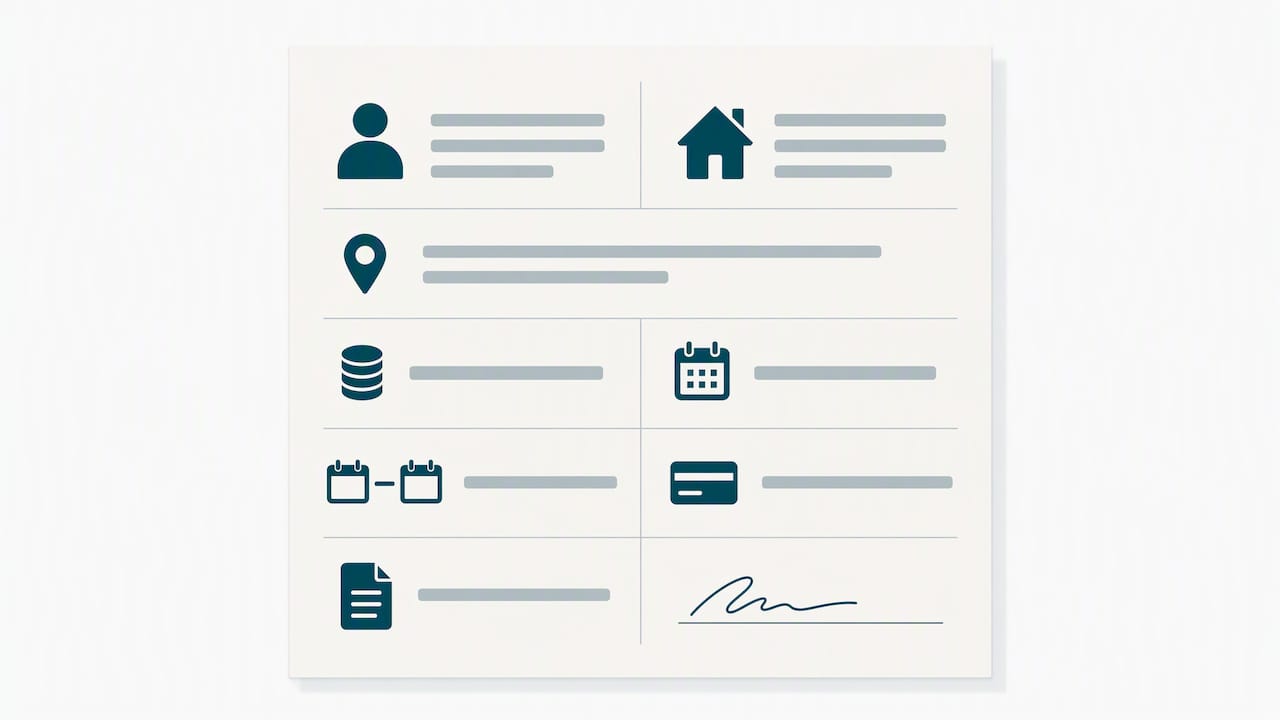
For online payments, a payments-software guide suggests the receipt should also carry the transaction ID, date, amount and the platform used, so the payment can be verified later.
Here is a checklist you can use to review any receipt you get:
| Item | Why it matters | Example |
|---|---|---|
| Landlord or property name | Shows who accepted the money | Property management company name |
| Tenant name(s) | Ties the payment to you | Every person on the lease |
| Rental address and unit | Identifies the premises | Street address plus apartment number |
| Date received | Shows the payment was on time | November 1, 2026 |
| Amount paid | Proves the exact sum | $2,000.00 |
| Rent period covered | Separates rent from fees or deposits | November 1 to November 30, 2026 |
| Payment method | Helps match your bank record | ACH, card, money order |
| Transaction or receipt number | Lets either side verify it | A reference code from the platform |
| Signature or name of recipient | Confirms who issued it | Typed name counts for electronic records |
If your payment covers more than rent, such as a late fee, a pet fee or an application fee, the best receipts break the amounts out line by line. That is how you can later show what was rent and what was not.
Are landlords required to give rent receipts?
There is no single national rule. States set their own, and many are narrow. A few examples from official sources show how much they differ:
| State | What the rule says |
|---|---|
| New York | Landlords must give a written receipt for rent paid in cash, by money order, by cashier’s check or any form other than a personal check. Tenants paying by personal check can request receipts in writing, after which the landlord must provide them monthly. |
| Maryland | Landlords must generally provide a receipt if a tenant pays in cash or asks for one. |
| New Jersey | Landlords must provide a printed or emailed receipt for each cash payment. |
| Wisconsin | Written receipts are required for cash payments, but not for payments by check. |
| Colorado | A receipt is required for in-person cash or money order payments. For other methods, the landlord must supply one within seven days of a request, unless an existing procedure already records the payment. |
Notice the pattern: cash and money orders trigger the strongest protections, because they leave no other trail. Electronic payments often count as already documented. New York’s rule is specific to that state’s regulation, which lists the date, amount, premises, payment period and the recipient’s signature and title. It is not a nationwide requirement.
What this means in Florida
Florida is our home market, so here is the plain version. According to a Florida legal-forms publisher, no standalone statute requires landlords to give monthly receipts for routine, full rent payments. The same source says written documentation does matter in specific situations, such as partial rent accepted after a nonpayment notice, and for certain security deposits or advance rent.
Treat that as a starting point, not legal advice. If you are in a dispute over a partial payment or a deposit, a Florida landlord-tenant attorney or your local legal aid office can confirm what applies to your situation. For the deposit side, our guides cover Florida security deposit law and how to handle deposit disputes.
Even without a rule, asking for a receipt is reasonable. A landlord who runs a clean operation will not mind.
Why you should keep every receipt
Three situations make receipts worth the thirty seconds of filing.
Disputed late payments. If a ledger shows a missed month, a dated receipt with a transaction number ends the argument quickly.
Deposit disputes at move-out. Deductions often get tangled with unpaid-rent claims. A clean year of receipts removes one line of argument. Our piece on Florida move-out charges and the 15/30/15 rule shows how the timeline works.
Applying for your next apartment. A future landlord may ask for proof of on-time payment history. Receipts and statements support that, along with the documents we list in our guide to proof of income for renters.
There is also a tax angle for some renters. The IRS says that electronically kept records are subject to the same requirements as paper records and recommends keeping receipts, proofs of payment and canceled or imaged checks that support amounts on a return. Publication 225 adds that electronic systems must be able to index, store, preserve, retrieve and reproduce records in legible form. That publication is written for farmers, but the standard it states is a useful model for any household filing system. Whether rent is deductible for you is a question for a tax professional.
If you live in assisted housing, HUD tells residents to keep copies of papers, forms and receipts that document income and expenses. That guidance applies specifically to HUD-assisted housing.
How to store digital receipts so they are useful
The best system is the one you will actually use. A simple version:
- One folder, one naming pattern. Create a folder called “Rent” with a subfolder for each lease year. Name files with year, month and the word “receipt”.
- Save the PDF, not just the email. Emails get deleted when accounts change. A downloaded PDF can be backed up.
- Screenshot portal confirmations. If the portal only displays a confirmation page, capture the whole page with the date and transaction number visible.
- Match each receipt to a bank line. Once a quarter, check that every receipt has a matching debit in your statement.
- Back up in two places. Use cloud storage plus an external drive, or cloud storage plus a second account.
- Keep records after the lease ends. Hold them at least through the deposit return period and any dispute window. If you use rent records for taxes, keep them as long as your tax professional advises.
One caution on payment apps: a confirmation from a peer-to-peer app is a record of a transfer, not necessarily a record of rent. It may not show the rental address or the period. If you use an app, put the month and unit in the memo line every time. For a deeper look at how electronic payment records and signatures work from the business side, see this overview of electronic payment processing for real estate.
What to do if your landlord won’t give you a receipt
Stay calm and build the record yourself. These steps escalate gently:
- Save your own proof first. Keep the bank confirmation, card statement, money order stub or a screenshot of the transfer. Pennsylvania guidance, for instance, points renters to bank transfer records, canceled checks and email or text acknowledgments as proof, and the same logic applies elsewhere.
- Ask in writing. Send a short email or portal message: “I paid $[amount] on [date] for [rent period]. Please send a receipt for my records.” A written request is dated evidence in itself.
- Prepare a receipt and ask for a signature. One legal-forms publisher notes that a tenant can prepare a receipt online and present it to the landlord for signature. A signed copy, even a typed name in a reply email, is better than none.
- Switch to a traceable payment method. Avoid cash. Use ACH, a card or the landlord’s portal so a record exists whether or not anyone sends a receipt.
- Get local help if payment is disputed. If a landlord claims you didn’t pay and you have proof you did, a local legal aid office or a tenant attorney is the right professional to see.
Our perspective
We manage a one-bedroom community in Boca Raton, and we see the same pattern with renters of every kind, from FAU students on their first lease to young professionals and cat owners settling in. People rarely think about receipts until the one month when they need one. By then, the bank app has rolled over, the email is buried and nobody remembers which account paid.
Our view is simple. A rent payment should leave a clear trail, with a date, an amount and a period. The same goes for fees. We publish our charges openly, including a $75 application fee per applicant, a $300 administration fee and a one-time cat fee of $300 to $500, with no ongoing pet rent, because a renter who knows what each line is can also recognize it on a receipt. Being able to match a payment to a published charge is what a clear paper trail is for.
Our advice, whoever your landlord is: pay in a way that leaves a record, ask for the receipt in writing if it doesn’t arrive, and save a PDF every month. It takes a minute and it can save you a lot of trouble later.
— Ayman
Looking for a one-bedroom with clear pricing?
If you are renting in Boca Raton, our one-bedroom apartments are listed at $1,990 to $2,220 per month, and the one-time fees are published on our site. You can browse the one-bedroom apartments with virtual tours, or review the application, administration and pet fees before you apply.
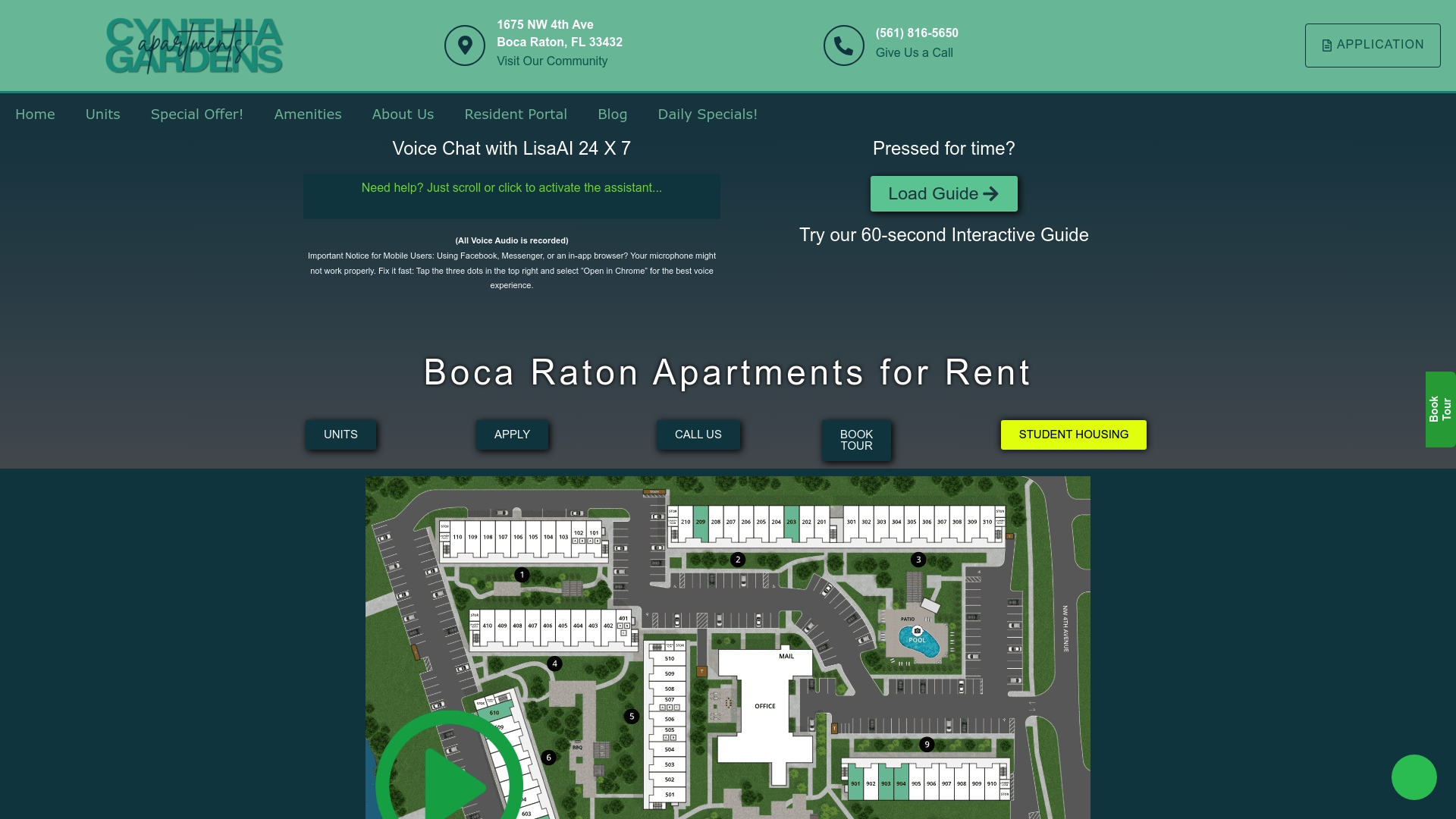
We also offer furnished options for shorter or longer stays, and our cat-friendly policy has a one-time fee rather than monthly pet rent. If you are weighing a rent increase or a renewal, our guide to Florida rent increase rules explains the notice timelines.
FAQ
How do I get a rent receipt online?
If you pay through your landlord’s online system, a receipt is usually emailed when the payment finishes processing, and your portal may keep a copy under payment history. If you paid offline, send your landlord the amount, date and method, and ask for the receipt once the payment is logged. Save the PDF as soon as it arrives.
Is a digital rent receipt legally valid?
Federal ESIGN guidance says a record cannot be denied legal effect solely because it is electronic, provided it can be retained and accurately reproduced. A receipt is evidence of payment, not a replacement for your lease. For a specific legal dispute, talk to a landlord-tenant attorney in your state.
Does my landlord have to give me a receipt in Florida?
A Florida legal-forms publisher reports no standalone statute requiring monthly receipts for routine, full payments, though written documentation matters for partial payments after a nonpayment notice and for certain deposits or advance rent. Ask for a receipt anyway and keep your own proof. For a payment dispute, see a Florida attorney or legal aid office.
Can I make my own rent receipt?
Yes. Include both names, the rental address, the date, the amount, the rent period, the payment method and a receipt number, then ask your landlord to sign or confirm it by email. A landlord-signed copy is stronger than one you wrote alone, so keep your bank record with it.
Is a bank statement enough to prove I paid rent?
It is good evidence, because it shows money leaving your account on a date. But it may not show the rental unit or the period covered, so a landlord-issued receipt is still worth having. Keeping both gives you the strongest record.
Sources
- How to fill out a rent receipt, MRI RentPayment
- FTC advisory opinion on ESIGN, May 24, 2001
- Florida rent receipt template and rules, Florida Legal Templates
- The importance of rent receipts for landlords and tenants, LegalZoom
- Do tenants receive a receipt when they make a payment, TurboTenant support
- Rent receipt template, Wise
- IRS Publication 225 (2025)
- IRS guidance on keeping good tax records
- HUD fact sheet on keeping records
- New York Attorney General, Residential Tenants’ Rights Guide
- New York 9 NYCRR 2100.15, Cornell LII
- Maryland Attorney General landlord-tenant guide
- New Jersey P.L. 2019, c.300
- Wisconsin Administrative Code ATCP 134
- Colorado Revised Statutes 38-12-802
- Rent receipts and proof of payment in Pennsylvania