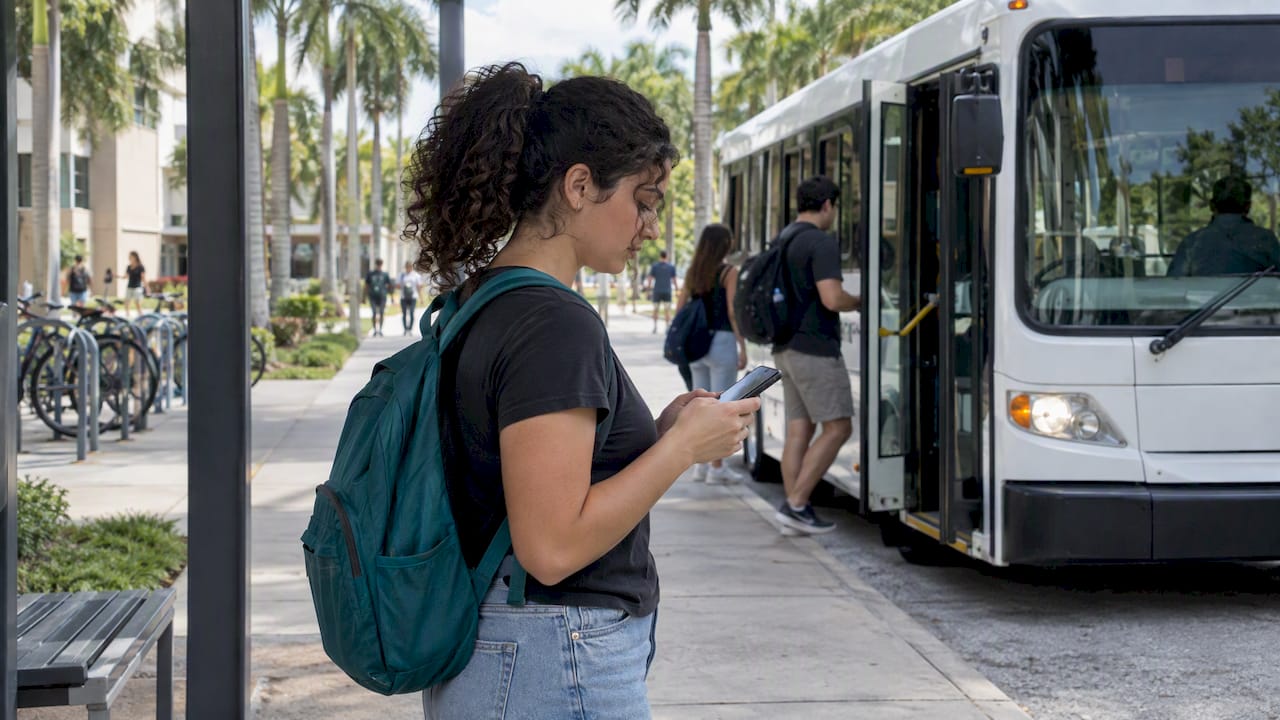
Getting to Florida Atlantic University comes down to five practical choices: the daytime campus shuttle, the Boca-to-Jupiter intercampus shuttle, Tri-Rail paired with Palm Tran Route 94, driving with an ePermit, and NightOwls for after-dark trips. Two tools make all of them work: the FAU Owl Card, which gets you free or discounted rides, and the FAU Mobile App, which tracks shuttles in real time. Jump to the section that matches how you travel.
TL;DR:
- Riders need an Owl Card for weekday intercampus shuttles during fall and spring; summer schedules differ, and the FAU Mobile App tracks shuttle locations.
- Students ride Palm Tran Route 94 free with a valid FAU Owl Card, while Tri-Rail offers a 50% fare discount with proof of enrollment.
- Frequent bus commuters can buy Palm Tran’s 31-day pass for $70, or $55 at the reduced fare rate, rather than paying per ride.
- Every vehicle needs a new ePermit each semester; activate the correct license plate and match the lot’s color, because permits do not renew automatically.
- NightOwls provides free golf cart rides across the Boca Raton campus after dark; for trips beyond campus, use a rideshare or arrange a carpool.
Table of Contents
- 1. On-campus and intercampus shuttles: schedules and tracking
- 2. Public transit: Tri-Rail to Boca Raton plus Palm Tran Route 94
- 3. Driving and parking: ePermits, meters, and avoiding citations
- 4. NightOwls and staying safe after dark
- 5. Planning tools and habits that make commuting predictable
- 6. Bicycle-friendly routes and bike-sharing options for FAU commuters
- 7. Ride-sharing and carpooling options specific to FAU students and staff
- 8. Typical commute times during peak hours for each transport method
- 9. Accessibility options for commuters with disabilities
- 10. Which FAU commute works best for your situation
- Cynthia Gardens: a shorter commute starts with where you live
- FAQ
- Sources
1. On-campus and intercampus shuttles: schedules and tracking
FAU runs a daytime campus shuttle on the Boca Raton campus for students, faculty, and staff who park in remote lots or live in student apartment buildings farther from classroom cores. Hours shift by semester, so checking current times before you plan your morning is worthwhile.
Students splitting time between Boca Raton and Jupiter rely on the intercampus shuttle, which runs Monday through Friday during the fall and spring semesters. Boarding requires a valid FAU Owl Card, and you can track the shuttle’s live location through the FAU Mobile App rather than guessing when it will show up. Summer 2026 service ran from May 18 through August 7, with fall semester scheduling typically resuming in late August, so confirm dates again once a new term starts since summer and fall calendars don’t match.
Before your first week of classes:
- Confirm the current semester’s shuttle hours on the FAU Parking and Transportation pages.
- Carry your FAU Owl Card every day, since it’s your boarding pass for the intercampus route.
- Turn on push notifications in the FAU Mobile App so you know when a shuttle is approaching your stop.
Pro Tip: Screenshot the current shuttle schedule at the start of each semester so you have it offline if your connection drops near the parking lots.
2. Public transit: Tri-Rail to Boca Raton plus Palm Tran Route 94
Tri-Rail’s commuter train stops directly at the Boca Raton station, and students qualify for a 50% fare discount by showing proof of enrollment, such as an Owl Card or current class schedule. From there, Palm Tran Route 94 closes the gap to campus.
Students ride Route 94 for free by presenting a valid FAU Owl Card to the bus driver, which removes the single biggest cost barrier for regional commuters who’d rather skip driving and parking altogether.
A few things to lock in before you rely on this route daily:
- Route 94 runs roughly every 20 to 30 minutes during peak hours, with about a 10-minute ride from the Tri-Rail station to campus.
- A Palm Tran unlimited 31-day pass costs $70, or $55 at the reduced fare rate, available at the Intermodal Transit Center and the FAU Owl Card Center.
- FAU Parking and Transportation doesn’t issue these discounts directly, so you’ll need to set up the Tri-Rail discount and Palm Tran pass yourselves rather than through the university.
Use the Palm Tran Trip Planner or call Palm Tran customer service to check current Route 94 times, especially if you’re commuting before sunrise or after the last evening run. Build in a buffer at the Tri-Rail station transfer point, since missing a connection can mean a longer wait for the next bus.
3. Driving and parking: ePermits, meters, and avoiding citations
Every vehicle parked on an FAU campus needs an ePermit each semester, and the permit type determines which lots you’re allowed to use. A commuter ePermit (often the blue category) opens specific lots, while other colors restrict you to reserved or resident areas, so matching your permit to the right lot matters as much as having one at all.
Meters cost $2.50 per hour and are enforced around the clock. Cash isn’t accepted at FAU meters, but ParkMobile covers payment at both standard meters and the airport-style multi-space units scattered across lots.
A common way students get cited isn’t forgetting a permit entirely. It’s creating an online parking profile without activating the specific vehicle under that ePermit, or letting a prior semester’s permit lapse without renewing. Both look like a paperwork oversight but result in the same ticket.
To avoid that:
- Log into the FAU parking portal and confirm your exact vehicle, plate included, is activated under your active ePermit.
- Check your lot’s color coding against your permit type before you park.
- Pay meters through ParkMobile whenever you’re in a short-term spot.
- Reconfirm your permit’s validity at the start of each new semester, since permits don’t roll over automatically.
Pro Tip: Set a calendar reminder at the start of every semester to double-check your ePermit status, since a grace period on citations applies early in the semester.
4. NightOwls and staying safe after dark
NightOwls is a student-run evening escort service that provides free golf-cart rides across the Boca Raton campus. It’s built for students heading to night classes, the library, residence halls, parking lots, or anywhere else on campus once it’s dark out.
A few habits make this safer in practice:
- Save the NightOwls number, 561-297-NOWL, in your phone before you need it, not after.
- Call for a ride rather than walking alone across remote lots late at night.
- Pair NightOwls with a travel buddy when you can, and check campus alert notifications for anything urgent.
5. Planning tools and habits that make commuting predictable
Four tools cover almost every commute scenario at FAU. The FAU Mobile App tracks campus and intercampus shuttles in real time. U-Ride supports greener, multimodal trip planning for students who mix walking, biking, and transit. Palm Tran’s trip planner and Tri-Rail’s published schedules round out the regional side.
The habits that actually stick:
- Check the FAU Mobile App and your relevant transit planner before you leave, not after you’re already running late.
- Buy a 31-day Palm Tran pass if you’re commuting by bus most weekdays, since it’s cheaper than paying per ride.
- Carry your Owl Card everywhere, since it unlocks free or discounted rides across multiple services.
- Build a 10 to 15 minute buffer into any trip involving a transfer.
Pro Tip: Frequent Palm Tran riders can use the Guaranteed Ride Home program as a backup if a late class or unexpected schedule change leaves you without a bus.
6. Bicycle-friendly routes and bike-sharing options for FAU commuters
Boca Raton’s flat terrain and grid-style streets around campus make biking a realistic option for students living within a few miles of FAU, particularly those in nearby apartment communities who want to skip both parking fees and bus transfers. Dedicated bike lanes run along several corridors feeding into campus, and FAU’s internal paths connect academic buildings without forcing cyclists onto main vehicle roads.
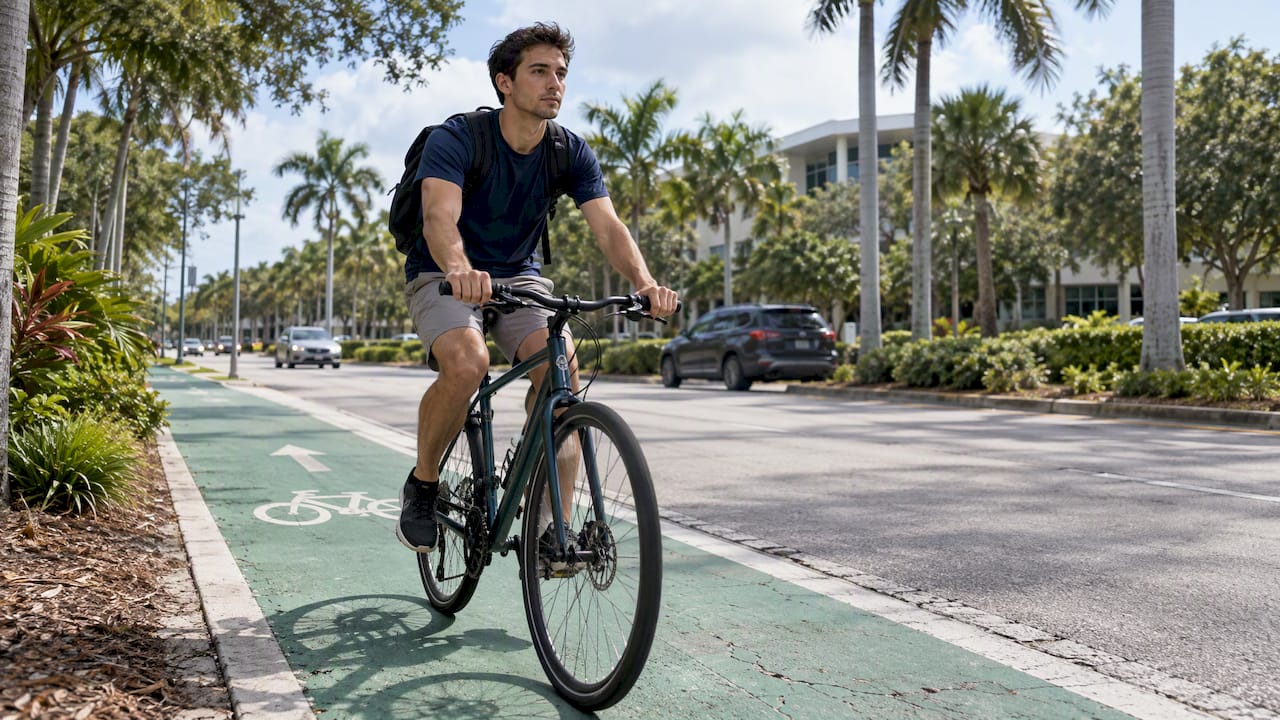
On-campus, bike racks are positioned near most academic buildings and residence halls, so a bike doubles as transportation for the regional commute and the last stretch from a parking lot or bus stop to class. For students without their own bike, checking with the student government or recreation office about short-term rental or loan programs is worth doing each semester, since availability and providers can change.
Biking also pairs well with transit: riders who live too far to bike the whole distance can bike to a Tri-Rail station or Palm Tran stop and finish the trip by rail or bus, which cuts both commute time and cost compared to driving alone. The tradeoff is weather. South Florida’s afternoon storms and heat make biking far more practical as a morning or evening option than a midday one, so building a backup plan, like knowing the nearest shuttle stop, keeps a rained-out bike day from turning into a missed class.
7. Ride-sharing and carpooling options specific to FAU students and staff
Ride-sharing apps operate throughout Boca Raton and serve the FAU campus directly, making them a reasonable backup for students without a car or a convenient transit connection, particularly for late trips when NightOwls only covers on-campus movement rather than off-campus addresses. The tradeoff is cost: a daily ride-share habit adds up fast compared to a free shuttle or a Palm Tran pass.
Carpooling works best for students who live in the same apartment complex or neighborhood and share a class schedule. Sharing gas and parking arrangements with roommates can cut both the driving cost and the parking burden compared to everyone bringing a separate car to campus. Some student organizations and class group chats double as informal carpool boards, since there isn’t always a university-managed matching system, so asking around early in the semester tends to turn up options faster than searching alone.
For students juggling irregular schedules, like evening labs or weekend coursework, a mix of carpooling for predictable trips and ride-sharing for one-off late nights tends to beat committing fully to either one.
8. Typical commute times during peak hours for each transport method
Commute time depends heavily on which mode you choose and where you’re starting from. The campus shuttle and intercampus route run on fixed schedules, so your wait time matters as much as the ride itself, especially during the first and last ten minutes of each class period when everyone is moving at once.
Tri-Rail plus Route 94 is efficient once you’re moving: the bus connection from the Boca Raton Tri-Rail station to campus takes about 10 minutes, though total door-to-door time depends on how long you wait for the train and then the bus. Riders who time their Tri-Rail arrival against Route 94’s 20 to 30 minute peak frequency can minimize dead time at the station.
Driving is the most variable. A short trip from a nearby apartment may be quick, but finding a legal, correctly permitted parking spot during peak morning hours can add considerably more time than the drive itself, particularly in lots near popular academic buildings. Biking from a close-by community often lands between driving and transit in total time, since it skips both the parking search and the transit wait, but it’s exposed to weather in a way the other options aren’t.
9. Accessibility options for commuters with disabilities
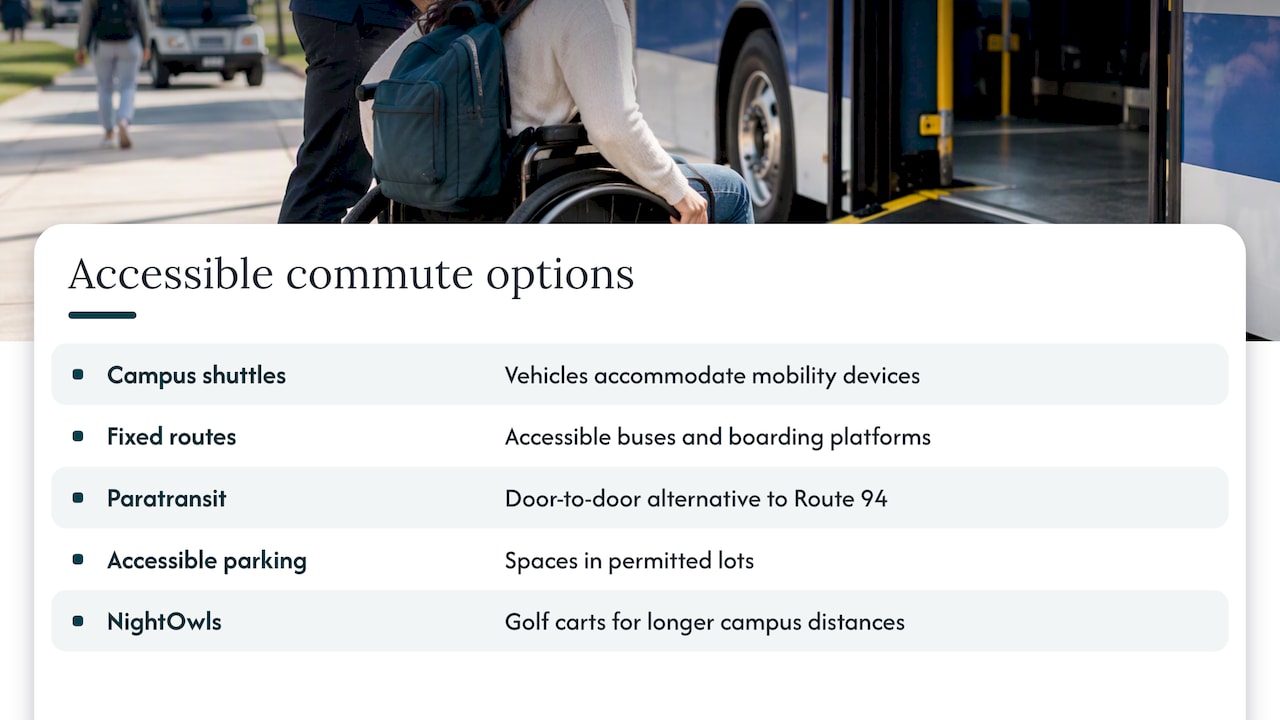
Commuting options at FAU extend to students with mobility, visual, or other access needs across every major mode. The campus shuttle and intercampus shuttle vehicles are designed to accommodate riders using mobility devices, and students who need specific accommodations should coordinate with FAU’s disability services office ahead of the semester to confirm current equipment and routes.
Palm Tran’s fixed routes, including Route 94, operate accessible buses, and Tri-Rail stations along the line provide accessible boarding platforms, which matters for students combining the train and bus connection into campus. Students who need door-to-door paratransit rather than fixed-route service can look into Palm Tran’s complementary paratransit program as an alternative to Route 94.
On campus, accessible parking spaces are available in FAU’s permitted lots, and students with qualifying needs should register for the appropriate permit designation alongside their standard ePermit to make sure both documents match. NightOwls’ golf-cart service is also a practical option for students who find walking longer distances across campus difficult, not just a nighttime safety tool, since it can be used any time it’s running.
10. Which FAU commute works best for your situation
If you’re hopping between buildings or campuses, the shuttles are hard to beat, free, scheduled, and trackable in the app. Regional commuters who want to skip parking entirely should lean on Tri-Rail and Route 94. Drivers need to respect ePermit rules closely, and anyone out after dark should default to NightOwls. Pick one routine and stick with it each semester rather than improvising daily, and always recheck schedules when a new term starts.
— Ayman
Cynthia Gardens: a shorter commute starts with where you live
The fastest way to simplify any of the options above is cutting the distance itself. Our one-bedroom apartments at Cynthia Gardens in Boca Raton make it easier to consider nearby transportation options, including daytime shuttles, Route 94 connections, or biking.
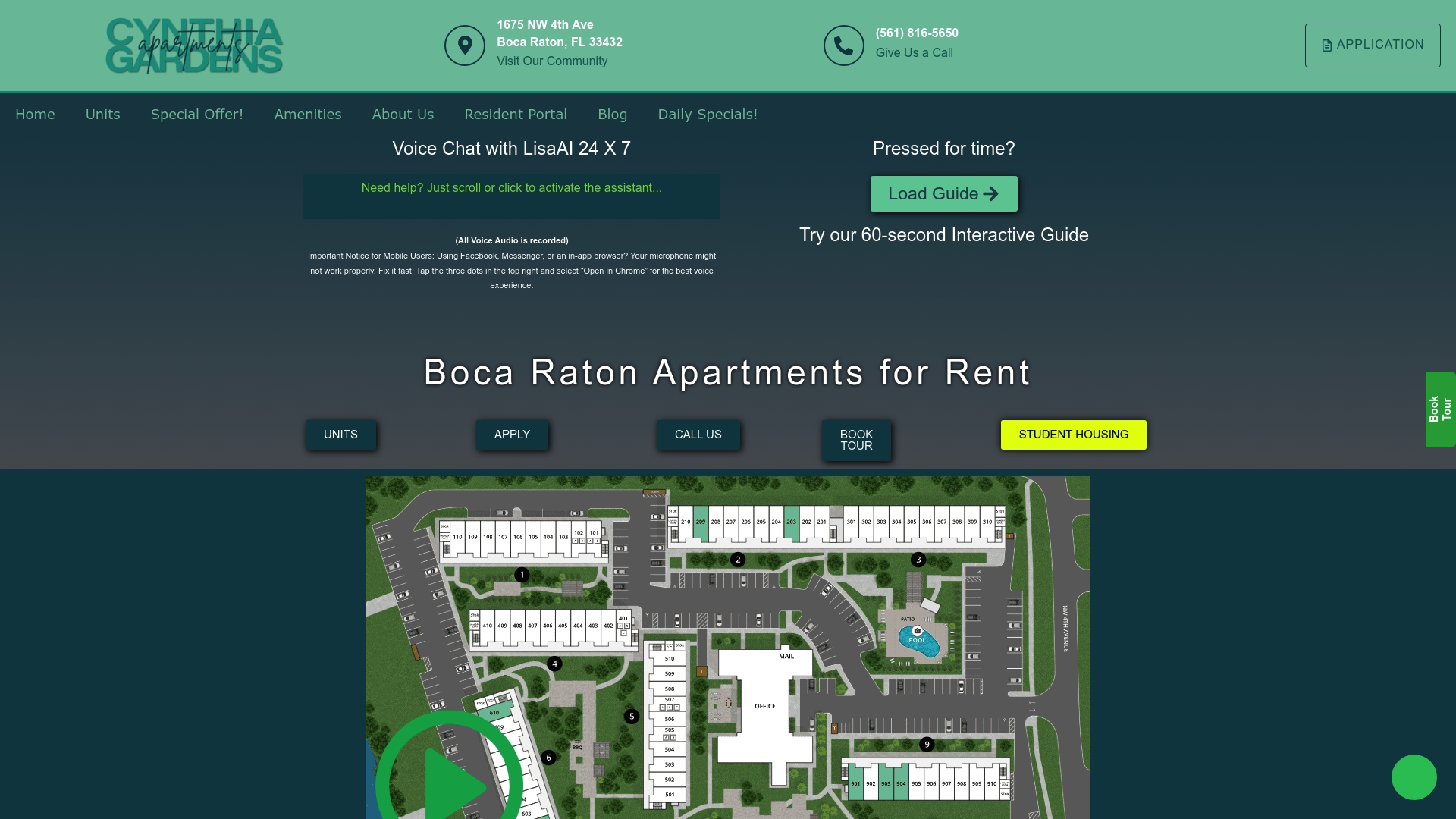
We keep pricing transparent with no hidden fees, offer cat-friendly units, and let prospective renters explore virtual tours and complete leasing online.
- Browse current one-bedroom apartments and pricing.
- Check out apartments near Florida Atlantic University designed with students in mind.
- Review our door-to-door transit guide for planning Palm Tran and Tri-Rail connections from the neighborhood.
If shaving your commute down to a walk or a short ride sounds better than tracking three different schedules, view our one-bedroom listings and start a virtual tour today.
FAQ
Is Florida Atlantic University a commuter school?
FAU serves a large population of students who live off campus and commute, which is why shuttles, Tri-Rail, Palm Tran Route 94, and parking permits are all built around daily back-and-forth travel. Many students also live in nearby apartment communities specifically to shorten that commute.
Is FAU more conservative or liberal?
Florida Atlantic University, like most large public universities, has a politically mixed student body with a range of viewpoints represented across clubs, programs, and coursework. There’s no single political identity that defines the campus as a whole.
Is FSU or FAU better?
The better choice depends on what you’re looking for, program strengths, campus size, location, and cost all factor in differently for each student. For commute-specific decisions, FAU’s Boca Raton location offers direct Tri-Rail and Palm Tran Route 94 access that some other Florida campuses don’t have in the same form.
Is FAU expensive for out of state?
Out-of-state tuition costs vary by program and credit load, and current rates are published through FAU’s own tuition and fees office rather than through transportation resources. For housing costs near campus, current prices for one-bedroom apartments at Cynthia Gardens are listed on our website, which gives out-of-state students a comparison point when budgeting total cost of attendance.