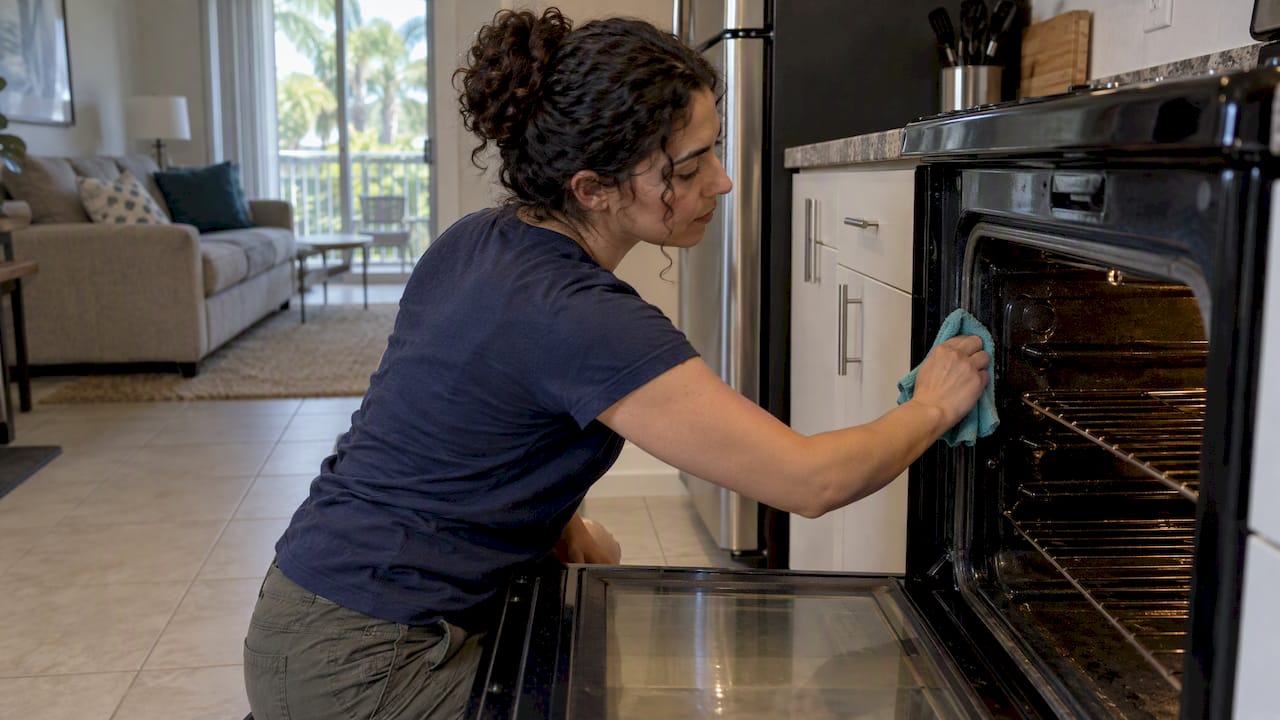
For furnished move out cleaning, hire a professional for carpets, appliance interiors, and upholstery, and handle lighter surface work yourself if you have the time. The jobs that most often cost tenants part of their deposit are the kitchen, bathrooms, appliance interiors, floors, and upholstered furniture. So, book any professional help 1 to 2 weeks before your move date.
TL;DR:
- Professional apartment cleaning typically costs $120 to $420, while carpet treatment adds $120 to $240; request a written task list to prevent surprise charges.
- During late spring or early fall, book three to four weeks ahead; clean after moving boxes and your furniture out, but before the final walkthrough.
- Request a pre move out inspection one to two weeks before departure, then photograph commonly disputed areas and bring receipts to the final walkthrough.
- For pet urine that reaches carpet padding or upholstery foam, surface cleaning may mask odor; enzyme treatment and professional equipment are often needed.
- Choose EPA Safer Choice or DfE certified products, and use disinfectants only on high touch surfaces for the label’s stated contact time.
Table of Contents
- Room-by-room move-out checklist for furnished rentals
- Typical costs and add-ons for move-out cleaning
- When to hire a professional vs. DIY: decision checklist
- Timeline and booking: when to schedule cleaning during a move
- Documenting condition and communicating with your landlord
- Safe product choices and when to use disinfectants
- Handling personal belongings and furniture during cleaning
- How pet ownership affects furnished move-out cleaning
- Final walkthrough tips after the cleaning is done
- Publisher perspective: how furnished move-out expectations shape leasing choices
- A furnished lease that removes the guesswork at move-out
- FAQ
- Sources
Room-by-room move-out checklist for furnished rentals
A furnished unit raises the stakes because you’re cleaning items you don’t own. A scratched countertop or a stained sofa cushion is a line item on your deposit statement, not a replacement you get to skip. Work through each room methodically rather than tidying by eye.
- Kitchen: Clean inside the oven, fridge, and microwave, wipe down cabinet interiors and drawers, scrub counters and the sink, and clear the disposal of debris and odor.
- Bathrooms: Scrub grout lines, tub or shower surfaces, and fixtures, then wipe mirrors and clean exhaust vents of dust buildup.
- Living areas and bedrooms: Vacuum under and behind furniture, spot-treat upholstery stains, and dust blinds or wipe down curtains.
- Floors and carpets: Vacuum thoroughly and spot-treat light marks yourself; book a professional steam or shampoo service for deep stains or pet odors.
- Windows, walls, and fixtures: Wipe interior glass, spot-clean wall marks, and replace any burned-out bulbs.
- Furnished-specific items: Remove and wash cushion covers only if the care label allows it, and check any manufacturer cleaning notes left by the landlord before using cleaners on upholstered pieces.
Appliance interiors and upholstery are the two areas tenants skip most often, and they’re also the two a landlord inspects closely because they show wear that’s hard to disguise.
Pro Tip: Photograph each cleaned area immediately after you finish it, before you move anything back into place, so you have a timestamped record if a dispute comes up later.
Typical costs and add-ons for move-out cleaning
Professional move-out cleaning for an apartment typically runs $120 to $420, depending on square footage and how much grime has built up. A studio or small one-bedroom sits at the lower end; a unit with heavy pet traffic or years of buildup pushes toward the top.
Add-ons change the total quickly:
- Carpet cleaning typically adds $120 to $240 depending on room count and stain severity.
- Window washing typically adds $80 to $300 based on window count and accessibility.
- Oven and fridge deep cleaning is often quoted as a flat add-on rather than folded into the base price.
- Junk removal is billed separately when furniture or large items need to be hauled out.
Some cleaners charge by square footage, others quote a flat rate for the whole job. Ask for a written list of exactly what’s included before you book, so an empty fridge or a skipped baseboard doesn’t turn into a surprise charge later.
When to hire a professional vs. DIY: decision checklist
Not every task needs a crew with commercial equipment, but some do. Use this as a quick filter before you decide.
- Hire a pro when: carpets have stains or pet odor, appliance interiors haven’t been deep cleaned in months, upholstery needs treatment, or you’re working against a tight deadline.
- DIY works fine for: dusting, wiping counters and surfaces, vacuuming, and basic floor mopping.
- Ask before booking: whether the company carries insurance, whether they offer any kind of satisfaction guarantee, and exactly which tasks are included in the quoted price.
Professionals bring commercial-grade equipment and know what landlords typically check, which is often worth the cost for carpet steam cleaning, oven interiors, or grout restoration that’s hard to get right with a rented machine and a weekend.
Timeline and booking: when to schedule cleaning during a move
Book your cleaning 1 to 2 weeks ahead of your move date in standard season, and extend that to 3 to 4 weeks if you’re moving during a peak period like late spring or early fall when crews book up fast.
- Pack and remove personal items first so cleaners have clear access to every surface.
- Move bulky furniture that’s leaving with you before the deep clean starts.
- Schedule the professional or DIY deep clean after the space is empty of boxes but before your final walkthrough.
- Coordinate the cleaning date with your movers so nothing gets tracked back in, and confirm the walkthrough time with your landlord once the clean is done.
Documenting condition and communicating with your landlord
Ask your landlord or property manager for a pre-move-out inspection even if it isn’t required. It surfaces their expectations before you clean, not after, when it’s too late to fix a missed spot cheaply.
- Request a walkthrough or checklist 1 to 2 weeks before move-out so you know what they’ll be checking.
- Take timestamped photos: wide shots of each room plus close-ups of commonly disputed areas like the oven interior, tub, and carpet edges.
- Bring your cleaning receipts and checklist to the final walkthrough as evidence of the work completed.
A pre-move-out inspection and photo documentation are two of the strongest tools against unfair deductions, since they separate normal wear and tear from actual damage before anyone’s relying on memory.
Pro Tip: Keep a copy of your move-in inspection report next to your move-out photos. Comparing the two side by side is the fastest way to prove a scuff was already there.
Safe product choices and when to use disinfectants
Skip vague “eco” marketing and look for products carrying the EPA Safer Choice or DfE label, which are backed by an actual certification rather than a claim on the bottle.
- Limit disinfectants to high-touch surfaces like doorknobs and light switches rather than every wall and floor.
- Follow the label’s stated contact time; wiping a disinfectant off too soon leaves it doing nothing.
- For upholstery and other soft textiles, use spot treatment and check the product label before applying anything labeled as a disinfectant, since many disinfectant claims target non-residential settings and aren’t formulated for furniture you’ll be sitting on again.
The Safer Choice and DfE programs maintain searchable product directories so you can confirm a cleaner is certified before you buy it, rather than trusting label language alone.
Handling personal belongings and furniture during cleaning
Clear every personal item out of a room before cleaning it. Cleaning around boxes and bags means missing the baseboards, corners, and floor sections those items were sitting on, and that’s exactly where a landlord’s inspection tends to focus.
Furnished rentals add a layer most move-outs don’t have: furniture you’re responsible for but don’t own. Move landlord-provided pieces carefully when you clean behind or under them, and avoid dragging heavy items like dressers or bed frames across hard flooring, since that’s one of the fastest ways to turn a cleaning job into a damage charge. If a couch or chair needs to be shifted for vacuuming, lift corners rather than sliding them.
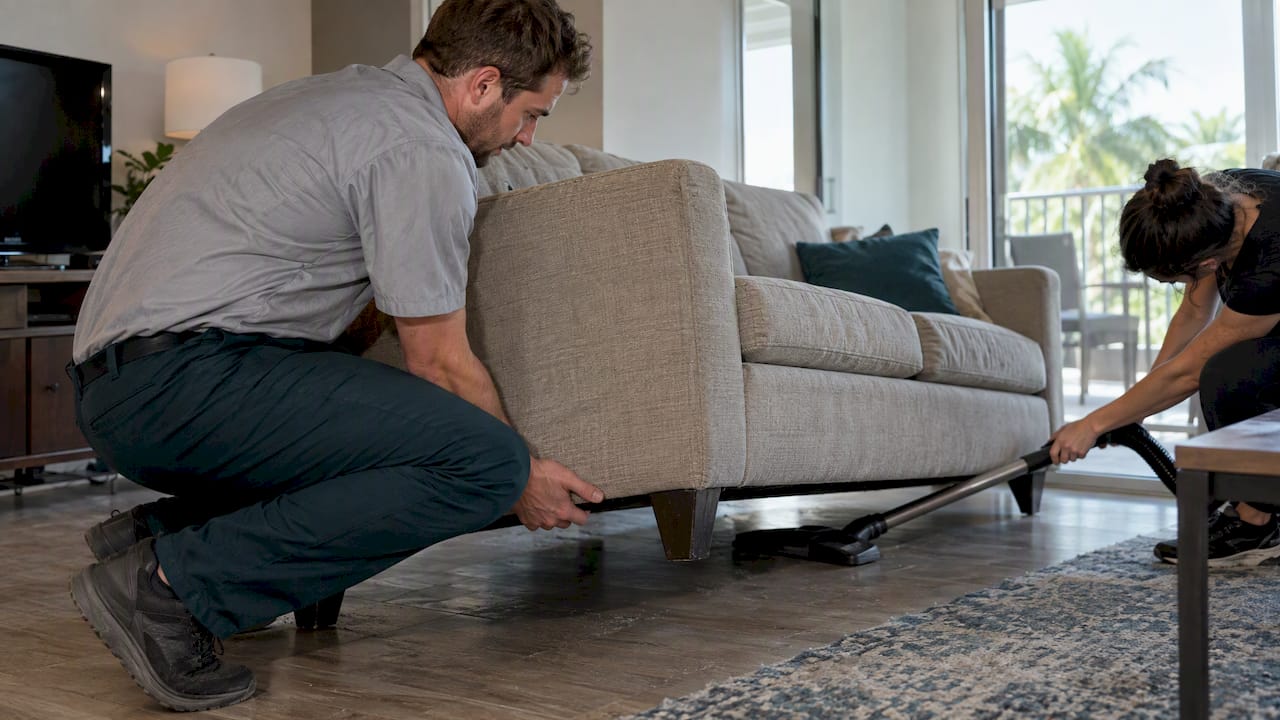
Keep your own belongings separated clearly from what stays. A simple approach: finish packing and staging your own items in one room first, then clean the rest of the unit room by room, finishing with that last room once it’s empty. This keeps you from cleaning a space twice or missing a spot because a moving box was sitting on it.
If any furnished item has a visible issue, a loose leg, a stain that predates your lease, or a drawer that doesn’t close right, note it in writing and photograph it before you start cleaning. That protects you from being charged for a problem that existed before you moved in, and it mirrors the kind of documentation a pre-move-out inspection is meant to produce.
How pet ownership affects furnished move-out cleaning
Pets add specific tasks that a standard move-out clean doesn’t cover, and furnished units make those tasks more sensitive since the furniture and carpet aren’t yours to replace if treatment goes wrong.
Pet hair embeds in upholstery and carpet fibers in ways a quick vacuum pass won’t fully remove. Plan for a slower, more thorough vacuum pass with a pet-hair attachment, and expect that carpet with heavy pet traffic may need the professional steam or shampoo treatment mentioned earlier rather than a DIY rental machine.
Odor is the bigger risk. Urine or accident stains that have set into carpet padding or upholstery foam often need enzyme-based treatment and professional equipment to fully neutralize, since surface cleaning can mask the smell temporarily without resolving it. If you have a pet and are renting furnished, budget for this possibility rather than assuming a standard clean will catch it.
Check your lease for any pet-related fees before you move out. Some properties apply this at lease signing rather than move-out, so it’s worth confirming which applies to your situation before you’re surprised by a charge either way. If you clean upholstery yourself, confirm the fabric’s care label before using any pet-stain product, since the wrong treatment can set a stain permanently into a cushion you’re responsible for returning in good condition.
Final walkthrough tips after the cleaning is done
Walk the unit yourself before the landlord does. Check every area from your checklist again with fresh eyes, since it’s easy to miss a spot when you’ve been cleaning for hours.
Bring your photos and receipts to the actual walkthrough. If a landlord or property manager points out an issue, having a timestamped photo showing that area already clean gives you something concrete to reference instead of relying on memory.
Ask for the inspection results in writing before you hand over keys, including any planned deductions and the reasoning behind them. This creates a paper trail that matches the one you already built with your own documentation, and it’s the clearest way to catch a mistake or an unfair charge before your deposit is finalized rather than after.
Publisher perspective: how furnished move-out expectations shape leasing choices
Most deposit disputes we see trace back to one thing: nobody agreed on expectations before move-out day. A written furnished-care checklist and a scheduled inspection fix more disputes than any cleaning product ever will. We built our move-in inspection checklist and our deposit dispute guidance around that belief.
— Ayman
A furnished lease that removes the guesswork at move-out
We built our furnished one-bedroom leases around clear care expectations up front, transparent pricing, and a move-in checklist you can compare directly against your move-out condition.
- Our furnished apartment deposit terms spell out what to expect before you sign, not after you’ve moved out.
- Pricing stays transparent from the start: one-bedroom apartments run $1,990 to $2,220 per month, with no surprise charges layered on later.
- Our cat-friendly policy applies a one-time Non-Refundable Pet Fee instead of ongoing pet rent.
If you’re weighing a new lease against the cleaning and documentation hassle of your current move-out, check available one-bedroom apartments to see what a transparent furnished lease looks like from day one.
FAQ
Are you supposed to clean your house when you move out?
Yes, most leases require you to return the unit in the condition you received it, minus normal wear and tear. A thorough clean, especially of the kitchen, bathrooms, and appliance interiors, is standard practice before a final walkthrough and directly affects how much of your deposit you get back.
Is $30 an hour good for cleaning?
Pricing varies by region and the scope of work, and professional move-out cleaning is more commonly quoted as a flat rate ranging from $120 to $420 for a full job rather than an hourly rate. Ask any cleaner for a written quote covering the specific tasks you need so you can compare it against that range.
What is the 5-5-5 rule for cleaning?
This isn’t a standard or widely documented cleaning framework, and definitions of it vary depending on where you see it referenced. For move-out purposes, it’s more reliable to follow a room-by-room checklist that covers the kitchen, bathrooms, floors, and upholstery specifically.
What is the 80/20 rule house cleaning?
Prioritizing those higher-scrutiny areas first is a reasonable approach regardless of the exact framing.
Sources
These EPA, municipal, and industry resources back the guidance above and are worth checking directly.
- Identifying Greener Cleaning Products | US EPA
- Return of Your Security Deposit – RentinginSeattle
- How Much Does a Move-Out Clean Cost? 2026 Data | Angi