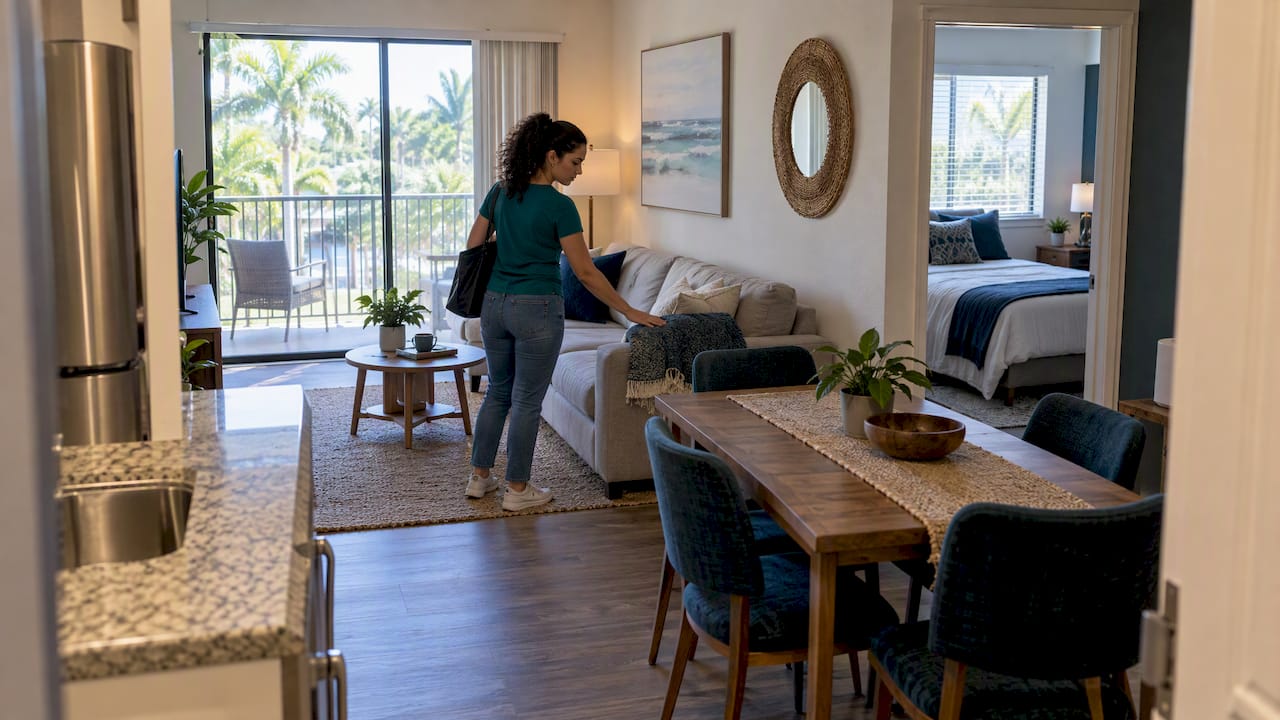
Furnished apartments typically run from $1,800 to $4,500 a month depending on lease length and location, with short-term stays costing noticeably more per night than month-to-month or annual leases. Plan to have several thousand dollars in cash ready at move-in to cover a security deposit, possible furniture or cleaning fees, and the first month’s rent. The breakdown below shows how those numbers shift by term length and market.
TL;DR:
- Compare itemized rent, furniture charges, utilities, and recurring fees, since furniture markups can add $150 to $400 monthly or raise base rent 15% to 30%.
- Treat the 30% of gross income rule as a rough guide; subtract housing and fixed costs from net income, then test the remainder against essentials.
- Before signing, confirm what furnishings and fees are included, then photograph every room and get a signed condition report to protect your deposit.
Table of Contents
- Average monthly price ranges by rental term
- What adds to the monthly price: furniture, utilities, and fees
- Short-term versus mid-term versus long-term pricing behavior
- How to budget and judge affordability for a furnished rent
- Renter protections and a furnished move-in checklist
- When furnished actually makes sense
- Finding a transparent furnished one-bedroom
- FAQ
- Sources
Average monthly price ranges by rental term
Furnished rent doesn’t move in a straight line as leases get longer. It drops in stages, and knowing where those stages land helps you spot a fair price versus an inflated one.
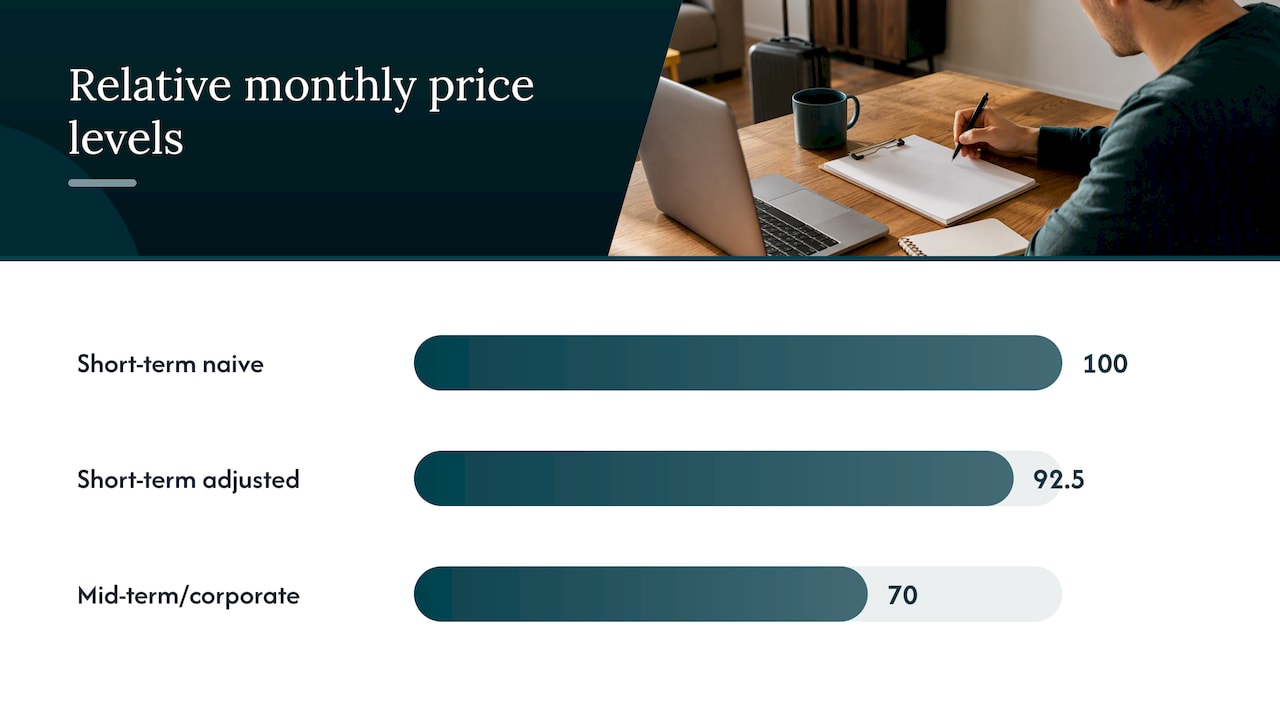
Short-term stays (a few nights to under 30 days) carry the steepest per-night cost because the owner is pricing in constant turnover, cleaning between guests, and the risk of vacancy. A furnished studio or one-bedroom booked nightly through a platform like Airbnb or VRBO might run $80 to $200 a night. Multiply that out and a 30-day stay at $100 a night comes to $3,000, often more than double what the same unit would rent for on an annual lease.
Mid-term furnished rentals (one to three months) sit in the middle. Corporate housing providers and mid-term platforms such as Landing or Blueground typically price these in the $2,200 to $3,800 monthly range, with the exact number depending heavily on city and unit size. This tier exists because landlords want to avoid nightly turnover costs but still charge a premium over a full annual lease.
Annual furnished leases are the cheapest per month by a wide margin. In high-cost metros like New York, San Francisco, or Boston, a furnished one-bedroom on a 12-month lease often lands between $2,800 and $4,500. In mid-market metros such as Austin, Denver, or Raleigh, expect $1,900 to $2,800. In lower-cost regions, including parts of Florida and the Southeast, furnished one-bedrooms can run $1,800 to $2,400, close to what you would pay unfurnished in a comparable high-cost market.
A few patterns show up across all three tiers:
- The shorter the stay, the higher the effective monthly rate, driven by cleaning turnover and vacancy risk rather than the furniture itself.
- Mid-term and corporate housing rates usually fall 20 to 40 percent below equivalent short-term monthly totals once you negotiate a weekly or monthly rate.
- Annual leases generally offer the lowest furnished premium because landlords amortize furniture costs over 12 months instead of pricing for constant turnover.
- Location drives the baseline rent far more than furnishing does, so a furnished unit in a lower-cost metro can still beat an unfurnished unit in an expensive one.
Housing costs overall have been climbing, which puts upward pressure on every tier of this market. The Bureau of Labor Statistics reported that rent expenditures for rented dwellings rose 5.4% in 2024, a trend that affects furnished and unfurnished rentals alike since furnished rent is built on top of the local base rent, not separate from it.
What adds to the monthly price: furniture, utilities, and fees
Furnished rent isn’t just “unfurnished rent plus furniture.” Landlords use a few different pricing approaches, and each one changes what you actually owe each month.
Some landlords charge a flat furniture fee on top of base rent, commonly $150 to $400 a month depending on how much is included (bed, sofa, dining set, kitchenware). Others apply a percentage markup to the base rent instead, often 15 to 30 percent higher than the unfurnished rate for the same unit. A smaller group simply bakes the furniture cost into one combined rent figure with no separate line item, which makes comparison shopping harder unless you ask directly.
Utilities add another layer. Many furnished units, especially short- and mid-term ones, bundle internet and sometimes basic utilities into the quoted rent. Utility costs for apartments vary by region and unit size, so always confirm which specific services are covered before comparing two listings on price alone. A unit advertised as “all-inclusive” at a higher rent can still beat a cheaper base rent plus separate utility bills.
Recurring extras to watch for:
- Pet fees, often charged monthly or as a one-time fee depending on the property.
- Amenity fees for gym, pool, or parking access that aren’t folded into base rent.
- Cleaning service fees if housekeeping is offered as part of the furnished package.
- Renter’s insurance, sometimes required and billed separately from rent.
One-time move-in costs, like setup fees, inventory deposits, or an initial deep clean charge, are separate from these recurring items and should appear in writing before you sign anything.
Pro Tip: Ask for an itemized breakdown of rent, furniture fee, and utilities before comparing listings. A single combined number hides which part of the deal you’re actually paying for.
Short-term versus mid-term versus long-term pricing behavior
Comparing a nightly rate to a monthly lease requires converting them to the same unit, and skipping this step is how renters overpay without realizing it.
- Take the nightly rate and multiply by 30 to get a rough monthly equivalent.
- Subtract 5 to 10 percent to account for the vacancy and cleaning days a landlord typically builds into that nightly price, since you’re not actually paying for those gaps yourself.
- Compare that adjusted number to posted mid-term or annual rates for a similar unit in the same neighborhood.
- If a mid-term or corporate housing option is available, ask directly about weekly or monthly discounts, since many providers quietly offer 20 to 40 percent off the short-term equivalent for longer stays.
Stays under 30 days almost always carry a visible premium, largely because of turnover costs rather than the furniture itself. Stays beyond 90 days usually qualify for a meaningfully lower monthly rate, since the landlord no longer needs to plan for frequent cleaning and re-listing.
This is also why corporate housing providers and mid-term rental managers occupy a distinct middle tier. They’re pricing for occupancy stability that short-term hosts don’t have, but they still charge more than a landlord signing a standard 12-month lease, since they’re absorbing more furniture wear and administrative overhead per tenant than an annual lease does.
How to budget and judge affordability for a furnished rent
The classic rule says to keep housing costs under 30 percent of gross income, but that threshold was never meant to be a precise test for every household. Research from the Harvard Joint Center for Housing Studies notes that the 30 percent benchmark is a long-standing convenience, but it ignores local cost of living and doesn’t account for what’s actually left over after other essentials are paid.
That’s where the residual-income approach comes in. Instead of asking “is rent under 30 percent of my income,” it asks “what do I have left after rent and other necessities, and is that enough to live on.” HUD-sponsored research on residual income recommends this method as a stronger complement to the percentage rule, particularly for lower-income renters and families where the leftover dollar amount matters more than the ratio.
A practical workflow:
- Add up total monthly housing cost, meaning rent plus any included utilities or service fees, not just the base rent figure.
- Subtract that number along with taxes and other fixed obligations from your net monthly income.
- Check what remains against your actual cost of food, transportation, insurance, and savings goals, not just a percentage target.
If the residual after rent and essentials feels tight relative to your real expenses, that’s a stronger warning sign than a percentage that technically falls under 30.
Renter protections and a furnished move-in checklist
Furnished units carry a risk that empty apartments don’t: disputes over damaged or missing items at move-out. An inventory and condition report closes most of that gap. Documenting furnished inventory at move-in with photos, written lists, and signatures from both parties is a low-cost step that prevents disagreements later and can save renters real money at move-out.
Before signing anything, confirm in writing:
- Whether linens, kitchenware, and small appliances are included or considered extras.
- The replacement policy for damaged or worn furniture.
- Whether the cleaning service, if any, is included or billed separately.
- Which fees are refundable and which are not, since furnished apartment deposits often run one to two months’ rent and the refundable portion isn’t always obvious from the listing alone.
Pro Tip: Photograph every room and major appliance the day you get the keys, and get the landlord or manager to sign off on the condition report before you unpack.
Transparent, itemized pricing at the lease stage, rather than a single bundled number, is one of the simplest ways to avoid these disputes before they start.
When furnished actually makes sense
Furnished rentals earn their premium when the alternative costs more than the markup. Temporary relocations, employer-paid housing stints, and bridge periods between a sale and a permanent move are the clearest cases. In those situations, buying and later reselling furniture would cost more than a few months of furnished premium, and the convenience is worth paying for.
The math flips for anyone staying longer than six to twelve months. At that point, the cumulative furnished premium usually exceeds what basic furniture would cost outright, and an unfurnished lease paired with secondhand or gradually purchased furniture comes out ahead over a multi-year horizon.
If you’re relocating for a known short window, prioritize mid-term or corporate housing over nightly short-term rates. If you’re settling somewhere longer-term, run the numbers on unfurnished rent plus furniture costs before assuming furnished is the easier path.
— Ayman
Finding a transparent furnished one-bedroom
We offer one-bedroom apartments designed to help renters understand their full costs before signing a lease. Our furnished apartments for rent come with no hidden fees, and our pricing page lays out every charge, including the application fee, administration fee, and deposit terms, so you aren’t guessing at a bundled number.
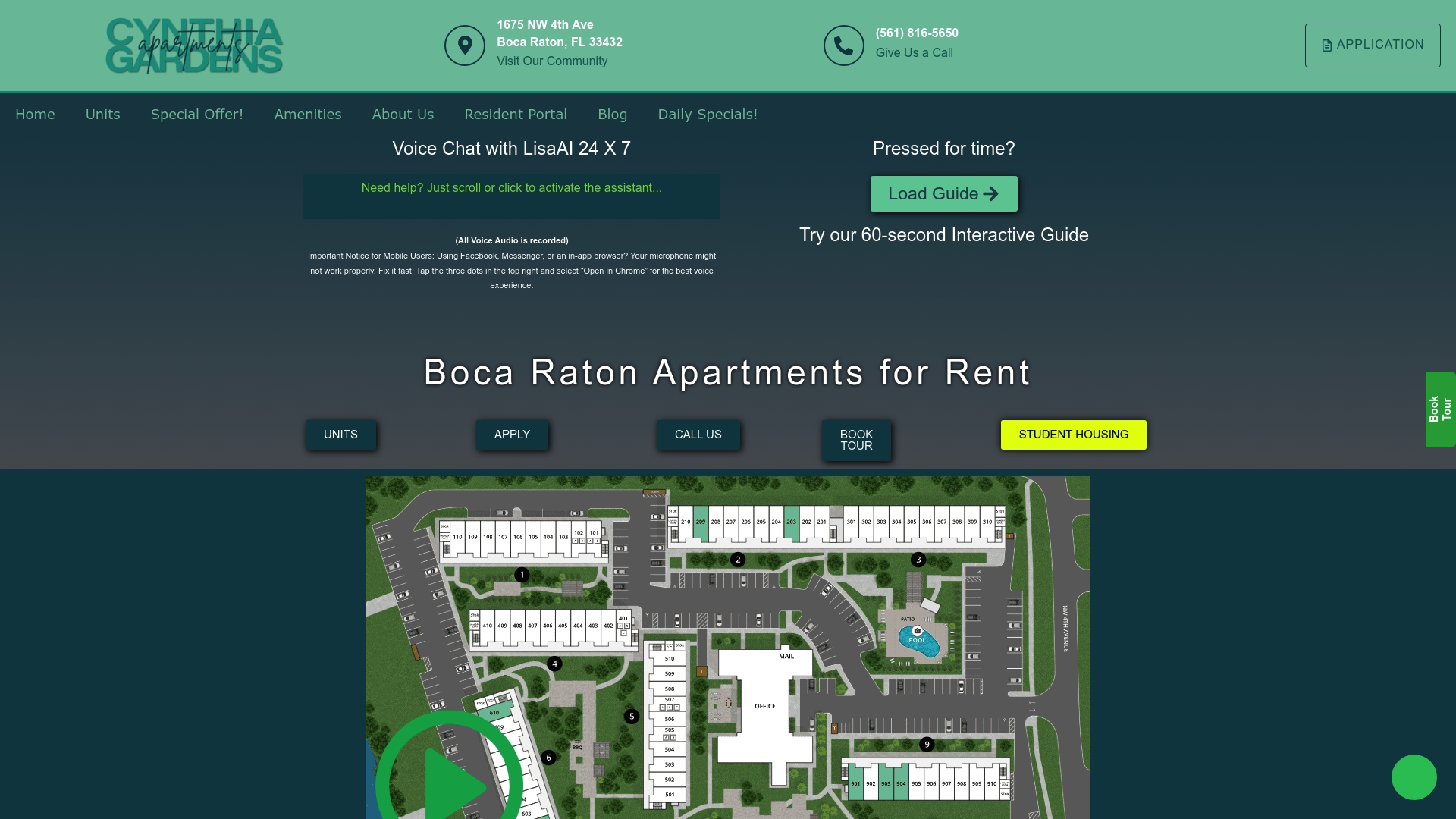
We use technology tools such as virtual tours, an interactive property map, and chat or voice support to assist prospective renters in exploring units remotely. Before you book, we recommend:
- Reviewing our furnished apartment deposit policy to see exactly what’s refundable.
- Taking the virtual tour to confirm the unit’s condition and layout match the listing.
- Checking our one-bedroom units page for current availability and pricing.
Our one-bedroom apartments have monthly rents in a range typical for the market and include a one-time pet fee with no ongoing pet rent. If you’re ready to see what’s available, browse our one-bedroom apartments and check current pricing directly.
FAQ
Is it more expensive to rent a furnished apartment?
Yes, furnished apartments typically cost more per month than unfurnished units in the same building or neighborhood, since landlords build in furniture wear, setup, and turnover costs. The exact premium depends on lease length: short-term furnished stays carry the steepest markup, while annual furnished leases carry the smallest.
How much should it cost to furnish an apartment?
Furnishing costs depend heavily on what you buy and whether it’s new or secondhand, so there’s no single standard figure. Renters comparing furnished versus unfurnished should weigh the monthly furnished premium against the one-time cost of buying furniture themselves over the length of their expected stay.
How much rent can I afford if I make $10,000 a month?
Using the traditional 30 percent guideline, that would suggest a housing budget around $3,000 a month, though Harvard JCHS research cautions that this ratio is a rough benchmark rather than a precise affordability test. A residual-income check, looking at what’s left after rent and other essentials, often gives a more accurate picture for your specific budget.
What are the drawbacks of furnished apartments?
The main drawbacks are the monthly premium over unfurnished rent and the added risk of disputes over furniture condition or damage at move-out. Renters can reduce that risk with a signed inventory and condition report at move-in, documenting the state of every major item before unpacking.
Sources
- Measuring housing affordability (Harvard JCHS)
- When the rent eats first: residual income approach (HUD user)
- Consumer expenditures in 2024 (BLS)