
Yes, amenity and application fees are generally legal in Florida, but they come with real boundaries. Florida’s Chapter 83 preempts local governments from regulating these charges, so state law, not city ordinance, decides what landlords can collect. The one hard dollar cap in Florida rental law applies to condominium association transfer fees. Before you sign anything, check your lease for an itemized fee list and ask for a written breakdown of what each charge covers.
TL;DR:
- Florida law has no statewide cap on application fees, but landlords can charge arbitrary amounts as long as they are not deceptive or unreasonable.
- Refundability of fees varies: application and admin fees are usually nonrefundable, while amenity and move-in fees are typically nonrefundable unless specified.
- Condo transfer fees are legally capped at the amount authorized in the association’s governing documents, unlike other fees that have no limit.
- Renters should request an itemized, written breakdown of all fees before payment to spot inflated charges and dispute any that seem unjustified.
- Short-term leases of six months or less are taxable as transient rentals, making associated fees susceptible to state and local transient rental taxes.
Table of Contents
- What counts as an amenity, move-in, or application fee?
- How Florida law treats application and landlord-imposed fees
- When fees count as taxable rent: the six-month rule
- Condo transfer fees: the one fee Florida actually caps
- How to verify, question, and dispute a fee before you sign
- How we keep fees transparent at Cynthia Gardens
- What this means if you’re apartment hunting right now
- See exactly what you’d pay before you tour
- FAQ
- Sources
What counts as an amenity, move-in, or application fee?
Florida leases bundle several distinct charges under the umbrella of “fees,” and knowing which is which helps you spot a fair price from an inflated one.
An application fee covers the cost of running your background and credit check before you’re approved as a tenant. An administration fee (sometimes called a processing fee) covers the paperwork and account setup once you’re approved. An amenity use fee grants access to shared spaces like a pool, gym, or clubhouse, sometimes charged once, sometimes monthly. A move-in fee is a catch-all charge, separate from your security deposit, meant to cover wear on common areas during moving day. A pet fee is a one-time charge tied to bringing an animal into the unit, distinct from monthly pet rent. A transfer or approval fee applies mainly in condo buildings, charged when a new resident is approved by the association.
Listings often disguise these as “move-in specials” or roll them into a single “admin fee” line, which makes comparison shopping harder than it should be. Our own breakdown of what application fees typically cover walks through how screening costs are usually calculated.
In practice, refundability varies widely:
- Application and administration fees are almost always nonrefundable, since they pay for a service already performed.
- Amenity and move-in fees are nonrefundable in most standard leases unless your lease states otherwise.
- Pet fees are typically one-time and nonrefundable, separate from any refundable pet deposit the lease might also require.
- Security deposits remain the main refundable charge, governed by separate Florida deposit-return rules.
If a lease doesn’t specify refundability for a given fee, ask directly rather than assuming.
How Florida law treats application and landlord-imposed fees
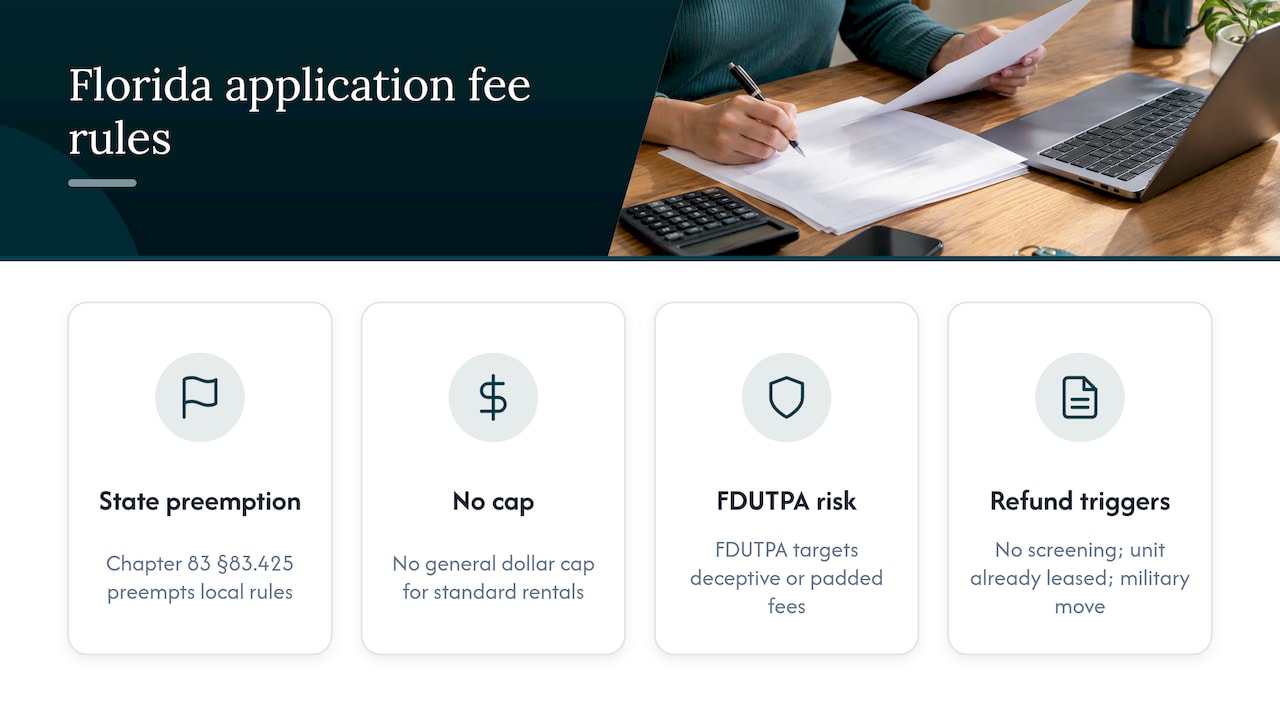
Florida’s statutory framework starts with Chapter 83, §83.425, which preempts local governments from regulating residential tenancy matters, including application fees and screening procedures. That means a city or county cannot pass its own cap or disclosure rule on top of state law. Renters evaluating whether a fee is legitimate should look to state statute language and official guidance rather than a local ordinance, since the ordinance has no authority here.
There is no general statewide dollar cap on application fees for standard apartment rentals in Florida. According to LegalClarity’s explainer on Florida rental application fee law, Florida does not cap these charges for standard residential units, though condominium transfer fees are separately capped. That absence of a ceiling doesn’t mean anything goes. When a fee is wildly disproportionate to the actual cost of screening, or when the amount charged isn’t disclosed up front, it can expose a landlord to claims under Florida’s Deceptive and Unfair Trade Practices Act, commonly known as FDUTPA. That statute targets fees that are deceptive or unreasonably padded relative to the service provided, which gives renters a legal angle even without a hard cap.
A few circumstances strengthen a renter’s claim to a refund. If an application fee was charged but no screening was ever run, or the unit was already leased to someone else before your application was processed, Florida Bar consumer guidance outlines why that situation supports a refund request under general consumer-protection principles. Servicemembers also warrant a mention: active-duty military renters facing deployment or transfer orders often have additional timing protections built into lease terms, and a fee charged for services never rendered because of a documented military move is a strong candidate for a refund demand.
When fees count as taxable rent: the six-month rule
Florida treats short-term rentals differently than standard annual leases, and that distinction can change how fees are taxed. According to Florida Department of Revenue guidance (GT-800034), any rental agreement for six months or less is classified as a transient rental and becomes subject to state and local transient rental taxes, similar to a hotel stay.
Check two things to figure out where you stand: your lease term and your residency intent. A standard 12-month apartment lease, the kind most renters sign, falls outside transient rental tax entirely. But a furnished short-term lease of six months or less, common for students or seasonal renters, can trigger transient tax treatment on the rent itself and on fees bundled into it.
The practical consequence is that if your lease is structured as a short-term or month-to-month arrangement, amenity and move-in fees tied to that occupancy may be taxable alongside the rent. Always ask whether your specific lease term triggers transient tax before assuming a quoted price is final.
Condo transfer fees: the one fee Florida actually caps
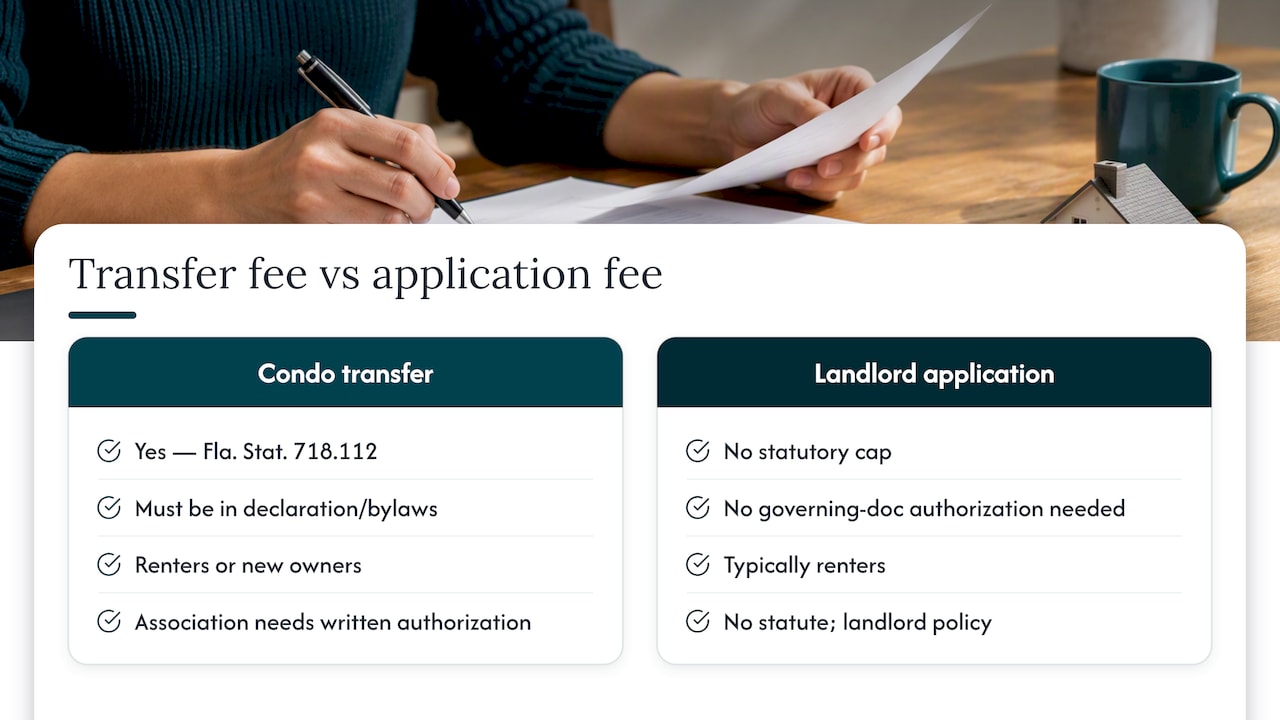
Condominium associations operate under different rules than individual landlords, and this is where Florida law gets specific. Florida Statute 718.112 sets limits on the fee a condo association can charge when approving a new tenant or buyer, commonly called a transfer or approval fee. An “applicant” in this context means anyone the association must formally approve before they can occupy or purchase the unit, whether that’s a renter or a new owner.
Crucially, an association can only charge this fee if its own governing documents, the declaration or bylaws, specifically authorize it. Without that authorization in writing, the association has no legal basis to collect the charge, even if it tries. This is different from a standard landlord’s application fee, which has no statutory cap and doesn’t require any governing-document authorization. If you’re renting in a condo building rather than a standard apartment complex, ask whether the transfer fee is authorized in the association documents and get the cap confirmed before you pay.
How to verify, question, and dispute a fee before you sign
Most fee disputes are avoidable if you ask the right questions before signing anything. Start with your own paperwork trail.
- Request an itemized list of every fee in writing, not a verbal estimate, before you submit payment.
- Ask which screening vendor the landlord uses and what that vendor typically charges, since package pricing commonly runs between $15 and $75 depending on what’s included.
- Confirm in writing whether each fee is refundable, and under what conditions.
- Keep every receipt and confirmation email tied to a fee payment.
- If you’re in a condo building, ask to see the governing document section that authorizes the transfer fee.
Pro Tip: Compare the quoted screening fee against the vendor’s public pricing page before you pay; a mismatch of more than a few dollars is worth questioning directly.
If a fee seems off, your first move is a written request asking the landlord to explain the charge and its basis. If that doesn’t resolve it, a demand letter citing the relevant statute, §83.425 for general tenancy matters or 718.112 for condo transfer fees, often prompts a faster response than a phone call. Persistent disputes involving larger sums are worth a consultation with a landlord-tenant attorney, particularly when FDUTPA concerns apply. Watch for red flags: a large, unexplained lump-sum fee with no description, a fee charged only to some applicants and not others, or a landlord who refuses to put the fee breakdown in writing. Our move-in cost budgeting guide walks through what a typical first-month charge list should include.
How we keep fees transparent at Cynthia Gardens
We build our pricing around a simple idea: you should know every charge before you ever sign a lease. Our fee list is itemized and published, not buried in fine print, covering typical charges such as non-refundable application fees, administration fees, and pet fees. That structure means the total cost of occupancy you calculate before touring is the same number you pay at move-in. We also use a tech-forward leasing process, including AI chat support and virtual tours, so questions about fees get answered quickly instead of waiting on a callback.
What this means if you’re apartment hunting right now
Most fee disputes come down to one thing: nobody asked for the breakdown in writing before signing. Florida’s lack of a statewide application fee cap puts more responsibility on renters to compare costs themselves rather than assume a number is standard. The condo transfer fee cap is the exception worth remembering, since it’s the one place state law draws a hard line. If you take one habit from this guide, make it asking for an itemized fee sheet before you pay anything.
— Ayman
See exactly what you’d pay before you tour
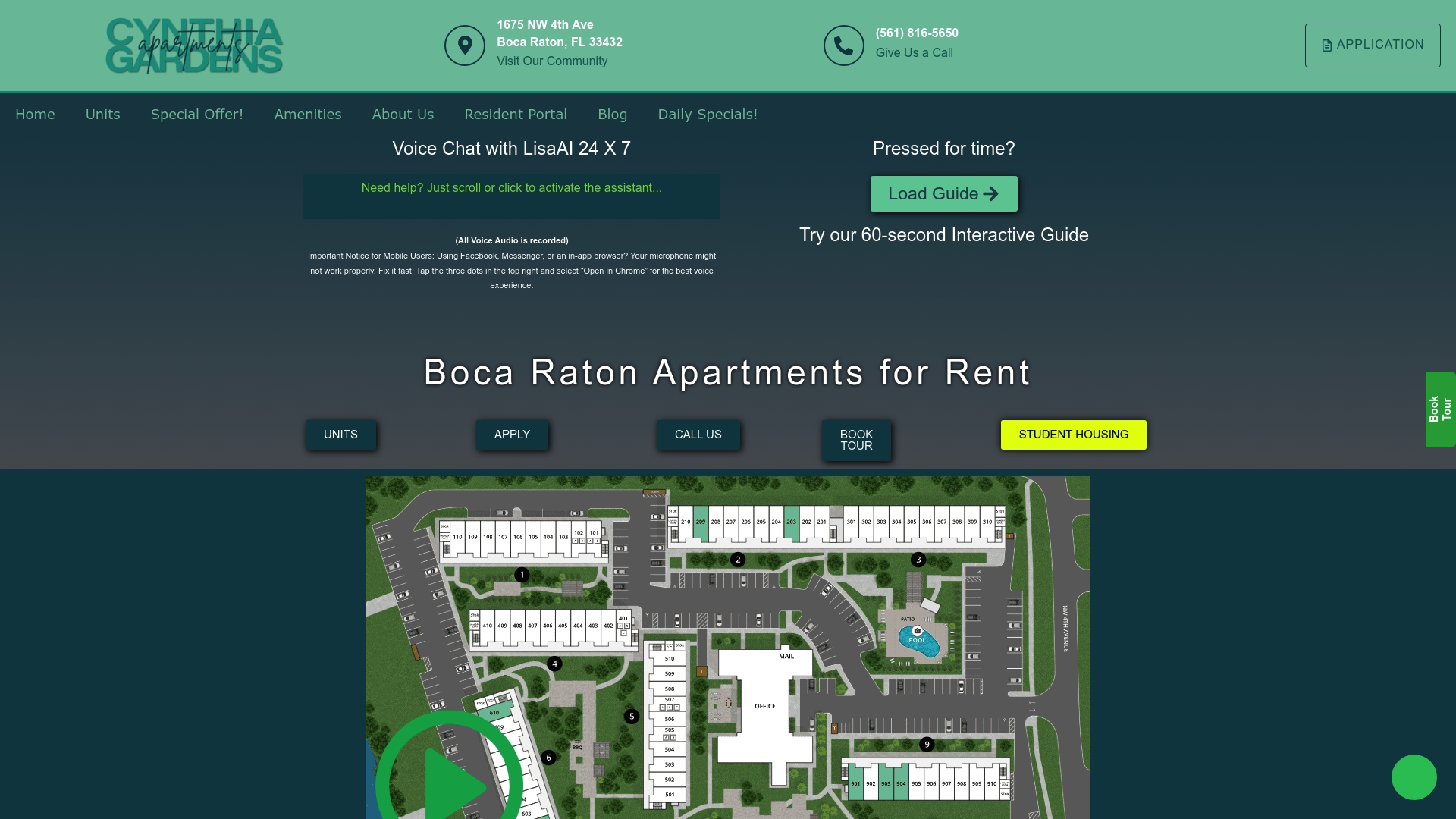
We list every fee up front because we’d rather you compare us on real numbers than guess. Our one-bedroom apartments run $1,990 to $2,220 per month, and our full fee breakdown on the fees and pricing page covers the application fee, administration fee, wire transfer fee, transfer fee, and the one-time cat fee, with nothing hidden behind a “contact us for details” wall.
What that looks like in practice:
- A $75 non-refundable application fee per applicant, itemized separately from administration costs.
- A $300 administration fee, charged once, not recurring.
- A one-time $300 to $500 non-refundable pet fee for cats, with no ongoing monthly pet rent.
If you’re ready to see current availability, book a virtual tour or start an application through our leasing workflow and get a full cost breakdown before you commit to anything.
FAQ
What is an amenity fee for apartments?
An amenity fee is a charge, either one-time or recurring, that covers access to shared property features like a pool, fitness center, or clubhouse. It’s typically separate from rent and from your security deposit, and whether it’s refundable depends entirely on what your specific lease states.
What is the typical application fee for apartments in Florida?
Florida sets no statewide cap on application fees, so amounts vary by landlord and by the screening vendor used. Screening packages themselves commonly cost between $15 and $75 depending on what’s included, though the fee a landlord charges a renter can be set independently of that underlying cost.
Why are Florida condo and HOA fees so high?
Condo and HOA fees cover shared building maintenance, insurance, reserves, and amenities, and they’ve risen in many Florida communities as insurance costs and reserve requirements increased. This differs from a one-time transfer or approval fee, which is separately capped under Florida Statute 718.112 and requires authorization in the association’s governing documents.
Are amenity fees negotiable in Florida?
Amenity and application fees aren’t subject to a statewide cap for standard rentals, which means landlords have room to set their own amounts, and some are open to discussion, especially for move-in specials. Asking for an itemized breakdown in writing is the most reliable way to identify room for negotiation or confirm a fee is standard.
Sources
- Florida Statutes §83.425 — Preemption
- Sales and Use Tax on Rental of Living or Sleeping Accommodations (GT-800034)
- Florida rental application fee laws: caps and refunds (LegalClarity)