
Yes, virtual tours are a common tool in rental scams, and the single most important defense is simple: never send a payment you cannot get back, and always verify ownership through sources the scammer does not control. The checklist and reporting steps below walk you through exactly how to do that before you hand over a deposit or sign anything.
TL;DR:
- Verifying ownership through official property records and calling the property manager on a verified number is essential before transferring any funds.
- Avoid making unrecoverable payments via wire transfer, gift cards, or cryptocurrency, especially when pressured to decide quickly or under urgency.
- Recognizing red flags such as refusal to speak by phone, inconsistent photos, or unusually low rent can help identify scam listings during virtual tours.
- Using reverse-image searches for listing photos and documenting all communications provides critical evidence if fraud occurs.
- Legitimate management firms confirm appointments through verified channels, never ask for deposits before signing a lease, and openly publish fees and procedures.
Table of Contents
- What virtual tour scams are and why they work
- Red flags you can check during the tour itself
- How scammers set up fake virtual tours
- A step-by-step checklist before you pay or sign
- What to do if you realize you were scammed
- How reputable managers run safe virtual tours
- Balancing convenience with caution
- A safer way to tour and lease online
- FAQ
- Sources
What virtual tour scams are and why they work
A virtual tour scam happens when someone uses a video walkthrough, a set of photos, or a live video call to convince you a property is available and legitimate when it is not. The scammer might have stolen photos from a real listing, invented a unit that does not exist, or be showing you someone else’s home without permission. Sometimes the person on camera does not even control the property they are showing you.

These scams succeed because a virtual tour feels like proof. Seeing rooms, hearing a voice, watching someone walk through a kitchen all trigger the same trust a real viewing would. That trust is exactly what scammers exploit: once you believe the unit is real, you stop asking the questions that would expose the fraud.
Most of these schemes start on casual platforms rather than verified rental sites. The FTC found that roughly half of reported rental scams in the 12 months ending June 2025 began with fake ads on Facebook, and consumers have lost about $65 million to rental scams since 2020. Classified sites and social marketplaces add to that volume because listings there often go live with little or no verification of who posted them.
Red flags you can check during the tour itself
Most virtual tour scams share a short list of tells. You usually do not need outside research to catch them, just attention during the interaction itself.
- The person pushes you to pay a deposit or holding fee by wire transfer, gift card, cryptocurrency, or a peer-to-peer app before you have seen the unit in person or signed anything.
- They create urgency: multiple applicants, a limited-time discount, or a demand to decide within hours.
- The photos look slightly off: different furniture styles between rooms, watermarks from another listing site, or images that appear elsewhere online under a different address.
- They refuse to talk by phone, insist on text or chat only, or will not confirm the property’s identity through any channel you did not get from them — a red flag highlighted in the How to review real estate contract terms confidently – Herndon Home Guide.
- The rent is noticeably below similar units in the area, or the lease terms are unusually loose, such as no application, no credit check, and no in-person signing.
The FTC’s consumer guidance is blunt about payment methods: wire transfers, gift cards, cryptocurrency, and certain P2P apps are effectively unrecoverable once sent, which is why scammers favor them.
Pro Tip: If someone refuses a phone call and only wants to communicate through the platform’s chat, treat that as a warning sign, not a preference.
How scammers set up fake virtual tours
Behind the red flags above are a handful of repeatable workflows. Recognizing the pattern helps you spot a scam even when the details differ.
- Scammers clone a real ad, swap the contact information, and repost it on another site or under a different name, sometimes impersonating a licensed agent whose identity they stole.
- They misuse self-guided tour and smart-lock systems, handing out access codes to properties they do not control, which the FTC warns creates a false sense of legitimacy for anyone who walks in.
- Some sell entire “apartment packages,” complete with AI-generated interior photos and forged lease documents, a pattern the National Apartment Association says is becoming more common and more convincing.
- When you ask to verify ownership, they deflect with excuses: they are “out of the country,” a “relative is handling the keys,” or they need the deposit first to “prove you’re serious.”
That last tactic, using urgency or a flimsy excuse to block verification, is often the clearest sign something is wrong. A legitimate landlord or manager has no reason to avoid a phone call to their own office.
A step-by-step checklist before you pay or sign
Work through this sequence any time you are dealing with a listing you found online, especially one where the only “viewing” was a virtual tour.
- Save the listing photos, then run a reverse-image search to check whether they appear on other sites under a different address or price.
- Look up the property address in your county’s tax or property assessor records to confirm who actually owns the unit.
- Find the property manager’s phone number from their official website, not the number in the ad, and call to confirm the listing and the person you have been talking to.
- Refuse any request for wire transfer, gift cards, cryptocurrency, or P2P payment apps; use a credit card or a verified, official escrow or payment portal instead.
- Ask for an in-person showing or a live video call with someone you independently verified, and insist on a signed lease along with an ID check before any money changes hands.
- Keep screenshots of the listing, every message, the names used, and any payment requests in case you need to report the interaction later.
This sequence follows the same logic property managers use internally: confirm the listing against the official source, cross-check photos, call a verified number, and only authorize access codes through a confirmed portal, a chain the FTC recommends for consumers directly. The FTC’s analysis found about $65 million in reported rental scam losses since 2020, a figure that reflects how often renters skip steps like these under time pressure.
What to do if you realize you were scammed
If you already sent money or shared personal information, speed matters more than anything else.
- Stop any further payments immediately and gather every piece of evidence: messages, listing screenshots, payment confirmations, and the names or phone numbers used.
- Contact your bank or card issuer right away to report the transaction and ask about reversing it, especially if you paid by card rather than wire or crypto.
- File a report with the FTC and with the FBI’s Internet Crime Complaint Center, and flag the listing to whatever platform hosted it so it can be taken down.
- If you shared a Social Security number, driver’s license, or bank details, follow identity-theft steps such as placing a fraud alert or credit freeze, a precaution the FTC specifically recommends when personal data has been exposed.
- Contact local police if you met the scammer in person or if the fraud involved a specific physical address you can point to.
The FBI and IC3 ask victims to preserve transaction details, emails, and IP information when reporting, since that evidence is what investigators use to connect related cases.
How reputable managers run safe virtual tours
A legitimate apartment community has nothing to hide, and its virtual tour process shows it. Listings live on the manager’s own official site rather than only on a third-party classifieds page, fees are published rather than negotiated case by case, and tours are scheduled through a verified channel rather than a stranger’s personal number.
Tech-forward features like AI chat support, voice assistants, and interactive property maps can make touring faster, but they only build trust when they are paired with a transparent, documented process behind them. A real manager will confirm a tour appointment through an official booking system, follow up from a listed company number, and never ask you to pay a deposit before you have seen a signed lease. Readers who want a closer look at what that workflow looks like in practice can review how virtual tours fit into secure leasing or walk through a complete virtual leasing process. The same scrutiny applies to self-guided access: a trustworthy provider issues lockbox or smart-lock codes only through a verified portal tied to a confirmed appointment, never through an ad or a chat message, as outlined in a closer look at self-guided apartment tours.

Balancing convenience with caution
Virtual tours save time, and that is exactly why they invite shortcuts. The faster a process feels, the easier it is to skip the one phone call or the one records search that would have caught a fraud. None of the verification steps above take more than a few minutes, and none of them require you to be rude or distrustful of a genuine landlord.
Treat the checklist as a habit, not a hassle. Document what you see, confirm what you can independently, and slow down the moment someone else tries to speed you up.
— Ayman
A safer way to tour and lease online
Some apartment communities already build verification into the process instead of leaving it to the renter. We offer guided virtual tours, transparent pricing, and an online leasing process where every step, from scheduling to signing, happens through verified, documented channels.
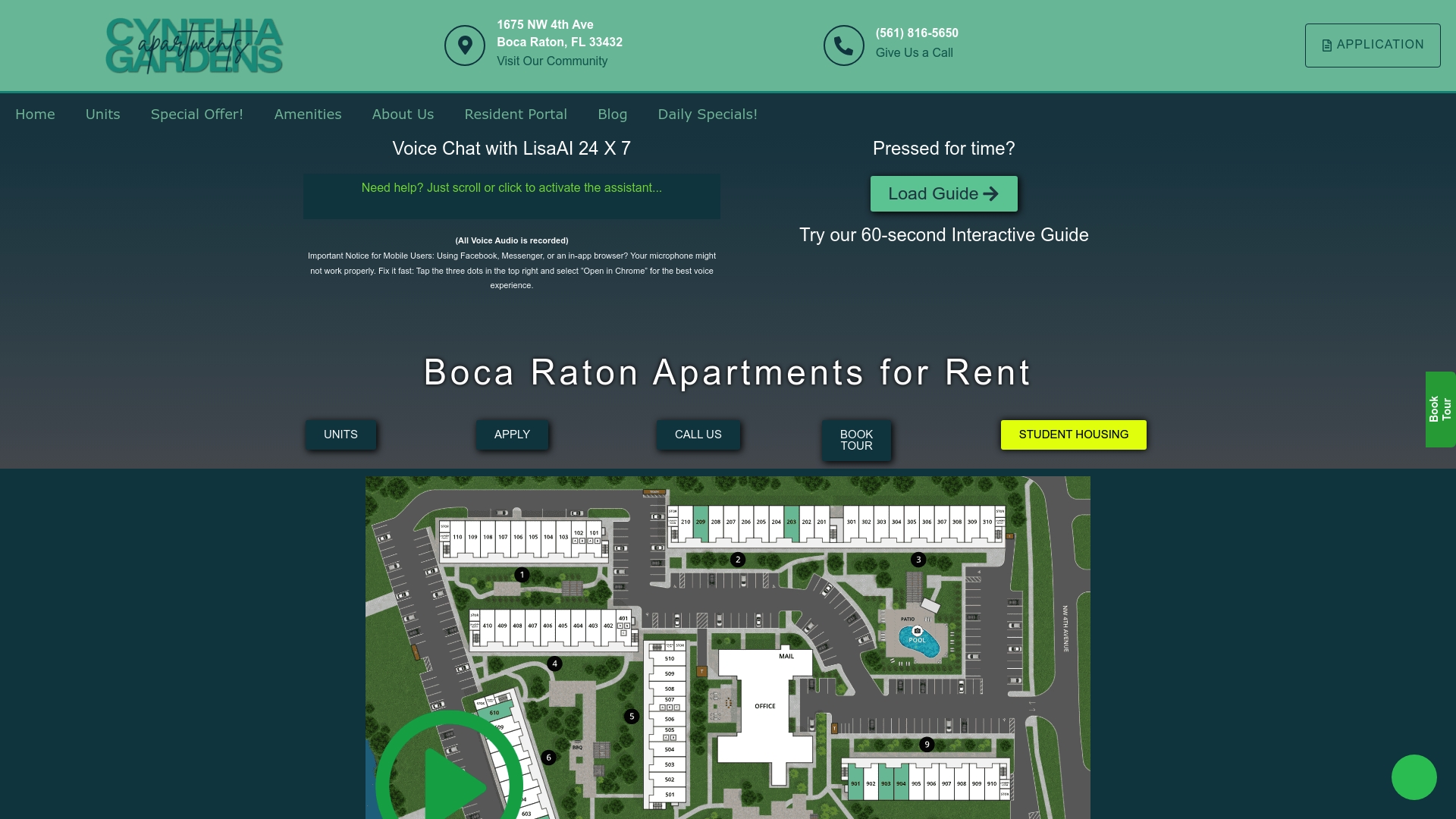
If you want to see what a verified virtual tour and transparent lease terms look like in practice, you can browse available one-bedroom apartments and check real pricing before you schedule a tour.
This article is general information, not a substitute for advice from a qualified financial advisor. Consult a qualified financial professional about your own circumstances before acting on anything here.
FAQ
What are some of the most common current scams?
Common rental scams right now include cloned listings with stolen photos, fake self-guided tour codes for units the poster does not control, and AI-generated “apartment packages” with forged documents. The National Apartment Association notes a rise in AI-generated fraudulent documents paired with cloned listings as a growing pattern.
What are the most common rental and travel-style listing scams?
The pattern across rental and travel listing scams is similar: a cloned or fake ad, pressure to pay quickly, and a request for an unrecoverable payment method like wire transfer or gift cards. The FTC identifies these payment types as a defining red flag regardless of what is being “rented.”
How can I tell if I’m chatting with a scammer?
Watch for refusal to speak by phone, pressure to decide within hours, and requests for payment before you have verified the property or person independently. If the person deflects every verification request with an excuse, such as being out of town or needing money “to prove you’re serious,” that is a strong signal of fraud.
How do I verify a listing is legitimate before paying anything?
Run a reverse-image search on the photos, check the address against your county’s tax or assessor records, and call the property manager using a number from their official website rather than the ad. The FTC recommends this exact combination as the baseline verification step before sending any money.
What should I do first if I already sent money to a scammer?
Contact your bank or card issuer immediately to ask about reversing the charge, then file a report with the FTC and the FBI’s Internet Crime Complaint Center. Preserve every message, screenshot, and payment record, since the FBI and IC3 rely on that evidence to investigate related cases.
Sources
- FTC analysis shows consumers have lost millions to rental scams
- Consumer
- Extinguishing fraud | National Apartment Association
- FBI / IC3 public service advisories on impersonation schemes