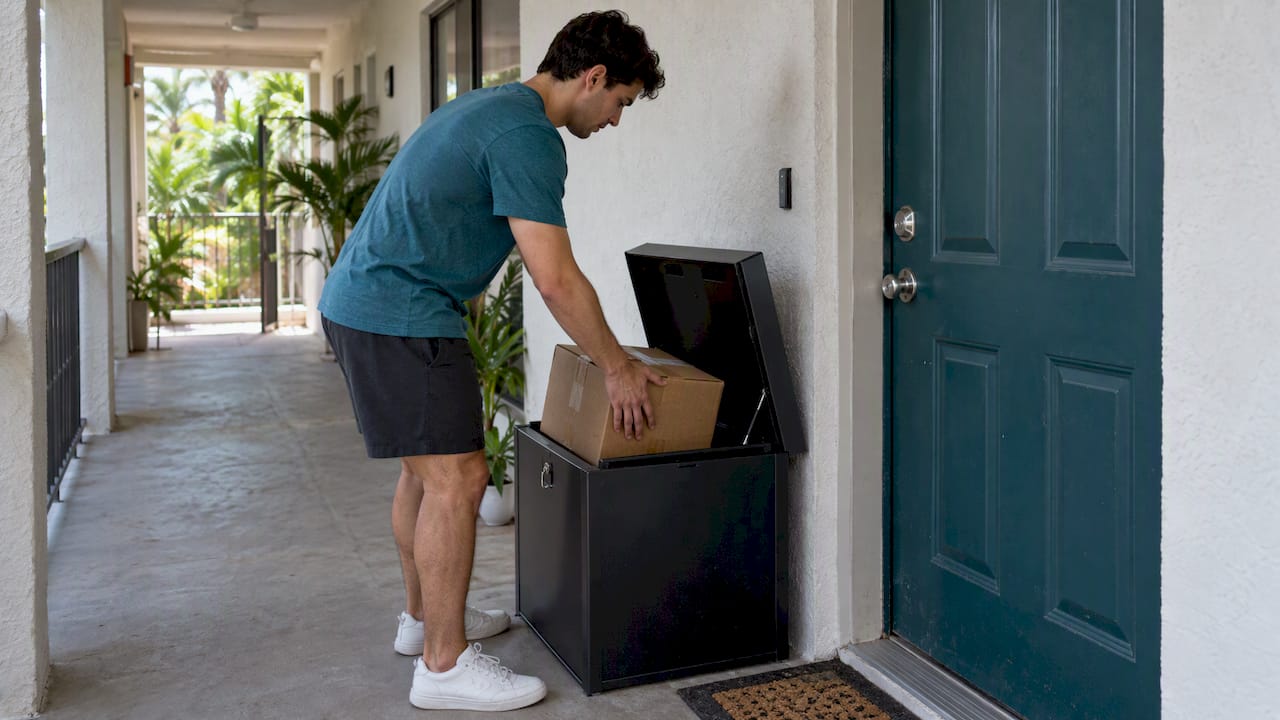
The fastest ways to cut package theft risk are requiring a signature on deliveries, using a locked pickup point like a retailer locker or carrier hold service, and keeping a portable lockbox or a battery-powered camera at your door for everything else. These cost little or nothing, do not require your landlord’s permission, and address the two biggest risk windows: unattended drop-offs and front-door visibility. Building lockers help too, but they are not a guarantee.
TL;DR:
- Using signature-required delivery or carrier hold services can significantly reduce unattended package exposure, especially for high-value orders.
- Portable lockboxes and battery-powered cameras are affordable, easy-to-install renter options that provide real-time visibility and control over deliveries.
- Building-installed smart lockers and staffed package rooms can help but are prone to operational failures such as full lockers or missed deliveries.
- Coordinating with trusted neighbors for package pickup and setting specific delivery instructions can further improve security without building approval.
- Collectively advocating for longer-term building fixes, like added lockers or security upgrades, becomes necessary if theft becomes a recurring problem.
Table of Contents
- What are your options for stopping package theft?
- Renter-friendly solutions you can set up today
- How do apartment buildings actually handle packages?
- How do you configure deliveries so nothing is left unattended?
- How do you avoid delivery scams and phishing?
- Who’s responsible when a package gets stolen?
- A prioritized checklist for reducing package theft
- How one Boca Raton community approaches package security
- When should you fix this yourself versus push for building change?
- Looking for an apartment that takes package security seriously?
- Where to go for official guidance
- Sources
- FAQ
What are your options for stopping package theft?
Package theft solutions split into two groups: things you can do as a renter without touching your lease, and things that depend on your building’s setup. Knowing which is which saves you from waiting on a property manager when you could solve the problem tonight.
Renter-controlled options include signature-required shipping, retailer lockers, carrier hold services, portable drop boxes, and wireless cameras. None of these need a maintenance request or a lease amendment. Building-level options, like smart parcel lockers, staffed package rooms, and third-party off-site delivery services, depend on what your property has already installed or is willing to add.
Cost and convenience vary widely across these categories:
- Signature-required delivery and carrier pickup services cost nothing extra in most cases and take a few minutes to set up per order.
- Portable lockboxes run a one-time cost and work anywhere, but add a step to every delivery.
- Wireless cameras cost more upfront but give you ongoing visibility, not just one-time protection.
- Smart lockers and package rooms depend entirely on your property having them and maintaining them well.
- Off-site third-party pickup services shift the problem elsewhere but usually mean an extra errand or a fee.
Resident research backs up why this matters: 95% of residents say knowing a package is secure until they can retrieve it matters to them, according to Parcel Pending’s 2025 resident preferences research shared through the National Apartment Association. That is less about any single gadget and more about having a dependable system, whichever one you choose.
Renter-friendly solutions you can set up today
You do not need your landlord’s approval to reduce your exposure. Start with what is already in your control.
A portable, weighted or anchorable package box sits outside your door and locks after the carrier drops a parcel inside through a slot. Place it somewhere visible from a hallway camera or sightline but not directly in front of a stairwell where foot traffic is heaviest. In a multifamily hallway, keep it flush against your door rather than jutting into a shared walkway, both for safety and so it reads as clearly yours, not communal property.
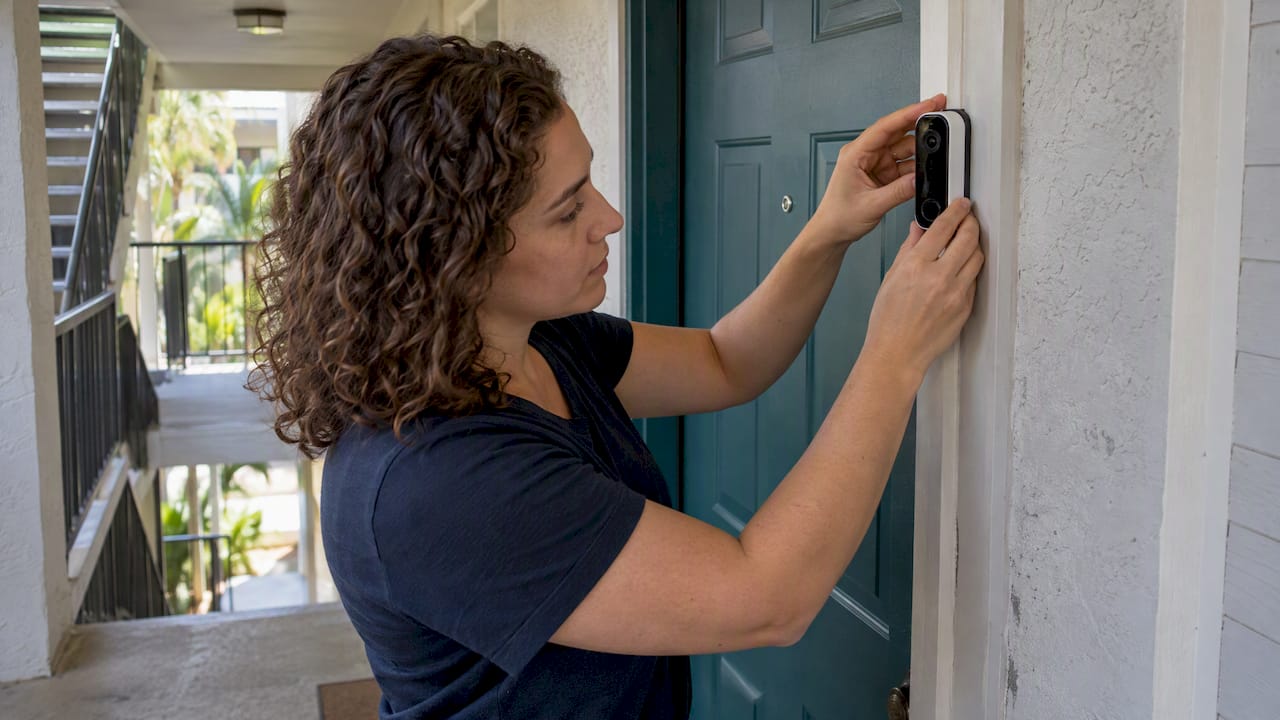
Battery-powered, wireless doorbell cameras are the other renter-friendly staple. They do not require drilling into a leased wall in most models, since many use adhesive mounts or door-frame clips, and they send a notification the moment a carrier approaches. Set privacy carefully: angle the camera to capture your doorstep, not a neighbor’s door or a shared corridor, since recording common areas can create friction with other residents or violate building policy. Camera-based property protection works the same principle whether it is a holiday home or an apartment landing: visibility plus notification equals faster response.
For higher-value orders, skip the doorstep entirely. Retailer lockers (Amazon Locker and similar services) and carrier pickup points let you collect a package on your schedule from a secured location instead of your hallway. When a locker or pickup point is not close by, signature-only shipping is the next best substitute.
Where your building has a front desk or concierge, ask if they will hold packages for pickup. Many will, informally or as a stated policy, and it costs you nothing but a conversation.
Pro Tip: Coordinate with a trusted neighbor who is usually home during the day. A quick text (“package arriving around 2pm, can you grab it?”) beats any lockbox for speed.
How do apartment buildings actually handle packages?
Buildings generally rely on one of three systems: smart parcel lockers, staffed package rooms, or third-party off-site services. Each has real strengths and real gaps that are worth understanding before you assume your building’s setup is foolproof.
Smart lockers assign a unit and a code to each delivery and text or email the resident a pickup notification. They work well when drivers actually use them. Industry reporting notes that driver compliance and locker capacity remain common failure points. Even properties with lockers installed still see carriers leave boxes in hallways when a locker bank is full or a driver is behind schedule.
Staffed package rooms, where an attendant logs deliveries and residents sign or scan a fob to retrieve them, generally offer tighter control because a person checks identity against a log. The tradeoff is that they depend on staffing hours, so a delivery that arrives after the office closes often ends up unattended anyway.
Third-party off-site services pick up deliveries before they reach the property and hold them at a separate facility for resident pickup or final delivery. Software-based package logistics can reduce onsite handling and staff time for larger properties, though it usually adds a pickup trip or a service fee for residents.
Common policy patterns worth knowing:
- Pickup windows that require retrieval within a set number of days before a package is returned or a storage fee applies.
- Waivers limiting the property’s liability for anything left in a package room or locker bank.
- Refusal policies where staff decline to accept oversized or high-value items on a resident’s behalf.
If your building has lockers but drivers keep bypassing them, that is a documented, common operational gap, not a sign you are doing something wrong.
How do you configure deliveries so nothing is left unattended?
Most theft happens because a package sits exposed for hours between drop-off and pickup. Closing that window is mostly a matter of settings, not spending.
- Request signature-required or adult-signature delivery on valuable orders at checkout or through the retailer’s shipping options. The FTC recommends signature requirements specifically to cut down on packages left unattended where thieves can grab them.
- Use Amazon Locker, or a UPS or FedEx hold-for-pickup location, when one exists near your apartment, so the package never reaches your door at all.
- Set up USPS Hold Mail or Hold for Pickup when you are traveling or expect to be out during delivery hours, which routes mail and packages to a post office instead of your unit.
- Add specific delivery instructions at checkout: apartment number, gate code, preferred drop spot, or “leave with front desk” where that option exists.
- Time deliveries for days you know you will be home, or schedule a carrier’s delivery window feature where the retailer offers one.
The US Postal Inspection Service recommends prompt pickup and signature confirmation for valuable mail as baseline habits, not just occasional precautions.
How do you avoid delivery scams and phishing?
Package notifications are now a favorite disguise for phishing. A text claiming your delivery failed, with a link asking you to “reschedule” or pay a small fee, is one of the most common versions.
- Treat unexpected “missed delivery” texts or emails with suspicion, especially ones demanding a fee or login to reschedule.
- Verify directly through the carrier’s own app or tracking page using the tracking number from your original order confirmation, not a link in the message.
- Never enter payment or account details through a link sent in an unsolicited delivery notice.
The FTC’s consumer alert on holiday phishing describes scammers using fake package messages to steal login credentials and push people toward identity theft, a tactic that spikes around high-shipping periods but runs year-round.
If you already clicked a suspicious link: change the password on any account you entered, turn on bank and card alerts, and report the message to the FTC through consumer.ftc.gov.
Who’s responsible when a package gets stolen?
Landlord liability for a stolen package almost always requires showing negligence, something like broken security cameras the property knew about and ignored, not simple bad luck. Most leases and package-room policies include waivers limiting the property’s responsibility for items left in common areas, and many set pickup windows or storage fees that affect how long you have to collect a parcel.
To put yourself in the best position if something goes missing:
- Save the delivery confirmation and tracking history showing the package was marked delivered.
- Photograph the delivery area and check for camera footage your building might have, including fob or access logs.
- File a police report, since many carrier claims and insurance processes ask for one.
- Start a claim directly with the carrier or retailer, since that is usually faster than any other route.
- Weigh renters insurance carefully. Deductibles often exceed the value of a single stolen package, so it tends to make sense only for higher-value losses.
A prioritized checklist for reducing package theft
Work through these roughly in order, spending the least effort first and building up from there.
- Tonight: switch your next few expected deliveries to signature-required or route them to a locker or carrier pickup point instead of your door.
- This week: order a portable lockbox if you do not already have secure drop-off coverage, and install a battery-powered camera facing your doorstep.
- This week: text a neighbor who is usually home and ask if they will grab packages when you are out, and return the favor.
- This month: ask your front desk or leasing office whether they hold packages informally, and get that confirmed in writing if possible.
- This month: if your building has a locker bank or package room, ask for clarification on pickup windows, storage fees, and what happens when lockers are full.
- Ongoing: if theft happens more than once, raise it with management in writing and ask about adding camera coverage or a staffed package area.
Pro Tip: Keep a simple log of delivery dates and tracking numbers in your phone’s notes app. It takes thirty seconds and turns into the first thing a carrier or insurer asks for if something goes missing.
Escalating to your property manager works better with specifics in hand: how many incidents, when, and what carrier logs showed, rather than a general complaint.
How one Boca Raton community approaches package security
Cynthia Gardens, a one-bedroom apartment community in Boca Raton, Florida, builds package handling into its broader tech-forward leasing approach rather than treating it as an afterthought. A few practices worth modeling, wherever you rent:
- Clear, resident-facing communication about delivery handling and pickup expectations, delivered through the kinds of digital tools (AI chat support, resident notifications) the community already uses for leasing.
- Transparent property policies with no hidden fees, which extends naturally to being upfront about how packages are logged and stored rather than leaving residents guessing.
- A culture of quick response for resident concerns, which matters as much for a missing package as it does for a maintenance ticket.
If your own building lacks any of this, a short, specific message to your property manager works better than a general complaint. Try something like: “Could we get fob-access logging added to the package room, or set a defined daily pickup window so items are not sitting out overnight?” Specific, low-cost asks tend to get traction faster than open-ended ones.
When should you fix this yourself versus push for building change?
Self-help measures (lockboxes, cameras, signature delivery) solve the problem for one person, fast, and cost you nothing in negotiation. They are the right first move almost always.
Building-wide fixes, like adding locker capacity, staffing a package room, or contracting an off-site service, take longer and depend on other residents caring enough to ask too. If you notice theft becoming a pattern rather than a one-off, that is the signal to organize: compare notes with neighbors, bring documented incidents to a resident meeting or a joint letter to management, and propose a specific fix rather than a vague ask. Collective pressure moves property policy. Individual tools protect you while you wait for it.
— Ayman
Looking for an apartment that takes package security seriously?
If package handling is part of what you weigh when choosing where to live, it’s worth asking any property upfront how deliveries are logged, stored, and communicated, not just whether they have a locker bank. Some modern apartment communities pair transparent pricing and no hidden fees with a tech-forward leasing experience that includes AI chat and voice assistance, so questions about resident services, including how deliveries are handled, get answered quickly rather than sitting in a queue.
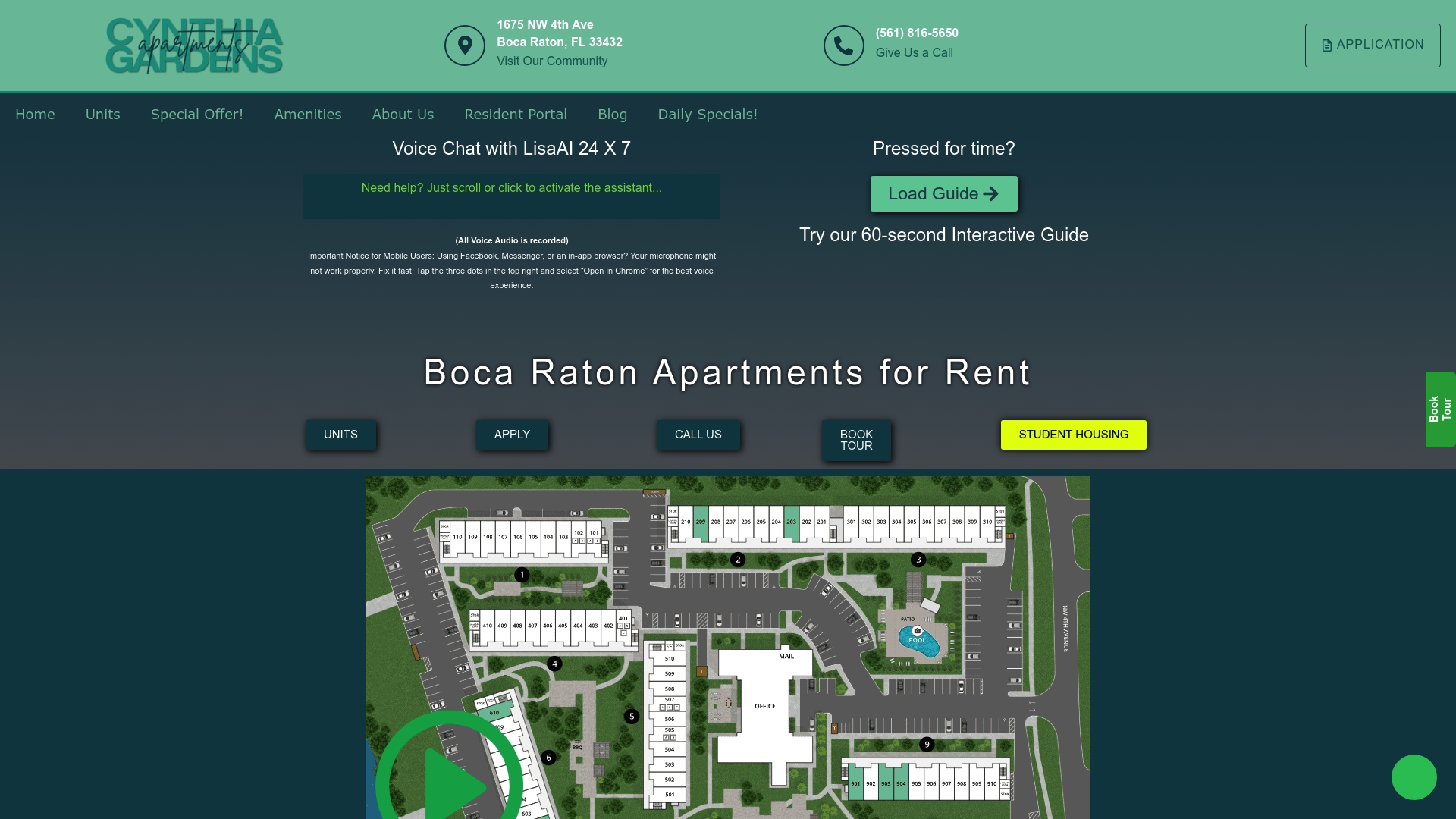
Pet owners, students, and young professionals who want a straightforward leasing process alongside day-to-day practicalities like package handling can browse available one-bedroom apartments to see current layouts and pricing, or reach out through the leasing office to ask specifically about on-site delivery practices before signing.
Where to go for official guidance
- FTC consumer guidance covers signature recommendations and how to verify delivery messages.
- US Postal Inspection Service lists prevention tips and reporting steps for mail and package theft.
- FTC phishing alert explains current delivery-scam tactics.
- NAA resident preferences research outlines what residents expect from package security.
Sources
- Key Findings from Parcel Pending’s 2025 Resident Preferences Report | National Apartment Association
- Federal Trade Commission (consumer.gov) guidance
- Tips for preventing mail and package theft | U.S. Postal Inspection Service
- Scammers are delivering phishing messages — FTC consumer alert
FAQ
How do you keep packages from being stolen at an apartment?
Combine signature-required delivery or a carrier pickup point with a portable lockbox or wireless camera at your door. According to FTC guidance, requiring a signature specifically reduces the chance a package sits unattended long enough to be taken.
Are apartments responsible for stolen packages?
Usually only if the property was negligent, such as ignoring broken cameras or access controls, rather than simple bad luck. Most leases and package-room policies include waivers limiting the property’s liability, so documenting the incident matters more than assuming the building will cover the loss.
What should you do if someone in your apartment steals your package?
Save your tracking history, photograph the delivery area, and file a police report, since carriers and insurers often require one before processing a claim. Report the theft to your property manager in writing and start a claim directly with the carrier or retailer, which tends to move faster than waiting on the building.
Where should you send packages so they don’t get stolen?
Route them to a retailer locker, a carrier hold-for-pickup location, or set up USPS Hold Mail or Hold for Pickup so items wait at a secured location instead of your door. When no locker or pickup point is nearby, signature-required delivery is the next best option.