
Table of Contents
- Start With a Joint Pre-Move-Out Inspection
- Florida Security Deposit Return Timeline: What Landlords Must Follow
- Normal Wear and Tear vs Damage Florida: Know the Difference
- How to Write a Security Deposit Demand Letter in Florida
- Try Mediation Before Small Claims Court Boca Raton Security Deposit Cases
- When to File in Small Claims Court for Security Deposit Disputes
- Frequently Asked Questions
Last Updated: September 30, 2026
Start With a Joint Pre-Move-Out Inspection
Roughly 26% of renters have lost a security deposit, and 36% of those who lost money got no explanation from their landlord, according to Rapid Eye Inspections’ 2026 security deposit research. Learning how to handle apartment security deposit disputes starts long before a dispute exists. The renters who walk away with full refunds are often the ones who document everything early, starting with a joint pre-move-out walkthrough.
A joint pre-move-out inspection is a scheduled walkthrough where you and your landlord review the unit together before you hand back the keys. Both sides note the condition of each room and agree on what needs fixing.
Here is how to make it count:
- Schedule the walkthrough 2-3 weeks before move-out day
- Bring a printed checklist and a phone for photos
- Test every appliance, faucet, and light fixture
- Photograph each room with a timestamp
- Ask for the list of flagged items in writing
- Fix small issues before the final walkthrough
The American Apartment Owners Association (2026) now treats joint inspections as a best practice. They let you fix flagged issues before the final walkthrough, which is when deductions get locked in.
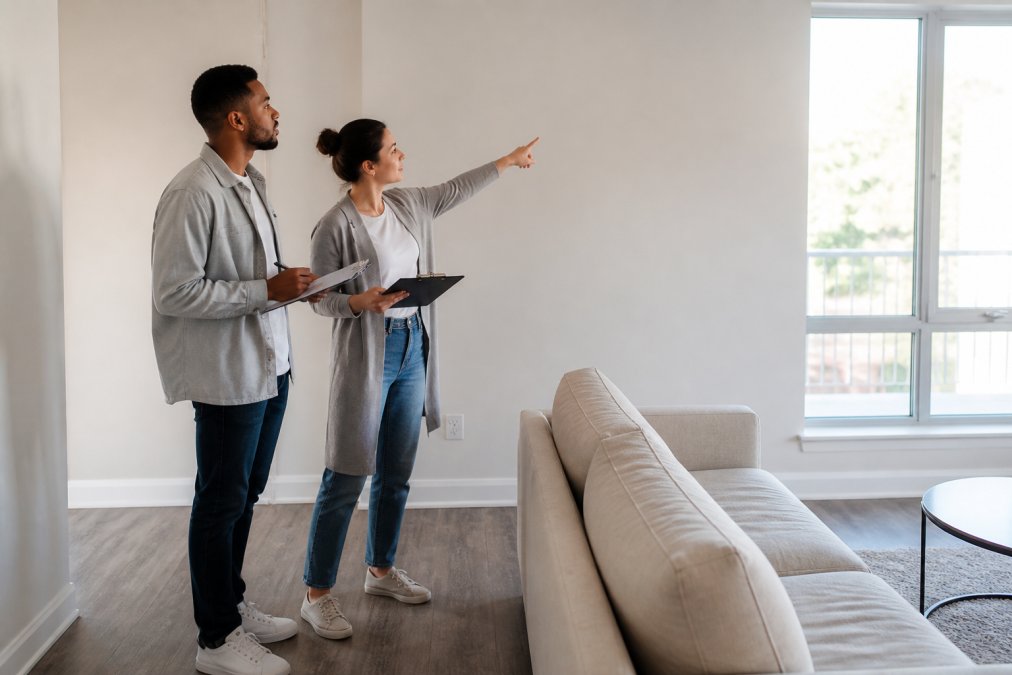
Take a short video walking through the unit on move-in day and again on move-out day. A dated video beats a stack of still photos when a landlord questions when damage happened.
Florida Security Deposit Return Timeline: What Landlords Must Follow
The Florida security deposit return timeline gives landlords 15 to 60 days to return your money, depending on whether you dispute any deductions. Under Florida Statutes Section 83.49, a landlord must return the full deposit within 15 days if no deductions apply. If deductions apply, you get written notice within 30 days. If you object in writing to those deductions, the landlord has 60 days to return the balance.
Nationwide, return deadlines range from 14 to 60 days (Rapid Eye Inspections, 2026). Florida sits in the middle, but the clock only starts when you move out and give a forwarding address.
Three things to do right away:
- Send your new address in writing, even if the landlord already has it
- Keep proof of the date you sent it
- Mark the 15, 30, and 60-day dates on your calendar
Miss those windows and you lose use. A landlord who blows the deadline can owe you the full deposit plus damages under state law.
Normal Wear and Tear vs Damage Florida: Know the Difference
Normal wear and tear vs damage Florida law is the single most contested line in deposit disputes. Normal wear and tear is the natural decline of a unit from ordinary use, like faded paint or worn carpet in high-traffic spots. Damage is harm beyond normal use, like burns, pet stains, or holes punched in walls.
Landlords may charge for damage. They cannot charge for wear and tear, and they cannot charge for routine repainting after a normal tenancy. In fact, 21 states set no legal cap on deposit amounts (Rapid Eye Inspections, 2026), which makes the wear-and-tear distinction even more important in Florida. Proactive maintenance remains the most effective strategy for preventing paint damage, ensuring that your unit stays within the bounds of standard upkeep rather than becoming a point of contention during the move-out inspection.
| Item | Normal Wear and Tear | Chargeable Damage |
|---|---|---|
| Paint | Faded or scuffed walls | Crayon marks, gouges |
| Carpet | Worn paths, light fading | Burns, pet stains, rips |
| Blinds | Faded slats | Broken or missing slats |
| Fixtures | Loose handles | Cracked or smashed parts |
| Doors | Light scratches | Holes, deep dents |
Never accept a lump-sum deduction like “cleaning: $300” with no itemization. Florida law requires a written list of what was deducted and why. Without it, you have grounds to dispute the entire charge.
How to Write a Security Deposit Demand Letter in Florida
A security deposit demand letter template Florida renters can rely on does four things: states the facts, cites the law, demands a specific amount, and sets a deadline. Send it by certified mail with a return receipt so you have proof of delivery.
Here is a fill-in-the-blank version:
[Your Name]
[Your Address]
[Date][Landlord Name]
[Landlord Address]RE: Security Deposit for [Rental Address], Lease Ended [Date]
I rented [address] from [start date] to [end date] and paid a security deposit of $[amount]. I moved out on [date] and provided my forwarding address on [date].
Under Florida Statutes Section 83.49, you were required to return my deposit or provide a written itemized list of deductions within [15/30] days. To date, I have received [nothing / an itemization I dispute].
I dispute the following deductions: [list them and why]. I demand return of $[amount] within 15 days of this letter. If I do not receive payment, I will pursue the matter in small claims court.
Sincerely,
[Your Name]
Keep a copy. Attach your move-in photos, your move-out photos, and any texts or emails. The paper trail is what wins these cases.
Try Mediation Before Small Claims Court Boca Raton Security Deposit Cases
Mediation is a structured negotiation with a neutral third party, and it should come before any court filing. Nolo (2026) notes that litigation should be a last resort after you exhaust direct negotiation and mediation, since court costs and time add up fast. For small claims court Boca Raton security deposit cases, mediation often settles the matter in weeks, not months.
How to start:
- Write one more demand letter that offers mediation
- Contact your local mediation program for a low-cost session
- Bring your photos, lease, and letters to the session
- Agree on a number both sides can live with
- Get the deal in writing before you leave
Most landlords prefer a quick settlement to a court date. Mediation gives them an exit, and it gives you a faster check.
Documentation wins disputes, not arguments. If your photos, checklist, and letters are organized, mediation and court both get easier.
When to File in Small Claims Court for Security Deposit Disputes
File in small claims court when mediation fails and your claim fits the county limit. In Florida, small claims handles disputes up to $8,000. Filing fees are modest, and you do not need a lawyer. Bring your lease, your demand letters, and dated photos.
Steps to file:
- Confirm your claim is under the county limit
- Get the filing forms from the clerk of court
- File in the county where the rental sits
- Pay the fee and get a hearing date
- Serve the landlord with notice
- Show up with organized evidence
Judges decide on evidence, not emotion. A clean folder with a timeline beats a long story every time.
If you are hunting for a new place near me in Boca Raton, pick a landlord who documents move-ins as carefully as you do. Cynthia Gardens offers maintenance-free one-bedroom apartments with quartz countertops and stainless steel appliances, minutes from FAU and the beach.
Frequently Asked Questions
What are the Florida laws regarding security deposit returns?
Florida law requires landlords to return a security deposit within 15 to 60 days after the lease ends, depending on whether the tenant disputes deductions. If you disagree with a deduction, the landlord must send a written notice within 30 days. You then have 15 days to object in writing. If you do, the landlord must return the undisputed amount within 30 days and may keep the disputed portion until the matter is resolved.
How many days does a landlord in Florida have to return a security deposit?
In Florida, a landlord has 15 days to return your deposit if no deductions are made. If deductions are claimed, the landlord must send you an itemized list within 30 days. After receiving that list, you have 15 days to object in writing. If you object, the landlord must return the undisputed amount within 30 days and may hold the disputed amount until you reach an agreement or a court decides.
What should I do if my landlord claims damages I didn’t cause?
Request a joint pre-move-out inspection before you leave so you can document the condition together. Take dated photos and videos of the entire unit. If your landlord still claims damages, send a written demand letter disputing the charges and include your evidence. If negotiation fails, you can file in small claims court in Boca Raton. According to Rapid Eye Inspections (2026), 36% of renters who lost a deposit received no explanation, so always insist on an itemized deduction list.
Can I take my landlord to small claims court in Boca Raton for a deposit dispute?
Yes. Small claims court in Boca Raton handles security deposit disputes up to $8,000. You must file in the county where the rental property is located. Before filing, send a demand letter and try mediation. Court costs are relatively low, but litigation should be a last resort after direct negotiation and mediation, as it involves time and fees. The Palm Beach County Clerk of Court provides the necessary forms and filing instructions.
A deposit dispute can feel stacked against you, but the rules favor renters who keep records. If you are ready for a smoother rental experience in Boca Raton, Cynthia Gardens offers garden-style one-bedroom apartments with a resort-style pool, lush landscaping, and a maintenance-free lifestyle. Schedule a tour today and see what a well-run community feels like.