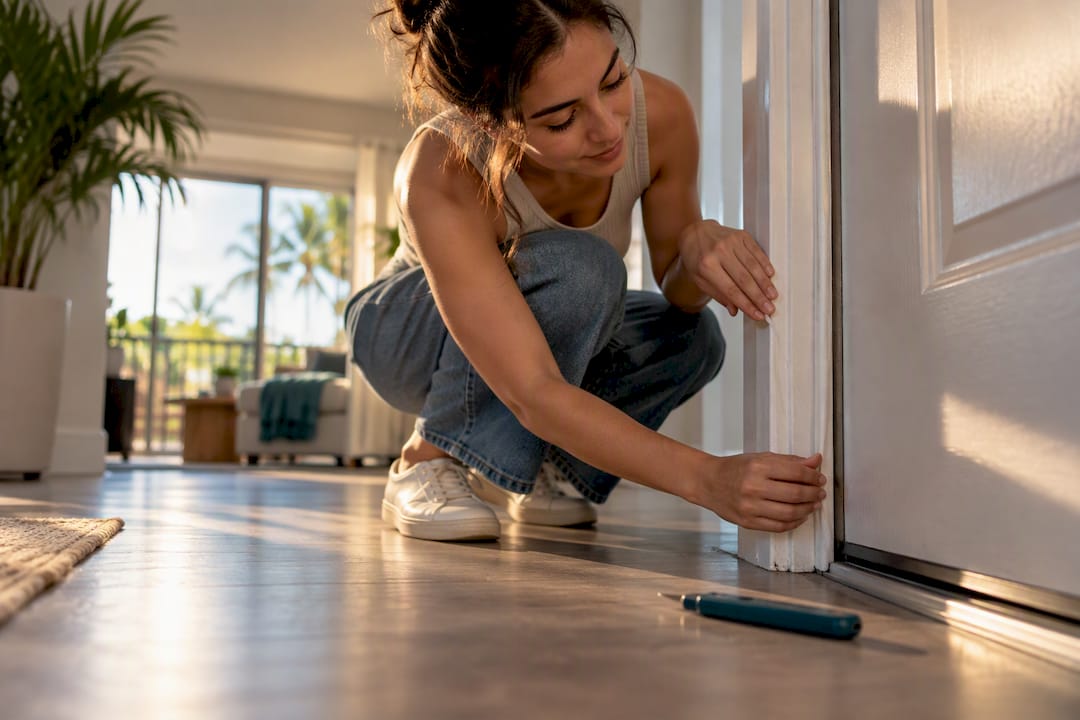
The fastest wins for apartment soundproofing are sealing air gaps, treating doors and windows, and adding dense soft surfaces to absorb sound. Airborne noise (voices, music) responds well to sealing and absorption, while structure-borne noise (footsteps, plumbing) needs padding or decoupling at the source. Done right, these steps noticeably cut noise, though they will not deliver full silence in most rental units.
TL;DR:
- Sealing air leaks around outlets, windows, and doors provides the highest impact for the lowest cost, often under $20.
- Addressing structure-borne noise requires padding or decoupling at the source, such as thick rugs with dense pads or adding impact-absorbing underlay.
- Using removable panels, curtains, and furniture like bookcases can improve sound absorption without damaging walls or violating lease terms.
- Heavy, lined curtains and thick rugs with pads can significantly reduce impact and airborne noise inside the unit but cannot guarantee full silence.
- Long-term noise reduction may require building features like thicker walls or moving to a quieter building, especially if structural noise persists after all renter measures.
Table of Contents
- Renter-friendly soundproofing tips ranked by ease and impact
- How to prioritize your soundproofing fixes step by step
- Materials that block sound versus materials that absorb it
- Getting building management involved without a fight
- Installing fixes correctly on apartment walls, ceilings, and floors
- Soundproofing versus sound absorption: know the difference
- What renters should realistically expect long term
- When it’s time to consider a quieter apartment instead
- Sources
- FAQ
Renter-friendly soundproofing tips ranked by ease and impact
Start with the cheapest, least invasive fixes before spending on materials. Sealing is almost always the highest return per dollar, since even small gaps let sound travel freely between units.
Check for leaks first. Run your hand around door and window frames on a windy or noisy day, or hold a piece of paper in the door jamb and try to pull it out while the door is closed. If it slides free easily, air (and sound) is getting through.
- Seal air leaks: use acoustic caulk around window frames, baseboards, and outlet boxes, and add foam gaskets behind switch plates.
- Fix your door: install a door sweep and weatherstripping around the perimeter. Hollow-core doors leak speech easily because they have almost no mass.
- Treat windows: hang thick, heavy curtains or try a removable window insert for added mass without altering the frame.
- Cover floors: a dense area rug over a thick pad reduces impact noise like footsteps far more than a thin rug alone.
- Use furniture as a buffer: a fully loaded bookcase against a shared wall adds mass and breaks up direct sound paths.
- Seal vents and outlets: these are common flanking paths that let sound sneak around treated walls and doors.
Cost bands are predictable: sealant, gaskets, and a door sweep run under $20 total, while rugs, curtains, and removable panels typically land between $100 and $300 depending on room size. A DOE Building America study found that sealing small leak points, especially around outlets and base edges, is one of the most cost-effective ways to reduce sound and air leakage between apartment units.
Pro Tip: Seal gaps and treat your door and windows before buying any panels or rugs. That order gives you the most noise reduction per dollar spent.
How to prioritize your soundproofing fixes step by step
Figure out what kind of noise you are dealing with before spending money. Knock on a shared wall: if it sounds hollow and voices carry clearly, you’re dealing with airborne noise. If footsteps or dragged furniture from above bother you more, that’s structure-borne noise, and it needs padding or underlay rather than sealant.
- Identify the noise path. Walk the room and note where sound enters loudest, usually a door, window, or shared wall.
- Seal every gap you find. This takes 30 to 60 minutes and costs under $20 in materials.
- Treat doors and windows. Budget an afternoon and $30 to $80 for sweeps, weatherstripping, and curtains.
- Add mass and absorption. Rugs, pads, and panels run $100 to $300 and take an hour or two to place.
- Check flanking paths last. Seal vents and outlet plates, which often get missed.
If a fix involves the building’s structure, shared walls, or a maintenance issue like a misaligned door, contact building management rather than attempting a permanent change yourself.
Materials that block sound versus materials that absorb it
Heavier, denser materials block more sound than light ones. This comes from a simple physical principle called mass law: roughly speaking, doubling the mass of a barrier or doubling the frequency increases transmission loss by about 6 decibels, according to research on transmission loss and double-layer assemblies. That’s why a thin sheet of foam, despite feeling substantial, does little to block sound from a neighbor’s television. Foam absorbs echo and reduces harshness inside a room; it does not stop sound from passing through a wall.
What actually helps renters:
- A dense area rug with a thick pad, paired with resilient underlay, to cut down on impact noise from footsteps.
- Heavy, lined curtains with a high noise reduction coefficient for windows.
- Removable acoustic panels mounted in a frame rather than glued directly to walls.
- A quality door sweep and acoustic sealant for gaps.
- Foam gaskets behind outlet and switch plates.
For mounting, 3M Command hooks, tension rods, and removable picture-hanging strips let you place panels or curtain rods without drilling or damaging paint. Avoid anything permanent: drywall changes, nailed resilient channel systems, or spray coatings that may contain regulated materials are not renter-safe and often violate lease terms. The USGBC’s guidance on acoustic doors also notes that doors need to be treated as full assemblies, meaning the door, its seals, and its threshold all matter together, not just one piece.
NIOSH sets a recommended exposure limit of 85 dBA averaged over 8 hours for occupational noise, according to OSHA’s noise exposure guidance. While that threshold is built for workplaces, it’s a useful reference point: if a noise source in your apartment feels consistently overwhelming, it’s worth taking seriously, not just annoying.
Getting building management involved without a fight
A short, specific message works better than a general complaint. Try something like: “I’d like to request a door sweep or threshold adjustment for my unit’s entry door to help reduce hallway noise. Is this something maintenance can install?” Keep a written log of dates and issues.
Maintenance teams typically handle door alignment, shared-ceiling problems, and structural gaps, since those fall under building upkeep. Sealing your own outlets or hanging curtains stays on you. Documenting requests in writing, and following up if nothing happens within a week or two, tends to get faster results than a verbal complaint at the front desk.
Installing fixes correctly on apartment walls, ceilings, and floors
Placement matters as much as the material itself. On walls, mount panels or heavy textiles using a removable frame or tension system positioned over the areas where sound is loudest, usually near shared outlets or thin sections rather than spread evenly across the whole wall. A loaded bookcase pushed flush against a party wall does more good than the same bookcase centered in the room.
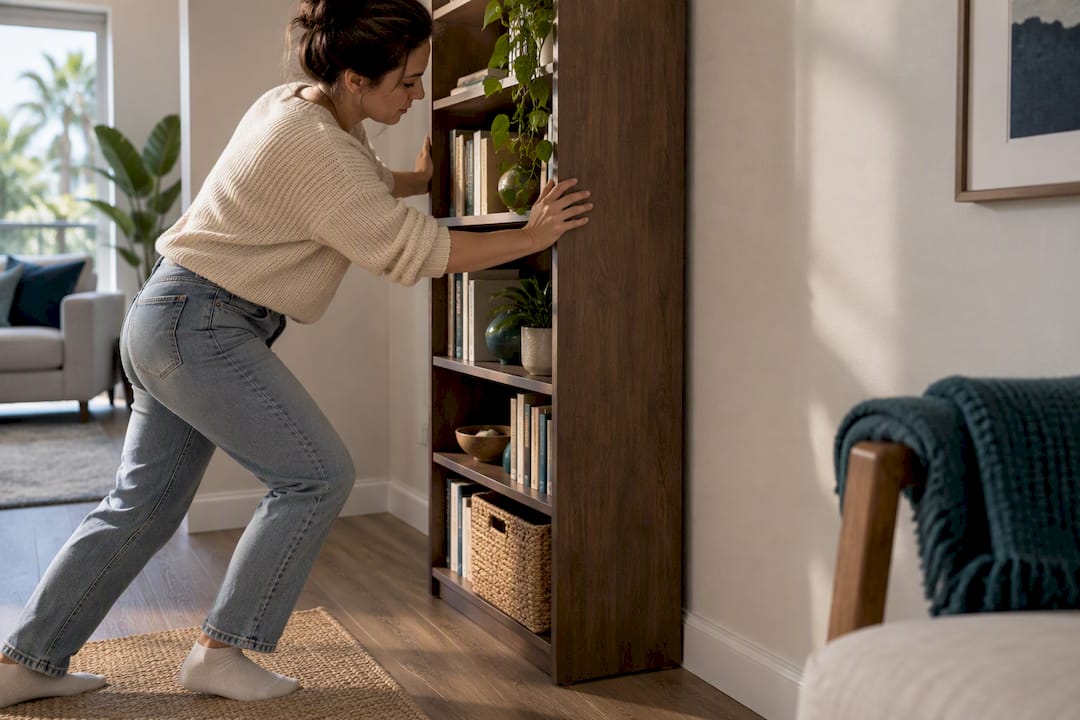
On ceilings, renters have fewer options since structural work isn’t possible, but a rug with a dense pad on the floor above (if you can influence that, such as in a shared household) reduces impact transfer more than any ceiling-mounted product. For your own floor, resilient underlay beneath a rug pad breaks the direct connection between footsteps and the structure below, which matters more than the rug’s thickness alone.
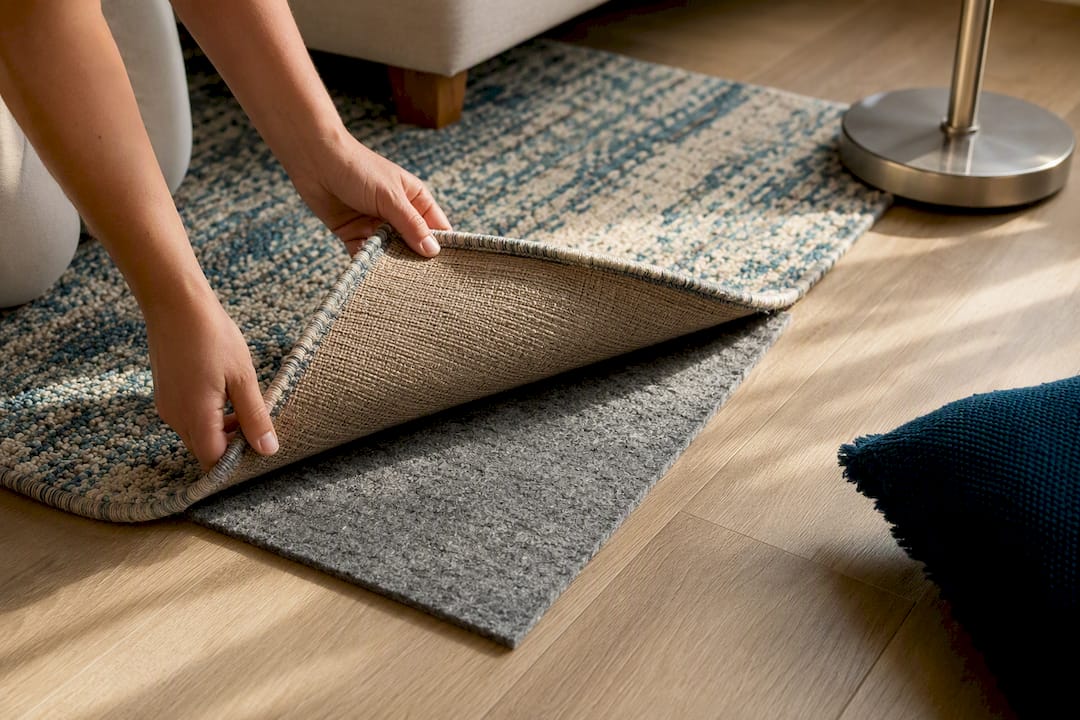
One installation mistake to avoid: attaching thin, lightweight materials loosely to a hard surface. This can create a mass-spring-mass resonance effect that sometimes makes certain frequencies louder rather than quieter, based on the same transmission loss principles that explain why mass and spacing matter. Dense materials, properly mounted flush or with a defined air gap, avoid this problem.
Soundproofing versus sound absorption: know the difference
These two terms get used interchangeably, but they solve different problems. Soundproofing means blocking sound from passing through a barrier, which requires mass, sealed gaps, and sometimes decoupling. Sound absorption means reducing echo and harshness within a room, which is what foam panels and soft furnishings do.
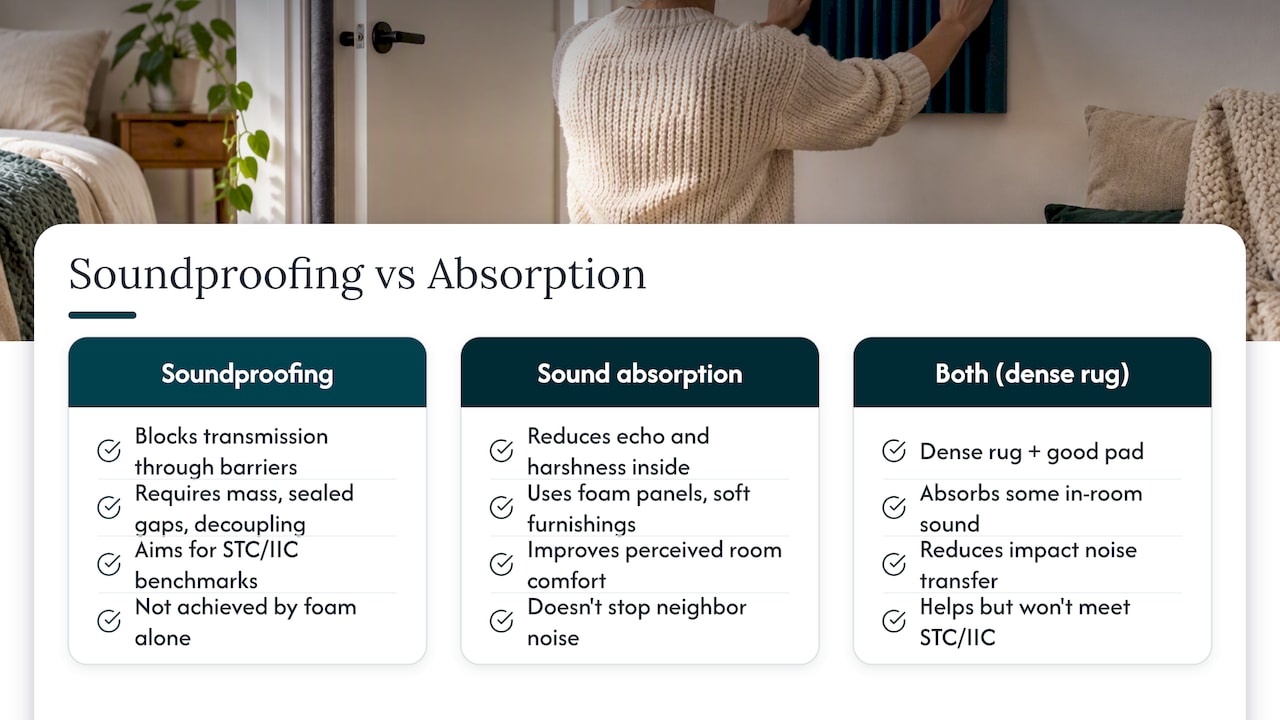
A renter who hangs acoustic foam expecting to stop a neighbor’s music will be disappointed, because foam absorbs reflected sound inside the room rather than blocking transmission through the wall. Meanwhile, a dense rug with a good pad does both: it absorbs some in-room sound and reduces impact noise transfer to the unit below.
Realistic targets help set expectations. Background research commonly cites an indoor comfort target around 45 dBA, with STC 50 for walls and IIC 60 for floors as common benchmarks when privacy or impact isolation matters. Most non-structural renter fixes won’t reach those numbers, since they’re typically achieved through wall assembly design during construction, but they can meaningfully close the gap between “distracting” and “livable.”
What renters should realistically expect long term
Sealing, absorption, and door and window treatments reduce annoyance, but they rarely deliver true privacy in a building with thin party walls or a lightweight floor slab. If the noise comes from the building’s own construction, moving to a higher floor, a different unit, or a quieter complex is often the more realistic fix. Sound-masking like a fan or white noise machine can help in the meantime, but it changes perception, not transmission.
— Ayman
When it’s time to consider a quieter apartment instead
If you’ve sealed every gap, added rugs and curtains, and still hear every conversation next door, the building itself may be the limit, not your effort. Look for buildings with staggered stud walls or concrete construction, higher floors away from street noise, and a maintenance team that responds quickly to requests like door sweeps or seal repairs.
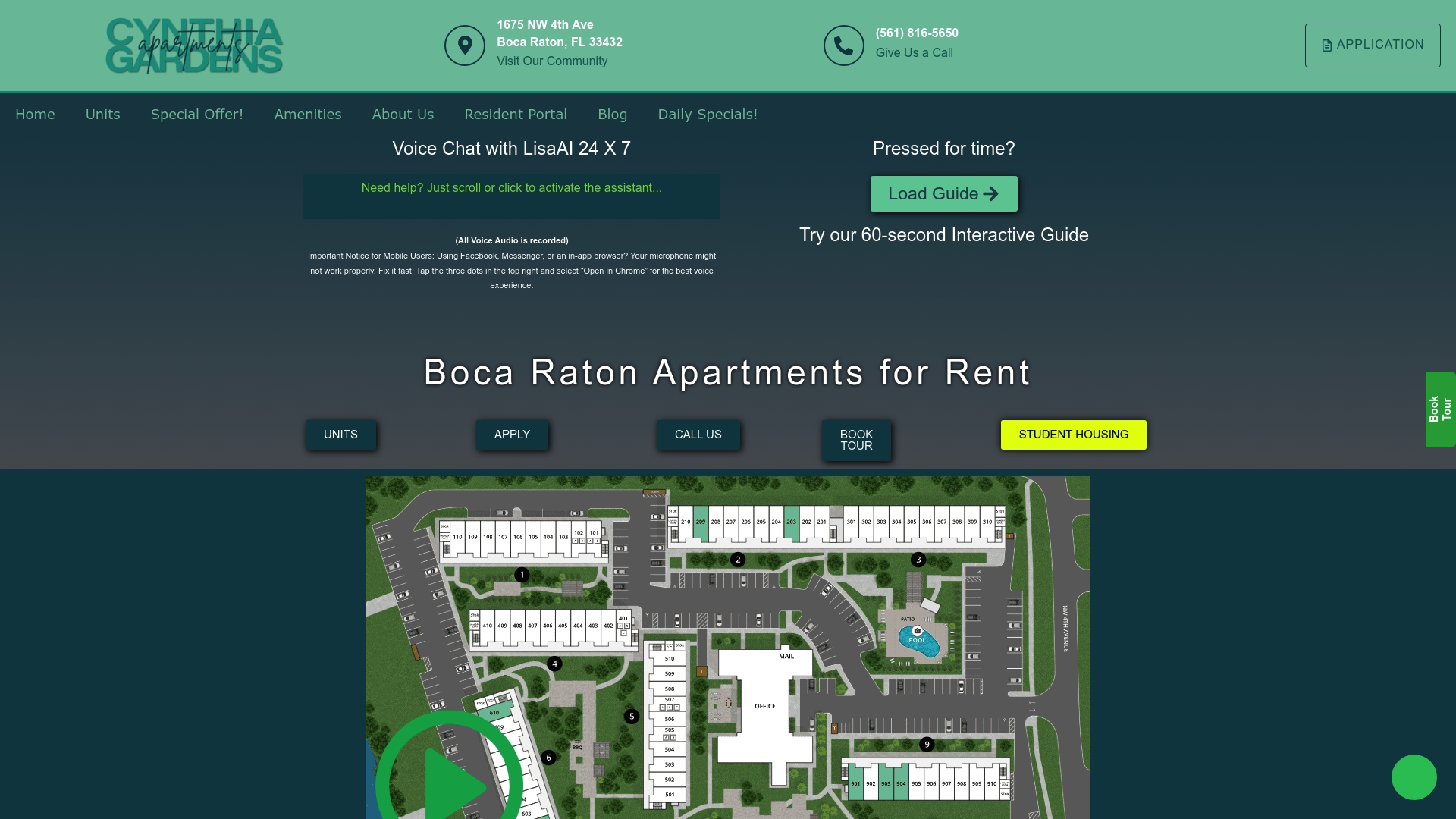
At a modern apartment community in Boca Raton, one-bedroom apartments are offered within a quiet, respectful community for professionals and students, with attentive same-day maintenance for small fixes that make a real difference in daily comfort. The leasing process includes virtual tours and an interactive property map, allowing prospective tenants to check unit placement and layout before committing.
- Transparent pricing with no hidden fees on leases.
- Cat-friendly units with a one-time pet fee.
- Digital leasing with AI chat support available for questions.
If your current unit has hit its soundproofing limit, browse our one-bedroom apartments and schedule a virtual tour to see if a quieter home is the simpler fix.
Sources
- OSHA — Occupational noise exposure
- Apartment compartmentalization and aerosol sealing — DOE / Building America
- Acoustic door assemblies and sound control — USGBC course handout
- Transmission loss, mass law, and double-layer assemblies — technical digest
FAQ
How can I soundproof my apartment to not hear my neighbors?
Seal gaps around doors, windows, and outlets first, then add a door sweep, heavy curtains, and a dense rug with a thick pad. These steps target both airborne noise (voices) and some impact noise (footsteps), though a shared wall will still carry some sound regardless of treatment.
What is the best way to soundproof apartment walls?
Adding mass and absorption works best: a loaded bookcase against the shared wall, heavy textiles, or removable acoustic panels mounted in a frame. According to research on transmission loss, denser materials block more sound than thin foam, which mainly reduces echo rather than blocking transmission.
How do I stop sound going through my apartment walls?
Focus on sealing every small gap first, since outlets, baseboards, and cracks act as flanking paths that let sound bypass even a treated wall. A DOE study on apartment sealing found this kind of targeted sealing to be one of the most cost-effective fixes available to renters.
How to block out sound in an apartment?
Combine sealing, door and window treatment, and soft-surface absorption rather than relying on one fix alone. Start with a door sweep and weatherstripping, since USGBC guidance treats doors as a major weak point in overall sound isolation, then add rugs and curtains for the rest of the room.