
Federal law does not set a nationwide cap on how many cats you can have in a private rental. Landlords set pet rules through the lease, though assistance-animal protections can override numeric limits in qualifying cases. Start by rereading your lease’s pet clause, gathering vaccination and vet records for every cat, and putting any request to your landlord in writing.
TL;DR:
- Most private leases give landlords discretion over pet limits, as federal law only restricts assistance animals and federally assisted housing, not private rentals.
- Reading your lease thoroughly is essential to understand pet caps, fees, and eviction triggers, especially since rules may be buried in addendums or definitions.
- Assistance animals are exempt from pet limits once a valid reasonable accommodation request is approved, but landlords can request minimal disability-related documentation.
- Managing odor, noise, and visible damage through proper litter box setup and environmental enrichment is key to preventing landlord complaints about multiple cats.
- Local city or county laws may override your lease’s pet policy, so renters should verify both lease terms and municipal ordinances before assuming an allowance for extra cats.
Table of Contents
- Legal baseline: HUD rules versus private landlord discretion
- Reading your lease: where pet limits, fees, and eviction triggers hide
- Assistance animals and reasonable accommodations: how they interact with pet limits
- Step-by-step: request exceptions, negotiate, and avoid eviction over extra cats
- Apartment-ready multi-cat care that prevents landlord complaints
- Impact of local and state laws on pet limits, including city-specific ordinances
- Strategies for managing noise and community complaints related to multiple cats
- Guidance on pet insurance and liability considerations for renters with multiple cats
- What multi-cat renters get wrong about apartment living
- How Cynthia Gardens makes it easier to rent with multiple cats
- Sources
- FAQ
Legal baseline: HUD rules versus private landlord discretion
Federal law does not set a nationwide number for how many cats a renter can keep. What exists is narrower: the Code of Federal Regulations §5.318 lets project owners of federally assisted housing set reasonable pet limits, often one common household pet per unit. That rule applies to subsidized housing programs, not to the private apartment market most renters deal with.
Outside federally assisted housing, landlords have wide discretion. They can cap the number of pets, restrict breeds or sizes, charge fees, and write eviction triggers into the lease for unregistered animals. The exception is assistance animals, which HUD guidance treats as a category separate from pets entirely.
- Federally assisted housing can enforce a numeric pet limit under CFR §5.318, but private landlords are not bound by that same ceiling.
- Assistance animals qualify for reasonable accommodation, meaning a numeric pet limit may not lawfully apply to them.
- Housing providers can ask for limited verification of a disability-related need but cannot demand medical records or diagnosis details.
The practical takeaway: your lease, not a federal statute, decides how many cats you can keep, unless one of your cats qualifies as an assistance animal.
Reading your lease: where pet limits, fees, and eviction triggers hide
Pet rules rarely sit in one obvious spot. Some leases fold them into a general “rules and regulations” section, others attach a separate pet addendum, and a few bury a numeric cap inside the definition of “material breach.” Read all three before assuming you know your limit.
Look for the words “unregistered pet” or “undisclosed animal.” Many leases treat an unlisted third or fourth cat as a lease violation independent of any actual damage, which means the number itself, not your cats’ behavior, becomes the legal issue.
- Check the pet addendum for a specific numeric cap and whether it applies per unit or per resident.
- Note any nonrefundable pet fee, refundable pet deposit, and monthly pet rent, since these often compound per animal.
- Look for language allowing immediate lease termination for unregistered pets versus language that just triggers a fine or notice period.
Financials add up fast with more than one cat. A property charging a deposit and monthly rent per animal turns a two-cat household into a meaningfully larger monthly cost than a one-cat lease, even before any damage charges. Guides on navigating an apartment pet policy can help you compare how different communities structure these fees.
Pro Tip: Photograph your signed pet addendum and any email approving extra cats. If a dispute comes up later, dated records matter more than memory.
Assistance animals and reasonable accommodations: how they interact with pet limits
Assistance animals, including emotional support animals, are not classified as pets under the Fair Housing Act. That distinction matters because a numeric pet cap written into a lease generally cannot be applied to an assistance animal once a valid accommodation request is granted.
- Submit a written request explaining the disability-related need, without volunteering more medical detail than necessary.
- Provide documentation only if the disability or the need for the animal is not obvious, since HUD guidance prohibits landlords from demanding full medical records.
- Expect the landlord to respond within a reasonable timeframe and to grant the accommodation absent a direct threat to safety or an undue financial burden.
- If denied, request the reason in writing and consider filing a complaint with HUD or a local fair-housing agency.
A landlord who denies a legitimate accommodation without citing a specific safety or financial burden is on shaky legal ground, and renters in that position have a real path to challenge the decision.
Step-by-step: request exceptions, negotiate, and avoid eviction over extra cats
If you already have more cats than your lease allows, silence is the riskiest option. Landlords who discover undisclosed pets during an inspection or a complaint often treat it as a straightforward breach, regardless of how well the cats are cared for.
- Pull your current lease and pet addendum so you know exactly what you’re asking to change.
- Collect vaccination records, microchip numbers, and a vet reference letter for each cat.
- Draft a short written request naming each additional cat and offering a concession, such as an extra deposit or a professional cleaning at move-out.
- Ask for the approval in writing or as an amendment to the pet addendum, not just a verbal yes.
- If the landlord threatens eviction, save every email and text, and contact a local tenant-rights organization or legal aid office before responding.
Pro Tip: Offering to pay for a move-in and move-out carpet cleaning upfront often does more to reassure a landlord than a longer explanation of why you need extra cats.
Mediation is worth raising before things reach a formal notice. Many disputes over undisclosed pets get resolved with a signed addendum and a fee adjustment rather than a court filing, especially when the renter approaches management first.
Apartment-ready multi-cat care that prevents landlord complaints
Most landlord complaints about multiple cats trace back to odor, noise, or visible damage, not the number of animals itself. Getting the basics right solves most of that before it becomes a lease issue.
- Follow the litter-box “n+1” rule: one box per cat plus one extra, placed in different locations rather than lined up together, as recommended by the ASPCA.
- Scoop daily and do a full litter change on a regular schedule to control odor in a small space.
- Add vertical space, cat trees, window perches, and separate feeding stations to reduce competition and stress between cats.
- Introduce new cats slowly, using separate rooms at first and gradual scent swapping before face-to-face contact.
Environmental enrichment and vertical space are considered important for indoor cat welfare, and can reduce stress and conflict in multi-cat households, according to veterinary behavior research. In an apartment, that often matters more than square footage, since a tall cat tree or a row of shelves gives cats separate territory without needing a bigger unit.
Covered litter boxes tend to see more avoidance from some cats, so an uncovered, larger bin is often the safer default in a multi-cat home. For a room-by-room approach, a guide like introducing a new cat to apartment living walks through staged introductions in more detail.

Impact of local and state laws on pet limits, including city-specific ordinances
Beyond your lease, some cities and counties set their own limits on the number of animals a household can keep, separate from anything a landlord decides. These ordinances usually target owned-pet caps for public health or animal-control reasons rather than rental-specific rules, but they still apply inside an apartment.
A local ordinance capping households at a set number of cats can override a more generous landlord policy, and the reverse is also true: a stricter lease can sit on top of a permissive local law. Renters need to check both layers rather than assuming a landlord’s approval settles the matter.

Municipal codes covering animal control, noise, and nuisance conditions also come into play if multiple cats generate complaints from neighbors, since code enforcement can act independently of your landlord. Before assuming you’re covered because your lease allows three or four cats, it’s worth a quick search of your city or county’s animal-control ordinance, since these are usually public and searchable by municipality.
Because these rules vary widely by jurisdiction, a lease approval is a starting point, not a guarantee that local law agrees. Renters relocating between cities should treat this as a fresh check each time, not something carried over from a previous address.
Strategies for managing noise and community complaints related to multiple cats
Noise complaints about cats are less common than complaints about odor or visible pet traffic, but yowling, nighttime zoomies, and territorial spats between cats can still draw attention in a building with shared walls. The fix is largely behavioral rather than structural.
Feeding cats on a consistent schedule and offering play sessions in the evening tends to reduce the nighttime activity bursts that generate noise complaints from neighbors. Separating food and litter resources so cats aren’t competing for access also cuts down on the vocal disputes that come from resource guarding.
Pheromone diffusers, used in common areas where cats spend time, are a low-effort way to reduce tension-driven vocalizing in a multi-cat household. When conflict between specific cats is persistent rather than occasional, a stepwise reintroduction protocol, separating the cats and reintroducing them gradually, addresses the root cause instead of just muffling the symptom.
If a neighbor does raise a complaint, treat it as useful information rather than a threat. Responding quickly, explaining what you’re doing to address it, and following up shows good faith to both the neighbor and, if it escalates, to property management.
Guidance on pet insurance and liability considerations for renters with multiple cats
Multiple cats mean multiple sources of potential vet bills, and pet insurance is worth evaluating on a per-cat basis rather than assuming one policy or one budget line covers the household. Premiums, deductibles, and coverage limits typically apply per animal, so a household with three or four cats is effectively managing three or four separate policies even if they’re billed together.
Liability is a separate consideration from insurance for veterinary costs. Renters insurance policies vary in whether they cover damage caused by pets, so it’s worth confirming with your provider whether cat-related property damage, scratched flooring or a bathtub overflow from a curious cat, falls under your existing coverage or requires an add-on.
Some landlords require proof of renters insurance as a lease condition regardless of pet ownership, and a policy that explicitly covers pet-related liability can also strengthen your position if you’re negotiating for approval of additional cats. Bringing proof of coverage to that conversation signals that you’ve thought through the risk, which can carry weight with a landlord who’s on the fence about a numeric exception.
What multi-cat renters get wrong about apartment living
The instinct among renters with multiple cats is to treat the number as the whole problem, negotiating hard for permission and then relaxing once approval comes through. That’s backward. The number on the lease is rarely what triggers a landlord’s complaint or a neighbor’s noise report. It’s the odor from an under-serviced litter box, or the sound of a fight breaking out at 2 a.m. because two cats never had enough separate territory to begin with.
Renters who focus their energy on documentation and legal footing while skipping the welfare basics often end up with the paperwork to defend themselves and a landlord who still wants them gone. The reverse works better: get the litter setup and vertical space right first, and the conversation about numbers gets a lot easier, because there’s nothing for the landlord to point to.
The other underestimated factor is how much a landlord’s willingness to say yes depends on precedent, not law. Most property managers have no legal obligation to allow a fourth cat, but they’ll often agree if a renter shows up with vet records, a clean history, and a specific plan rather than a vague request. That’s a negotiation, not a legal filing, and it rewards preparation over persistence.
— Ayman
How Cynthia Gardens makes it easier to rent with multiple cats
Cynthia Gardens is a modern apartment community in Boca Raton, Florida offering affordable, well-maintained one-bedroom apartments built with young professionals, students, and pet owners in mind. The pet policy includes a one-time, non-refundable pet fee per cat, and pricing is designed to be transparent without hidden fees.
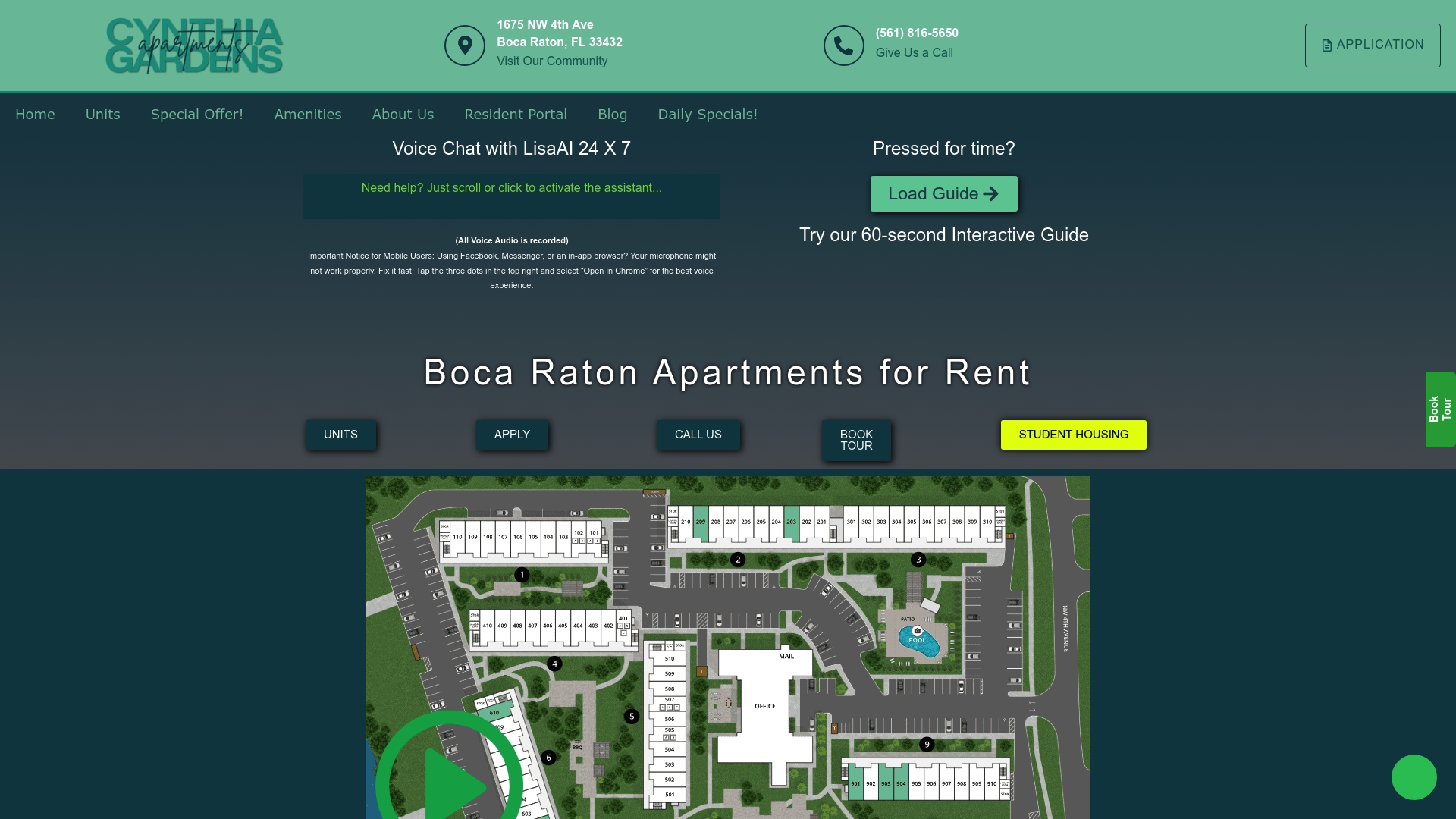
If you’re weighing whether a new apartment can accommodate your cats, checking the pet policy before you apply saves time on both sides.
- Review the one-bedroom apartments currently available and their listed pet terms.
- Have vaccination and microchip records ready before you submit an application, since it speeds up approval.
- Ask directly about the non-refundable pet fee structure if you’re bringing more than one cat.
Checking availability and pet terms directly on the units page is the fastest way to see whether a one-bedroom layout works for your household.
Sources
- Code of Federal Regulations §5.318 — Requirements (HUD-related)
- HUD — Assistance animals in housing
- ASPCA — Litter box problems
- Environmental enrichment for cats (AVMA/PMC article)
FAQ
Will apartments allow five cats?
Some will, but it depends entirely on the individual lease and landlord, since there’s no federal rule setting a maximum. Private landlords can set any numeric limit they choose, so five cats is possible in buildings with a generous or negotiable pet policy, but far from guaranteed.
What is the 3-3-3 rule for cats?
The 3-3-3 rule is a common guideline for newly adopted cats: roughly three days to decompress, three weeks to settle into a routine, and three months to feel fully at home. It’s a behavioral rule of thumb, not a legal or lease-related standard, and timelines vary by cat.
Is three cats in an apartment too much?
Three cats can work well in an apartment if litter boxes follow the n+1 rule and there’s enough vertical space and separate resources to reduce competition. Whether it’s “too much” depends more on the unit’s layout and your lease’s pet limit than on the number itself.
Is two cats in a one-bedroom apartment too much?
Two cats generally fit comfortably in a one-bedroom apartment, provided there’s enough enrichment and multiple separated litter boxes, following the n+1 principle from the ASPCA. Most one-bedroom layouts have enough room for the vertical space and resource separation two cats need to coexist without stress.