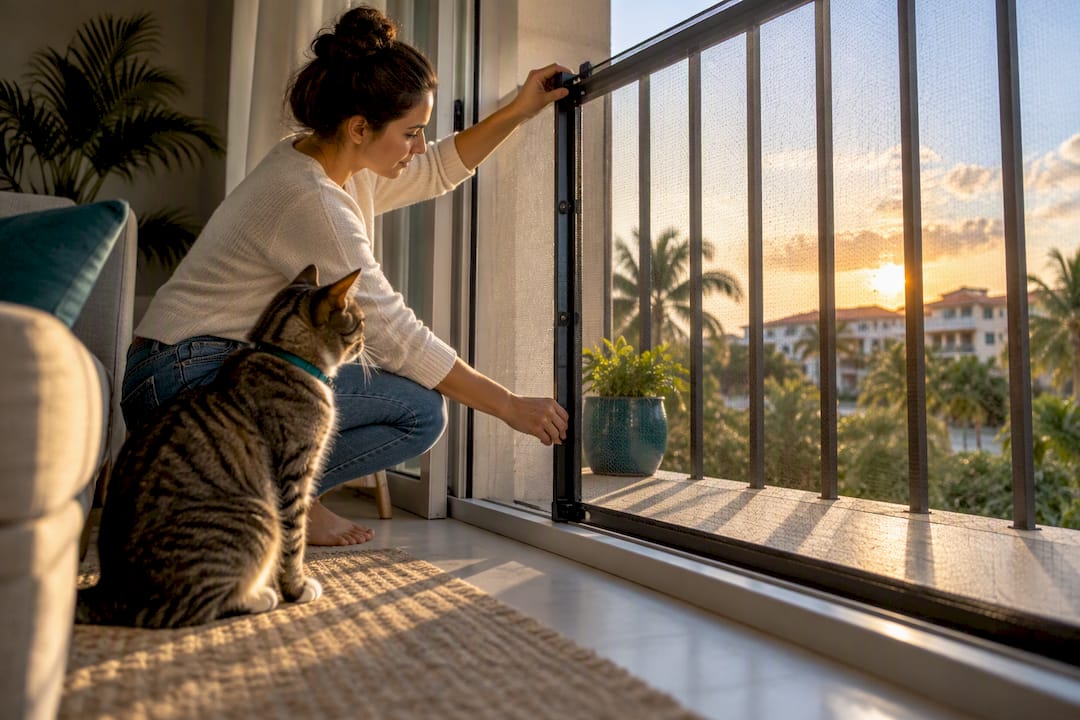
Pets can use an apartment balcony safely only during short, supervised visits, with fall-prevention barriers in place and full compliance with your lease’s pet policy. The ASPCA and AKC both warn that unscreened balconies are a preventable cause of serious injury. Install a secure barrier, never leave a pet unattended outside, and confirm your building’s registration and fee requirements before you let your animal near the rail.
TL;DR:
- Installing a rated, removable barrier approved in writing by the landlord is essential before allowing any pet near a balcony rail.
- Supervised visits should be short, never during extreme weather, and always with access to shade and fresh water to prevent heat stress or accidents.
- Balcony pet barriers must be measured and photographed after installation to ensure proper fit, with fixings rated for outdoor use and landlord approval.
- Use balcony potty solutions only as backups, with daily cleaning using enzymatic cleaners to prevent odors that could lead to lease violations.
- Most buildings require pet registration, current vaccinations, and adherence to lease rules, with assistance animals exempt from fees and size limits.
Table of Contents
- Quick rules checklist for balcony pet use
- Balcony safety fixes: railings, screens, and renter-friendly barriers
- Supervision, weather, and timing for safe balcony visits
- Potty solutions and odor control that won’t get you complaints
- Lease rules, registration, and what landlords can enforce
- Neighbor etiquette and handling complaints before they escalate
- Publisher perspective: a sample pet policy in practice
- Why safety and lease compliance have to move together
- Where to find pet-friendly one-bedroom apartments
- Primary sources for balcony pet safety
- Sources
- FAQ
Quick rules checklist for balcony pet use
Print this and keep it near the door so anyone in the household follows the same routine.
- Supervise every balcony visit and stay within sight the whole time.
- Secure railings and gaps with a screen, mesh, or panel rated for pets.
- Keep shade and fresh water available whenever a pet is outside.
- Register your pet with management and keep vaccine records current.
- Never leave food, water, or waste out overnight, since it draws pests.
- Skip climbable furniture near the railing and store cleaning chemicals out of reach.
A no-drill mesh screen and a quick camera check-in cover most of the risk. If a barrier install requires drilling or permanent fixtures, get written approval from your leasing office first, a step covered under most apartment pet policies.
Balcony safety fixes: railings, screens, and renter-friendly barriers
Standard railing gaps are wide enough for small dogs and cats to slip through, and low rails give larger dogs enough room to jump or climb. The ASPCA points to unscreened windows and open balconies as a leading, preventable cause of what veterinarians call high-rise syndrome in cats. Falls from height are common enough in multi-story buildings that prevention, not cleanup after an incident, is the only approach worth taking.
Renters have a few solid options that don’t require permanent changes:
- Clear plexiglass panels: block gaps well and preserve the view, with no-drill mounting brackets available for most rail styles.
- Pet netting or screens: lightweight, cheap, and easy to remove at move-out, though less durable against determined chewers.
- Tension-mounted mesh: fits between floor and ceiling for a snug barrier without touching the balcony structure itself.
- Removable cat-proof enclosures: fully enclosed options for cats that climb, ideal for smaller balconies.
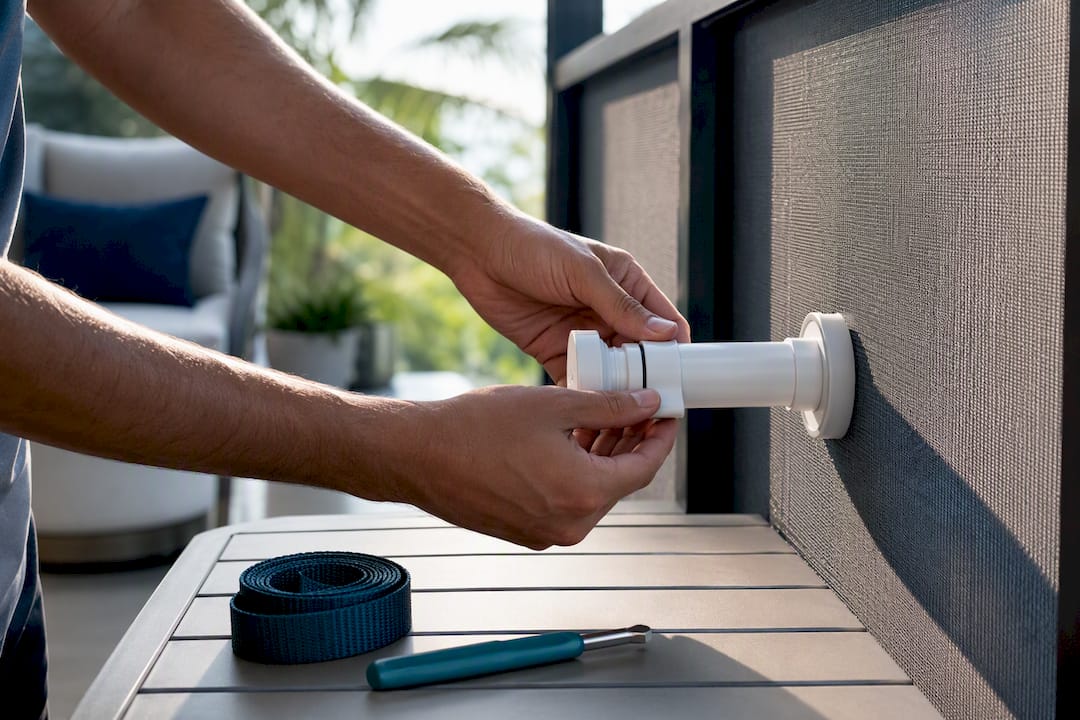
Pro Tip: Measure your railing height and gap width before shopping for a barrier, and photograph the installed result for your own records in case your landlord asks later.
Always use removable fixings such as tension mounts or adhesive strips rated for outdoor use, and get any installation cleared in writing so there’s no dispute at lease renewal or move-out.
Supervision, weather, and timing for safe balcony visits
Never leave a pet on a balcony unattended, even for a few minutes. A dog can overheat, a cat can slip through a gap, and neither can call for help. The AKC recommends shade, fresh water, and cooling mats for any outdoor time, and watching for heat stress signs like heavy panting, drooling, or lethargy.
- Keep visits short and supervised, and bring pets inside at the first sign of distress.
- Skip the balcony entirely during high winds, storms, or extreme heat or cold.
- Use a phone camera or baby monitor for a live check if you step away briefly.
- Ask a neighbor to check in if you’re away and your pet has balcony access.
Some animals, including high-jumping dogs and escape-prone cats, are poor candidates for balcony access no matter how many barriers you install, a point AKC guidance makes clearly.
Potty solutions and odor control that won’t get you complaints
A balcony potty setup works as a backup, not a substitute for walks. Pick containment by size and habit:
- Artificial-grass trays: good for small to medium dogs, easy to rinse and dry.
- Pee-pad trays with a liner: simplest option for puppies or small breeds still training.
- Balcony litter setups: enclosed boxes with high sides work well for cats that prefer to go outside.
Clean the tray or box daily, and use a pet-safe enzymatic cleaner rather than ammonia-based products, which can encourage repeat marking. Bag and dispose of waste immediately instead of letting it sit, since odor complaints are one of the fastest ways a minor habit becomes a lease issue. Reinforce regular walks or litter-box use indoors so the balcony option stays occasional rather than routine.
Lease rules, registration, and what landlords can enforce
Most buildings require pet registration, proof of current vaccinations, and either a one-time pet fee or ongoing pet rent, sometimes alongside size or breed limits. Model housing guidance from LA County lists these as standard elements: inoculations, sanitary waste standards, and registration, alongside a clear exception for assistance animals. Property managers are encouraged to hand over the written policy at lease signing and spell out consequences for noncompliance, which cuts down on later disputes.
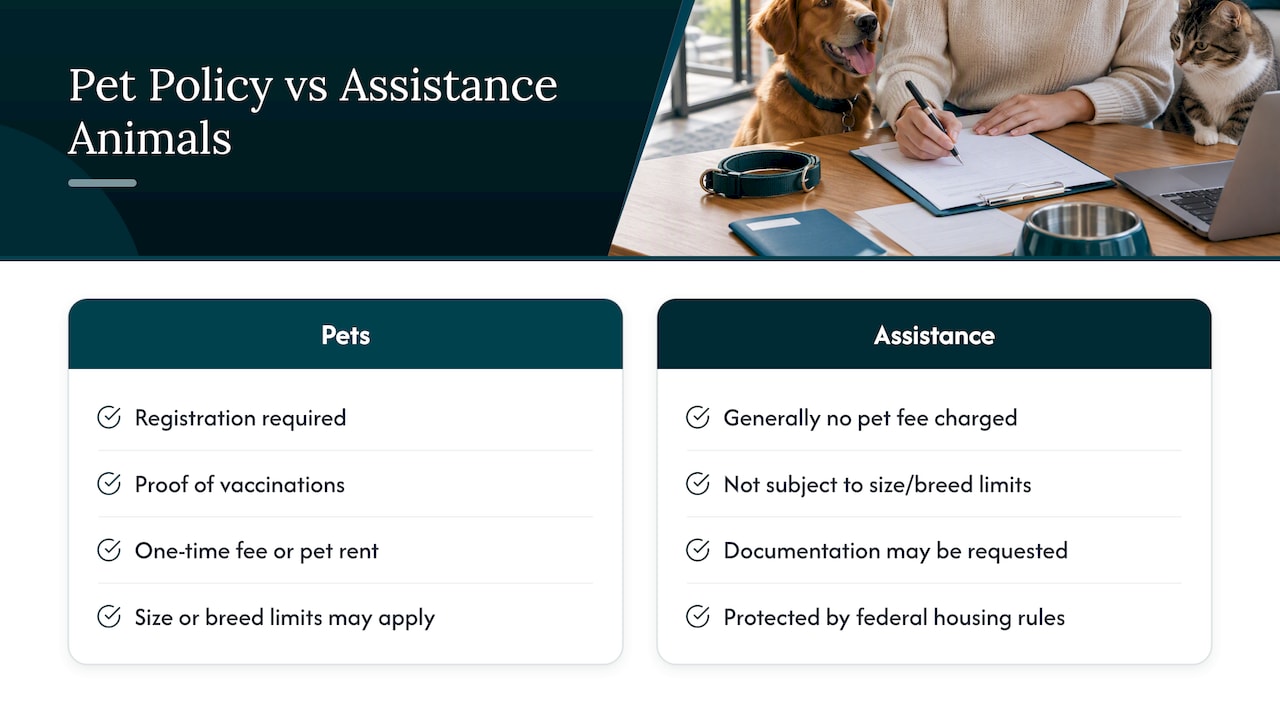
Assistance and service animals are legally distinct from pets under federal housing rules, and a landlord generally can’t charge a pet fee or apply breed and size limits to them, though documentation may be requested. Before assuming a policy applies to your situation, ask for the written pet policy, submit vaccine and registration paperwork, and get any barrier installation approved in writing. A pet fee checklist can help you compare what’s typical against what your specific lease requires.
Neighbor etiquette and handling complaints before they escalate
Balcony pet noise, waste odor, and shedding debris are the most common sources of neighbor friction. Trim nails regularly to cut down on scratching noise on hard flooring, keep waste contained and cleaned on a set schedule, and avoid leaving pets outside during early morning or late evening hours when barking carries.
If a complaint comes in, respond quickly: fix the issue the same day if possible, and follow up with management in writing to show good faith. Document what you changed and when. Repeat violations can lead to fines or lease termination, so a pattern of complaints is the point to loop in your renter’s insurance or request mediation through your leasing office rather than letting it sit unresolved.
Publisher perspective: a sample pet policy in practice
Cynthia Gardens’ pet policy documents cover the same ground housing guidance recommends: registration at move-in, a one-time non-refundable pet fee rather than ongoing pet rent for cats, and clear expectations for barrier installations on balconies. Before installing anything, tenants are asked to confirm mounting type with the leasing office and provide vaccine records as part of registration.
A useful tenant checklist to bring to any leasing conversation: proof of vaccination, a photo of the barrier you plan to install, and a written request for approval. Community resources like virtual tours and a pet-friendly unit guide let prospective renters review balcony layouts and pet terms before committing to a lease.
Why safety and lease compliance have to move together
Most advice on this topic treats balcony safety and lease compliance as separate problems: one is a veterinary issue, the other a paperwork issue. That split is the mistake. A barrier installed without landlord approval can get you fined or forced to remove it, and a lease followed to the letter without a physical barrier still leaves your pet exposed to a fall.
The conventional advice oversells decorative fixes like planters or furniture rearrangement as safety measures. They aren’t. A determined cat or a dog chasing a squirrel doesn’t respect a plant box. The thing that actually prevents injury is a rated barrier plus supervision, full stop, and the thing that prevents a lease dispute is asking permission before you install anything.
If you only do one thing differently after reading this, make it this: get the barrier approved in writing before you buy it, not after.
— Ayman
Where to find pet-friendly one-bedroom apartments
Cynthia Gardens offers one-bedroom apartments from $1,990 to $2,220 per month with a cat-friendly policy built around a one-time non-refundable pet fee instead of ongoing pet rent, so your monthly cost stays predictable.
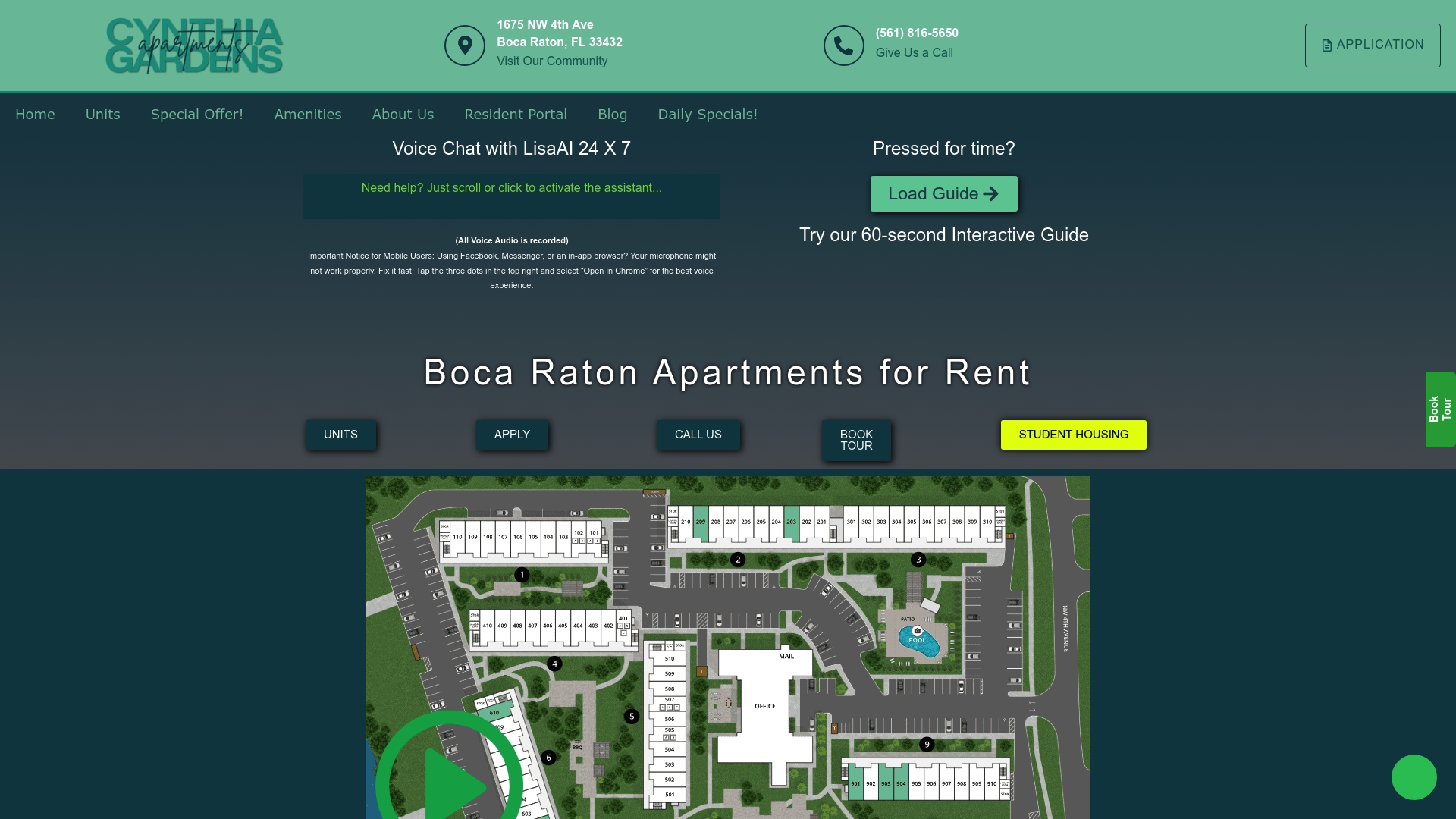
- Browse available one-bedroom apartments with balconies suited for supervised pet time.
- Review the pet-friendly apartment features that make daily life easier with a cat.
- Schedule a virtual tour online to check balcony layout and railing height before you apply.
Primary sources for balcony pet safety
- ASPCA: high-rise fall risk and screen recommendations for cats.
- AKC: puppy-proofing and balcony safety tips for dogs.
- LA County guidebook: model pet-policy elements for rental housing.
- PubMed: veterinary outcomes data for high-rise falls.
Sources
- PubMed: High-rise falls veterinary outcomes
- ASPCA: High-Rise Syndrome: Lifesaving tips for cat parents
- AKC: Making your balcony safe and dog-friendly
- LA County: Pets in rental housing guidebook
FAQ
How do I puppy-proof an apartment balcony?
Remove climbable furniture near the railing, secure any gaps with mesh or paneling, and clear away toxic plants and loose electrical cords. The AKC also recommends providing shade and water anytime a puppy is outside.
What is the 3-3-3 rule for pets?
The 3-3-3 rule refers to a general adjustment timeline for newly adopted pets that varies depending on the individual, and it doesn’t specifically address balcony safety, but it’s worth remembering that a new pet may take time to behave predictably around a balcony railing.
Is it safe to leave my dog on my apartment balcony?
No, dogs should never be left unattended on a balcony, even briefly. Falls, overheating, and escape attempts can happen fast, and supervision is the one safeguard every veterinary and housing source agrees on.
Can cats go on apartment balconies?
Cats can use a balcony only with a secure, gap-free barrier and direct supervision, since the ASPCA documents high-rise syndrome as a real and largely preventable risk. Immediate veterinary care after a fall raises survival odds to about 90%, but prevention through screens and supervision is the safer route.