
Most furnished apartments run a security deposit of one to two months’ rent, roughly 25 to 50 percent higher than what an unfurnished unit demands. The exact number depends heavily on where you’re renting, since state and local law can cap deposits regardless of what a landlord prefers to charge. California, for one, limits deposits to one month’s rent for both furnished and unfurnished units. Document every piece of furniture at move-in, because that record is what gets your money back.
TL;DR:
- Furnished apartment deposits typically range from one and a half to two months’ rent, depending on market conditions and vacancy rates.
- State laws often cap security deposits at one or two months’ rent, with California limiting deposits to one monthly rent legally.
- Damage risks associated with furniture and electronics drive higher deposits, but some landlords offset costs with increased rent or nonrefundable fees.
- A thorough move-in inspection with timestamped photos and signed inventory is crucial to ensure full deposit refund eligibility.
- Verification of local deposit laws and transparent pricing before signing helps prevent disputes over charges and deposit return procedures.
Table of Contents
- How Much Is a Furnished Apartment Deposit, Typically?
- Deposit Caps, Interest Rules, and Where Laws Differ
- Why Furnished Units Cost More to Rent
- What Else Drives Your Deposit Size
- Move-In Checklist for a Furnished Apartment
- How Deposit Returns Actually Work
- Disputing a Deduction or a Screening Error
- A Renter-First Take on Deposits and Documentation
- Check Your Exact Deposit Before You Sign
- Where to Verify Local Deposit Rules
- Sources
- FAQ
How Much Is a Furnished Apartment Deposit, Typically?
A one-month deposit is still the national default for standard rentals. Furnished units break that pattern because landlords are protecting more than bare walls and carpet. Sofas, mattresses, cookware, and electronics all carry replacement cost, so many listings ask for 25 to 50 percent more, or a flat 1.5 to 2 months’ rent.
Dollar amounts shift by market. In a mid-cost city where a furnished one-bedroom rents for $1,800, that could mean a deposit anywhere from $1,800 to $3,600. In a high-cost market where furnished units push past $3,000 a month, a two-month deposit crosses $6,000 fast.
- Low-cost markets: often $1,000–$1,800 for a furnished one-bedroom
- Mid-cost markets: commonly $1,800–$3,000
- High-cost markets: frequently $3,000–$6,000 or more
Vacancy rates matter too. When a neighborhood has a glut of furnished listings, landlords tend to soften deposit demands to fill units faster. Tight seasonal demand, especially near college campuses in August or corporate relocation season in January, does the opposite.
Deposit Caps, Interest Rules, and Where Laws Differ
Deposit law is written state by state, and sometimes city by city on top of that. A landlord can’t simply pick a number because the property is furnished. The statute governing that address sets the ceiling, and in some cases the process for holding and returning the money.
Common legal variables to check before signing:
- Maximum deposit amount — some states cap it at one or two months’ rent; others set no cap at all
- Return timeline — often 14 to 30 days after move-out, depending on the state
- Interest requirements — a handful of states and cities require landlords to pay interest on deposits held longer than a year
- Separate-account rules — some states require deposits held apart from the landlord’s operating funds
California is the clearest recent example: a new law limiting security deposits to one month’s rent took effect for both furnished and unfurnished units, closing a loophole that had let landlords charge more for furnished properties. Florida takes a different approach. Florida Statute 83.49 doesn’t cap the deposit amount, but it does require landlords to hold the money in a separate interest-bearing or non-interest-bearing account, or post a surety bond, and it spells out notice requirements when a landlord intends to keep any part of it. Read the Florida-specific breakdown before you sign if you’re renting in that state. Before you sign anything, check your state’s landlord-tenant statute and your city’s housing authority page. A local ordinance can be stricter than state law, and it’s the local rule that governs your lease.
Why Furnished Units Cost More to Rent
Furniture is inventory, and inventory gets damaged. A landlord furnishing a unit with a couch, bed frame, dresser, dining set, and a handful of small appliances is carrying real replacement risk that an empty unit simply doesn’t have. That risk shows up in the deposit line.
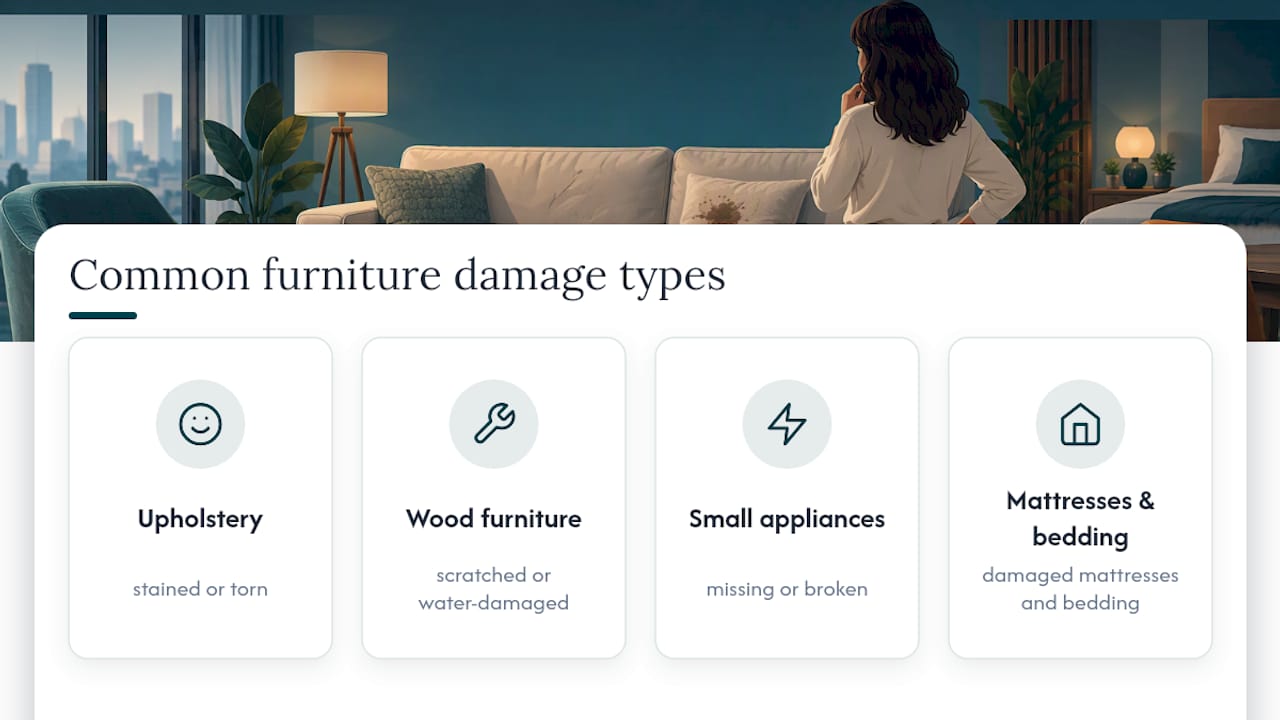
The most common damage categories landlords price for include stained or torn upholstery, scratched or water-damaged wood furniture, missing or broken small appliances, and damaged mattresses and bedding.
Some landlords skip the bigger deposit and instead raise the monthly rent slightly, charge a separate nonrefundable furniture fee, or require a damage-protection plan. Excessive deposits can backfire, since a high upfront cost scares off qualified applicants and leaves the unit vacant longer, which costs the landlord more than the deposit protects.
What Else Drives Your Deposit Size
Your personal file matters as much as the apartment itself. Landlords run tenant screening reports that pull credit history, past evictions, and rental payment records, and a thin or troubled file often results in a landlord asking for more money upfront. A strong credit score tends to work in the opposite direction.
- Pet ownership commonly adds a separate pet fee or deposit. Ask directly whether it’s refundable, since many pet fees are not.
- A co-signer with solid credit can sometimes replace a higher deposit entirely.
- Paying several months of rent upfront, or purchasing third-party damage insurance, can also reduce what a landlord requires at signing.
Pro Tip: If your application gets a higher deposit condition because of a screening report, ask the landlord which company ran it. Federal rules require an adverse action notice naming that company, and you have the right to request the report and dispute anything inaccurate on it.
Move-In Checklist for a Furnished Apartment
Your deposit refund depends almost entirely on what you can prove about the unit’s condition on day one. Do this before you unpack a single box.
- Walk every room and take time-stamped photos and short videos of each furnished item, including drawers, cushions, and appliance interiors.
- Complete a written, signed inventory and condition report with the landlord, noting every existing scratch, stain, or malfunction. Use a move-in inspection checklist as your template.
- Attach that signed inventory to your lease as an exhibit, not a separate loose document.
- Save receipts for any repairs the landlord agrees to make, and keep every email or text about the unit’s condition in one folder.
How Deposit Returns Actually Work
Return windows vary by state, typically running 14 to 30 days after move-out, and most states require an itemized list of any deductions rather than a vague lump-sum withholding. Interest may apply depending on where you live and how long the landlord held the deposit.
Lawful deductions generally cover:
- Unpaid rent or utility balances
- Damage beyond normal wear and tear (a burn hole in a couch cushion, a broken lamp)
- Missing furnished items listed on the inventory
Normal wear and tear, faded fabric, minor carpet flattening from furniture legs, small scuffs, is not a lawful deduction in most states. If the landlord misses the return deadline or sends deductions with no itemized explanation, send a written demand citing your state’s statute and give a specific deadline for response. Reviewing general security deposit protections before that letter helps you cite the right language.
Disputing a Deduction or a Screening Error
Start with paper. Request the itemized deduction list in writing, then compare it line by line against your signed move-in inventory and dated photos. If the numbers don’t match reality, send a written demand for the disputed amount with copies of your evidence attached.
- If your application was denied or conditioned because of a screening report, request the adverse action notice and contact the reporting company directly to dispute inaccuracies.
- If a landlord ignores your written demand for 10 to 14 days, escalate to your state’s tenant rights agency or a local mediation program.
- Small-claims court is the next step when mediation fails, and most states set the filing limit well above a typical deposit amount.
A Renter-First Take on Deposits and Documentation
Most disputes over furnished deposits aren’t really about the money. They’re about the absence of a paper trail. A landlord who can’t produce a signed inventory has almost nothing to stand on when a tenant pushes back, and a tenant with dated photos wins the argument before it starts. That imbalance is why documentation matters more than the deposit amount itself.
At Cynthiagardens, that shows up in specifics: pet deposit rules for Boca Raton apartments are published rather than buried in a lease addendum, and prospective renters can walk a unit through virtual tours before ever signing anything. Transparency at the front end is what prevents disputes at the back end.
— Ayman
Check Your Exact Deposit Before You Sign
Skip the guesswork on deposit math. Cynthiagardens posts transparent pricing with no hidden fees, so the deposit, application fee, and any pet fee are laid out before you apply, not discovered after you’ve already signed a lease.
Every one-bedroom apartment lists its own deposit and fee schedule, priced from $1,990 to $2,220 a month, so you’re comparing real numbers instead of estimates. Full details on the application fee, administrative charge, and other one-time costs are posted for every unit. Take a virtual tour to see the furnished inventory before you commit, then start your online application when you’re ready to move.
Where to Verify Local Deposit Rules
State and local statutes govern the exact deposit rules for your address, and these sources cut through guesswork:
- Your state’s official landlord-tenant statute page, searchable through your state legislature’s website
- CFPB guidance on tenant screening reports and consumer rights during the application process
- HUD’s fair housing and equal opportunity office for federal-level tenant protections
This article is general information, not a substitute for advice from a qualified financial advisor. Consult a qualified financial professional about your own circumstances before acting on anything here.
Sources
- What is a tenant screening report? | CFPB
- New law limiting security deposits in effect as of July 1 | California Apartment Association
- How Much Should You Charge for a Security Deposit? | Furnished Finder
- How much is a security deposit? | Baseline resource
- Florida Statute 83.49 – Deposit money or advance rent; duty of landlord and tenant
FAQ
What’s a typical deposit for a furnished apartment on sites like Furnished Finder?
Deposits on furnished short-term rental platforms vary by market and lease length. Survey data from Furnished Finder found that 71% of tenants consider deposits under $1,000 reasonable, and 57% said they’d passed on a listing because the deposit felt too high.
Is a rental with no security deposit a red flag?
Not automatically, but it’s worth asking why. Some landlords waive the deposit in exchange for higher monthly rent or a mandatory damage-protection plan, so read the lease closely to confirm you’re not paying the same cost under a different name.
What’s a normal deposit for an unfurnished apartment?
One month’s rent remains the standard baseline nationwide for unfurnished units, though state caps can set that number lower depending on where you live. Furnished units commonly run 25 to 50 percent higher than that baseline, or as much as 1.5 to 2 months’ rent.
What salary do I need to afford $1,500 in monthly rent?
Most landlords use a rule requiring gross annual income of roughly 30 times the monthly rent as a guideline. That income guideline is separate from the deposit itself, though a thinner income file can sometimes lead a landlord to request a higher deposit or a co-signer.
Does Cynthiagardens require a security deposit on furnished units?
Deposit amounts and any furnished-related fees are listed on each unit’s page along with the monthly rent, so you can see exact costs before applying. General fee details, including the application and administrative charges, are posted on the pricing page.