
Prorated rent is calculated as (monthly rent ÷ divisor) × days occupied, and the divisor is what trips people up. Landlords and property managers pick from three accepted variants: actual days in the month, a flat 30 days (the “banker’s month”), or 365 days annualized. The lease decides which one applies, so whatever it says in writing beats whatever a spreadsheet defaults to.
TL;DR:
- The actual-days method usually provides the fairest prorated rent calculation, as it reflects the precise number of days in each month.
- Different methods, such as the 30-day or annualized approach, can result in higher or lower charges depending on the month and chosen divisor.
- Leases should specify the proration method clearly, and inconsistent application or defaults in software can lead to disputes or legal issues.
- Confirm that move-in and move-out days are counted consistently and document all calculations to ensure transparency.
- Regularly review lease clauses and software settings to prevent unintentional deviations from the agreed prorating method.
Table of Contents
- How to Calculate Prorated Rent: The Three Formulas
- Worked Examples: Move-In and Move-Out Math
- Which Method Should You Use? Lease Language Wins
- How to Calculate and Document It Yourself
- Why Transparent Proration Math Matters to Us
- Renting a One-Bedroom With Move-In Costs You Can Actually Verify
- Sources
- FAQ
How to Calculate Prorated Rent: The Three Formulas
Each method uses the same basic shape but a different divisor, and that divisor changes how much a tenant owes for a partial month.
Actual-days method: Monthly rent ÷ days in that specific month × days occupied. A February charge divides by 28, a July charge divides by 31.
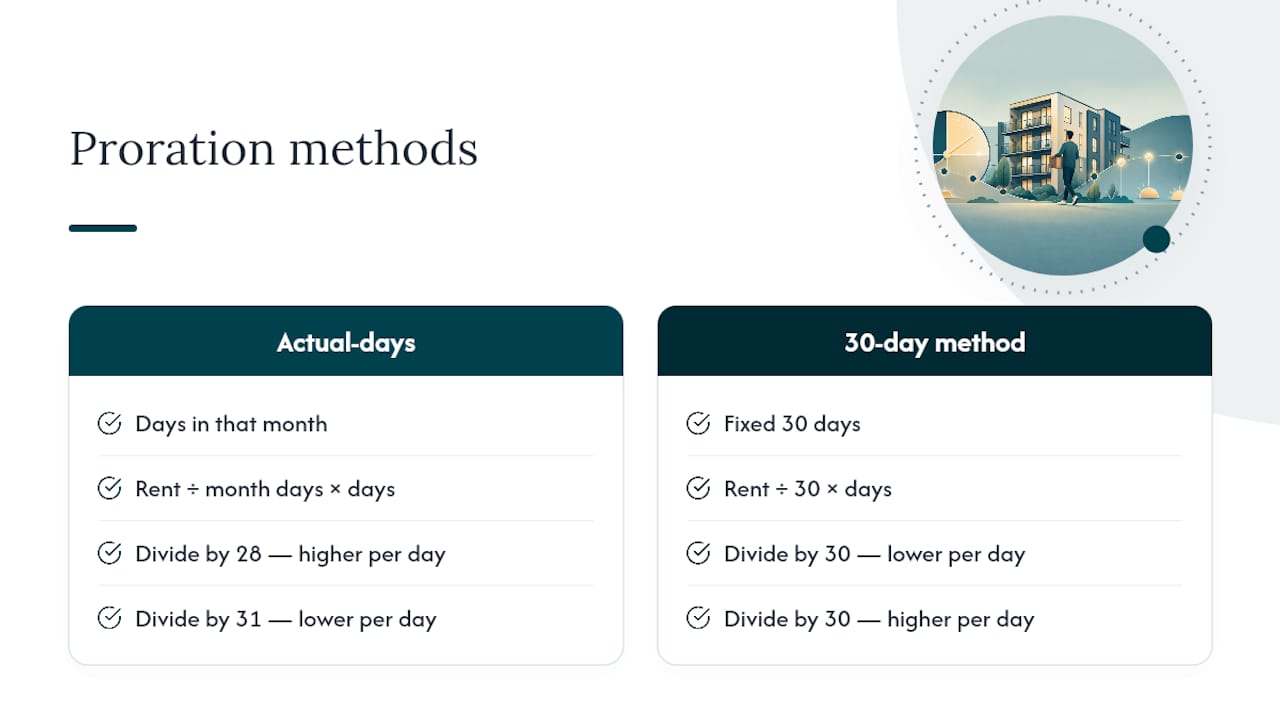
30-day “banker’s month”: Monthly rent ÷ 30 × days occupied, regardless of how many days the actual month has. Common in commercial leasing and among larger property management firms because it simplifies billing across a portfolio.
Annualized/365 method: (Monthly rent × 12 ÷ 365) × days occupied. This ties proration to a yearly accounting cycle rather than the specific month, which is why it’s popular with accounting software built around annual budgets.
Counting days matters just as much as picking the divisor. Most leases treat move-in day as occupied (day one counts) and move-out day as the tenant’s last day of responsibility, but this isn’t universal. A lease that doesn’t specify inclusive or exclusive counting invites disagreement the moment someone moves in on the 30th of a 31-day month.
Quick reference: which method costs more?
- In a 28-day month (February), actual-days produces a higher per-diem than the 30-day method, so tenants pay more per day occupied.
- In a 31-day month, actual-days produces a lower per-diem, favoring the tenant.
- The Rentec Direct property management team notes that picking one method and sticking to it across every unit avoids the appearance of favoritism.
The most common recommendation for accuracy is actual-days, since it reflects the real cost per day of that specific month rather than an averaged approximation.
Worked Examples: Move-In and Move-Out Math
Numbers settle arguments faster than explanations. Here’s the same $2,200 monthly rent run through all three methods for a move-in and a move-out scenario.
Example A: Move-in on May 18, tenant occupies May 18 through May 31 (14 days, May has 31 days)
- Actual-days: $2,200 ÷ 31 = $70.97 per day × 14 days = $993.55
- 30-day method: $2,200 ÷ 30 = $73.33 per day × 14 days = $1,026.67
- Annualized/365: ($2,200 × 12 ÷ 365) = $72.33 per day × 14 days = $1,012.60
The gap between the cheapest and most expensive method here is about $33, small in isolation but real if a landlord applies different methods to different tenants in the same building.
Example B: Move-out on July 10, tenant occupied July 1 through July 10 (10 days, July has 31 days)
- Actual-days: $2,200 ÷ 31 = $70.97 × 10 days = $709.68
- 30-day method: $2,200 ÷ 30 = $73.33 × 10 days = $733.33
- Annualized/365: $72.33 × 10 days = $723.30
The 30-day method consistently charges more than actual-days in any month longer than 30 days, since it spreads the same rent over fewer assumed days. In a 28-day February, the relationship flips, and actual-days becomes the pricier option for the tenant. This is exactly why three legitimate methods coexist in the industry instead of one universal standard: each serves a different administrative purpose, and none is objectively “correct” until the lease names it.
Which Method Should You Use? Lease Language Wins
There’s no federal or state law that mandates a specific prorated rent formula. The lease agreement controls, and when a lease is silent on the matter, courts tend to look for a reasonable charge and often default to actual-days as the fairest interpretation.
That gap between “no statute” and “courts expect reasonableness” is where most disputes are born. A property manager who switches from actual-days to the 30-day method halfway through a lease term, without amending the paperwork, is inviting a legitimate complaint. The same goes for software defaults: many property management platforms ship with the 30-day method pre-set, and a manager who never checks that setting against the actual lease language can end up charging tenants a rate the signed contract never authorized.
Pro Tip: Before your leasing software runs its first prorated charge, open the settings and confirm which divisor it’s using. A default that contradicts your lease is a compliance problem waiting to surface, not a rounding error.
A workable lease clause reads something like this: “Rent for any partial month at the start or end of the lease term will be calculated by dividing the monthly rent by the actual number of days in that calendar month and multiplying by the number of days the tenant occupies the unit. The move-in date is counted as an occupied day; the move-out date is counted as the tenant’s final day of responsibility.”
Watch for these red flags in any lease or move-in packet:
- No stated proration method anywhere in the lease document
- Software-generated invoices that don’t match the lease’s written formula
- Different proration math applied to different units in the same building
- No documentation trail showing how the number was calculated
Property managers should also keep fair housing standards in mind: applying billing methods inconsistently across tenants can raise questions well beyond simple math errors.
How to Calculate and Document It Yourself
You don’t need software to get this right. Here’s the manual checklist:
- Confirm which divisor your lease specifies: actual days, 30, or 365.
- Count the days occupied, checking whether the lease counts the move-in day as occupied.
- Divide monthly rent by the divisor to get a per-diem rate.
- Multiply the per-diem rate by days occupied.
- Round to the nearest cent and write down every step.
Every move-in or move-out receipt should show the formula used, the specific numbers plugged in, the final dollar amount, and a signature line from both parties. This turns a one-line invoice into a document that holds up if anyone questions it six months later.
Pro Tip: If you’re a tenant reviewing a lease before signing, ask which proration method applies and get it in writing. It’s a two-minute conversation that prevents a much longer one later.
If you manage several units, audit your leasing software’s default settings against your actual lease template at least once a year. Formulas don’t drift on their own, but software updates and template changes do, and the two can quietly fall out of sync.
Why Transparent Proration Math Matters to Us
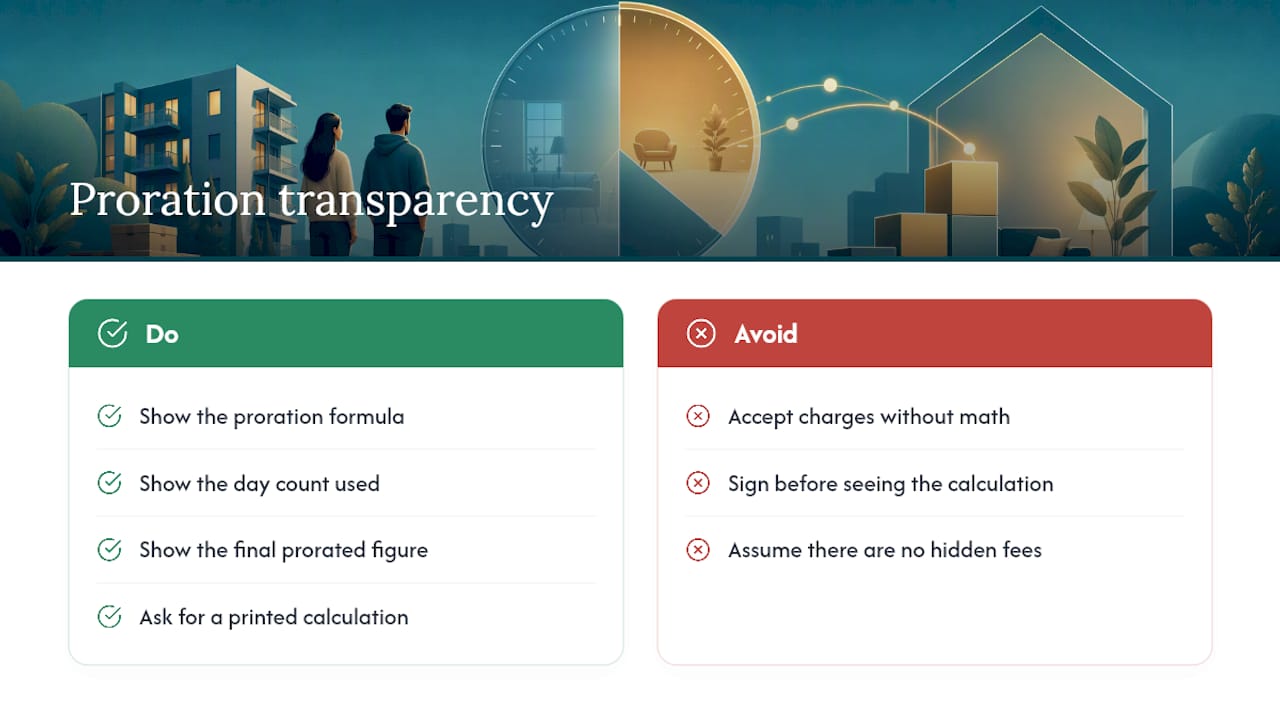
This community builds every move-in cost breakdown around one rule: no number appears on a bill without the math behind it also being available to the resident. Transparent pricing with no hidden fees isn’t just a slogan—it is why the property documents exactly how a prorated charge was calculated before a lease is ever signed.
When a prospective resident asks how much they’ll owe for a partial first month, we can show the formula, the day count, and the final figure, not just the total. If you’re touring a unit and want to see that math in writing, ask your leasing agent for a printed calculation. It takes a minute and it settles the question permanently.
— Ayman
Renting a One-Bedroom With Move-In Costs You Can Actually Verify
This property offers an alternative to guessing what your first rent check should be, showing the exact math behind every partial-month charge before signing, so there’s no invoice differing from what was communicated at tour day.
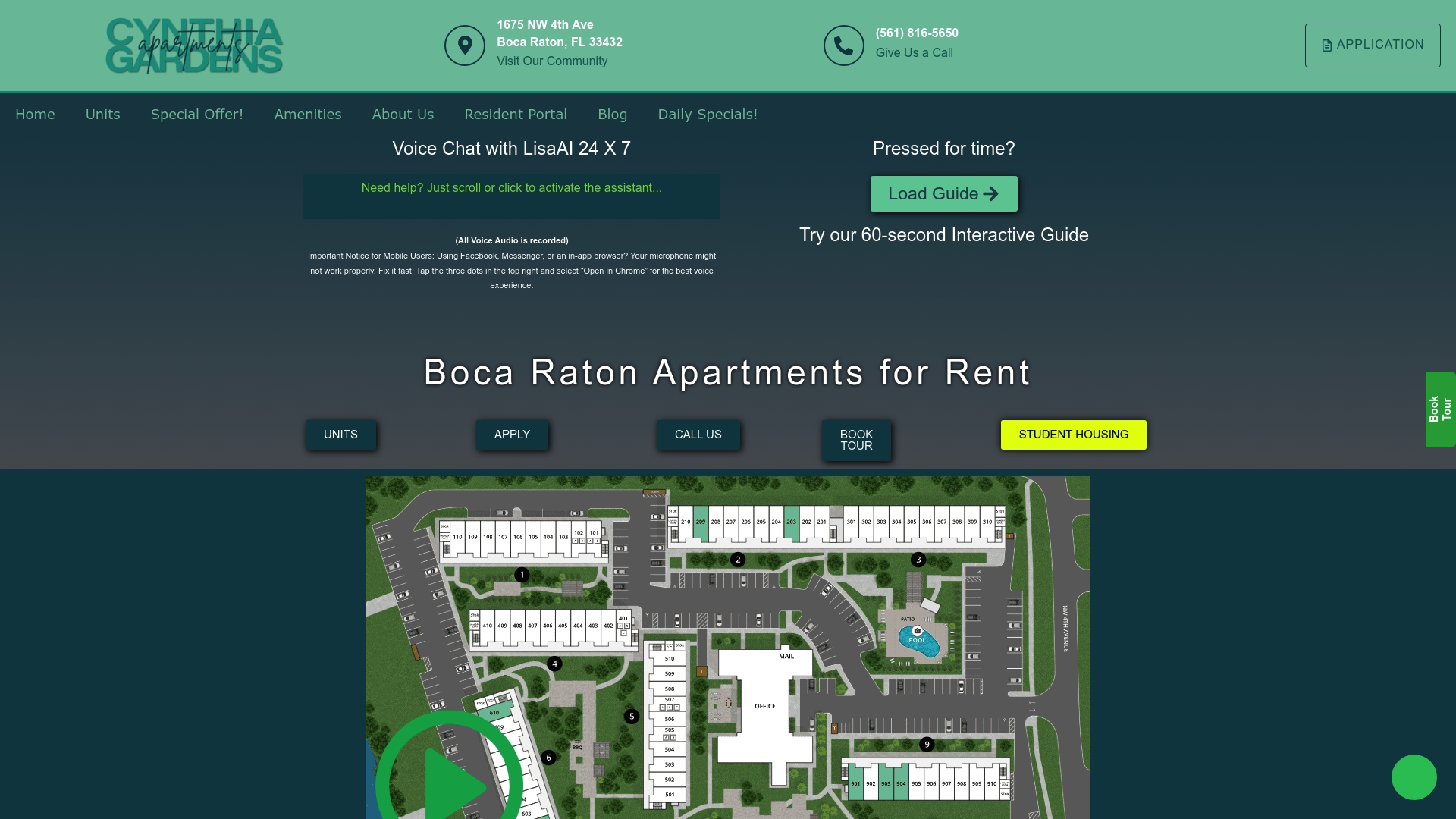
Our one-bedroom apartments come with transparent pricing and no hidden fees, and that transparency extends to move-in day itself. Every fee is listed clearly, from the application and administrative charges to the prorated rent itself, and our tech-forward leasing process means you can review a sample move-in cost breakdown before you ever set foot on the property. Check current unit availability and request a written proration example when you contact leasing. It’s the easiest way to know exactly what your first month actually costs.
Sources
- Prorated rent
- How to calculate prorated rent (Rentec Direct)
- Prorated Rent: The Complete Calculator & 3-Method Guide
- What Is Prorated Rent? Complete Guide
FAQ
Is prorated rent divided by 30 or 31?
It depends on the method your lease specifies. The 30-day “banker’s month” always uses 30, while the actual-days method uses the real number of days in that month, whether it’s 28, 30, or 31.
What is the 30% rent rule?
It’s unrelated to prorated rent calculations, which deal with partial-month charges rather than affordability.
Does the first month usually get prorated?
Yes, if you move in on any day other than the first of the month, the first month is typically prorated based on the days you actually occupy the unit. This calculation is documented on every move-in statement so residents can see the exact math.
How do I calculate prorated rent when I move out?
Use the same formula as move-in: divide monthly rent by your lease’s chosen divisor, then multiply by the number of days you occupied the unit before your move-out date. Most leases count the move-out date itself as the tenant’s last responsible day.